
Need this roof reviewed?
Written roof condition reports in Hollywood, FL with photographs, marked plans, moisture findings and ranked next steps a manager can act on or share.
A stained ceiling tile does not tell anyone where water entered, only where it finally landed. The same is true of a roof that looks clean from the hatch: the membrane may be intact while insulation underneath holds water from a seam that opened months ago. A condition report exists to connect what is seen with what is happening inside the assembly, and to record both in a form that survives a change of manager. In Hollywood, FL, where August afternoons average near 90 degrees and the wet season brings heavy rain, a report written before the stormy months gives a manager time to act on what it finds. We write each one so a reader who never visited the roof could still find every item on it.
Location, observation, mechanism and action
Every entry in the report follows the same four steps. It names the location on the roof plan. It describes what was seen, with a photograph. It states the likely mechanism, such as a lifted lap, a set-high drain or a pulled counterflashing. Then it gives the practical next step: repair now, monitor for a stated sign, or investigate with a named test.
The order keeps the report accurate about what it knows. An observation is a fact. A mechanism is an interpretation, labeled as one. The action follows from both. A reader scanning for urgent items can find them quickly, and a reader checking the reasoning can follow it to the evidence.
Language is kept plain. A manager should not need a roofing glossary to see that a seam is open or that a drain sits higher than the surrounding surface. Where a technical term is useful, it is defined once in the report and used the same way afterward. Photographs carry much of the explanation, and captions say what to look at in each frame.
Roof plans, photographs and fixed positions
A marked-up roof plan is the backbone of the report. Each section of the roof gets a label, each penetration a number and each finding a symbol. Photographs are taken from the same positions on every visit, with a wide shot to show the setting and a close shot to show the detail. A small arrow or scale in the frame helps the next person see what changed.
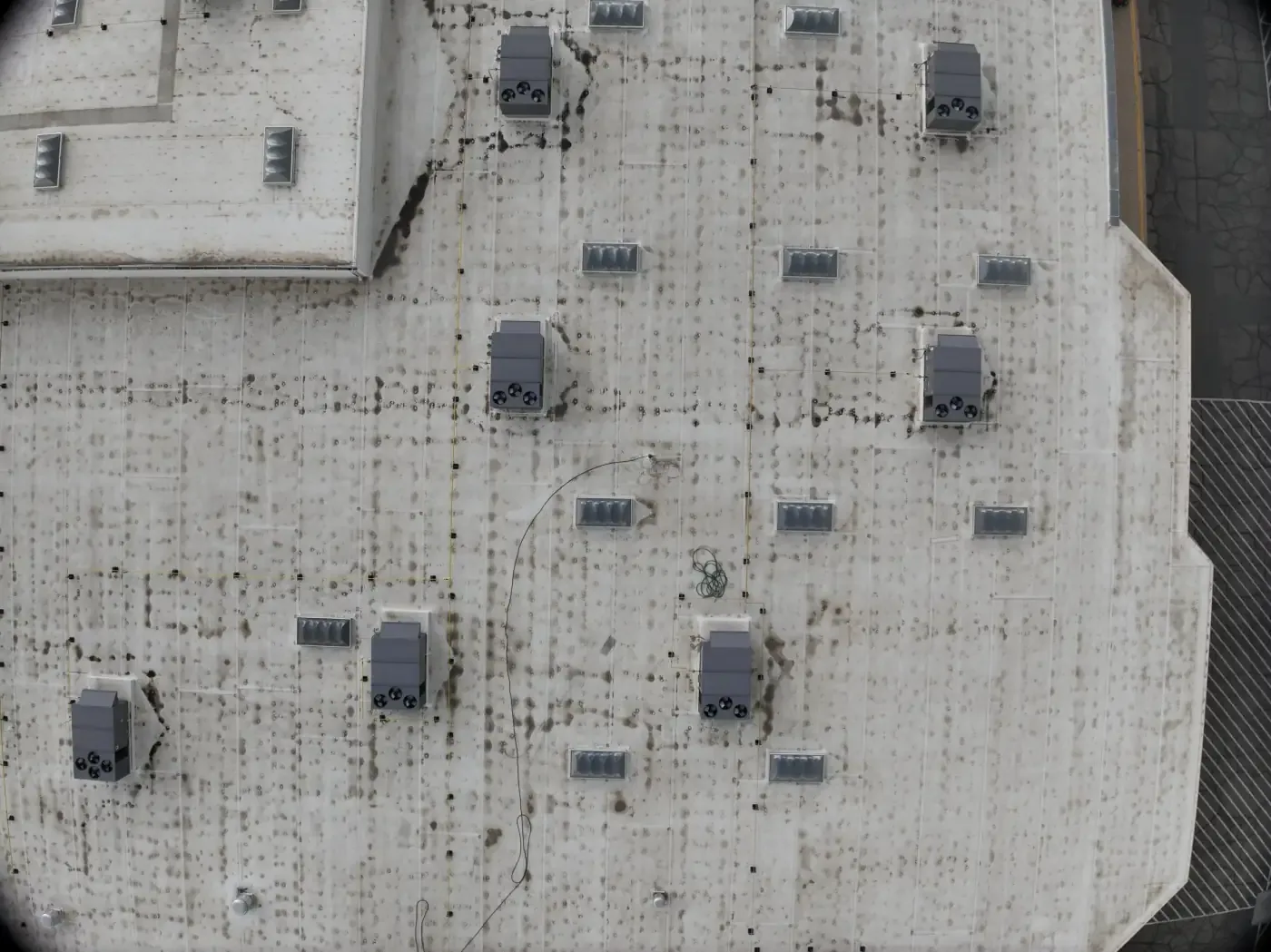
When drone imagery is used, the report says so, and the images supplement the walk without replacing it. A drone roof inspection shows ponding, staining and debris across a wide surface, while the hands-on walk probes seams and confirms flashing condition. The report states which finding came from which method.
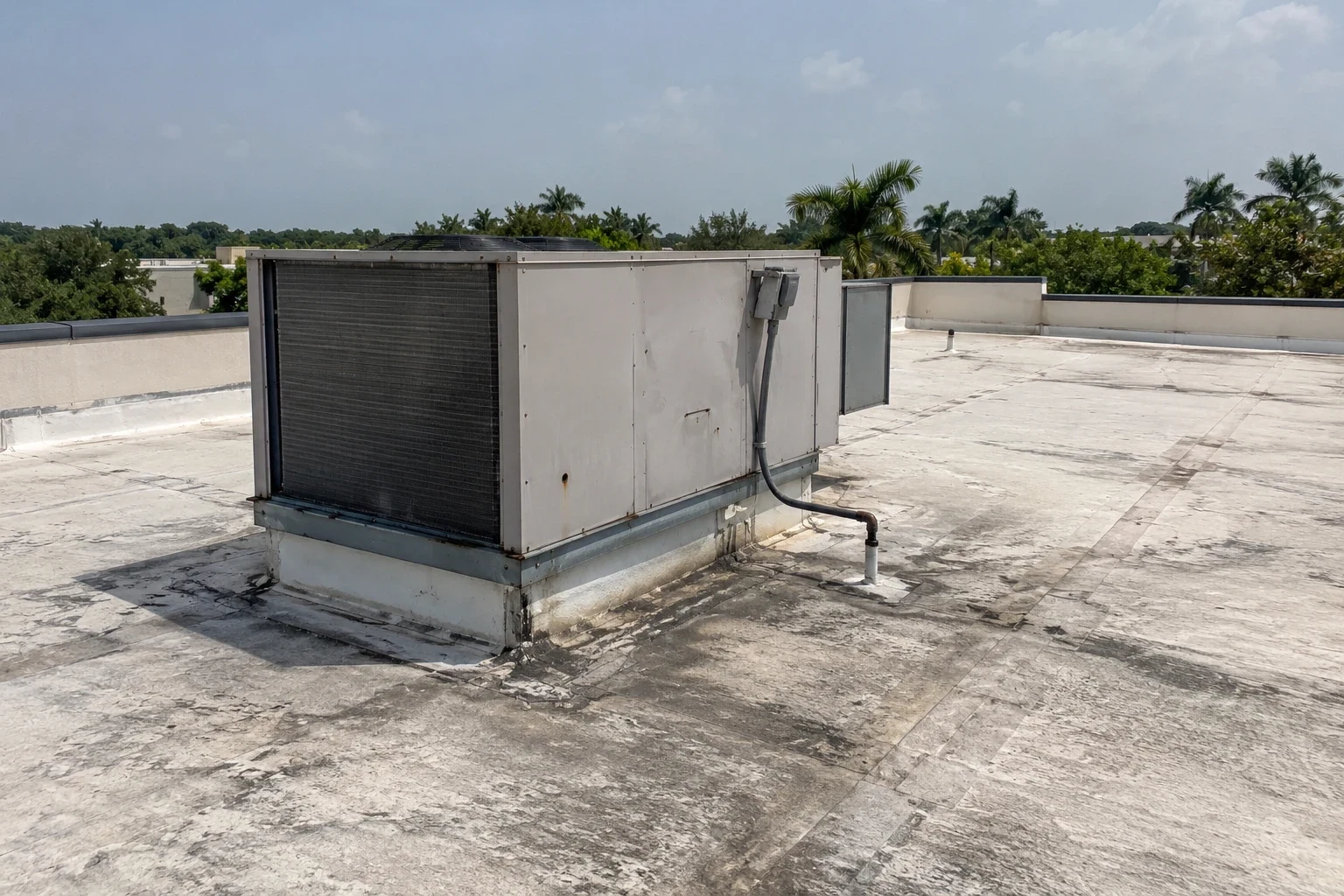
Equipment changes are logged as they occur. A new unit, a moved conduit or a capped line appears on the plan with its date, so a later reader can tell which penetrations belong to the original roof and which were added. That distinction often explains why a leak sits near one curb and not another.
Moisture maps and core evidence
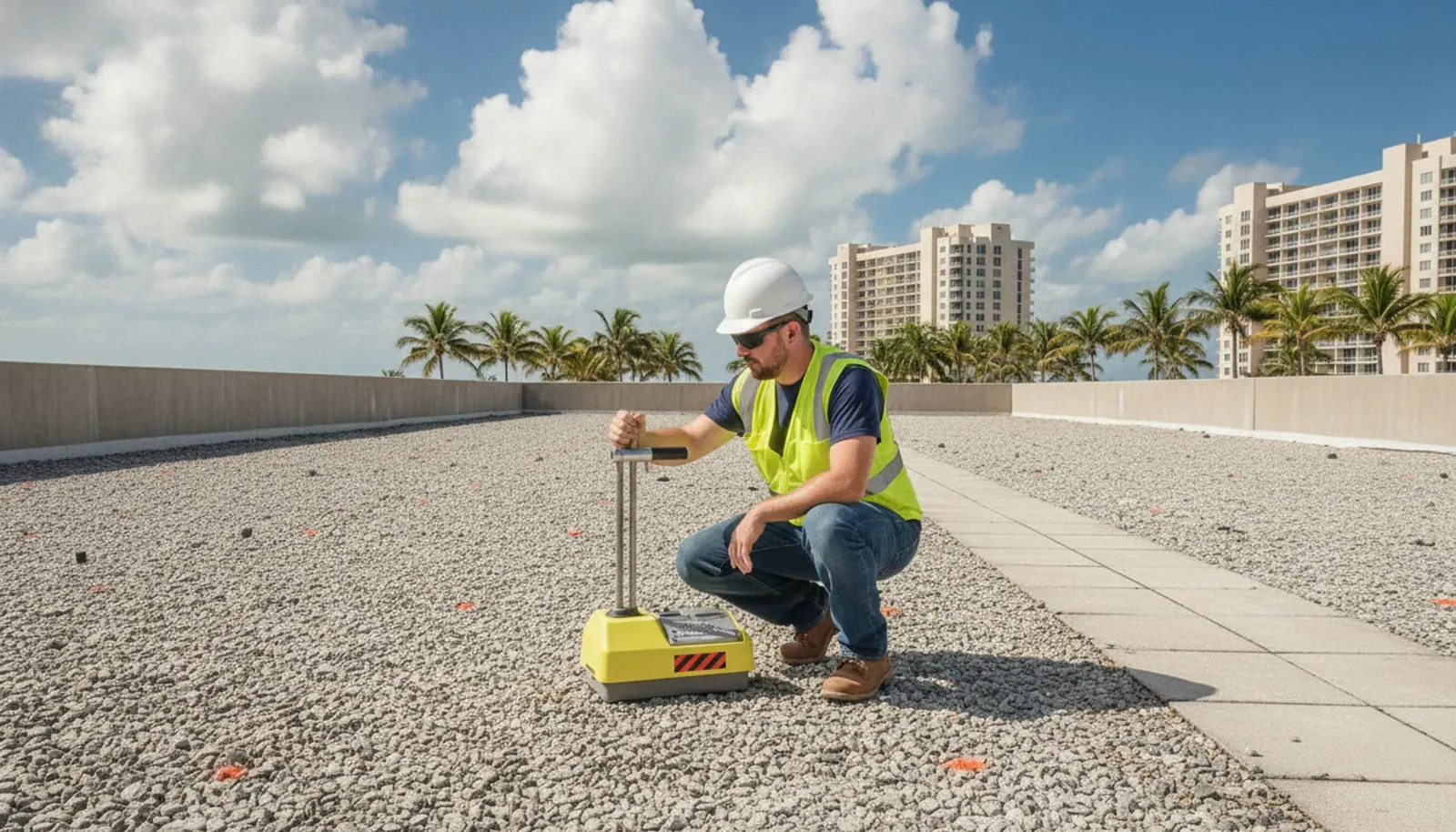
Where hidden water is a question, the report includes a moisture map. An infrared moisture survey shows temperature patterns that suggest wet insulation, and test cores confirm the layer, the depth and the extent. Each core is patched the same day, numbered on the plan and photographed.
The map matters because it turns a debate into a measurement. The share of the roof that is wet governs the choice between a contained repair and a larger scope, and it gives ownership a figure to carry into a budget. Without it, a report can only say that leaks exist, not how far the damage reaches.
Interpretation is conservative. A cool patch on an infrared image can come from shade, a thicker insulation area or a recent rain on the surface, so each suspected area is confirmed before it is marked wet. The map shows confirmed wet areas in one color and unconfirmed anomalies in another, which prevents a scan from being read as a final answer.
Priority categories and the limits of a visit
Findings are sorted into three groups: urgent, planned and watch. Urgent items let water in now or are close to it. Planned items are known defects that can be fixed on a schedule. Watch items are stable conditions with a named sign that would move them up. Each entry says why it sits where it does.
The report also states its limits: the date, the areas reached, the areas that were not accessible and any conditions that could not be confirmed without opening the roof. It does not forecast an exact remaining life. The cost section gives a range with reasons and splits confirmed quantities from allowances that wait on opening the roof. Those limits are part of what makes the document trustworthy.
Safety observations travel with the report. A soft deck area, a missing guard at an edge or a skylight without protection is flagged at once, and the manager is told before the report is finished, since some findings cannot wait for a document.
Timing follows the season. Because the stormiest part of South Florida's wet season starts in mid-May, we aim to hand over the report ahead of that date, with urgent drainage and edge items already sorted into a first round. A manager with buildings along Johnson Street between 56th Avenue and US-441, or in Downtown Hollywood, can then schedule the planned items for the quieter months.
Using the report with insurers, lenders and contractors
A report that is clear and dated serves many readers. An insurer reviewing storm damage can compare the roof with an earlier record. A lender can see the condition and the planned work. A contractor bidding the work can price from the same plan, which makes bids comparable. For claim support, our roof insurance claim assistance uses the same format and describes conditions without assigning coverage.
Owners with older buildings in places like the Harrison and Tyler historic districts, where the City notes many buildings reflect 1920s-era architectural styles, can use the report to separate what is known about the roof from what is assumed about the building's age. Reports feed the roof asset register and support due diligence roof surveys when a sale is planned.
Updates take less effort once a baseline exists. A later visit compares each marked item with its original photograph and notes whether it changed, so a yearly refresh can be shorter than the first report while still showing the trend.

