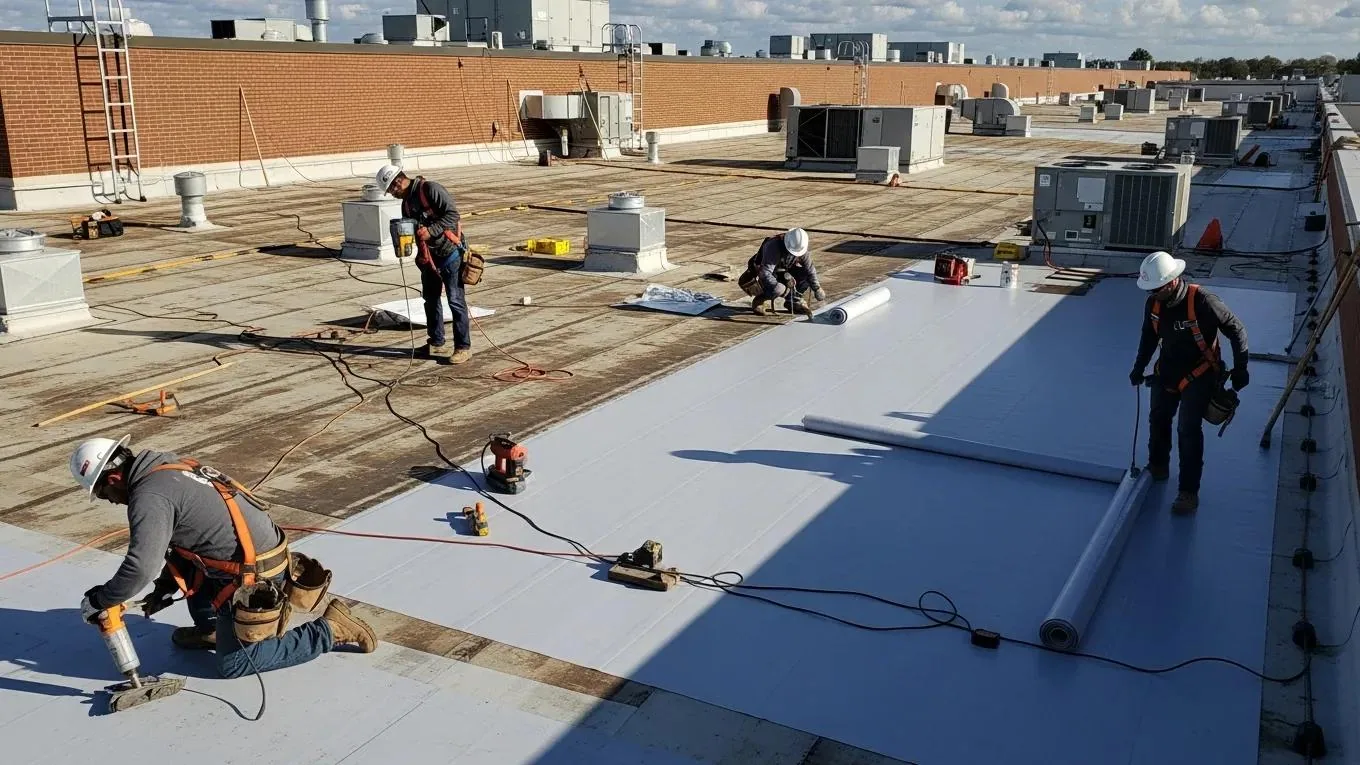
Commercial roof damage repair in Hollywood, FL for wind, hurricane, tornado, hail, ponding, seam, flashing, puncture, heat and fire damage, documented first.
Damage rarely announces its cause. A lifted flashing, a split seam and a puddle that outlasts the storm can each be the result of one event or of years of heat and movement. In Hollywood, FL the first task is to record the wetting pattern and the edge condition, then separate what the weather did from what the assembly already carried.
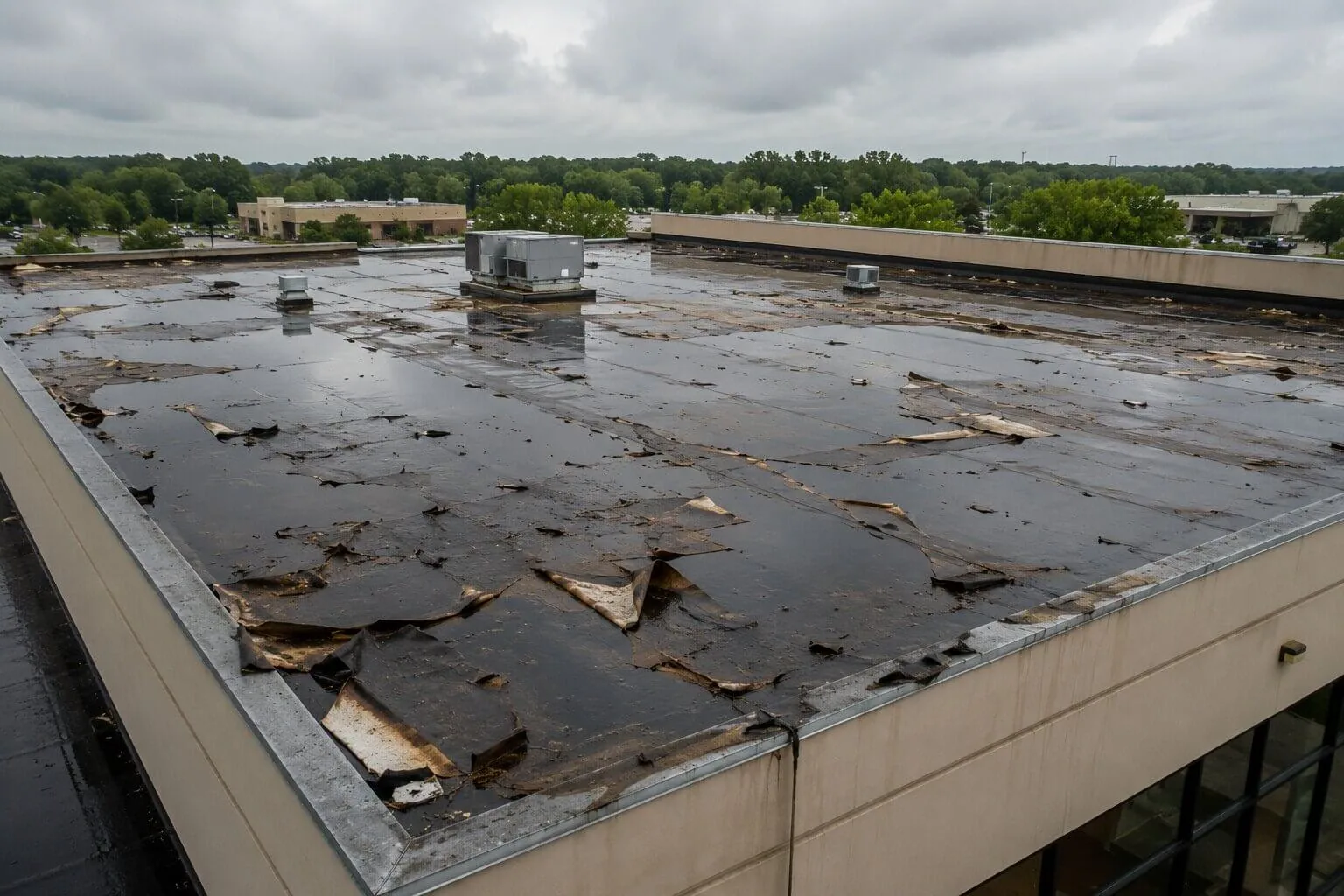
The early wet season, from mid-May into July, is when South Florida is most exposed to damaging gusts, tornadoes, lightning, hail and flooding. Wind damage roof repair starts at edges, corners and equipment. Hurricane damage roof repair adds temporary protection, debris removal and a documented scope for the owner and the carrier, and tornado damage roof repair follows the same path for narrow, severe losses.
Hail damage roof repair depends on evidence of impact, such as bruising, fractured granules or dented metal, never on the forecast alone. Heat and UV roof damage repair addresses chalking, cracking and shrinkage, which build slowly across summers with highs near 90 degrees in August.
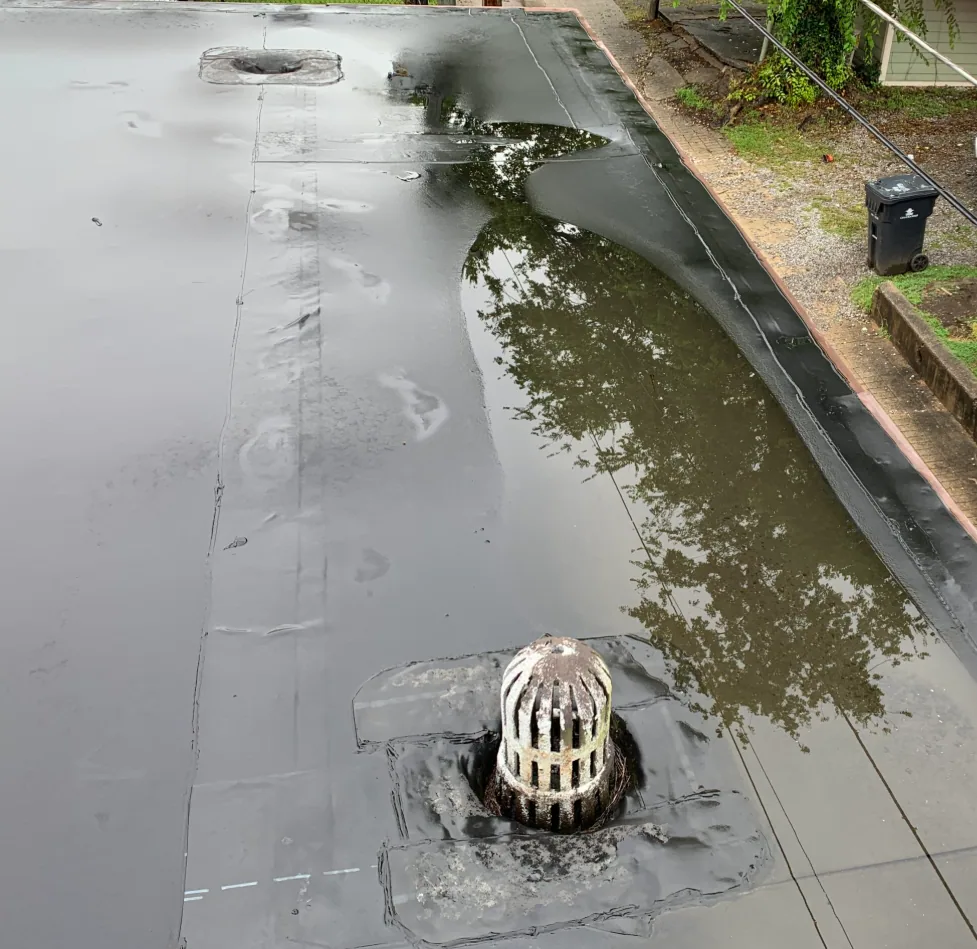
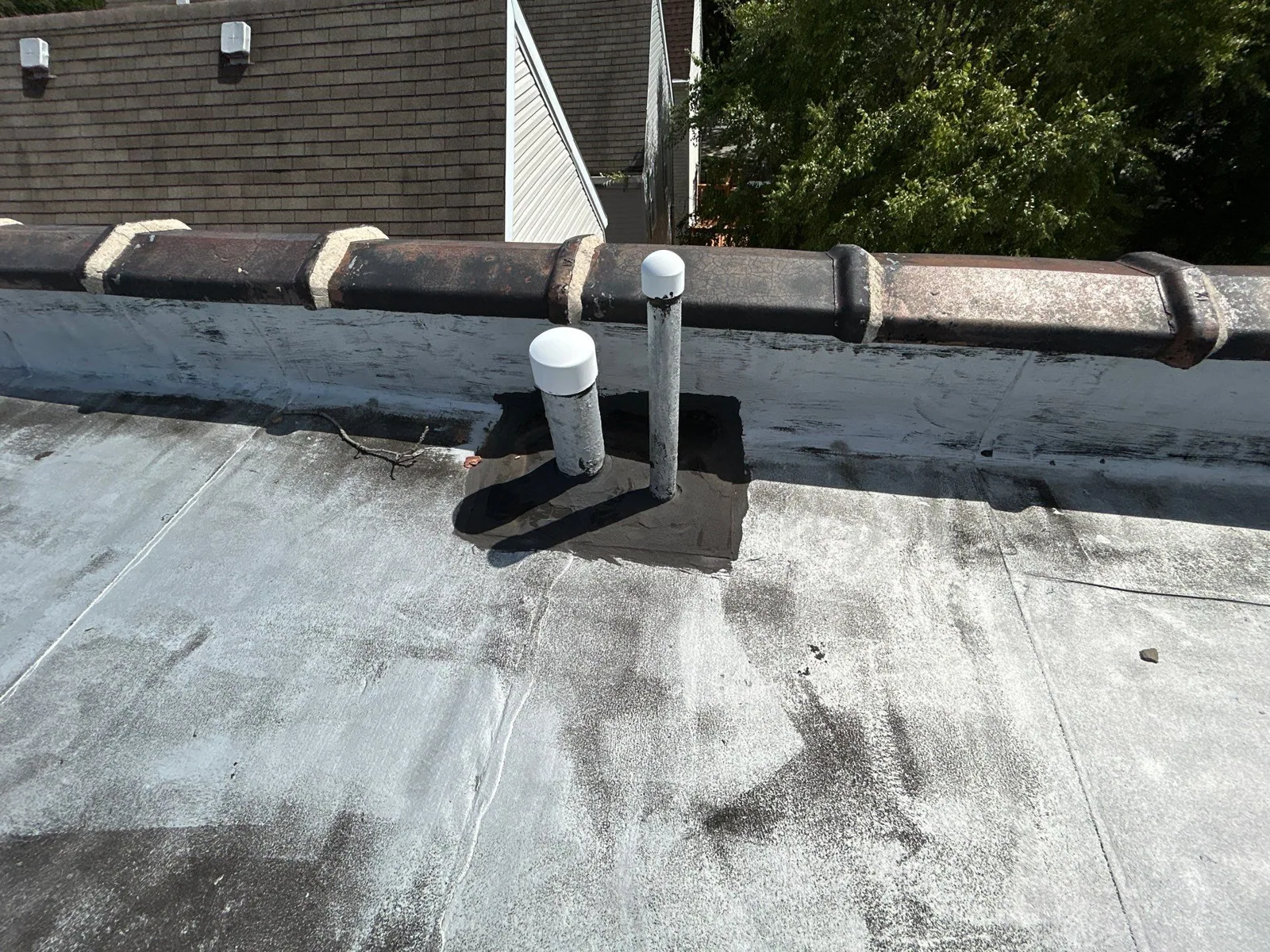
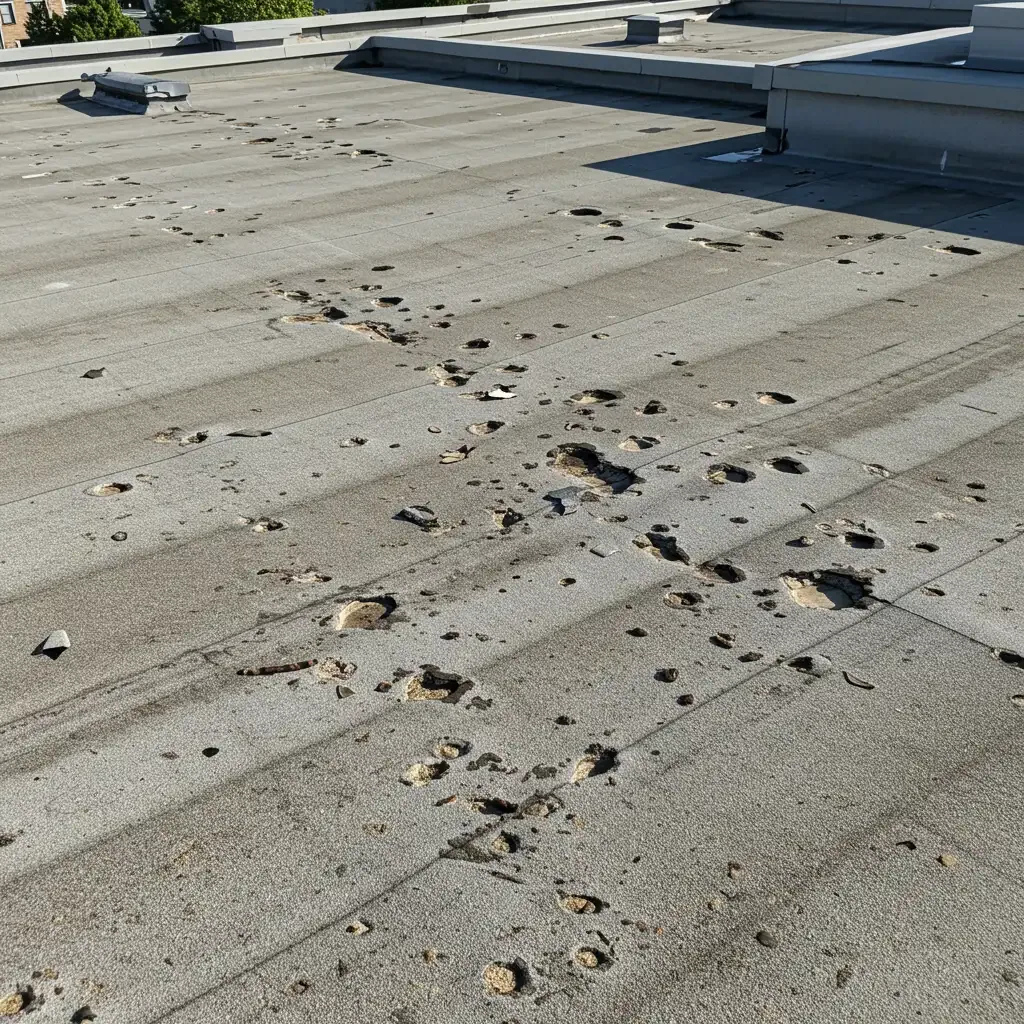
Ponding, seams and flashing carry most leak calls. Ponding water roof repair finds the low point and its cause. Seam failure repair and flashing failure repair restore the joints where moisture routes begin. Membrane puncture repair includes a moisture check on the insulation below the hole.
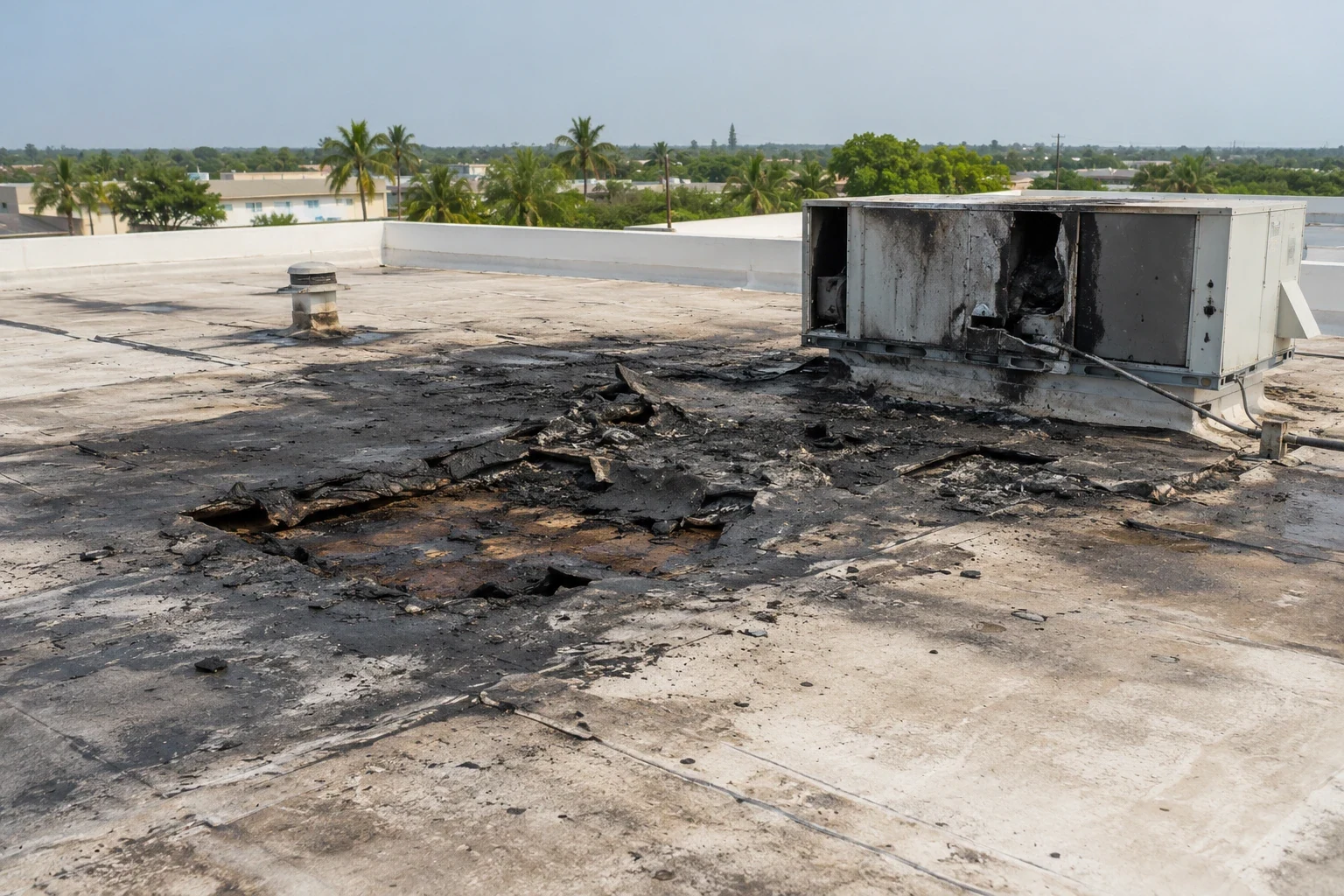
Fire damage roof repair begins with a structural and material review. Heat can affect insulation and deck well past the visible char, so the scope is set only after those layers are examined.
Where fire work and storm work overlap, the report keeps the two causes apart so the owner can see which repair belongs to which loss.
Hollywood's own risk assessment looks at sea-level rise, tides, surge and rain together, and the city reports that over 11,000 of its properties lie in a FEMA Special Flood Hazard Area. Flood exposure concerns the ground floor, but the same storms that cause it drive rain and wind onto the roof, so a loss review looks at both. For a building in the Hollywood Beach Business District, the roof walk adds edge metal, fasteners and scupper discharge, which wind-driven rain tests first.