
Need this roof reviewed?
Get a documented commercial roof inspection in Hollywood, FL. We map conditions, photograph details and explain repair, monitoring and replacement choices.
A useful roof inspection gives a property manager a location, an observation and a next step for each finding. We walk the accessible areas, check the membrane and details, and connect roof conditions with the building’s leak history and maintenance records. In Hollywood, NOAA normals show an August average daily maximum of 89.9°F, while high seasonal rainfall makes drains and transitions worth documenting before the next wet period. A roof near Downtown Hollywood or the Johnson Street Business District still needs an inspection grounded in its actual assembly. We provide photos and a clear condition summary so the owner can distinguish urgent repairs from planned maintenance.
Walk the field and the transitions
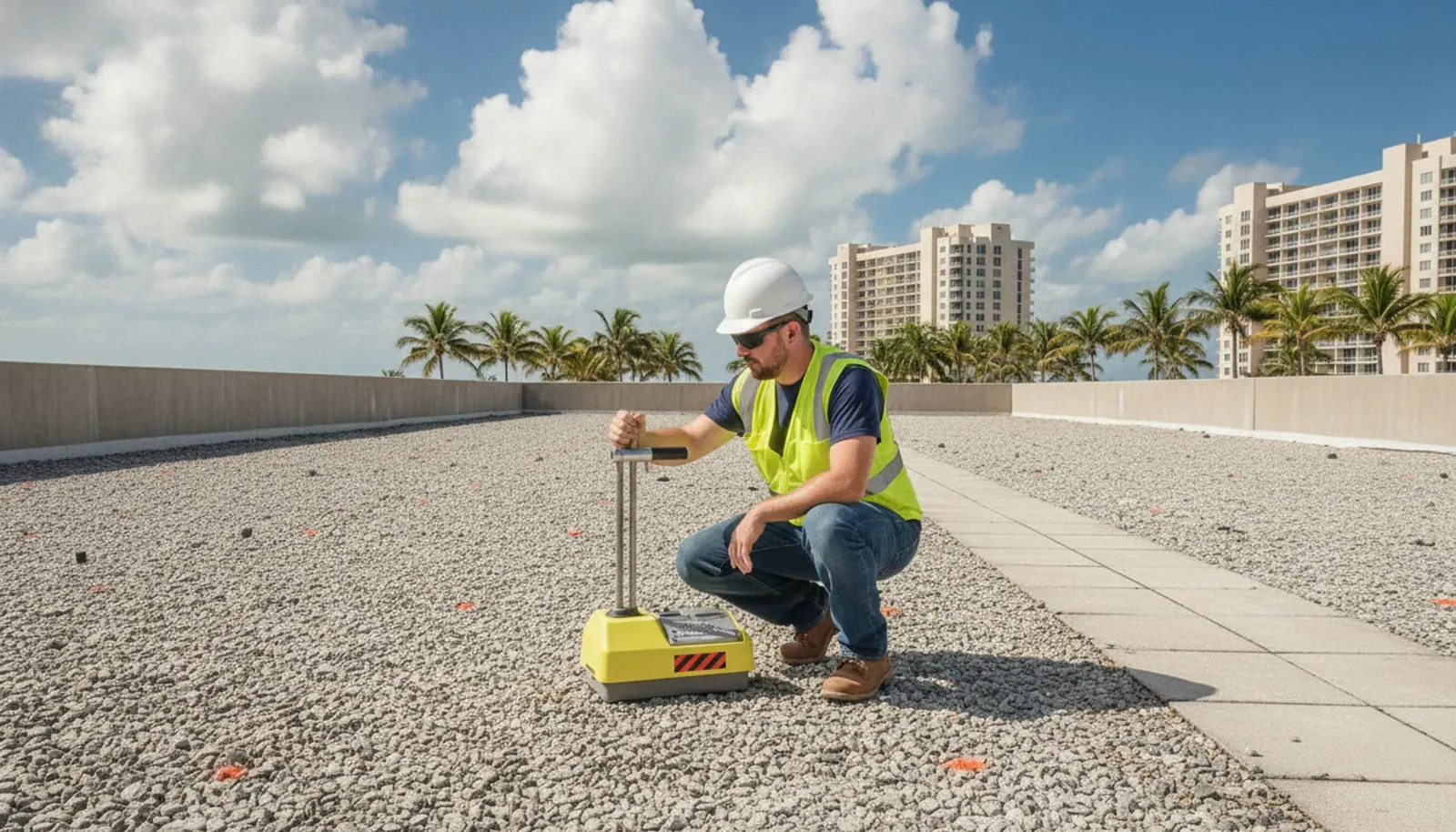
We begin with roof access, safety conditions and a current plan if one is available. The walk covers membrane seams, laps, patches, drains, scuppers, edges, penetrations, curbs, parapets and changes between roof areas. We look for openings, loose or brittle material, movement, coating wear and water that remains after the surface should have drained. Each observation gets a location reference and photo so another person can find the same spot.
Inspection notes separate visible conditions from assumptions. A stained ceiling may point toward a roof area, but water can move before it appears indoors. A blister may indicate trapped air or moisture, but its cause should be assessed before it is opened. We note what was accessible and what could not be confirmed without testing. If a core, infrared scan or controlled water test would answer a specific question, we explain why and what result would change the decision.
Hollywood’s Building Division handles permits and inspections across construction work, including structural reroof permit categories in its online permitting information. That does not make a condition survey a code inspection. We describe the roof observations and flag permit questions for the owner’s project team. A targeted moisture survey can supplement the walk where surface evidence suggests concealed wet areas.
Drainage, water paths and flood context
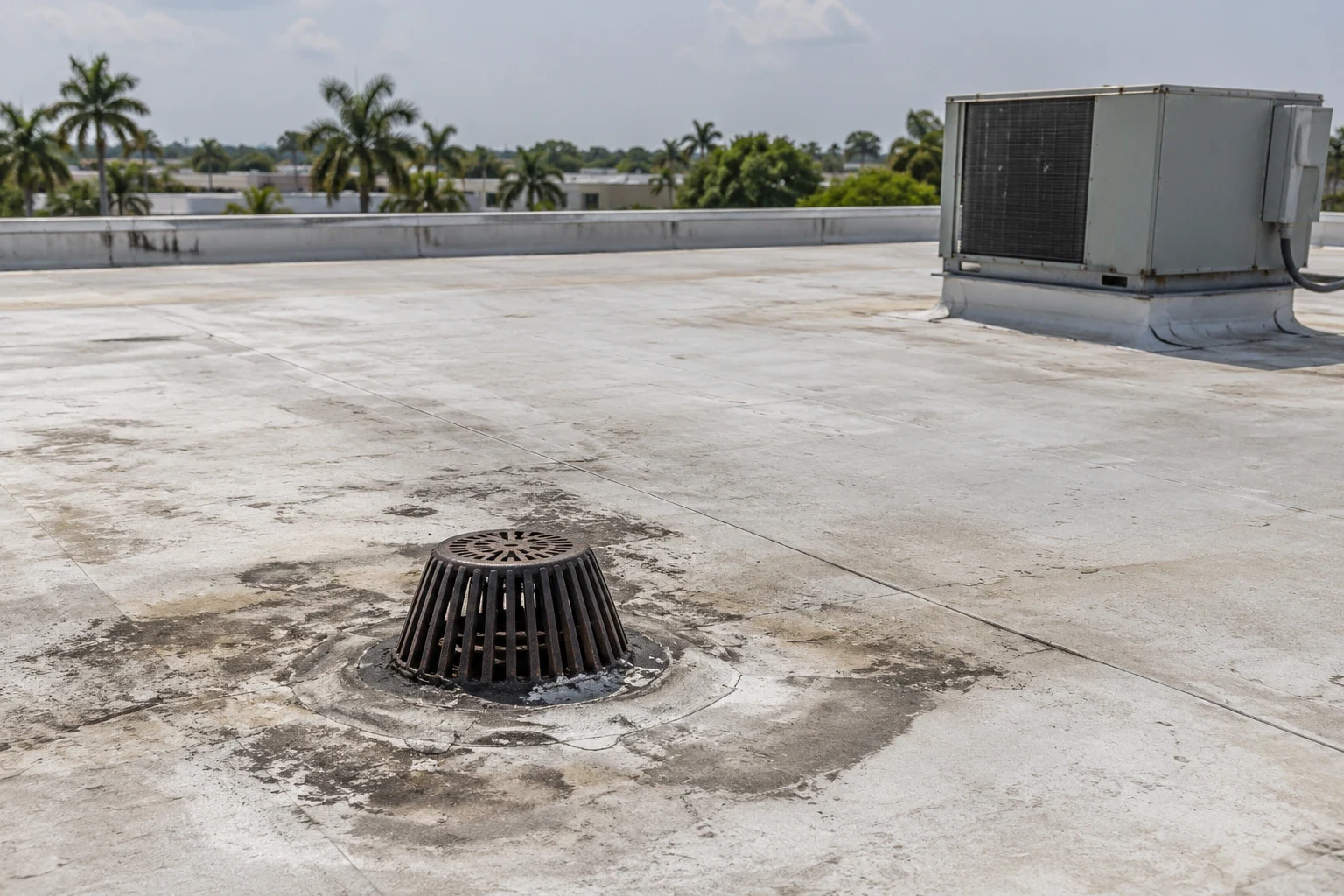
At drains and scuppers, we look at strainers, bowls, surrounding membrane, overflow routes and the slope leading to each outlet. A blocked strainer is easy to note; a settled area or repeated patch that creates a dam takes more measurement. Photos should show the outlet and the wider drainage plane so the manager can understand where water collects and which direction it should move.
Hollywood’s stormwater program models the interaction of rainfall and tides as part of assessing flood risk. The city’s flood information also calls particular attention to areas east of US-1 for map review. Both belong to site planning and parcel review. In the inspection report, we keep roof drainage observations separate from ground flood exposure and identify when the owner should consult parcel maps or civil plans.
The Historic Hollywood district occupies Hollywood Boulevard between 21st Avenue and Young Circle. For an older or mixed-use property, the inspection focuses on actual roof materials and interfaces, not assumptions based on its district. A drain and scupper review can define outlet repairs, while an edge metal inspection can address water entry at parapets and perimeter transitions.
Turn observations into a usable report
The report organizes findings by location, condition and recommended response. We distinguish a leak path that needs prompt work from a maintenance item or a condition that should be watched. Each entry explains the visible evidence, the likely mechanism and what additional testing may be needed. If the roof has multiple sections, the plan identifies the section and the transition so maintenance staff can locate it without relying on a photograph alone.
A strong record should not inflate a small defect into a replacement recommendation. It should also avoid describing an isolated patch as proof that the roof is sound. We note how many areas were observed, the access limits and the inspection date. If the owner needs budget planning, we can group items by timing and scope, then separate confirmed quantities from allowances that depend on opening the roof.
The Downtown Hollywood property owners association focuses on quality buildouts and permitting coordination among other district priorities. A roof report can support those owner discussions by showing a clear scope and photographs, but it does not promise a permit outcome. A written condition report keeps the findings in a format that ownership can share with its facilities and finance teams.
Use inspection findings over time
One visit is a snapshot. A maintenance log shows whether an open seam has changed, whether a patch has held and whether ponding appears in the same area after rain. We can compare photos and markups across visits, then adjust the maintenance plan to the roof’s actual condition. Keep records of equipment work, new penetrations, drain cleaning and repairs because those activities can change the roof after an inspection.
After a storm, a focused walk can document visible damage at edges, seams and penetrations. Hollywood’s flood map notes that applicable buildings in mapped special hazard areas must meet local elevation requirements, a parcel question that stays separate from what happened to the roof. If a claim may be involved, preserve event timing, photos and repair records and coordinate with the owner’s insurer. Our report describes roof conditions without assigning coverage.
For several properties, a multi-site roof program can standardize condition records while retaining building-specific observations. A Washington Park area inspection or walk in the central business district uses the same disciplined record: actual details, labeled locations and recommendations tied to observed conditions.
Choose the next action
Inspection findings usually lead to one of three paths: repair a confirmed defect, monitor a stable condition, or investigate further where evidence is incomplete. We explain why each item belongs in its category and what could change that call. A repair recommendation should identify the repair boundary and material compatibility. A monitoring item should name the sign that would trigger another visit. Further investigation should specify the test and the question it answers.
Timing and budget depend on access, roof system, number of details, wet-area extent, deck condition and whether other trades need to coordinate. We can prepare a prioritized scope for maintenance planning or a broader replacement review if the inspection shows widespread deterioration. The owner receives the photos, a roof plan markup where available and a discussion of the decisions ahead.
We inspect commercial roofs throughout Hollywood and nearby cities. Share the roof plan, prior reports and current leak locations. We will walk the accessible assembly, record what is visible and explain the practical next step.