Need this roof reviewed?
Trace and repair active commercial roof leaks in Hollywood, FL. We protect the interior, find the water path and document the work for follow-up.
A fresh ceiling stain gives you a place to start, not necessarily the place where water entered. The roof leak may travel along insulation, a deck flute or a framing member before it reaches the room. In Hollywood, June and September rainfall normals each exceed eight inches, so an unresolved opening can be tested repeatedly during the wet season. We first help protect the interior, then inspect the roof above and around the reported area. A business property near Johnson Street or Hallandale Beach needs a repair based on its actual membrane and drainage path, not a guess from the stain. We document the likely entry, explain what is confirmed, and complete a repair suited to the assembly.
Protect the occupied space
Move equipment, stock or furnishings away from active dripping where it is safe to do so. Place a catch container, mark the stain and note whether it grows during rain or continues after the weather clears. If water is near electrical equipment, keep people clear and follow the building’s safety procedure. A photo with the room location and time helps connect the interior symptom to the roof inspection.
We coordinate roof access, interior access and any temporary protection with the property manager. A temporary patch or cover can limit entry while we trace the cause, but it should not conceal a condition that still needs inspection. If rain continues, we prioritize a safe dry-in and a defined return visit rather than leave an open area exposed. The manager receives a clear description of the immediate work and what remains to be verified.
For a leak that affects operations in the Downtown Hollywood business area, we confirm the entry route and work zone before moving ladders or materials. The city’s 2026 guide describes how event closures in the Downtown area can affect access and deliveries along Hollywood Boulevard. We verify current property access with the site contact rather than rely on a prior event notice.
Follow the water path
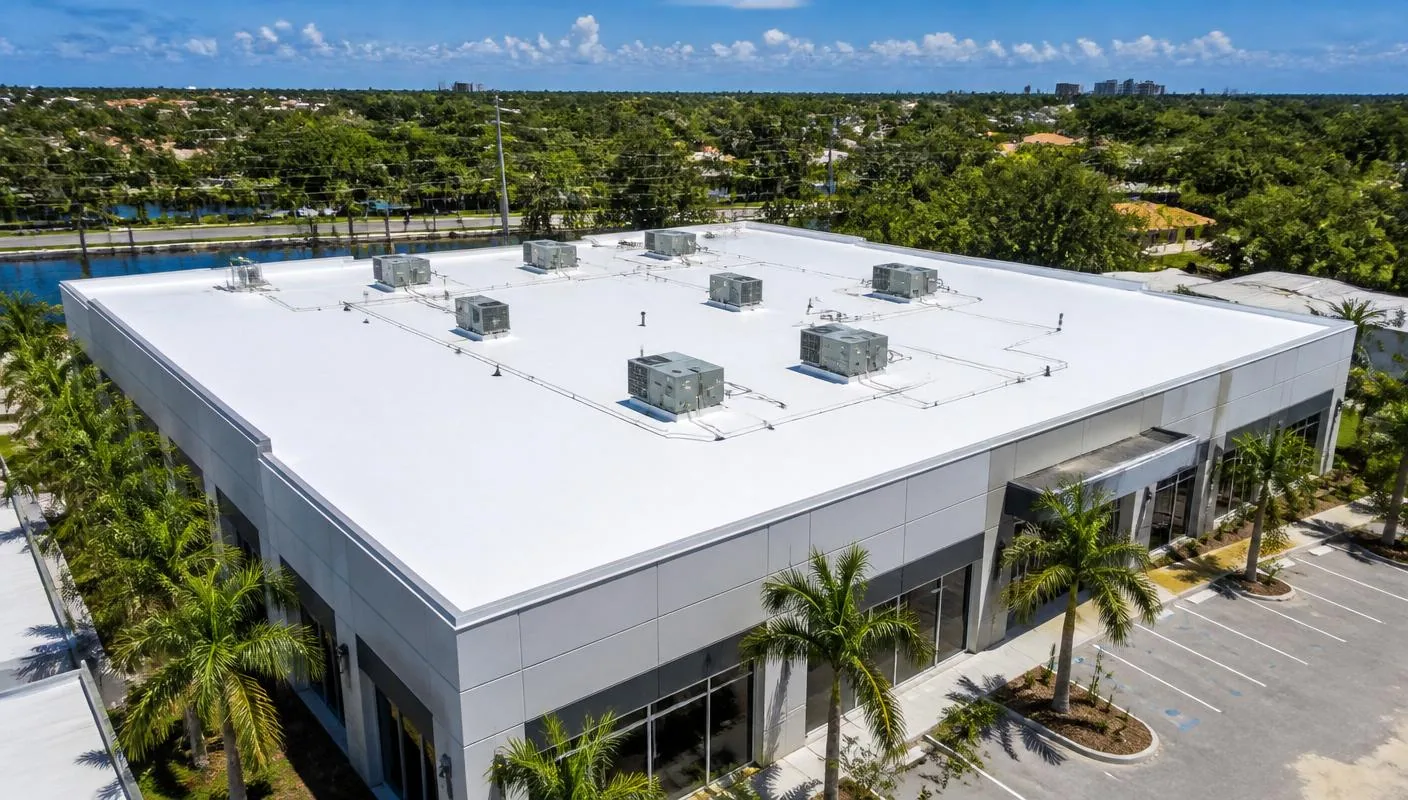
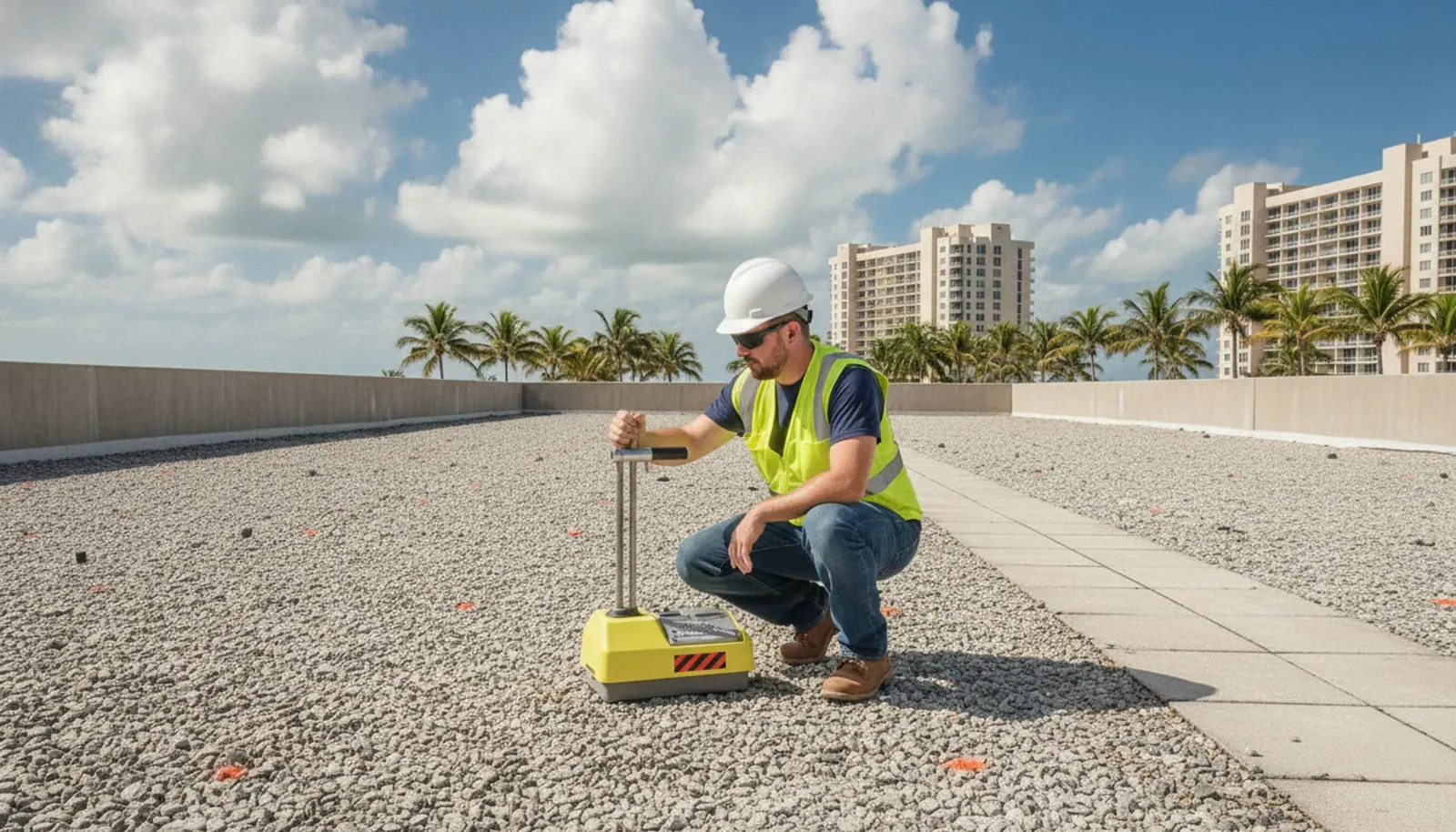
Once the roof is safe to inspect, we compare the interior mark with the roof plan, drains, seams, curbs, parapets and earlier repair areas. Water can move sideways beneath a membrane or through a deck channel, so the point above a stain is only one clue. We look for lifted laps, failed penetration flashing, open pitch pockets, punctures, damaged coping and drain back-up. A hand sketch or marked photograph records where each observation sits.
Sometimes one defect clearly explains the entry. Other times we find several candidates and need a controlled test or small opening to distinguish them. We explain the test before performing it, including what the result can confirm and what it cannot. That keeps the repair decision tied to evidence. If insulation is wet or the membrane has separated, we map the affected extent instead of assuming the visible stain shows the full problem.
Hollywood’s stormwater program considers the interaction of rainfall and tides in flood-risk assessment. We keep the roof investigation focused on the building envelope, while parcel flood questions are a separate review. A roof inspection can broaden the review when recurring leaks or several repair areas suggest a wider condition.
Repair the assembly that failed
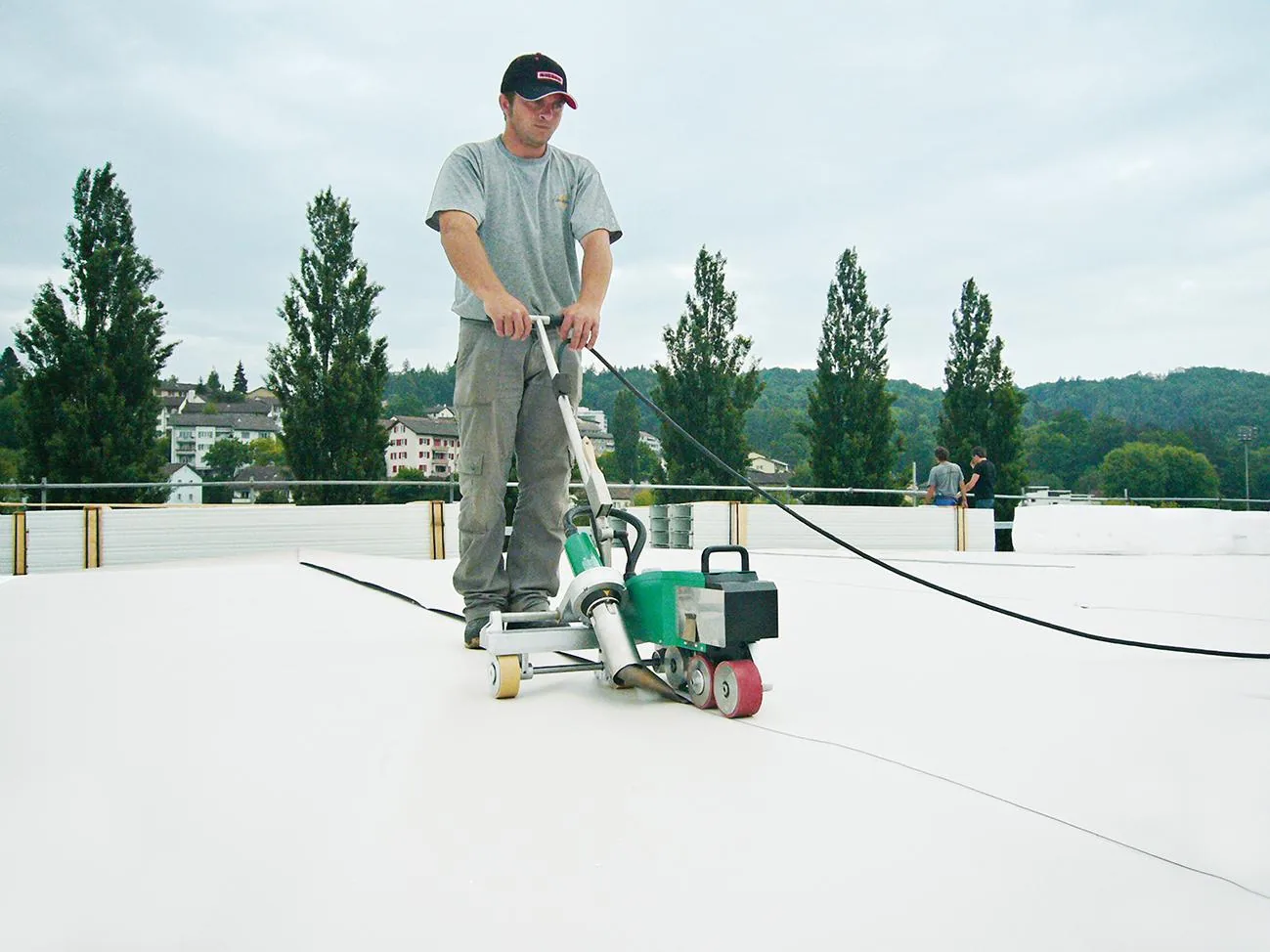
The repair material must fit the existing roof. We identify the membrane or metal system, prepare the surface, and address the detail that opened. A seam repair may need cleaning and compatible welding or adhesive; a puncture may require a properly sized patch with rounded corners and sealed edges. At a curb or wall, flashing has to reach sound material and terminate in a way that sheds water. Simply adding sealant over dirt or movement can fail again.
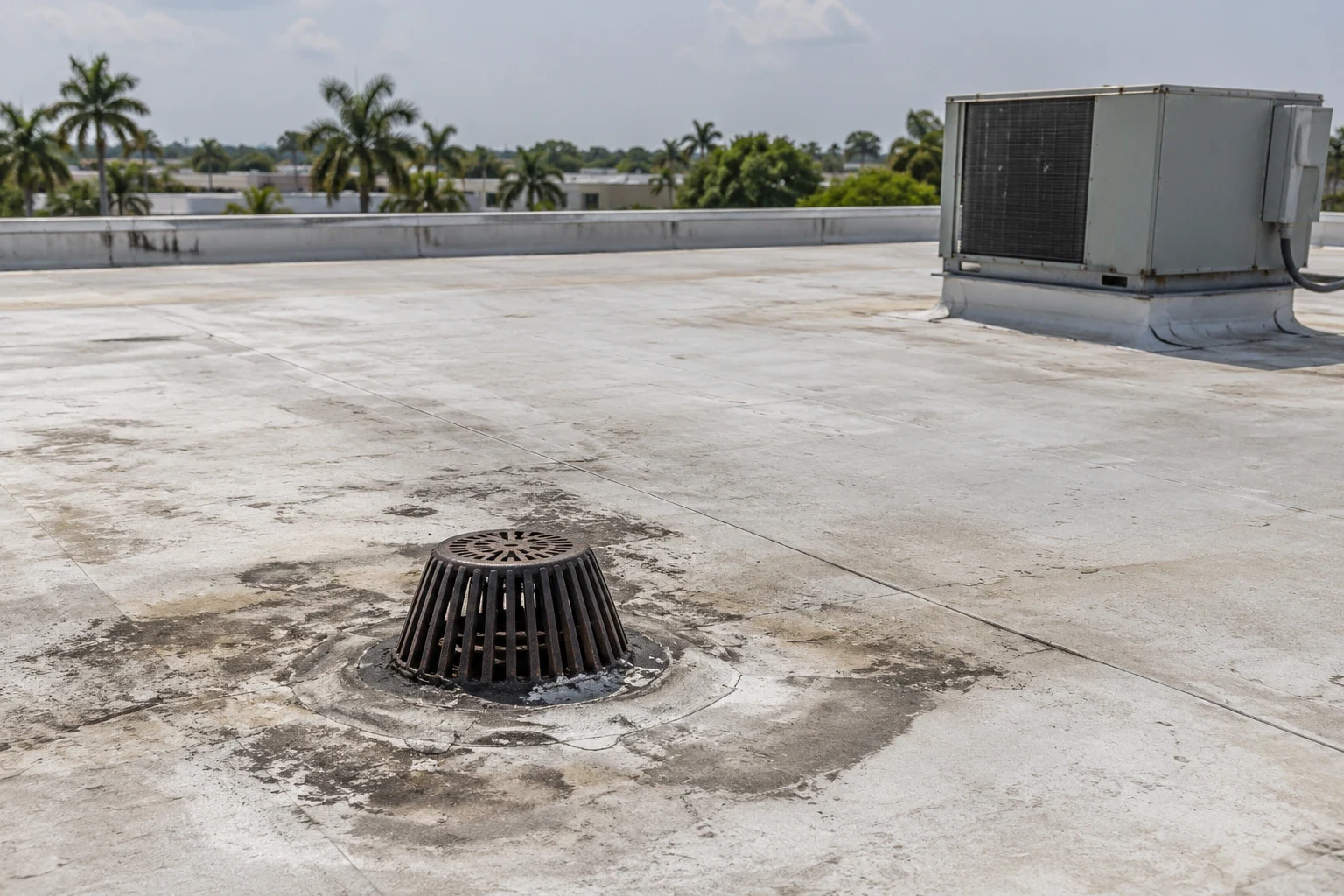
Drainage can be part of the leak path. We clear and inspect the outlet, check the surrounding slope and look for a low area that sends water back toward a seam. If the drain bowl or scupper is damaged, we describe the needed work separately from the membrane patch. A drain and scupper repair may be included when it addresses the observed path. A PVC detail requires different preparation than an EPDM or coated assembly.
On older buildings around the Harrison and Tyler districts, the city describes a mix of commercial and mixed-use properties with 1920s-era styles. We verify each roof system before selecting a repair, because the era of a district does not tell us what is on a particular building. Photos of the material and repair area become part of the work record.
Timing, access and cost drivers
Repair timing depends on the active water path, weather, roof access and whether a detail can be made dry enough for the selected material. Interior protection may be immediate, while a permanent repair waits for safe and compatible conditions. We tell the manager what can happen on the first visit and what requires a second step. If equipment must be moved or a tenant area cleared, that coordination belongs in the schedule.
Cost changes with the number of defects, membrane type, preparation, insulation replacement, metal work, access equipment and testing. A simple puncture in an accessible field is different from a leak that requires opening multiple layers or rebuilding a curb. We define the repair boundary and note any allowances. If the roof has repeated leaks, a moisture survey can guide test locations, while a photo condition report helps ownership prioritize other observed needs.
For tenants and deliveries near the Johnson Street Business District, a known access window can prevent a small repair from interfering with loading. We confirm the building’s own schedule and keep a contact available for field decisions. A crew should not expand the scope without telling the authorized person what was found and why the change matters.
Confirm the repair and preserve the record
After the repair, we photograph the prepared surface, finished detail and nearby drainage or flashing that was checked. The closeout names the repair location, system where identified, materials and any limits on verification. If the roof could not be tested during the visit, we state what follow-up condition would confirm performance. That distinction helps a manager respond if the symptom returns.
Keep the repair record with the roof plan, prior service notes and warranty documents. Compare future stains with the location map and note the weather and room conditions. Repeated symptoms in one area may indicate movement, trapped moisture or a drainage problem beyond the first patch. The next inspection can use that history instead of starting from scratch.
We repair commercial roof leaks throughout Hollywood and nearby communities, including properties in the Downtown Hollywood business area and Hallandale Beach. Share the room location, photos and prior repair details. We will protect the interior, trace the roof path and explain the repair before work proceeds.