Need this roof reviewed?
EPDM rubber roof repair, restoration, and replacement in Hollywood, FL, with splice testing, shrinkage checks, drainage review, and clear records.
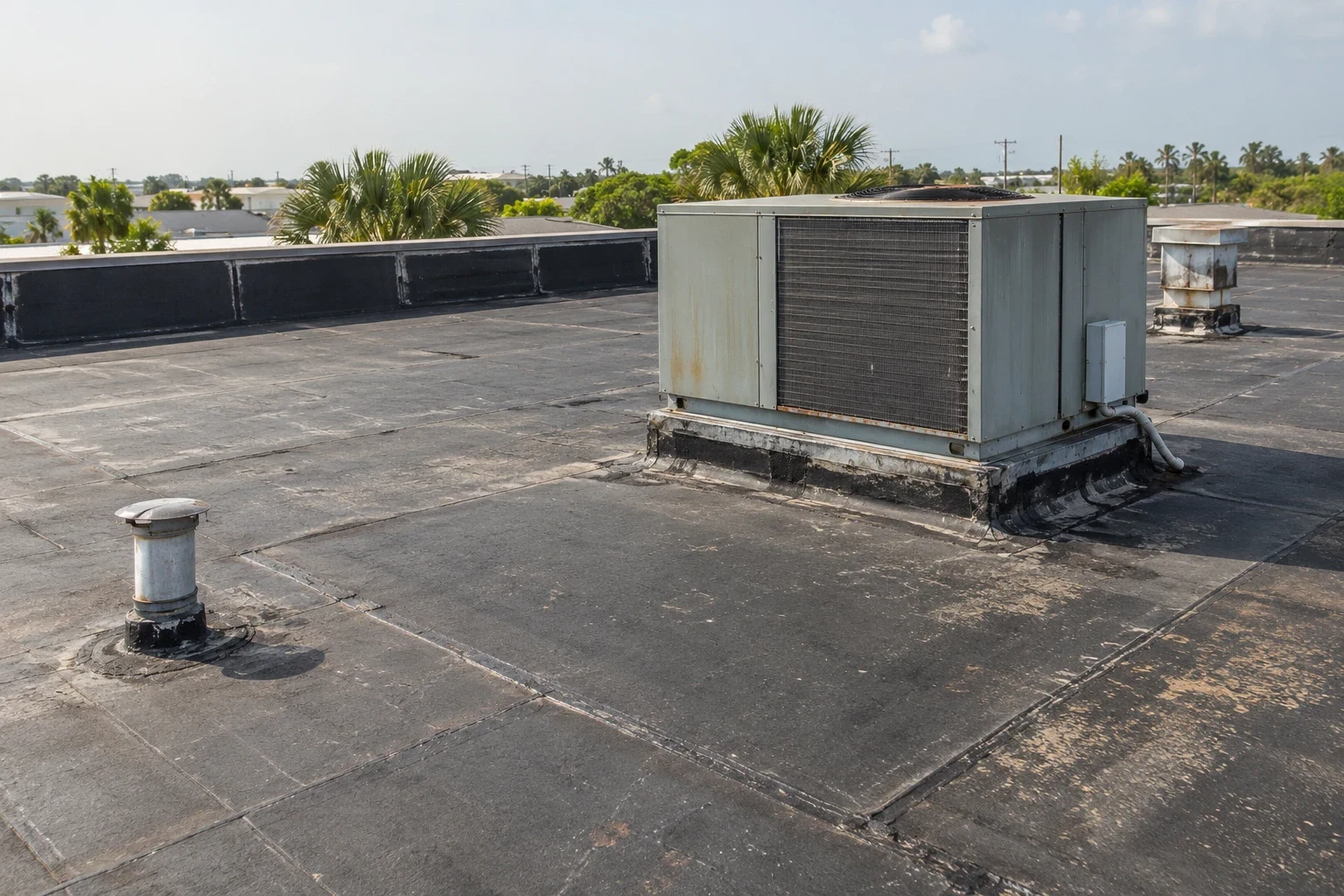
Black rubber soaks up the sun, and an EPDM roof records the result at its splices, corners and flashing terminations. The sheet itself is flexible and can tolerate years of weather, but it shrinks slightly as it ages, pulls on whatever holds it down and opens small paths at the details. In Hollywood, FL, a long summer and a rainy season put that cycle through repeated tests. We begin by walking the roof, pressing along the splices, checking each curb corner and noting where water stays after rain. Then we follow the likely moisture route from a ceiling stain back toward the roof and recommend repair, monitoring or replacement based on what the membrane and the insulation below actually show.
Black rubber and the heat path
NOAA's 1991-2020 normals put Hollywood's annual mean temperature at 76.1°F, and its August average daily maximum at 89.9°F. A dark membrane absorbs more of that energy than a pale one, so the roof surface runs warmer than the air and passes the heat into insulation and the deck beneath. EPDM handles that exposure well as a material, but the details around it do not always.
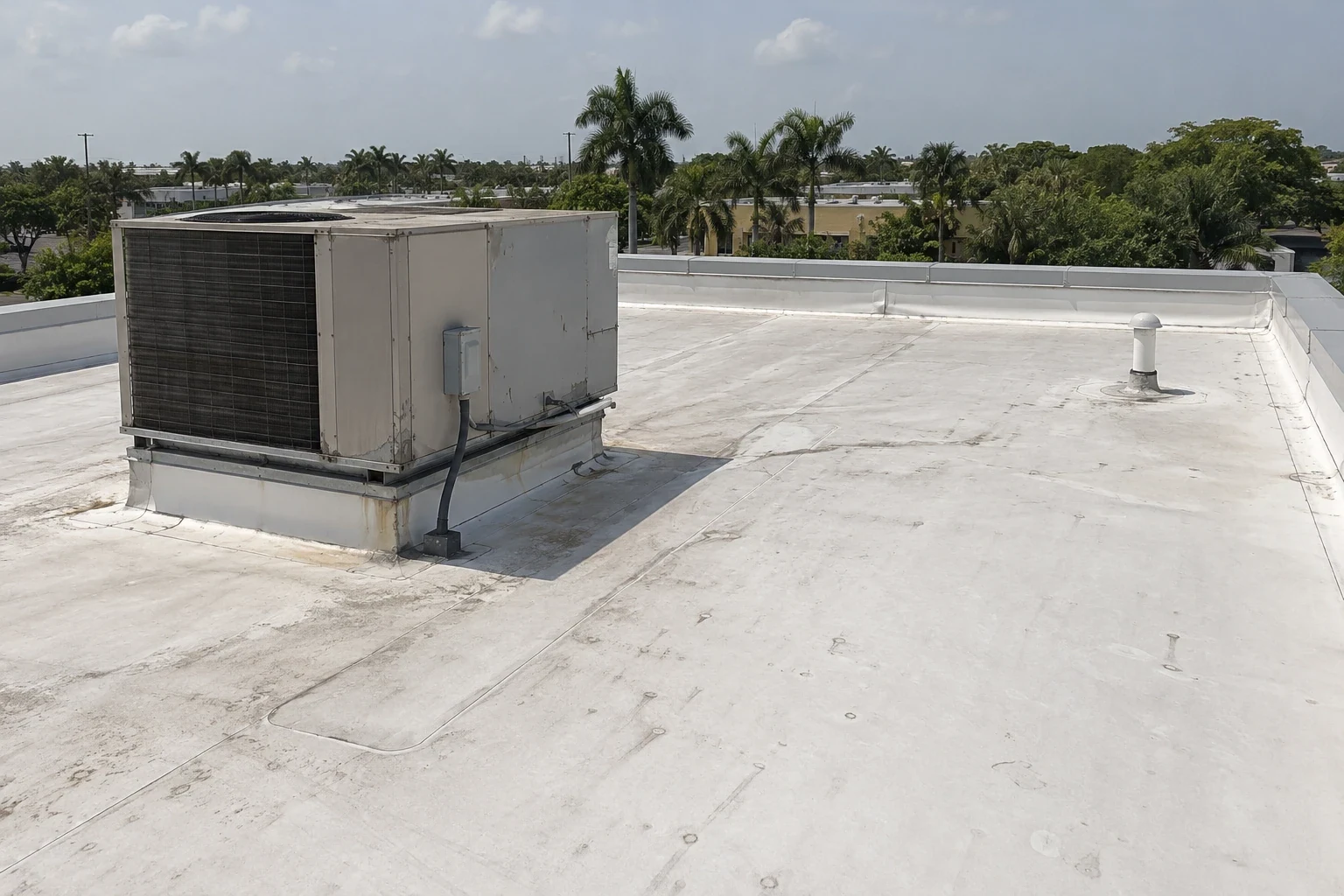
We look for signs of repeated thermal movement: pulled flashing at curbs, wrinkles that run toward a restraint, tape that has crept from its seam and sealant that has hardened. Those signs show where the heat path is working hardest, and they guide where we probe first. A roof with a high amount of rooftop equipment concentrates that movement around each curb.
Dirt and algae film can hide the first signs of splice distress, so we clean a small test area before reading the surface. A membrane that looks uniformly gray may show a lifted edge only after cleaning.
Splices, tape, and seam adhesive
EPDM sheets are joined at splices with tape or liquid adhesive, and the splice is the usual place where the system opens. We press along each lap, looking for fishmouths, lifted edges and a tape line that has lost grip. Where a splice has failed, the repair is a cleaned, primed and re-bonded joint, not a layer of sealant over a dirty edge.
Surface condition decides what bonds. Old EPDM develops a film of dirt and weathered rubber that must be removed before any patch will hold, so cleaning is part of the repair, not an extra. We note the method, the product and the date, and we photograph the finished splice, because a repair that cannot be found later cannot be checked later.
Where tape was used on the original splice, we check whether the tape line is intact along its full length, since creep at one point suggests movement along the whole lap.
Shrinkage at corners and curbs
As EPDM ages it can shrink, and the strain concentrates where the sheet is held: inside corners, around penetrations and along parapet bases. A membrane that has pulled tight over a curb can lift its flashing and leave a gap. A sheet that has shrunk away from a wall can expose the termination.
We check the sheet at every restraint for tension, bridging and lifted edges. If shrinkage is limited to a few details, the repair may be new flashing with slack built in. If shrinkage appears across the field, the membrane is nearing the end of its useful life, and the discussion moves to restoration or replacement. The City treats the Washington Park Industrial Area as a distinct redevelopment area, and any long roof section there deserves a check of its far corners, as do buildings on Johnson Street near US-441.
Ballast, adhesive, and mechanical attachment
EPDM may be ballasted with stone, fully adhered or mechanically fastened, and each method asks a different question. A ballasted roof hides the sheet under stone, so we look at where stone has moved and exposed the membrane, and at whether drains are buried. An adhered roof is tapped for loose areas. A fastened roof is checked for fastener backout along the seam plates.
The attachment also affects repair access. Ballast must be moved to see the membrane and put back afterward, and the deck below must tolerate the stacked stone. We plan that sequence before work starts. For a TPO roof or a modified bitumen roof, the attachment question has different answers, which is one reason the system is identified before a repair is chosen.
Ponding tolerance and drainage
Hollywood's heaviest monthly rain, 8.84 inches in June by NOAA normals, arrives with the early wet season, and September adds 8.67 inches. NWS puts the stormiest part of that season between mid-May and early July. EPDM tolerates standing water better than some membranes, but that does not make ponding harmless. Dirt collects at the pond edge, seams carry extra load and drains that never work properly shorten the roof's life.
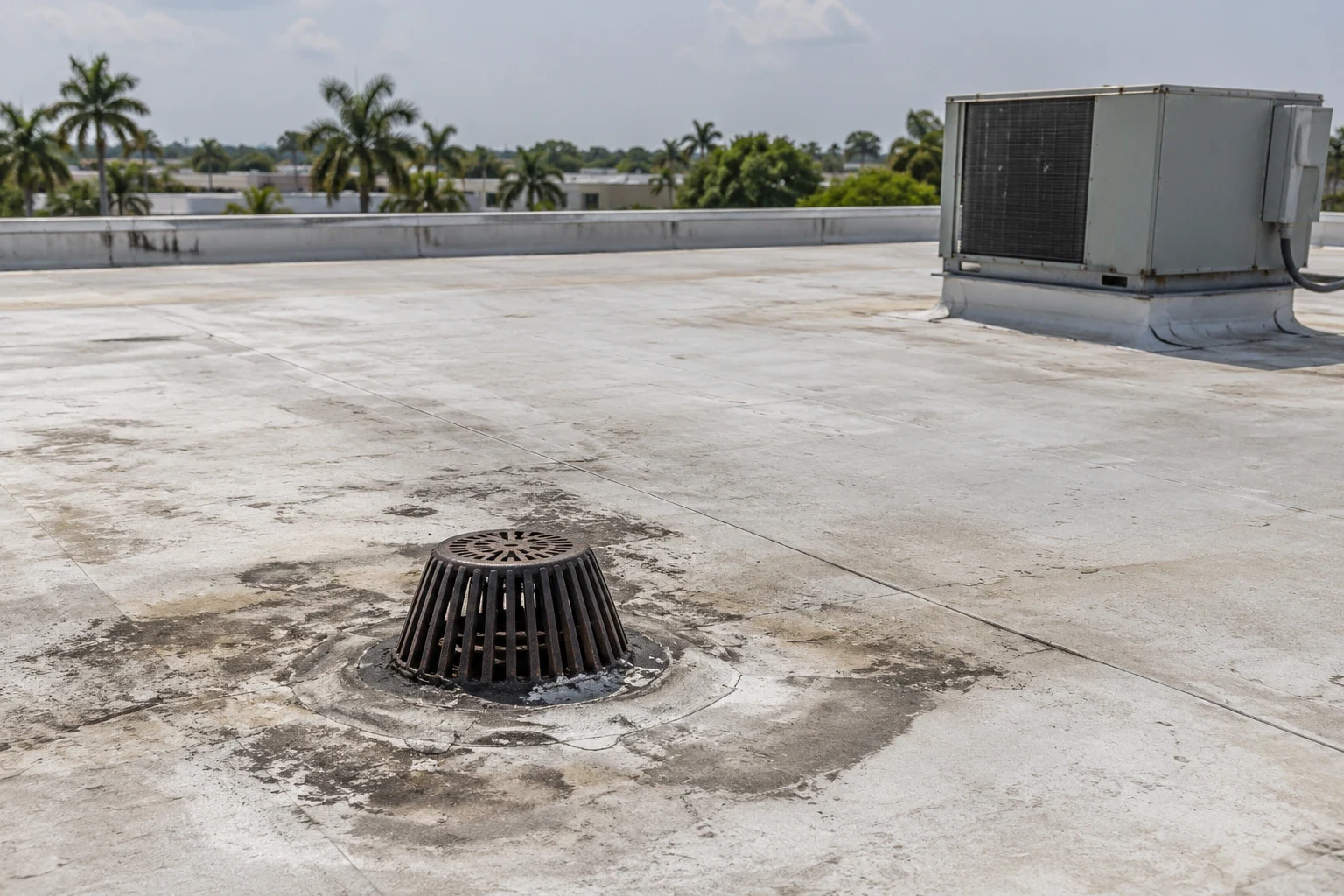
We measure ponding depth and how long it lasts, then look for the cause: a drain bowl that sits high, a scupper blocked with debris, a deflecting deck or compressed insulation. A drain and scupper review often removes the cause without touching the membrane. When slope is the problem, tapered insulation can be added during a recover.
Repair, restoration, or replacement
The findings sort the roof. Isolated splice and flashing defects over dry insulation call for repair, and a membrane puncture repair may be all a single damaged area needs. A sound but weathered sheet may take a coating system suited to EPDM. Widespread shrinkage, repeated splice failure or saturated insulation points toward replacement. A moisture survey separates these cases.
What a job costs depends on how deep the tear-off goes, how much insulation is replaced, how many penetrations are flashed and when the building lets us work. Because EPDM is often compared with other single-ply sheets, a price for the same roof section on a Carlisle SynTec system can sit beside one for a different membrane. Ownership receives the readings and the cost of each path.
Condition records and watch lists
EPDM roofs reward a steady record. We log splice repairs by location, flashing replacements by date and shrinkage observations by detail, and we photograph each from the same position at every visit. When a section is placed on a watch list, the report says what to look for and when, so a small change is caught before the next wet season.
The file also supports decisions that reach beyond the roof. A property manager can show an insurer what has been repaired, a lender what is monitored and a buyer how the membrane has behaved. If the record shows repeated repairs in one area, it supports replacing that section rather than repairing it again.
Records are only useful if they are read. We deliver a short summary on top of the full file, with the three or four items that most affect budget or risk, and we ask the manager what decision the next visit should support.

