Need this roof reviewed?
Commercial membrane puncture and foot-traffic damage repair in Hollywood, FL: punctures located, patched, tested and protected with walk pads and clear records.
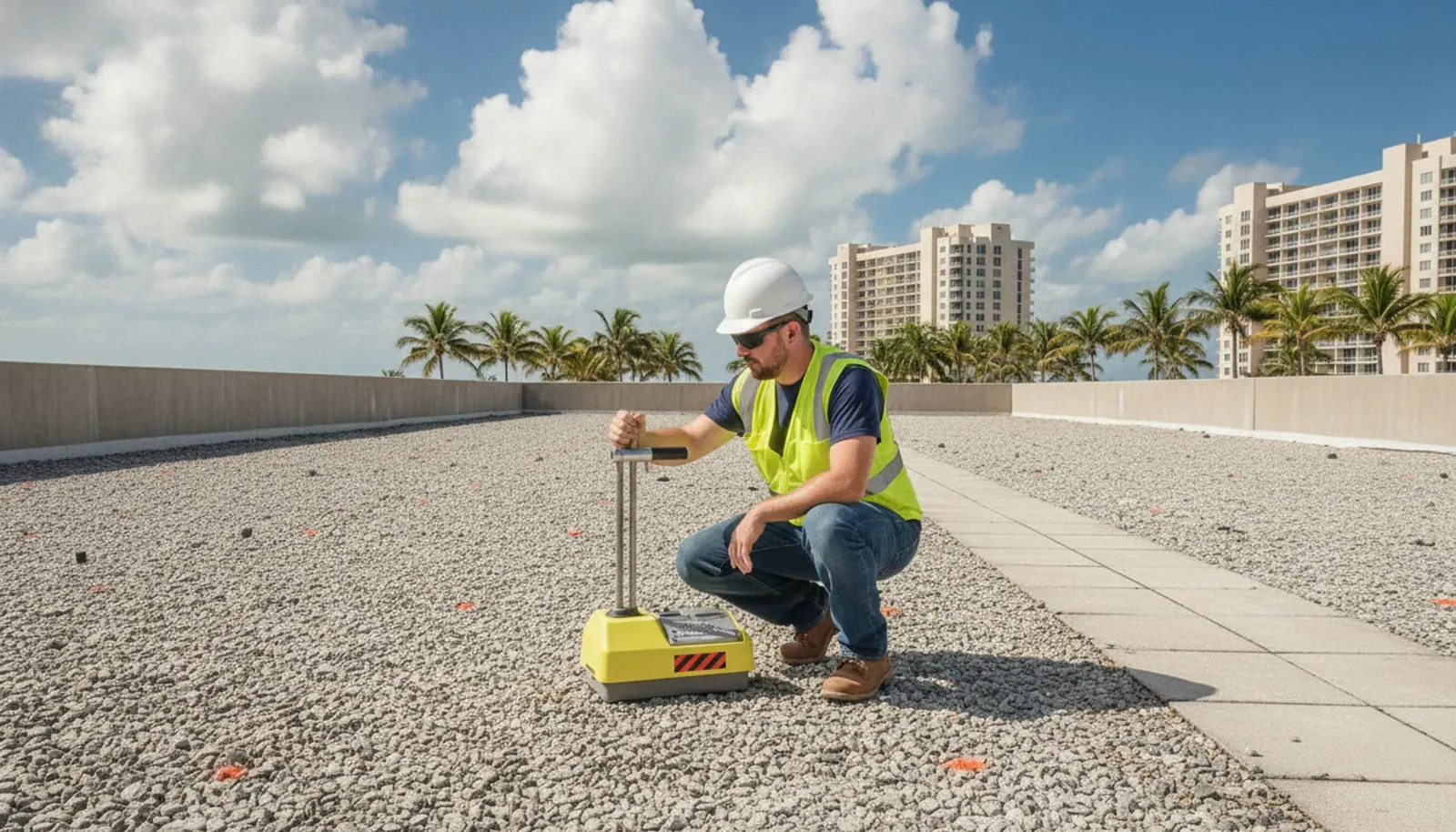
A puncture is a small hole with a large consequence, because it opens the assembly directly to rain and lets water spread through insulation before it shows indoors. Commercial Roofers Hollywood locates and repairs membrane punctures and foot-traffic damage on commercial roofs in Hollywood, FL. The causes are ordinary: a dropped tool, a screw head, a ladder foot, a vendor crossing a seam with a cart, hail or windblown debris, a rooftop unit cover that scraped across the surface. The work is to find every opening, patch it properly, check what water has done below, and then protect the route that caused the damage.
Locating the openings
Visible punctures are the easy part. Many are small, and some sit under dirt or ponded water. We clean suspect areas, inspect with a low-angle light and photograph each mark with a scale. Where the interior shows leaks that the surface does not explain, an infrared moisture survey maps wet insulation, and the survey points to the areas where punctures are likely. On suitable membranes, electronic leak detection can pinpoint openings that cannot be seen. Each opening is marked on the plan with a number so the repair record can account for every one, and so a reviewer can tell that none was skipped.
On older roofs with many previous repairs, the search includes the patches themselves. A patch that lifted at one corner can leave an opening as small as a pinhole, and a patch laid over a puncture without cleaning may never have bonded. We probe the edges of each patch, note which are sound and which are suspect, and include the failed ones in the same numbered list as the original punctures.
Where foot-traffic damage collects
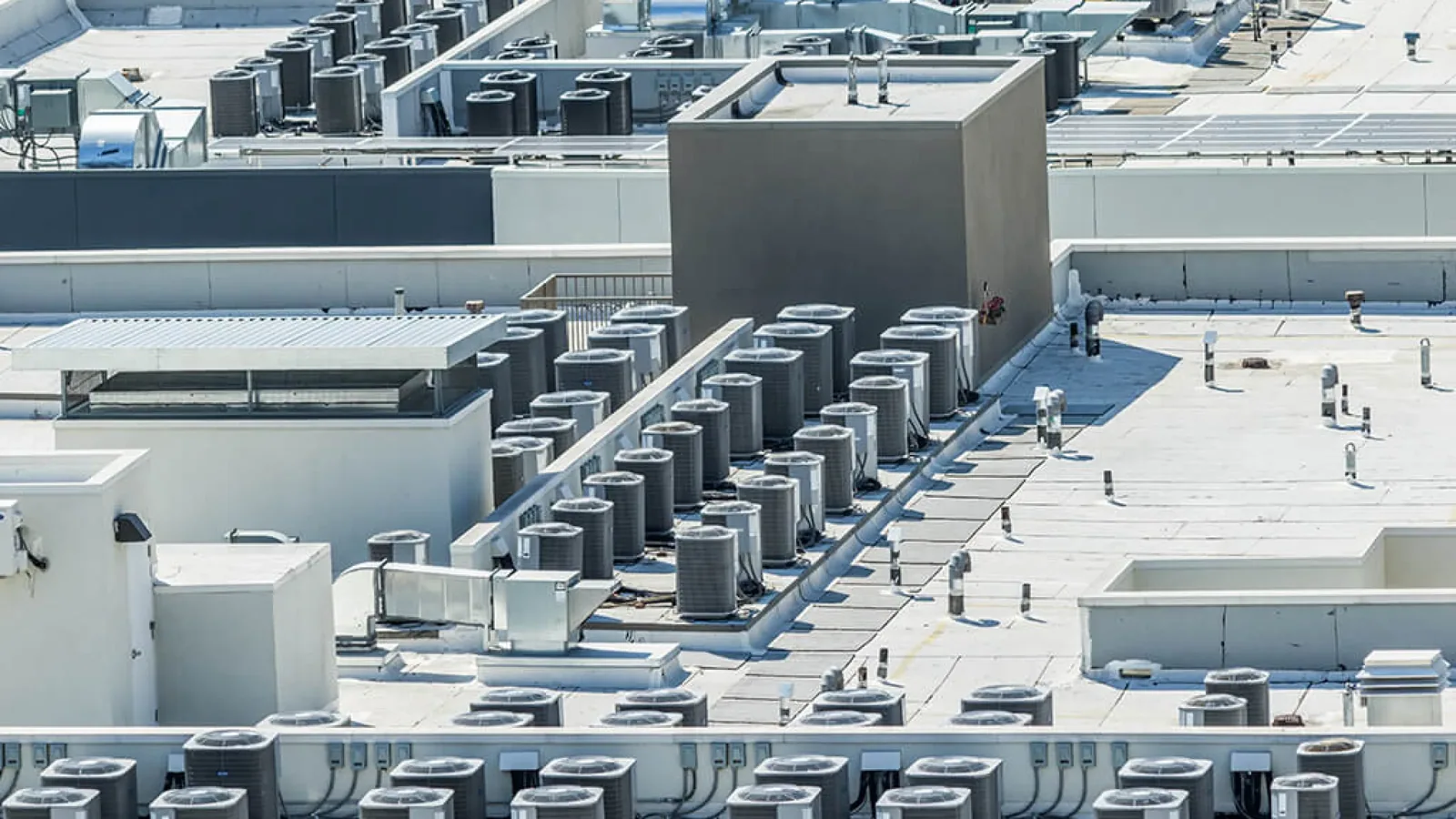
Damage concentrates along routes. Technicians cross the roof to the same rooftop units, delivery crews reach the same hatch, and vendors cross the same seams. Footprints show up as scuffed lines, thin spots, crushed insulation and cut edges. We map the routes by looking at wear, ask who uses the roof and why, and photograph the trail. The map tells us where walk pads belong, where a hatch landing needs protection and where equipment access should move. A roof that gets frequent service is often more worn than one that does not, and the wear pattern shows which tasks cause it.
Patching methods and compatibility
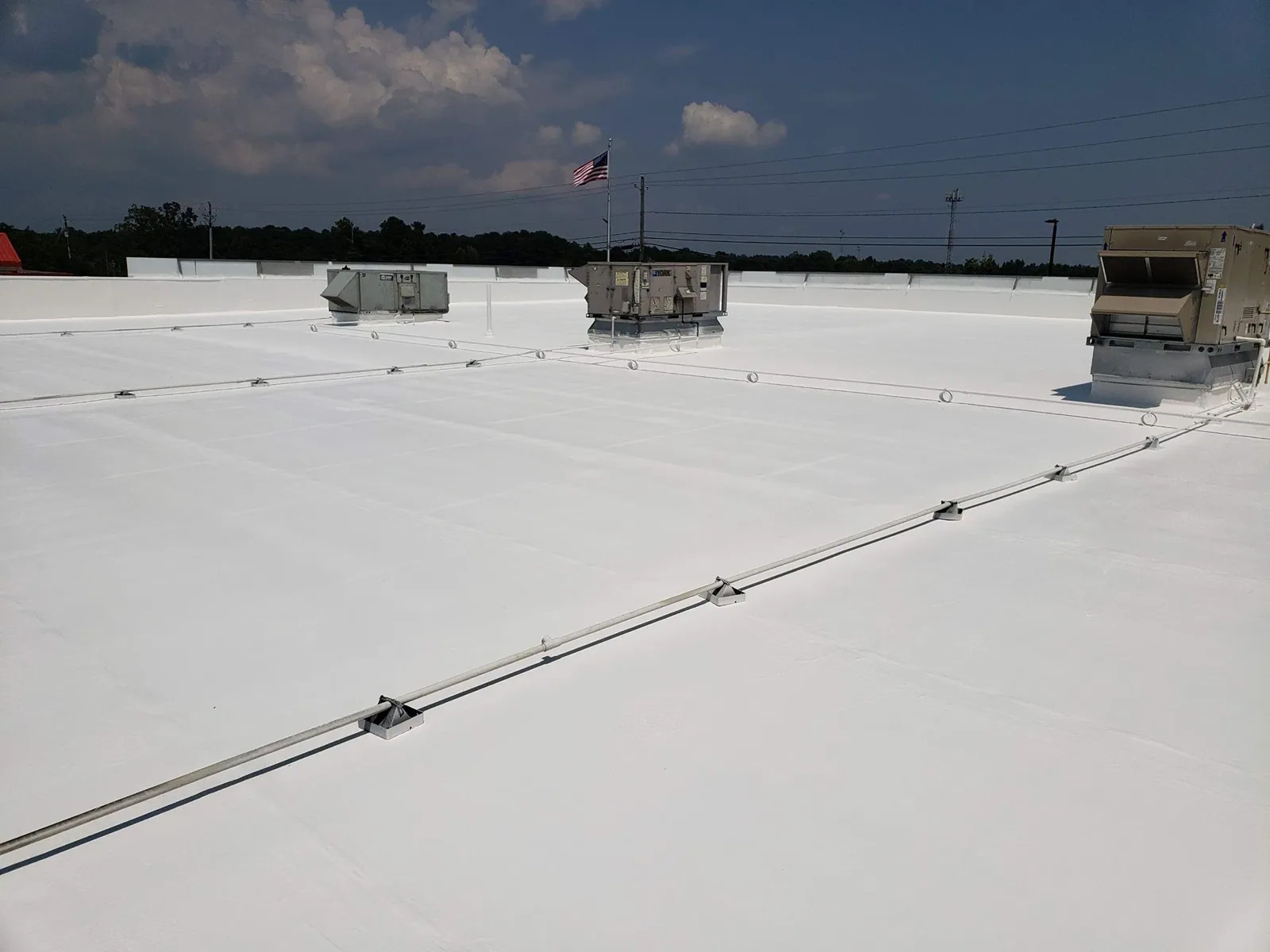
A puncture repair has three requirements: a clean surface, a compatible material and a patch large enough to bond beyond the damaged area. We cut away torn or frayed membrane, clean and prepare the surface, and install a patch that extends well beyond the edges with rounded corners so they do not lift. The material must match the membrane type, since a patch that does not bond will leak within a season. On welded systems, the patch is heat-welded and probed. On adhered systems, it is bonded with compatible adhesive and rolled. On bitumen systems, it is set in compatible material and sealed at the edges. Metal punctures are sealed with a compatible patch or mechanical closure and checked for corrosion.
Tools matter on the roof as well. We use blunt probes, soft-soled footwear and padded kneeling mats while working, and we set down materials on protection boards. A repair crew that damages the membrane while fixing it undermines the job, so the practice is part of the scope, and it is documented with photographs of the protection in place.
Temporary patches and the permanent repair
When a puncture is found during a leak, the first job is to stop water. A temporary patch, whether a sealed tape, a mastic patch or a cover sheet, can be applied quickly, often in the same visit as the diagnosis. It is labeled temporary in the work order, with photographs and a note of when to revisit. The permanent repair follows once the surface is dry, the insulation has been tested and the right materials are on hand. Emergency roof repair response runs around the clock for leaks that cannot wait. Keeping the two entries separate is more than bookkeeping: it ensures that a temporary patch is revisited, and it keeps the record clear for an insurer or a landlord.
Many punctures are found after a storm, when debris has been blown across the roof. In that case, the pattern of damage and the debris itself are photographed before cleanup, because the distribution helps separate storm damage from foot traffic. A storm damage roof repair scope follows the same evidence-first sequence. Debris is removed afterward, drains are cleared and the surface is inspected a second time for marks that were hidden under the material.
What the water did below
A puncture that has been open through several storms may have wetted insulation, and a patch over wet insulation traps moisture. We test around each puncture with a moisture meter, take a core sample if readings are high and decide whether the wet area can dry under a vented patch or must be cut out and replaced. Openings left through a wet season, with Hollywood's June and September rain near 8.8 and 8.7 inches, often reach this point. If insulation is replaced, the new section is tied into the existing with a clean tie-in width and photographed. The repair boundary becomes the wet area, not the visible hole.
Protecting the route afterward
Repairing a puncture without protecting the path invites the next one. We install walk pads along service routes and at hatch landings, mark no-step zones near seams and drains, and recommend that vendors sign in and photograph what they touch. Equipment covers and stands are checked for sharp edges. With August afternoons near 89.9°F, a hot membrane is softer and more easily marked by foot traffic, which is a reason to keep traffic off in the afternoon where possible. Rooftop equipment work follows the same discipline as rooftop equipment curbs and supports, with the roof treated as a work surface that needs protection.
Written rules for roof access cost little and prevent much. A sign-in sheet at the hatch, a photograph of any new mark and a requirement that vendors report damage right away turn an invisible problem into a record.
Busy districts and shared roofs
Puncture risk is highest on roofs that people use. Buildings in Downtown Hollywood, where event days can change deliveries and access, and in the Hollywood Beach Business District, which lists events on the Broadwalk among its concerns, can have rooftop uses such as signage, antennas, mechanical equipment and terraces. Each use adds visitors to the roof. A property manager can reduce damage by controlling who goes on the roof and by logging each visit. Damage from seam failure and hail can look similar at a glance, and a proper inspection tells them apart.

