Need this roof reviewed?
Commercial storm damage roof assessment and repair in Hollywood, FL: emergency dry-in, wind and debris evidence, documented findings and repair scopes.
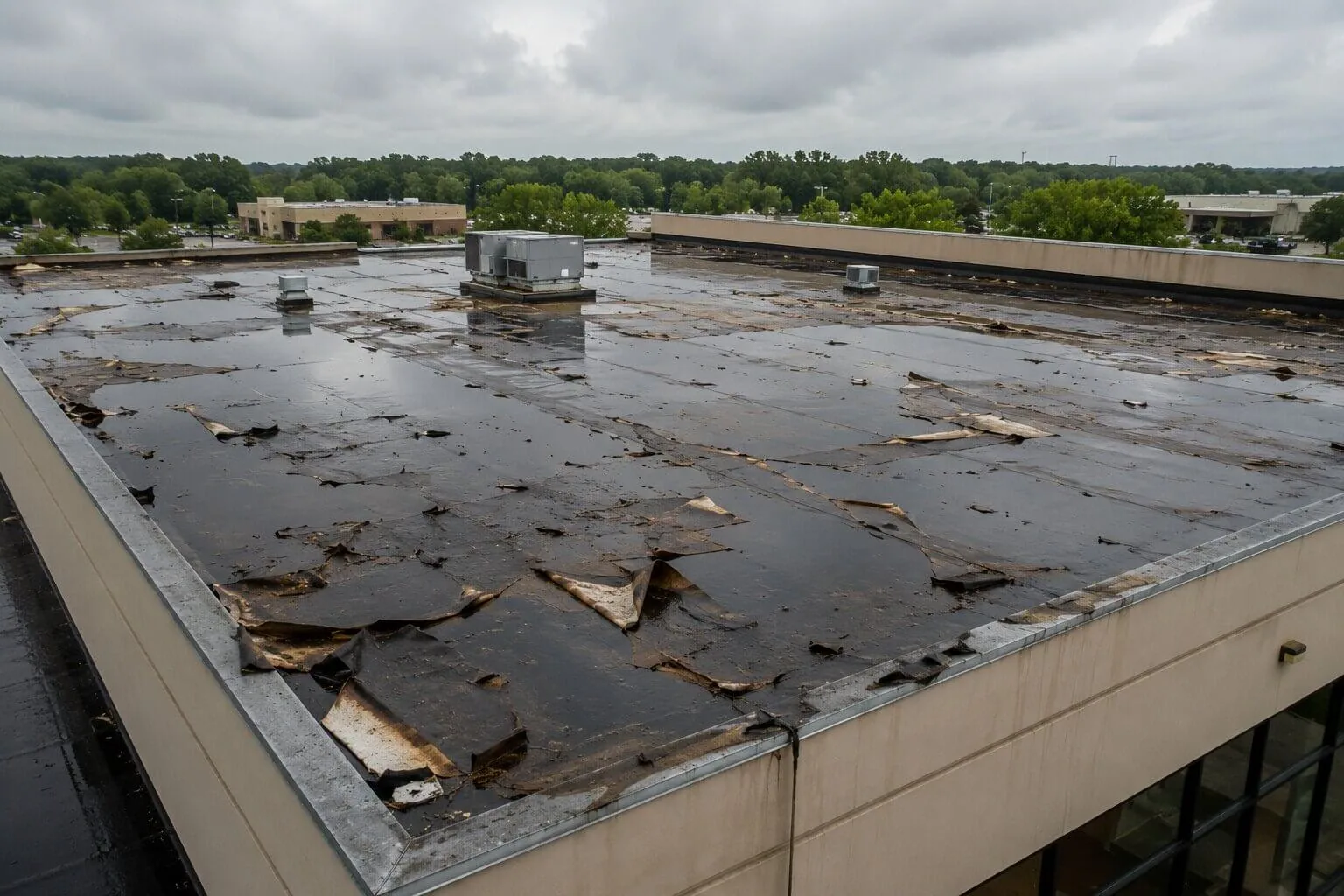
Storm damage on a commercial roof shows up as specific evidence: edge metal lifted or missing, membrane torn at a fastener line, flashing pulled from a wall, debris marks on the surface or water staining in places it did not appear the week before. The National Weather Service describes the stormiest part of the South Florida wet season as running from mid-May into early July, when damaging winds, tornadoes, lightning, hail and flooding are most likely. That context tells a property manager when to be ready.
We answer that question on the roof. The first visit stops active water entry, records what the storm left behind and separates fresh damage from older wear, so repairs and any claim rest on observed conditions.
Emergency Dry-In
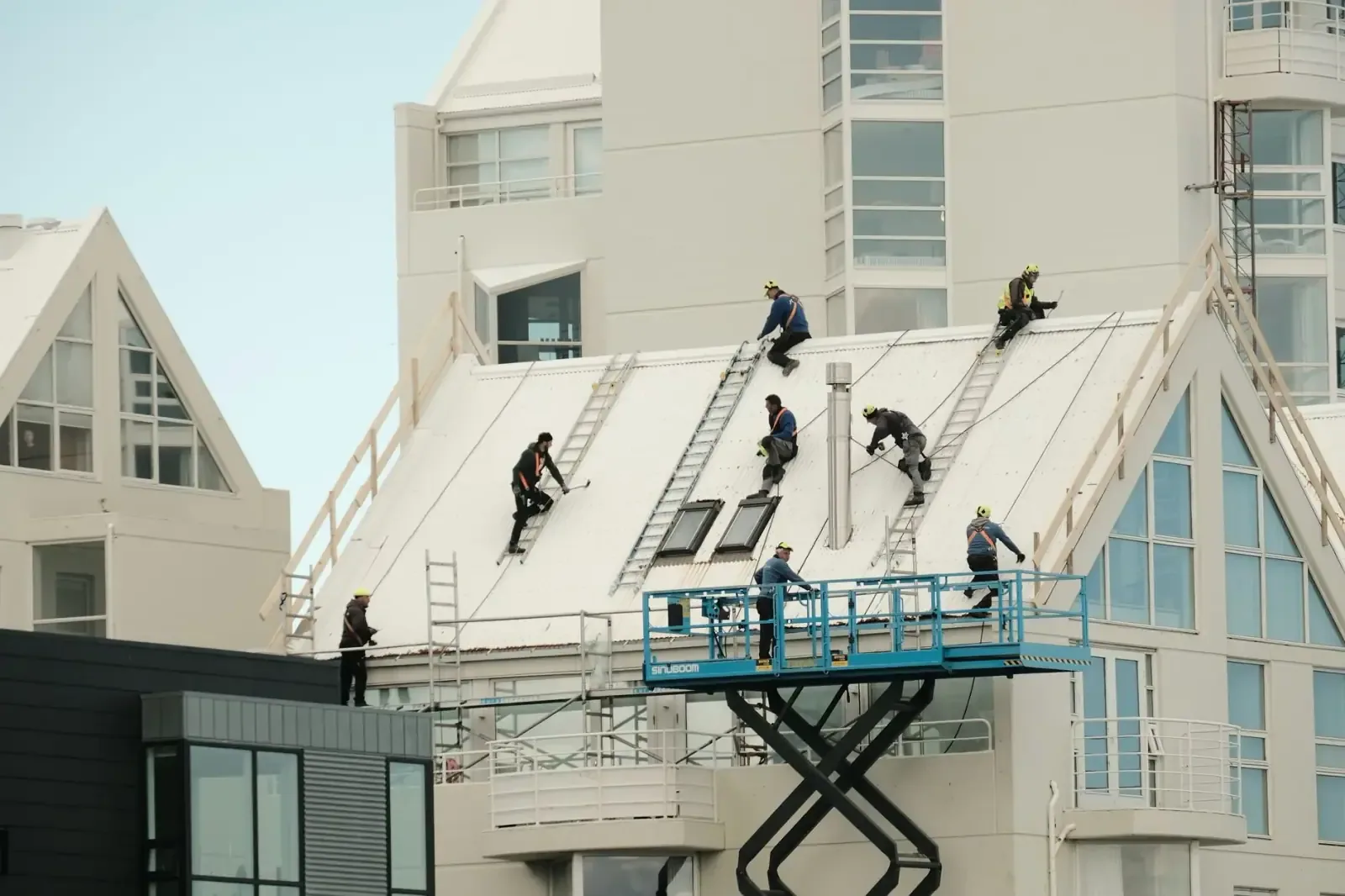
The first job after a storm is to stop water from reaching the interior. That may mean a temporary patch over a puncture, a sealed tarp over an opened section, rebuilt edge flashing or a cleared drain. Temporary work is labeled as temporary in the report. It buys time while permanent materials are ordered and the surface dries enough for proper adhesion.
Safety shapes the approach. We check for wet decking, saturated insulation and sagging ceilings below before anyone walks a questionable section, and we do not work around lightning, standing water on a deck or open electrical gear. Our emergency roof repair response runs around the clock, holidays included, because storms do not follow business hours.
Interior protection matters as much as the roof patch. Sheeting over equipment, moving contents away from drips and placing collection containers below leaks reduce loss while the roof is being secured. We note each protective step in the report, because it is also part of the owner's duty to limit further damage.
Reading Wind and Debris Evidence
Wind leaves a pattern. Uplift lifts the roof at its perimeter and corners first, where pressure is highest, so we start at the edges. We look for displaced coping, bent or missing edge metal, billowed membrane that has pulled off its fasteners and torn flashing at walls. A fastener line with a row of elongated holes tells us the sheet moved.
Debris leaves a different pattern: punctures, gouges and dents in equipment housings, often in a line that matches a wind direction. We photograph each mark with a scale and place it on a roof sketch. The sketch also records wind direction on the day, when known, so the pattern of damage can be read against it. Where age or foot traffic caused a mark, the report says so. Sorting marks by cause keeps the findings credible, and it keeps the repair aimed at storm damage instead of a general renovation. After a larger system, hurricane roof damage calls for the same sequence on a bigger scale, with more attention to attachment and to water that has traveled inside the assembly.
Our wind damage repair approach builds on this sequence: edges, field, penetrations, then interior.
Rain, Tides and Compound Flooding
The citywide vulnerability assessment weighs sea-level rise, tidal and surge flooding and compound flooding, and the stormwater program models how rainfall and tides interact. For a roof, the practical point is drainage: a heavy rain arriving when downstream systems are already high puts the maximum demand on drains and scuppers, and any outlet that is blocked or undersized shows itself quickly.
After a storm we check ponding depth and duration, look for debris packed into strainers and confirm that overflow scuppers are open. Water that stood against a parapet for hours can push through weak flashing, leaving a stain pattern that follows the wall. Those marks, matched to the roof layout, show the water entry point more reliably than the ceiling stain alone.
Wet insulation is the quiet cost of a storm. Water that enters at a torn seam spreads sideways through the boards, so a small opening can wet a large area. Moisture meters and thermal imaging find the extent, and wet boards come out before a permanent membrane repair, because a patch over trapped water will blister.
Where Storm Exposure Differs
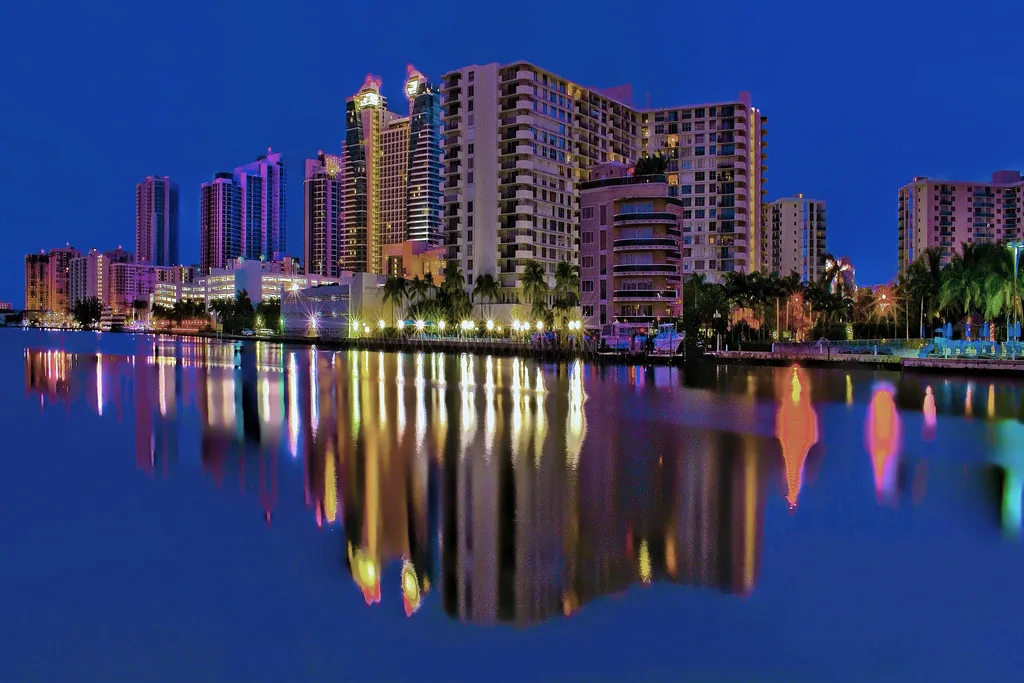
Exposure varies across Hollywood. The city's flood information treats the eastern part of town, including areas east of US-1, as especially important in flood-map review, and the Hollywood Beach Business District sits near the Atlantic with a mix of hotels, cottages and other buildings. A roof right beside the water meets wind and salt air differently from one several blocks back from it.
We do not assume every property has the same risk, and a clean report on one building says nothing about its neighbor. We read each roof for its own edge condition, drainage and attachment, whether it sits in the Beach business district or in the Historic Hollywood Business District along Hollywood Boulevard, and the repair scope follows what the evidence shows. Parapets, tall walls and rooftop equipment each change where wind loads concentrate, so the walk includes a look at what stands above the roof as well as what lies on it.
Permanent Repair Scope
Permanent work starts once the surface is dry and the damage is documented, usually after a second visit to confirm that temporary measures held through the next rain. Typical items, in the order we usually address them, include replacing torn membrane sections, re-securing or replacing edge metal, reflashing walls and curbs, restoring wet insulation and correcting drainage. Each scope names the materials, the attachment method and the details at transitions.
Permanent repairs have to satisfy the current state building code, and Hollywood's building division reviews work that needs a permit. We confirm whether a repair needs a permit and what attachment requirements apply before work begins. When damage is widespread, we compare repair with replacement and price both, listing cost drivers separately: tear-off, insulation, deck repair, edge metal, penetrations and access.
Documentation for the Owner
Every storm visit produces a file: dated photographs, the sketch with numbered findings, a description of temporary measures and a scope for permanent repair. The file serves the owner whether or not an insurance claim follows, since lenders, buyers and tenants also ask what a storm did to the building and what was done about it. If a claim is filed, our claim documentation support organizes the same evidence for the adjuster's visit.

