Need this roof reviewed?
Roof inspections, repairs and replacement planning for property managers with several buildings in Hollywood, FL, using comparable photo records.
A June downpour and a late-summer heat run reach every building in a portfolio in the same week, yet the water entry points differ from roof to roof, and a manager with a dozen addresses needs a way to compare them. Commercial Roofers Hollywood works with property management companies that run multiple buildings in Hollywood, FL, and the work starts with one repeatable record: the same photograph sequence, the same roof zones, the same list of open items at every address. Once every building is put in the same terms, a manager can see which roof needs money now, which can be watched, and which is simply carrying its age without a defect.
A seasonal cadence for many roofs
On average Hollywood sees 8.84 inches of rain in June and 8.67 in September, and the weather service places the stormiest wet-season weeks between mid-May and early July. That calendar suggests two visits: one before the wet season, when drains, scuppers, edge condition and membrane transitions are cleared and photographed, and one after the heaviest months, when the ponding depth, new staining and storm debris are recorded. A shorter heat check follows summer, since the August average daily maximum of 89.9°F loads the surface temperature of dark and light membranes alike. The visits are scheduled by building type and tenant hours, so a manager receives one calendar instead of a dozen separate requests.
Records that compare buildings
Comparison needs consistency. Each roof is divided into zones, each zone is photographed from a fixed position, and each finding is tied to a location on a plan: a drain bowl with debris, a seam with a lifted edge, a curb flashing with a gap. We record ponding depth and how long it lasted after rain, and we note which assembly layer the evidence points to. The result is a table a manager can sort: active water entry points first, drainage defects second, surface wear third. When a repair is made, the same position is photographed again, so the file shows whether the repair held through the next season. This is the working format behind our roof condition reports.
Drainage plane checks that scale
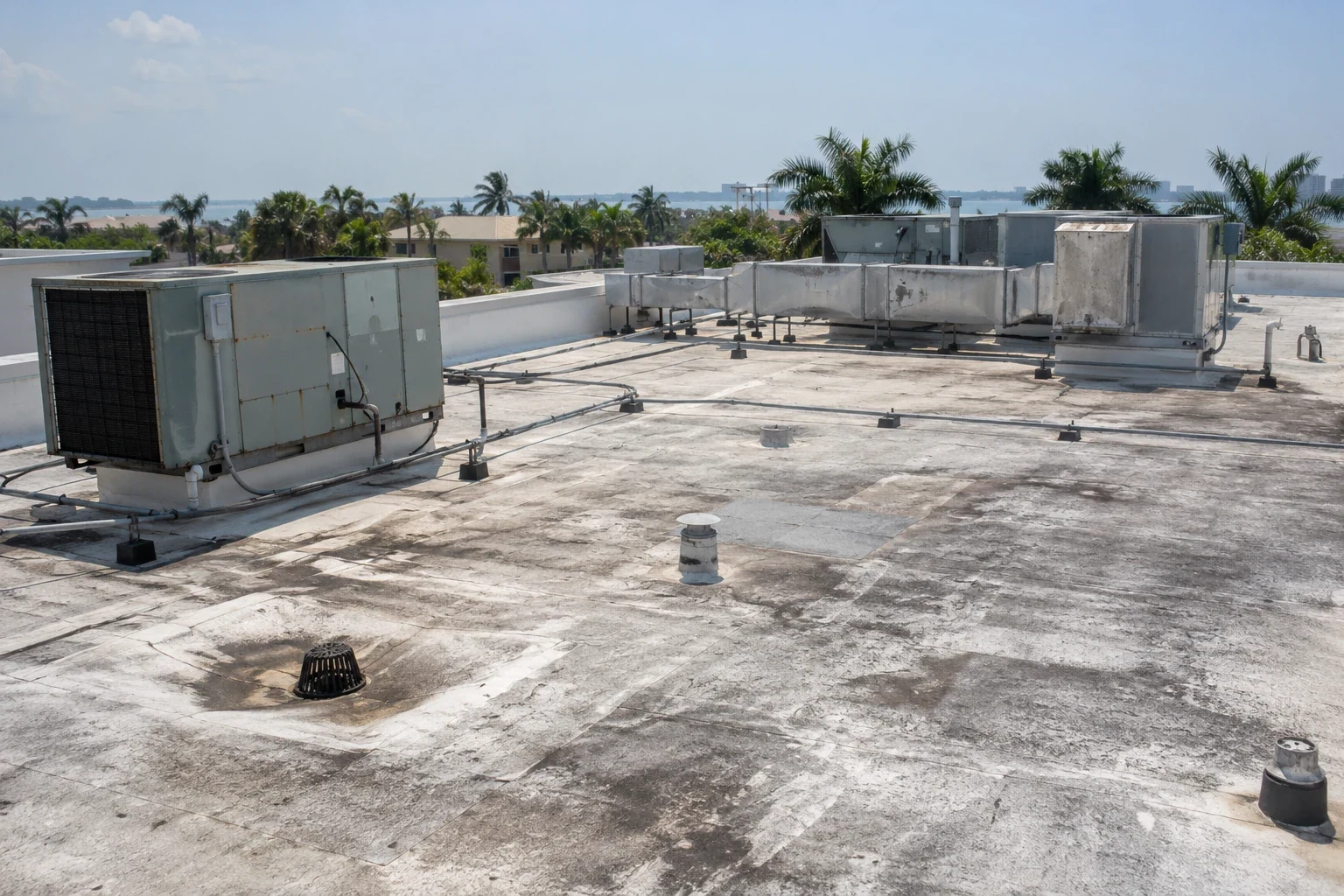
Most roof complaints in a wet climate trace back to water that did not leave. On each roof we follow the drainage plane from the high point to the outlet: slope between drains, crickets behind curbs, strainers, scupper throats and downspout discharge. Ponding depth is measured with a straightedge or a level and recorded with the time since the last rain, because a pond that is gone in a day is a different finding from one that remains after three. The city's stormwater modeling pairs rainfall with tide levels, a reminder that the ground side of the outlet matters too, since a downspout that discharges into a full system cannot relieve the roof. For a manager, the useful output is a short list of drains to clear, outlets to add and low spots to correct, grouped by building and priced by the hour or by the item.
Tenant communication during a leak
A leak in an occupied building creates two jobs: protecting the space and finding the water entry point. The first call from a tenant should produce a short log, with the suite, the time, the weather and whether water is active, and we ask managers to start that log before the roof visit. Photographs of the ceiling and the floor under it, taken before cleanup, let us compare the stain with the roof layout instead of assuming the opening sits directly above it. Temporary protection is placed first and labeled temporary, and the permanent repair is scheduled as a separate item. When a leak starts at night, emergency roof repair crews can be on the way.
Districts, closures and deliveries
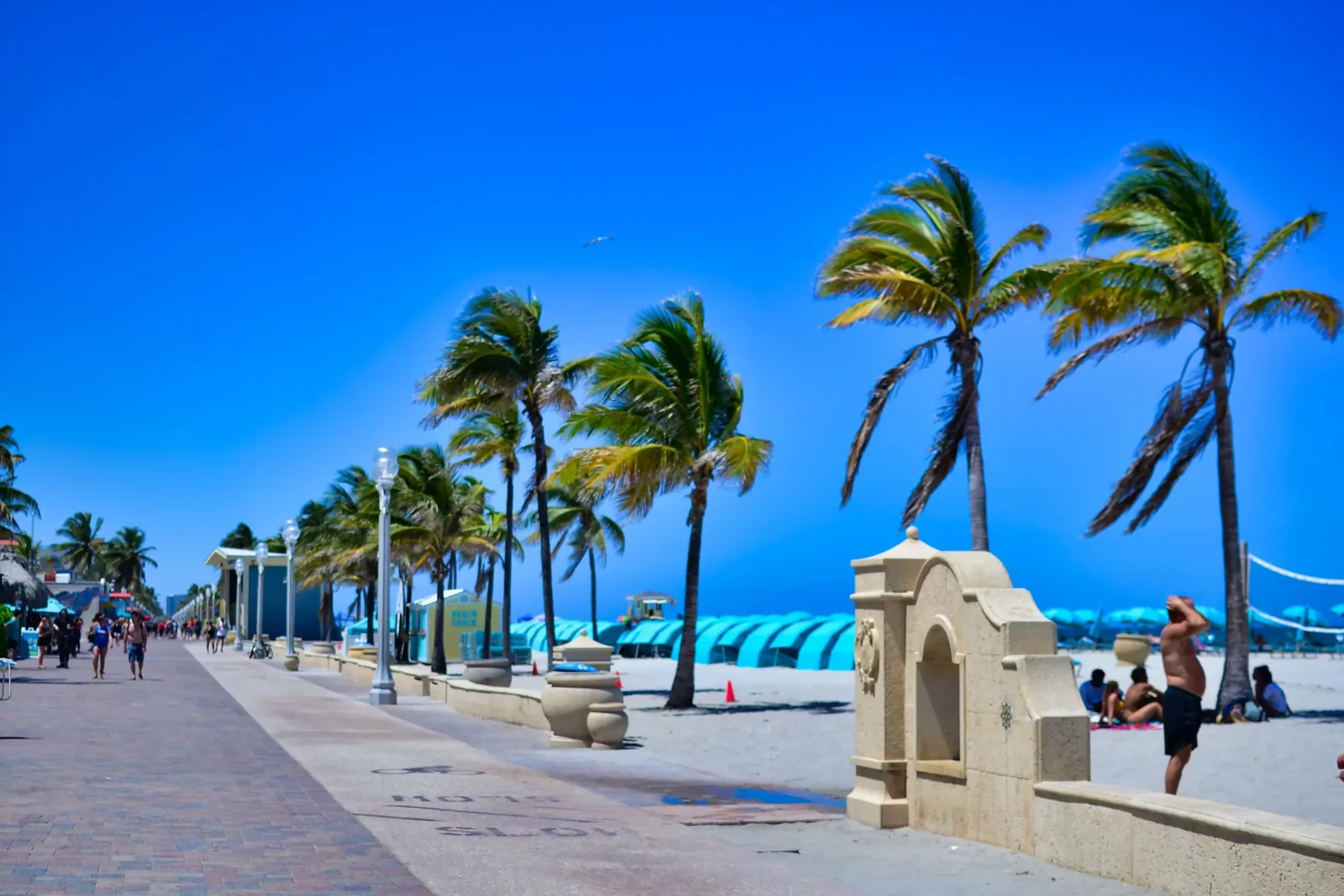
A portfolio rarely sits in one setting. The Johnson Street Business District stretches from 56th Avenue to US-441, while street closures for events in downtown Hollywood, along Hollywood Boulevard from US-1 to 21st Avenue, can disrupt employee access, deliveries and parking. Hollywood Beach adds parking, transit and Broadwalk events to the planning list. A crane pick or a material delivery has to fit the street conditions of its own address, so the work plan names the delivery window, the staging position and the contact on site. For buildings near Downtown Hollywood, event calendars are checked before dates are fixed.
Vendor coordination on the roof
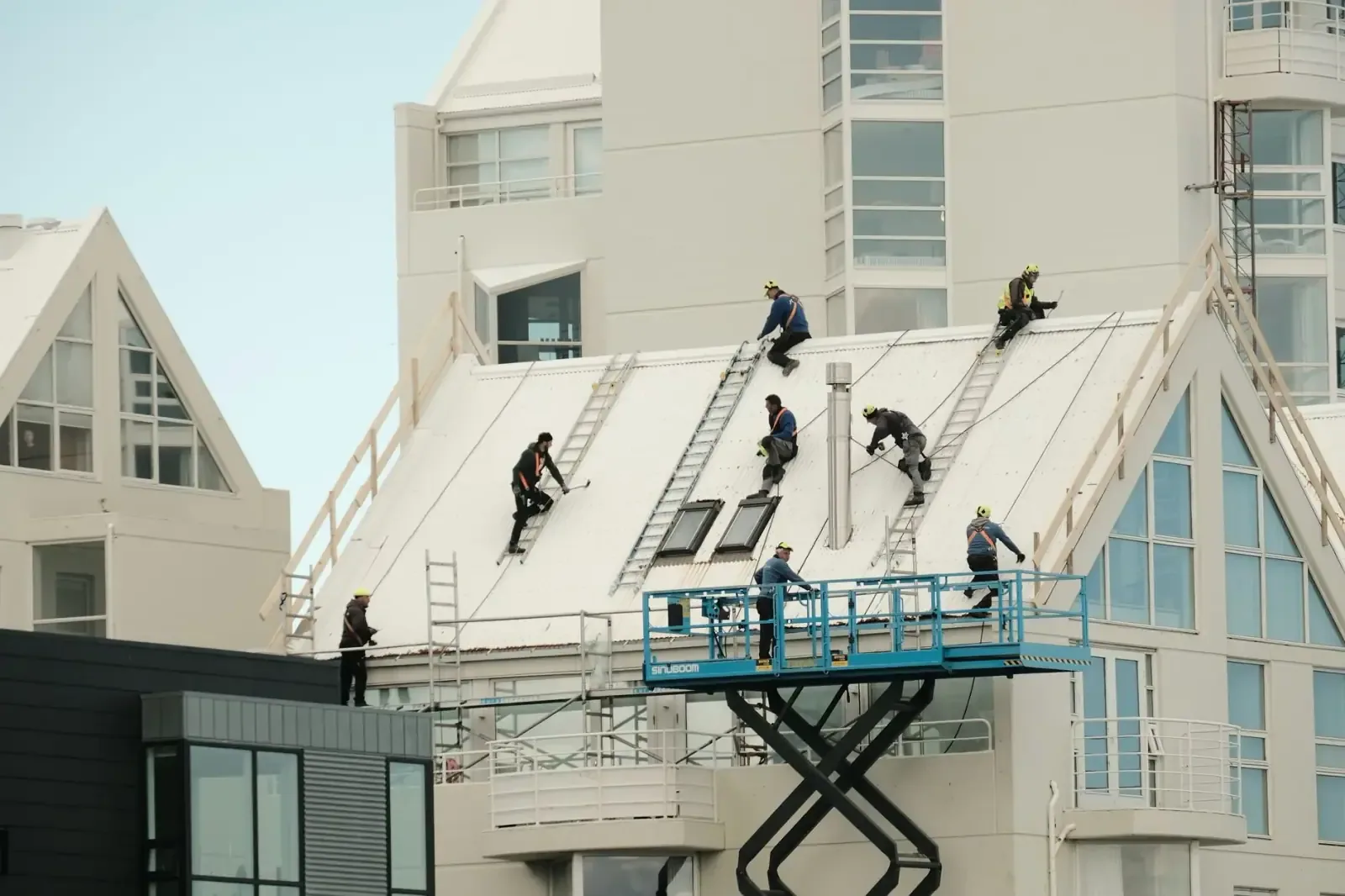
Roofs are shared work surfaces. Mechanical contractors service rooftop units, telecom crews run cable, signage installers drill for brackets and cleaners clear drains, and each visit can leave a cut, a puncture or a displaced cover. A managed roof benefits from a simple access rule: anyone going on the roof signs in, photographs what they touched and leaves the surface as found. We place walk pads along service routes, mark no-step zones near seams and drains, and keep a log of roof visits that explains marks on the membrane later. When a vendor needs a new penetration, the manager routes the request through us, the opening is flashed to match the roof system, and the detail is photographed. That habit alone prevents many of the repeat leaks managers see around rooftop equipment. Hospitality owners run into the same traffic problem on a larger scale, as the notes for hospitality groups show.
From open items to a capital sequence and permit log
After two cycles of records, a portfolio's roofs sort themselves. Some show isolated defects with a dry assembly, which means a localized repair with a defined boundary. Others show wet insulation in several zones or repeated repairs at the same transition, and those move toward recover or replacement. We price each option by what drives cost: roof area, access, number of penetrations, insulation thickness, drainage changes and the hours a tenant can give. The sequence can then be matched to budget cycles through multi-site roof programs, with the riskiest buildings first and the lowest-risk buildings on a watch list.
Permit work in Hollywood runs through the Building Division, which applies the 2023 Florida Building Code (8th Edition) and city ordinances to each reroof or repair that needs a permit. A manager with several buildings benefits from a single permit log: which address needed a reroof permit, which was a repair, who pulled it and when it closed. Properties in a FEMA Special Flood Hazard Area, a list that the city puts at more than 11,000 properties, carry local flood-elevation requirements that can affect equipment placement. We build the permit log into the closeout file. Owners who hold buildings as investments, including real estate investors and REITs, ask for the same log at acquisition and sale.