
Need this roof reviewed?
Multi-site roof programs across Hollywood, FL and nearby cities: one inspection standard, one ranking and one calendar for every building in the portfolio.
Twelve buildings on one maintenance budget invite a familiar mistake: the roof fixed first is the one whose manager called loudest, not the one with the most wet insulation. A program replaces that pattern with a single standard: every roof is walked the same way, scored on the same scale and scheduled from the same list. In the Hollywood, FL area, a portfolio may spread across several cities with different permit offices, flood maps and traffic, while the weather works on every building at once. Summer heat loads the surface and the wet season tests the drains, so the program is timed to the season and written to be read by people who never visited the sites.
One inspection standard across building types
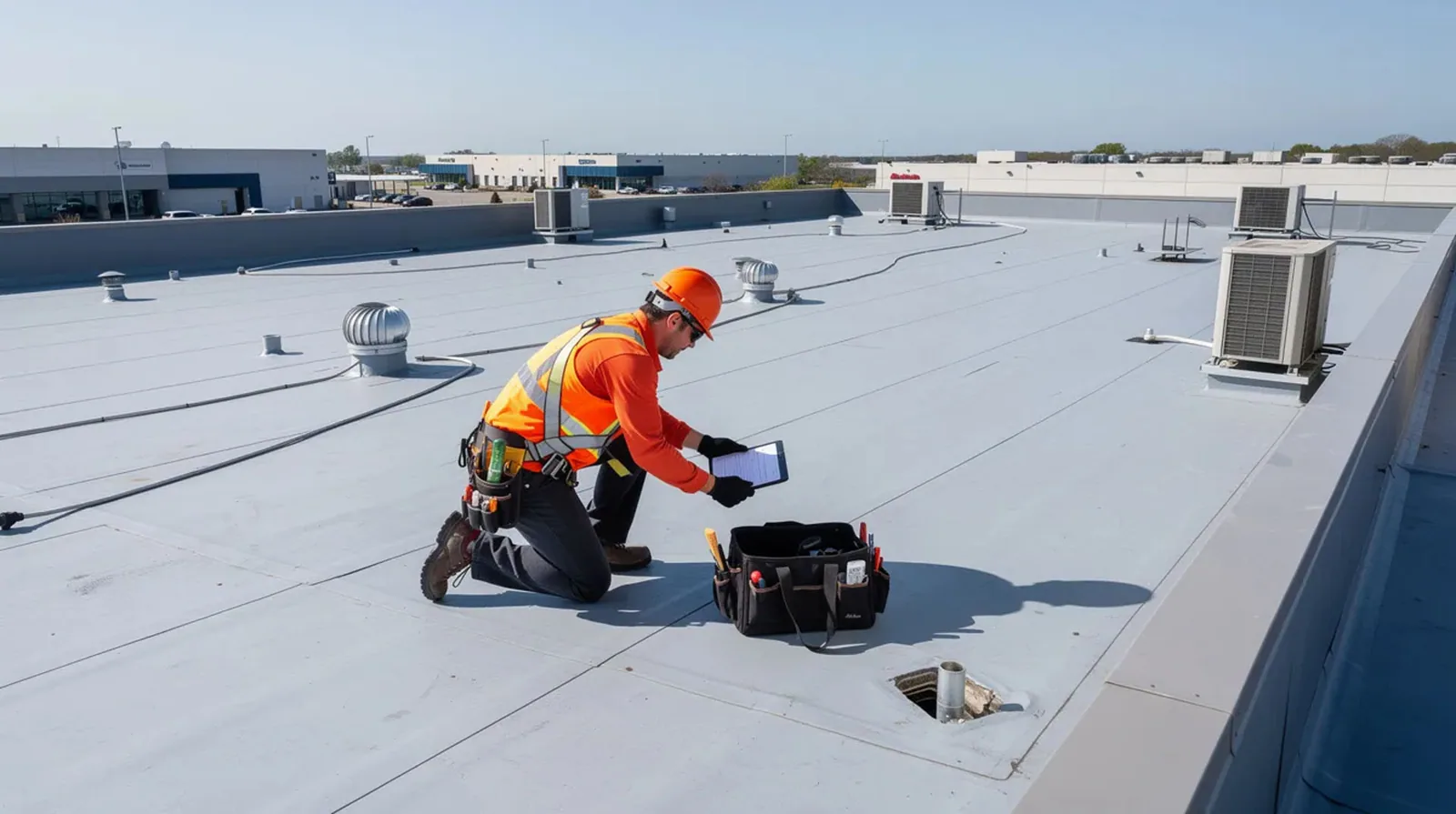
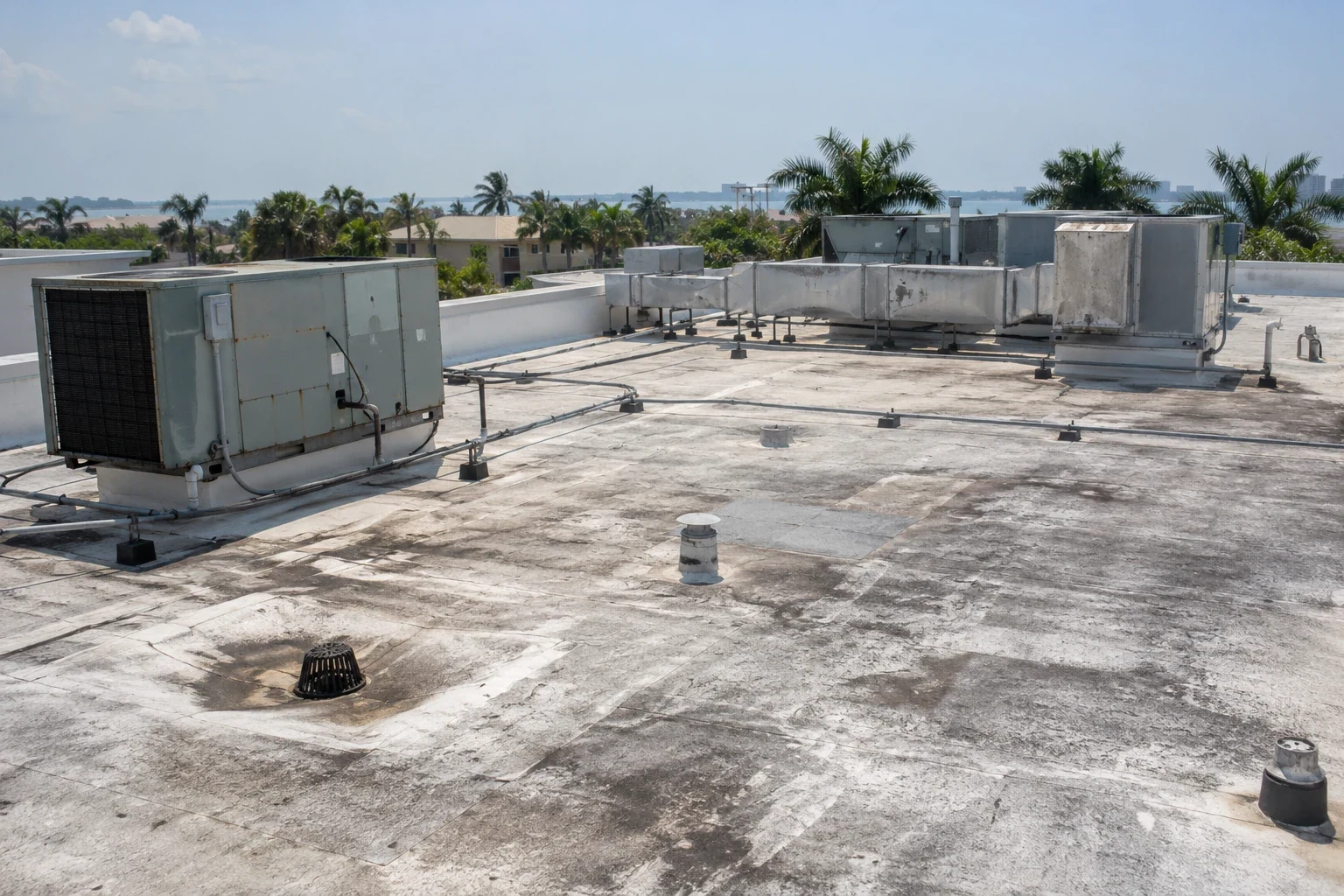
A warehouse, a strip center and a medical office have different roofs, but the questions are the same: where does water go, what is wet, what has moved and what has been repaired. We use a common checklist and a common photograph set for every site, and we add details specific to the building type. The result is a set of reports that can be laid side by side.
The standard also fixes the vocabulary. A "watch" item means the same thing at every building, with a named sign that would move it up, and an "urgent" item means water is entering or about to. That consistency lets a regional manager read across the portfolio without translating each report. It also feeds the roof asset register and the roof condition reports that support each decision.
Each site also receives a baseline set of photographs from fixed positions. The baseline makes later comparison fast, since a manager or a reviewer can open two images of the same spot and see whether a seam, a patch or a puddle changed. Without it, every visit starts over.
A ranked list with reasons
After the first round of walks, we rank buildings by risk and consequence. Risk comes from moisture extent, repeat leaks, seam condition and drainage. Consequence comes from what sits below: stock that cannot get wet, tenants who cannot move, equipment that is costly to shut down. A modest defect over a critical space can outrank a larger defect over an empty one.
Each ranking carries its reasons and the evidence behind them, and it changes when new evidence arrives. The list drives roof capital planning, where cost ranges and timing are set against the budget. Owners can see why a building moved up, which helps defend the spending to a board or a lender.
Ties are broken by timing. If two roofs score alike, the one with the nearer lease event, the older warranty term or the more exposed drainage moves up. The reasons are written beside the number, so a reviewer can disagree with a judgment and still follow it.
Routing visits across neighboring cities
Portfolios in South Broward and northern Miami-Dade cross city lines, and each city has its own building department. Pembroke Pines reports more than 8 million square feet of retail space across 34 square miles, Davie's economic-development office cites over 900 acres of industrial-zoned land, and Miramar names Florida's Turnpike, I-75, US-441 and US-27 as its main corridors, so a portfolio spread across them mixes strip centers, industrial buildings and offices. Those facts describe the places, not any owner's roofs, but they explain why travel planning is part of the program.
We group visits by area: Pembroke Pines and Miramar in one trip, Hallandale Beach and Dania Beach in another. Grouped routes cut travel, keep crews familiar with the buildings and let one lead carry findings from site to site.
Permit practice differs by city, so each site file notes the building department, the typical review steps and any special conditions for the area, such as flood-zone documentation. That note saves time when a repair becomes a reroof and a permit is required.
The seasonal calendar
At the Hollywood station, NOAA normals put June and September rainfall near 8.8 inches apiece, and the stormiest part of South Florida's wet season runs from mid-May into early July per the National Weather Service, so a portfolio calendar should clear the worst drainage items before that window. The program calendar therefore places a drainage and edge walk of every building before that phase, a post-storm check when events warrant and a yearly review of scores and plans after the wet months.
Planned repairs are scheduled in clusters, so a crew can finish several buildings in the same area in one mobilization. Preventive roof maintenance visits fit between the major walks and keep drains clear, sealants sound and records current.
A yearly review closes each cycle. Scores are refreshed, the ranking is rebuilt and the next year's calendar is drawn from it, with repairs sequenced by area and by the wet-season window. Owners see what was spent, what changed and what comes next.
Storm triage across many roofs
After a major storm, a manager with many buildings needs an order of calls. The program supplies it in advance: roofs with known weak points, critical occupants or open watch items are checked first, and the rest follow. Each building has an access note, a contact and a photograph set from the last visit, so the crew can compare before and after.
For active leaks, emergency roof repair is available around the clock, holidays included, and the first visit stops water and protects the interior. Findings go into the same record, and claim documentation follows the format used for every site.
Communication is brief and ordered. The manager receives a short list after a storm: buildings checked, findings, temporary work done and items needing a decision. Detailed reports follow once the roofs are dry and safe to walk.
Tenants, vendors and reporting
A program also coordinates people. Tenants receive notice of rooftop work through the manager, trades that need roof access are told the rules and results go back in one summary the owner can read in minutes. A retail or restaurant chain with many locations can keep a consistent standard from store to store, and logistics operators can align roof work with peak and quiet periods at each facility.
The summary lists what was done, what was found, what changed in the ranking and what is due next.
Vendor access follows a written rule. Mechanical, solar and signage contractors check in before going up, follow the walk routes and report any opening they make, so the roof record stays accurate between visits. Clear rules cost little and prevent many of the punctures that start leaks.
Budget forecasts roll up from the site files. Each building contributes its next-year repair range and its replacement horizon, and the owner sees a total with the biggest contributors named.
Related Roofing Topics

