Need this roof reviewed?
Scheduled commercial roof maintenance in Hollywood, FL: drain clearing, seam and flashing checks, dated photographs and a repair list ranked by water risk.
Maintenance on a Hollywood roof is mostly a matter of keeping water moving before the rainy months arrive. In August the average daily high reaches about 89.9 degrees at the local NOAA station, and June and September each carry roughly 8.7 to 8.8 inches of rain in the long-term normals. Heat softens sealants and flexes seams all summer. Then the downpours test whether every drain, scupper and transition still carries water away. A scheduled visit finds the small failures while they are still cheap to correct.
We keep the visit short and repeatable: clear the outlets, walk the membrane, inspect each edge and penetration, photograph the same positions each time and write a ranked list of what needs work now, what can wait and what simply needs watching.
Seasonal Timing
For South Florida, forecasters place the stormiest stretch of the wet season between mid-May and early July. A pre-season visit in April or early May is therefore the most valuable of the year. It clears debris that has collected over the dry months, confirms that scuppers and drains discharge freely and checks edge metal and flashing before the first heavy cells arrive.
A second visit after the wet season catches what the summer did. Seams that moved with the heat show as lifted laps, sealants that baked show as cracks and ponding that stayed too long leaves a stain line on the membrane. If a named storm or a severe squall passes through, an extra walk documents conditions while the evidence is fresh and gives the owner a dated baseline for any later claim.
What a Maintenance Visit Covers
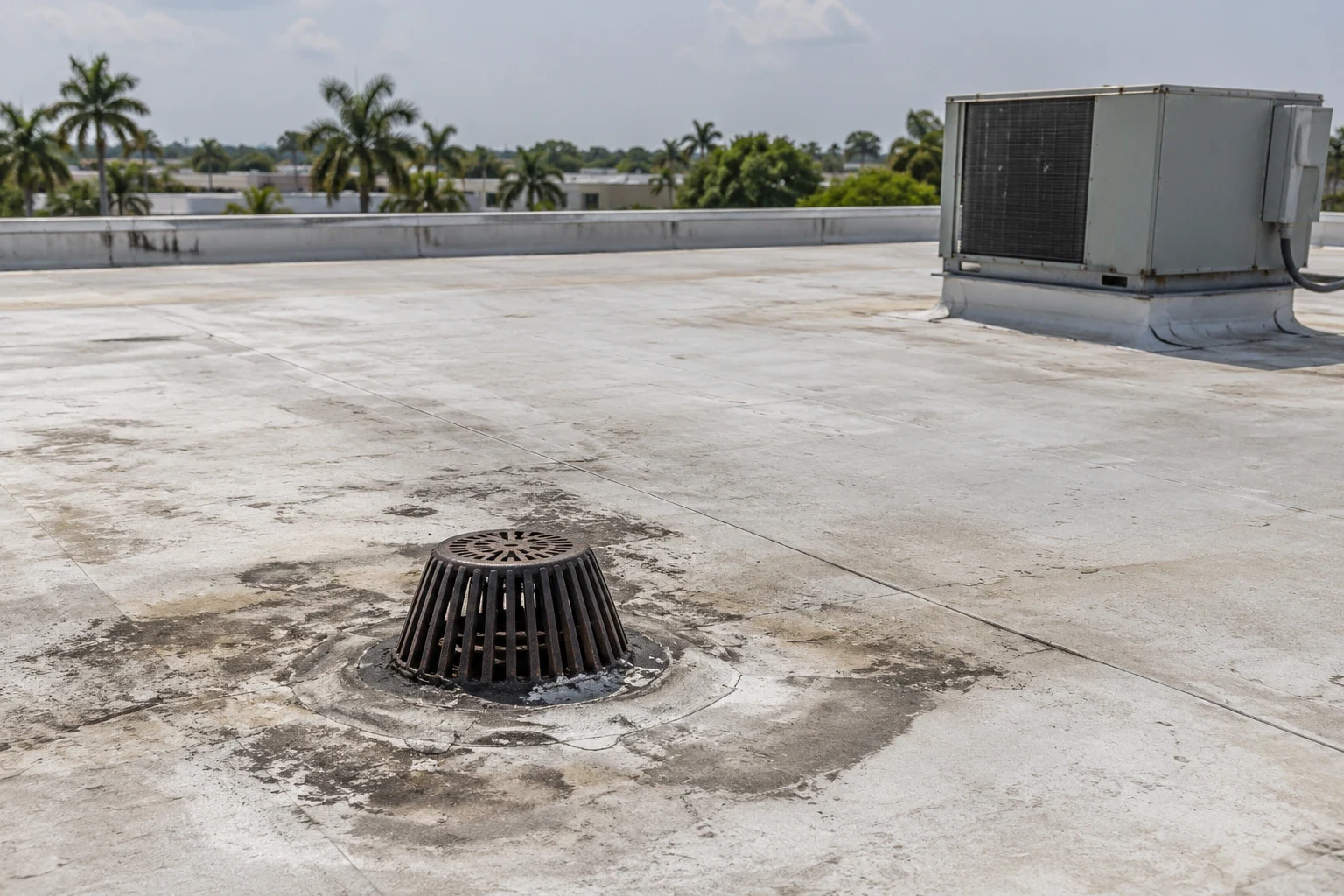
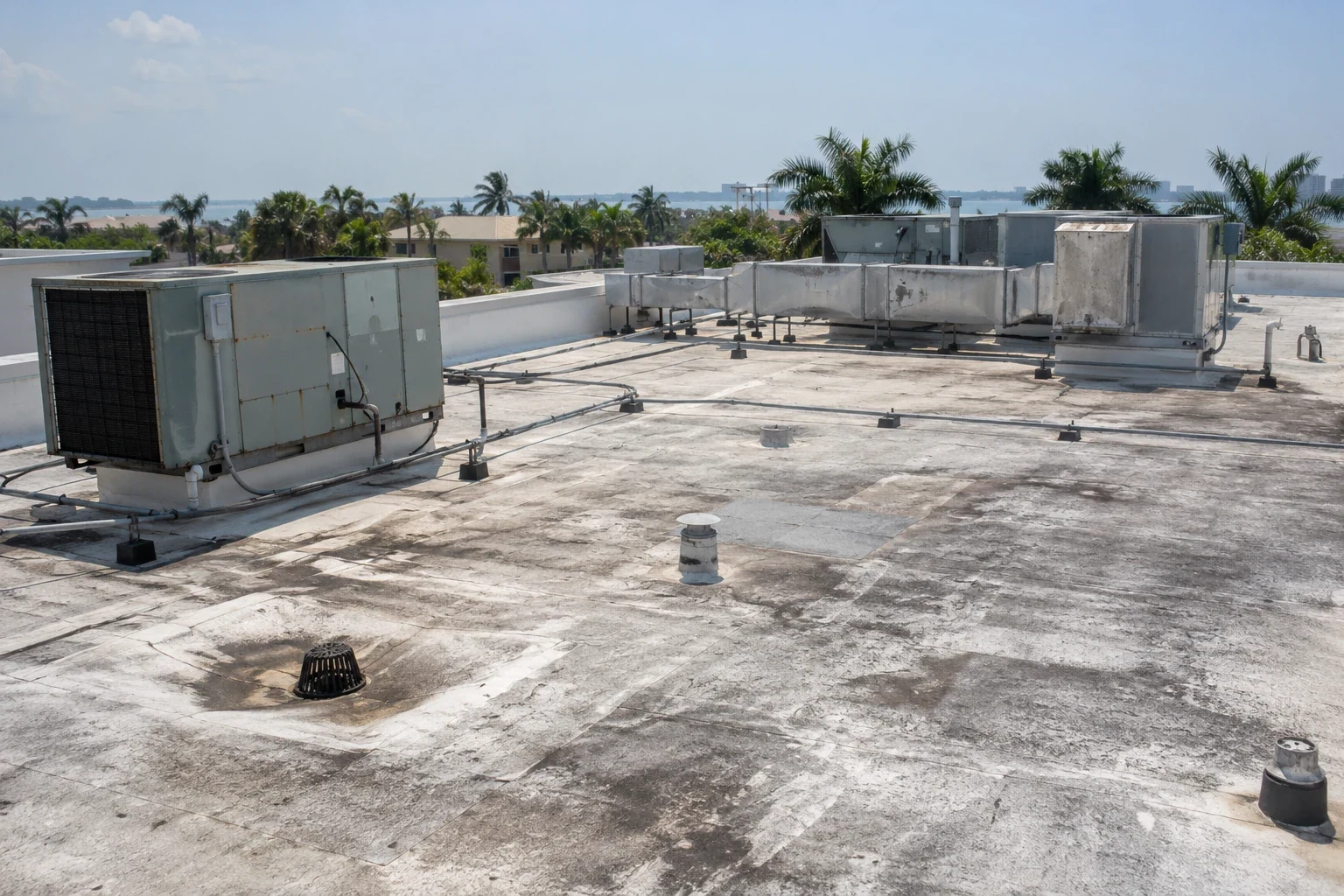
The first task is drainage. We remove leaves, grit and windblown debris from strainers, sumps, scupper openings and gutters, then watch how water leaves the area. A strainer that clears but a bowl that holds water points to a deck or slope issue, which we log for a later drain and ponding correction.
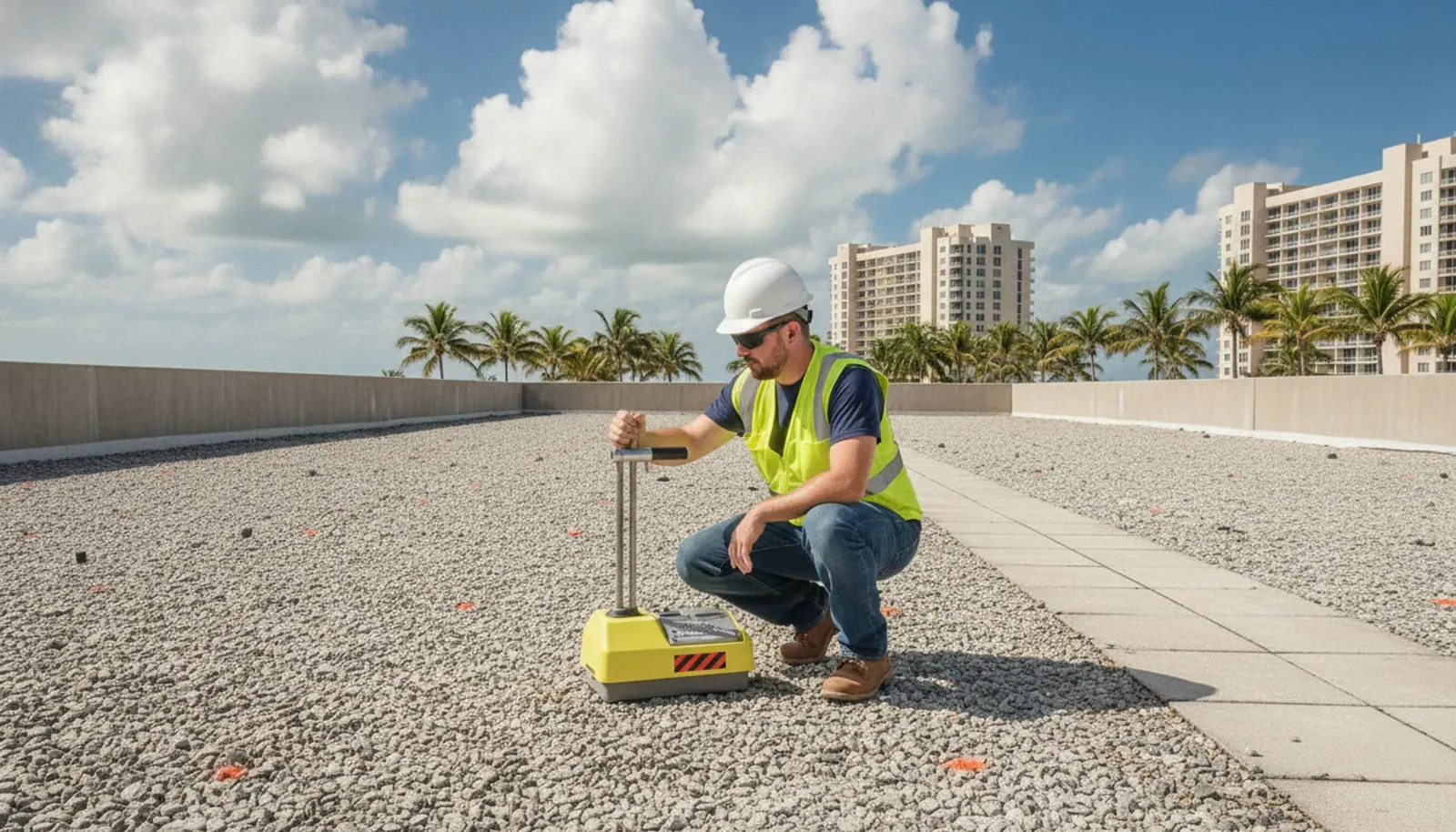
Next we walk the field in a set pattern. We press suspect areas for softness, probe seam edges, look for blisters and punctures and note where foot traffic has worn the surface. Penetrations get individual attention: pipe boots, vent collars, equipment curbs and conduit supports each have sealant or flashing that ages. Minor items such as a loose termination or an open sealant joint are repaired during the visit, using materials matched to the roof. Each small repair is photographed before and after, so the file shows exactly what was touched.
Equipment areas get a separate pass. Condensate lines that discharge onto the membrane can leave a constant wet patch, and refrigerant lines or conduit lying on the surface can wear through it where they rub. We note these, suggest supports or walkway pads and look at whether the equipment curbs have the flashing height they need.
Larger findings go into the report instead of being patched blindly. A wet-looking area may warrant an infrared moisture survey before anyone decides what to cut out.
Photographs and Condition Records
A maintenance program is only as useful as its records. Each visit produces dated photographs taken from the same marked positions, a roof sketch with the findings numbered, and a short summary of what changed since the last visit, written in plain language that a manager can forward to an owner without translation. A seam that was tight in spring and lifted by fall is a documented change, and it can be priced and scheduled instead of discovered during a leak.
The file also gives ownership something concrete to hand to a lender, a buyer or an insurer. Over several visits it becomes the roof's history: repairs made, materials used and areas still on watch. Where an owner holds several buildings, our roof condition reports use one format so the roofs can be compared side by side.
Business Districts and Access
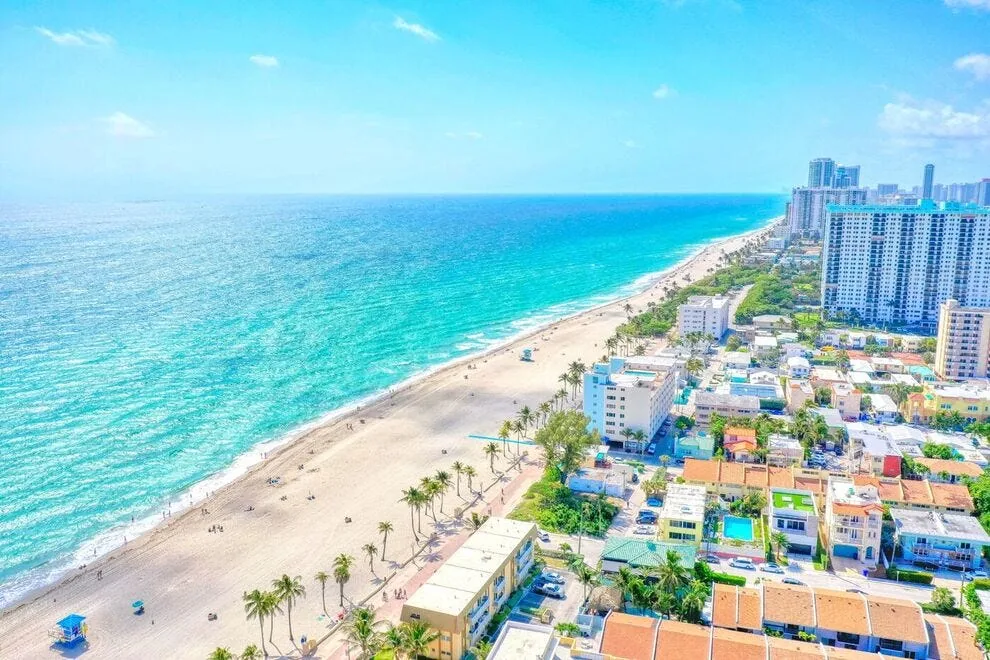
Maintenance access varies with the property. Hollywood's commercial settings range from the Downtown and Beach districts to Johnson Street, where businesses sit between 56th Avenue and US-441. A roof in a mixed-use block needs a different access plan than one with a private service drive, and a building near the Broadwalk or an event closure may restrict deliveries and parking.
We ask before the first visit about the roof hatch or ladder, who holds the key, which tenants sit below and what hours are quiet. For owners in the Johnson Street district or the Downtown Hollywood area, we fit the visit to the property's own schedule and keep the crew off the roof when it is wet or lightning is in the area. Safety comes first on a hot roof as well: the surface temperature can run far above the air temperature, so summer visits start early and include water breaks.
Membrane-Specific Checks
What we look for depends on the roof system. On a TPO roof, we probe welded seams, check flashing laps and look for shrinkage at walls. On a modified bitumen or built-up roof, we look for blisters, split laps and bare asphalt where granules have worn away. On a metal roof, we check fasteners, laps and sealant at penetrations. Coated roofs get a close look at the coating's bond and thickness at seams and drains.
Heat cycling shows up differently in each. White single-ply membranes reflect much of the sun, but flashing at dark walls and curbs sees large temperature swings, so corners and terminations are where we spend extra time. We record the membrane type in the file on the first visit so the right repair material is used every time.
Turning Findings Into a Plan
The report ranks every finding by what it could reach. An open seam above finished space ranks above surface dulling on a membrane over a storeroom. We price repairs in groups, so the owner can approve the urgent group immediately and schedule the rest against the budget calendar. When the same area keeps appearing on the list, the report says so, and the conversation turns from patching to a larger scope with its own cost drivers: insulation condition, deck repair, penetrations, access and disposal.
Reroofing follows the Florida Building Code, 8th Edition, which took effect on December 31, 2023, and Hollywood's building division reviews permitted projects. Whether a repair needs a permit depends on its scope, and we flag any that might before it is scheduled, so the building division is not a surprise to the owner.