Need this roof reviewed?
Commercial roof repair, replacement and maintenance in the Hollywood Beach Business District, planned around hotels, events, parking and coastal exposure.
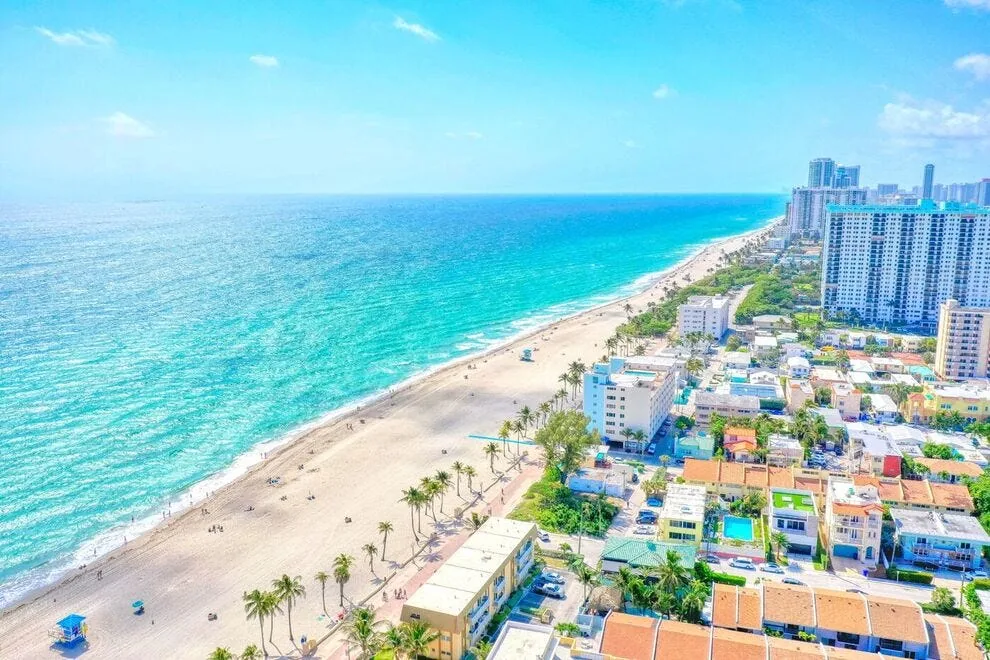
Metal that sits near open water ages differently from metal inland, and the first sign is usually a fastener head with a rust halo at the edge of a roof. Near the Atlantic, the Hollywood Beach Business District includes a Beach Historic District with hotels, cottages and other historic buildings, and a business association that lists parking, transit, Broadwalk events and historic preservation as concerns. In the district, Commercial Roofers Hollywood repairs, replaces, recovers and coats both low-slope and metal roofs. The work is planned around the edge condition, the drainage plane and the way a crowded beach calendar limits access.
Coastal Exposure at Edges and Fasteners
The Beach district sits closest to the water, and among the risks the city's climate vulnerability assessment weighs are sea-level rise, tidal flooding, storm surge and compound flooding. Those findings are citywide, and they point to the kind of exposure a beach district asks us to check: wind-driven rain, damp air and corrosion at metal. Coping, drip edge, gutters, fasteners, rooftop unit frames and exposed hardware are examined for rust, loose joints and failed coatings, and the sealant at every metal lap is pressed to test its grip.
Corrosion can sit under paint or behind a cap before it shows. We probe fastener heads, lift edge metal where practical and photograph conditions with a scale reference. Where metal has lost section, the repair is a replacement run, not a coat of paint, and the new metal is chosen for the exposure with compatible fasteners so that two metals do not set up a new corrosion path.
Hotels, Cottages and Occupied Roofs
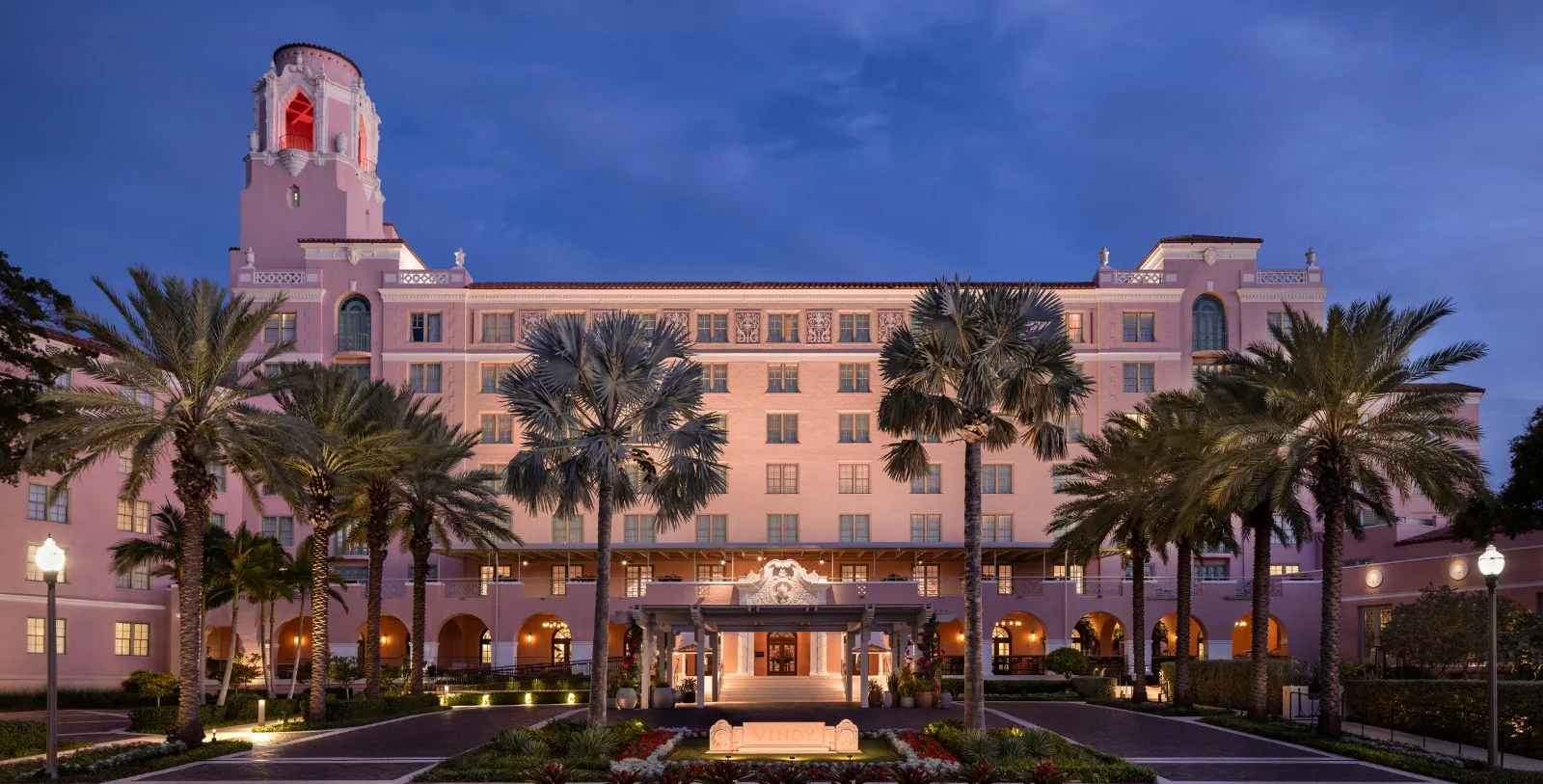
Mediterranean Revival and Art Deco examples stand among the hotels, cottages and other buildings of the Beach Historic District. We do not assume what any of them has on the roof, but a hotel roof has predictable needs: guest rooms below, rooftop equipment above, kitchens and event spaces with their own exhaust. Hotel roofing plans start with a map of the rooms and spaces under each roof zone, so a leak report from the front desk can be matched to a roof area at once.
Noise and odor are guest issues. Tear-off, fastening and hot-applied work are scheduled for the hours when the rooms below are least occupied, air intakes and operable windows are identified before adhesives are opened, and a manager on duty has the authority to call a pause. Rooms under active work are held out of inventory, and the schedule is shared with the front office the day before.
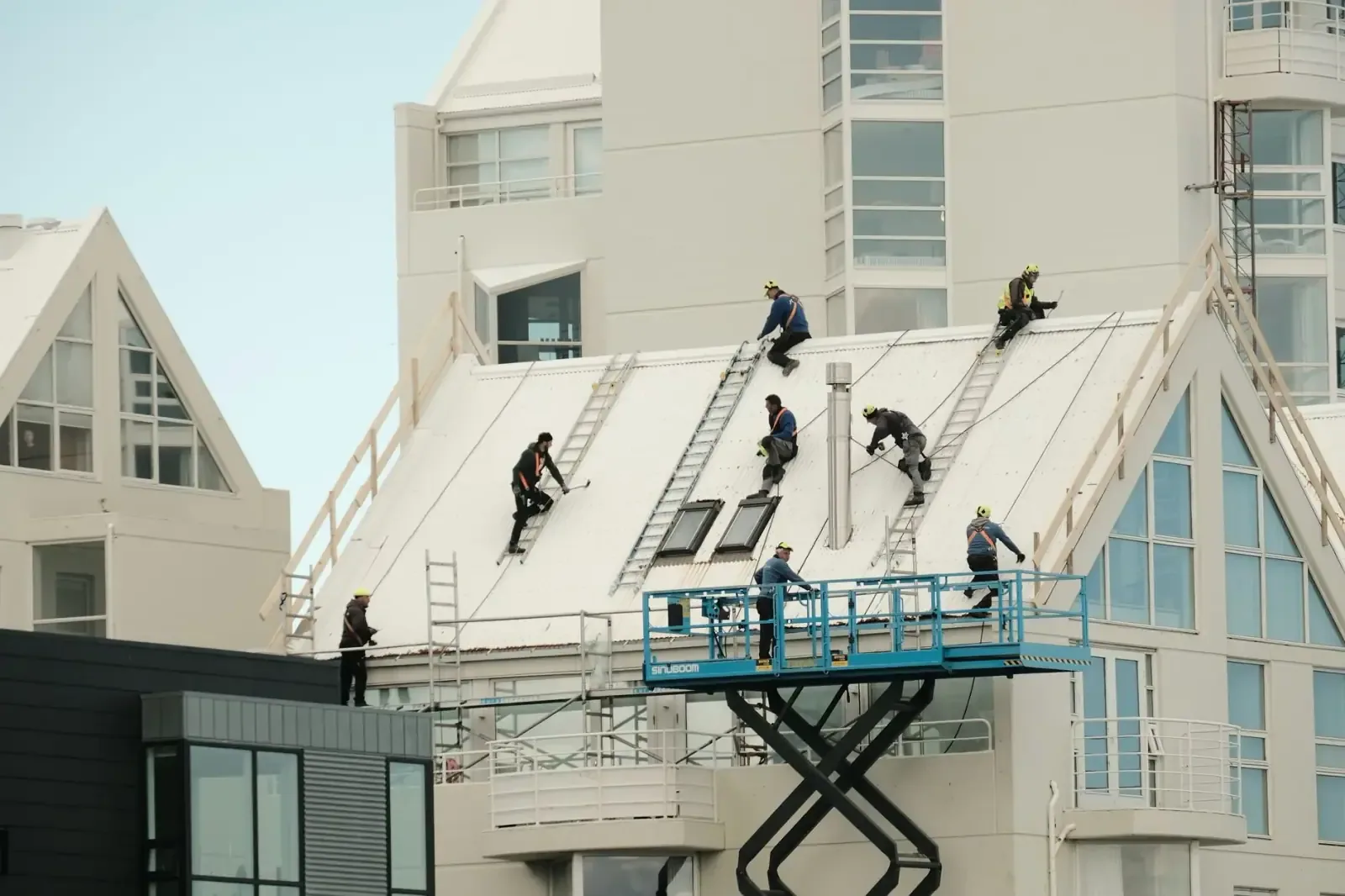
Cottages and small historic buildings carry smaller roofs and tighter access. A lift may not fit, a ladder may be the only route and the roof may be reached through the building. We confirm the access method on the first walk, size the crew to the space and plan protection for what sits below, whether that is a guest room, a shop or a storage area.
Broadwalk Events, Parking and Access
The business association names parking, transit and Broadwalk events among the district's concerns, and each of them touches a roofing job. A lift or a delivery truck needs curb space that may not exist on an event weekend. A crew needs parking, and a staging area that blocks a pedestrian route is a problem on any busy street. We ask for the event calendar, agree on delivery windows and keep equipment off the public way wherever the building permits.
Heavy picks and tear-off are placed on quieter dates. Where street or sidewalk closure is unavoidable, the city's process sets the lead time, and the schedule carries it. Material staged on a roof adds load and can move in wind, so we stage in small amounts and secure what stays overnight.
Heat, Rain and the Wet Season
NOAA's Hollywood station averages 76.1 degrees over the year and 89.9 degrees for August highs, and records rainfall of 8.84 inches in June. Between mid-May and early July the National Weather Service expects the most dangerous conditions of South Florida's wet season: damaging winds, tornadoes, lightning, hail and flooding. A roof in that cycle goes through heat, thermal movement and heavy rain in sequence, and the weak points are drains, edges, penetrations and membrane transitions.
More than 11,000 Hollywood properties lie in a FEMA Special Flood Hazard Area, and the city states that buildings there must meet local flood-elevation requirements. That is a citywide figure about ground-level flood exposure. It does not describe any roof, and we mention it only because a building's owner may be planning around flood elevation at the same time as a roof project, and the two schedules should be coordinated.
After a major storm, a roof deserves a walk even if no leak has appeared. Wind can lift an edge or loosen a unit cover without breaking the waterproofing at once, and the first rain after the event finds the opening. A dated photo record from the walk shows what changed.
Drains, Scuppers and Standing Water
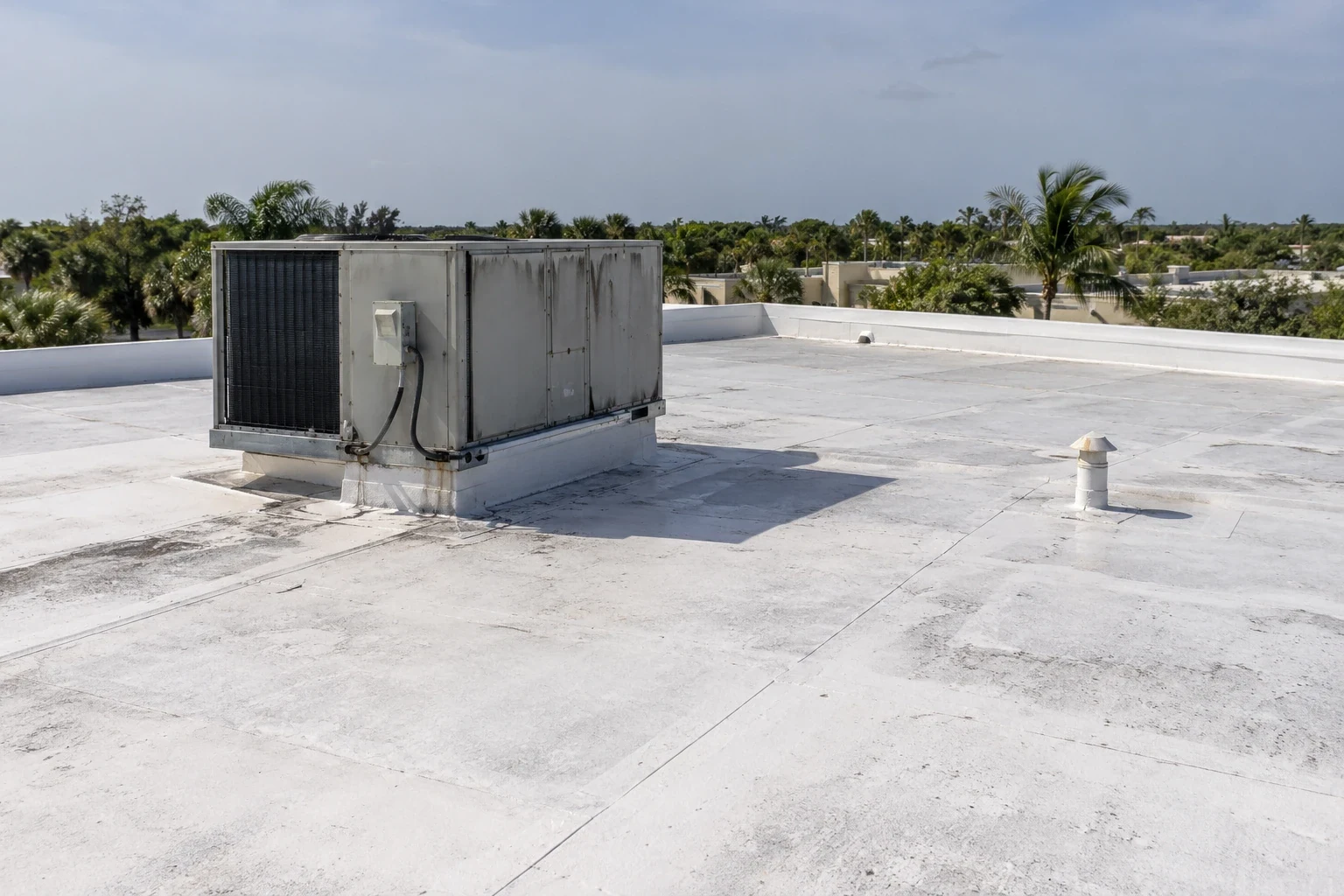
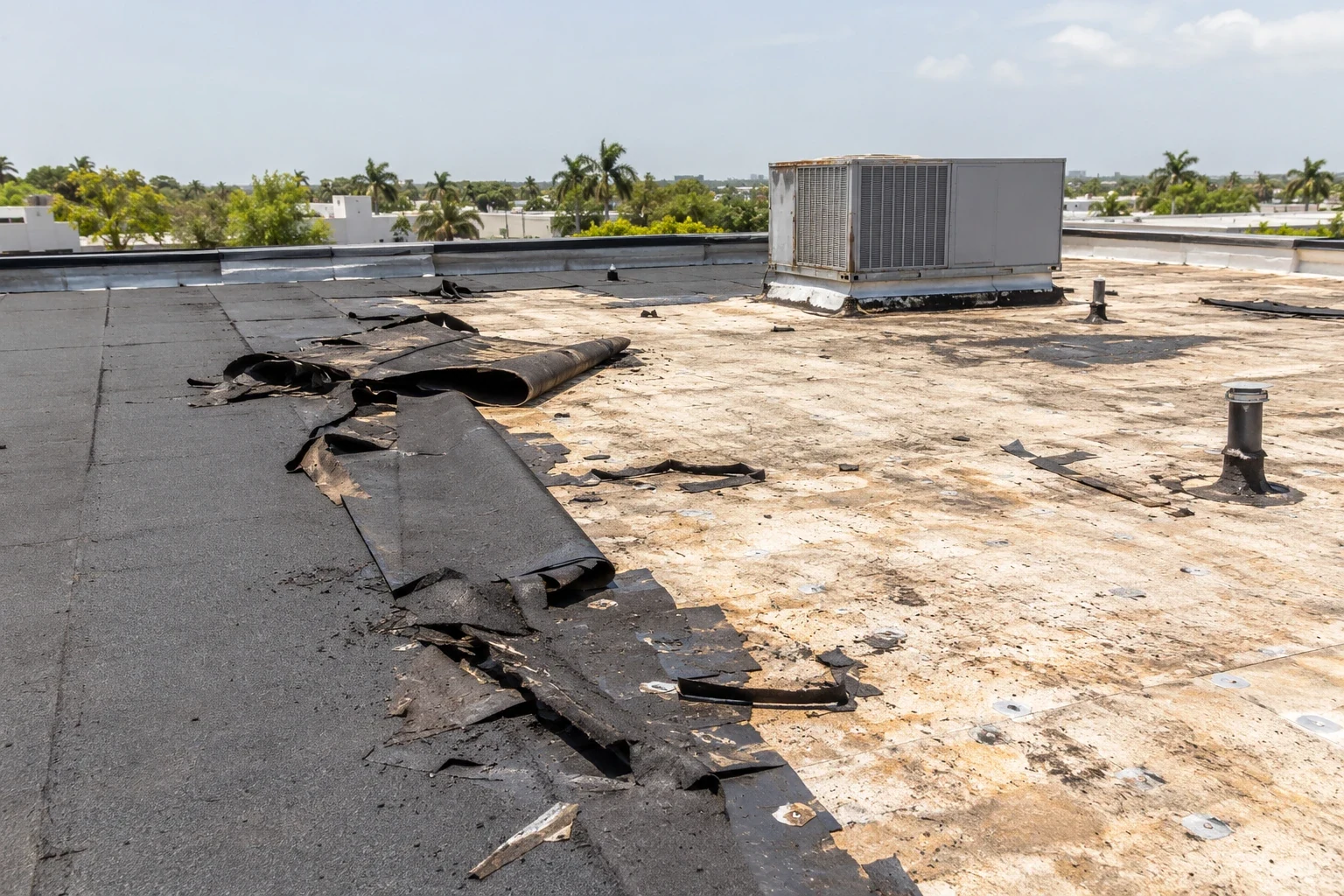
A flat roof near the coast can hold water for reasons that have nothing to do with the sea: a drain strainer packed with leaves and grit, a scupper set above the surface of the roof, a leader that crushes at a bend. We clear and flush each outlet, observe the flow, measure ponding depth after rain and mark the pools on the roof plan. A drain that backs up during a downpour is a different finding from a drain that is clear and still leaves a pond, which points to slope or deck.
The repair follows the cause. Resetting a drain body, rebuilding the membrane transition into the bowl, adding an overflow scupper or correcting slope with tapered insulation are different scopes with different costs. We separate them in the proposal and say what each does not fix. Standing water through a hot summer ages a membrane faster than the field around it, so ponded areas are checked for blistering, softening and open seams as part of the same visit.
Repair, Recover or Replace
A local repair suits an isolated defect with dry insulation beneath. A coating restoration can extend a sound, dry roof after repairs. A recover limits tear-off when the layers allow it. A replacement removes wet or failed layers when moisture is widespread. We test with a meter, an infrared scan where conditions suit and test openings, and we price each option on the same assumptions. Reroof permits come from Hollywood's Building Division, which enforces the 8th Edition Florida Building Code effective December 31, 2023.
Records Across Districts
The closeout file holds the plan, photographs by zone, test results, materials and open items, and emergency roof repair is available at any hour. Owners with property in Downtown Hollywood or the Johnson Street Business District can have inspections arranged together.
Related Roofing Topics