Need this roof reviewed?
Restore a sound commercial roof in Hollywood, FL with a tested coating system, from moisture scans and adhesion trials to seam work and recorded thickness.
A coating can extend a roof's service life only if the roof underneath is dry, bonded and structurally sound. In Hollywood the annual mean temperature runs about 76 degrees, and the August average daily high is near 90, so a dark or weathered membrane spends much of the year absorbing more heat than it sheds. That heat path ages seams and flashing, which is why coating is often considered here. The first question is not which product, but whether the existing roof is a candidate at all.
We answer it with a test sequence, run in the same order on every roof: a moisture scan of the assembly, an adhesion trial on the surface, a seam and flashing review and a drainage check. The results go to the owner in writing before any material is ordered.
That order protects the budget. Coating a roof that cannot hold it wastes money twice, once on the product and again on the replacement that follows too soon. A candidacy review costs far less than either.
Candidacy Tests
Four conditions have to hold. The membrane must be well bonded to its substrate. The insulation must be dry. Seams and flashings must be repairable. And the surface must be clean enough to take a primer or coating. Failure in any one changes the plan.
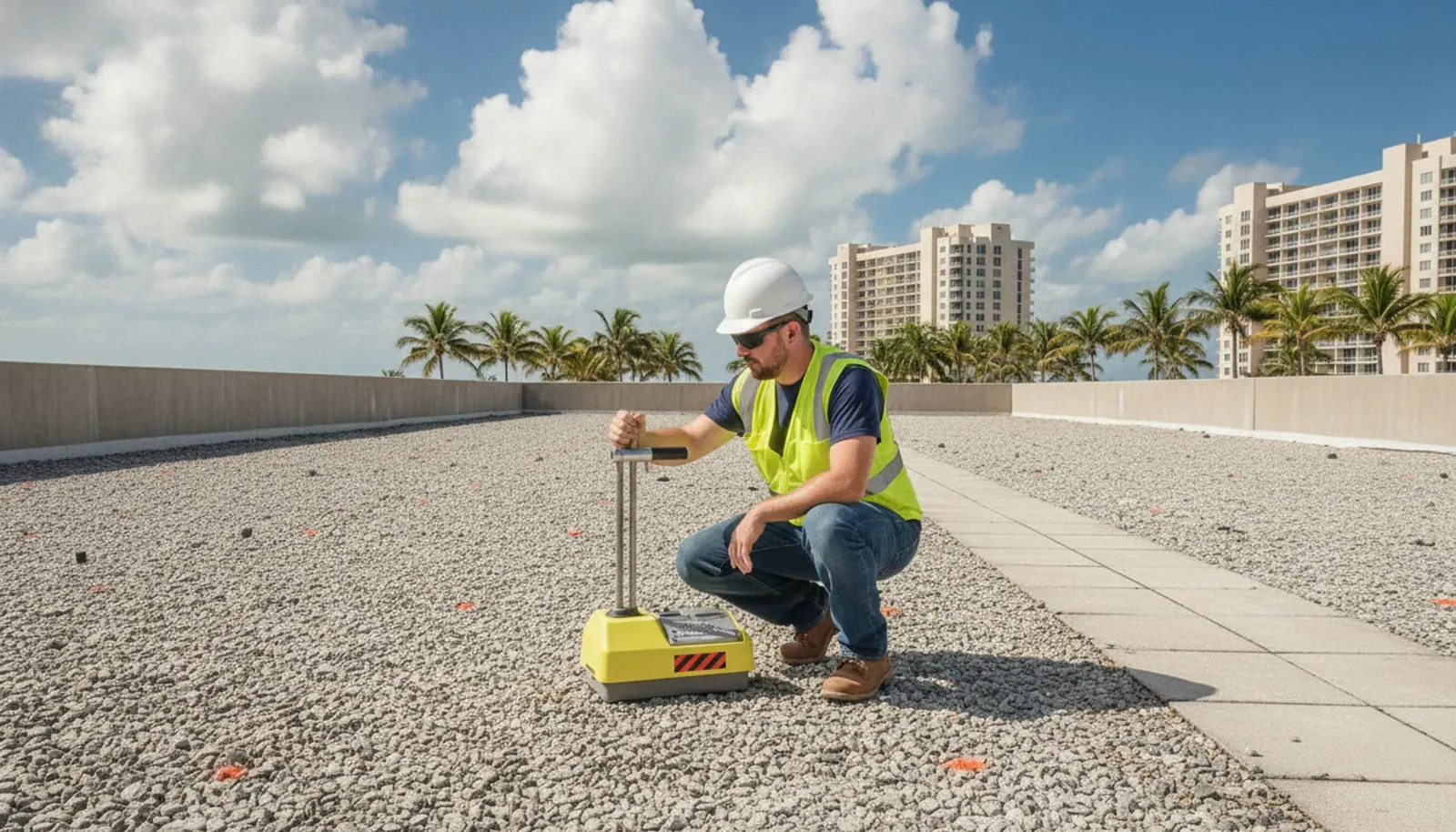
We test bond by lifting a small area and watching how the layers separate. Moisture is found with probes and meters, and across large areas with an infrared moisture survey that reads the thermal differences trapped water creates. We test the surface by washing a sample area and applying the intended primer and coating, then checking the bond after cure. A roof that passes all four is a real candidate, and the report says which tests it passed and where. One that fails gets a clear explanation of what failed and what repair would be needed before coating could be reconsidered.
Coating Chemistries
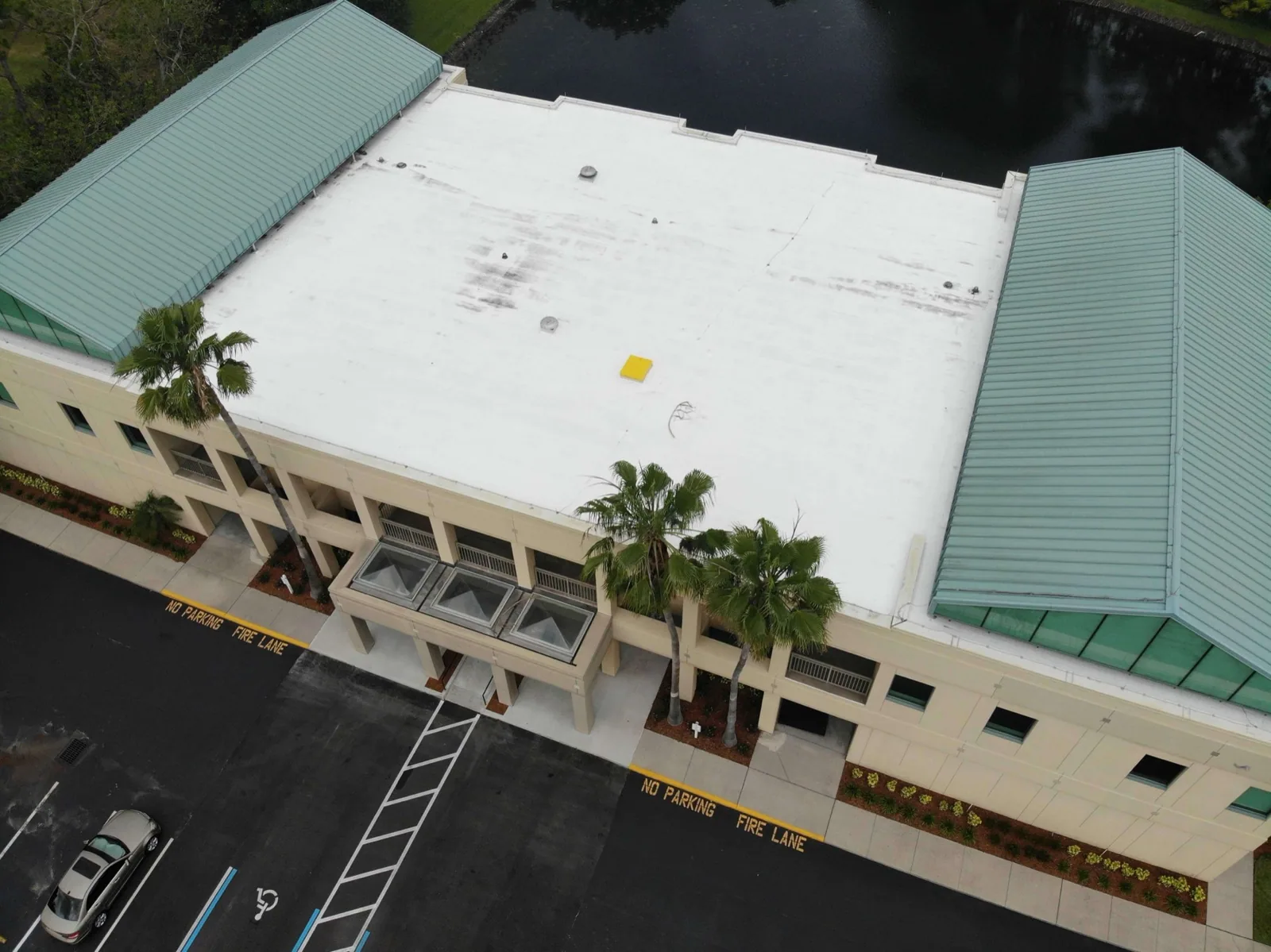
Liquid-applied coatings behave differently. Silicone systems tolerate ponding water better and hold their flexibility in heat, but they attract dirt and are hard to recoat with other chemistries. Acrylic systems clean easily and recoat readily, but they prefer roofs that drain well and can soften when water stands on them.
Substrate matters as much as chemistry. A modified bitumen roof, a metal panel roof and a single-ply membrane each need a compatible primer, and a mismatch is a frequent cause of peeling. We identify the existing membrane, run an adhesion test and choose a system that fits both the surface and the drainage behavior we observe after rain.
Metal roofs add a particular concern. Fasteners back out with thermal movement, and seams open slightly at laps. We tighten or replace fasteners, seal laps and reinforce them with fabric before coating, since a film over a moving joint will crack along the joint within a season or two.
Rainfall, Ponding and the Drainage Plane
The wettest months in the long-term normals, June at about 8.8 inches and September at about 8.7, arrive after the stormiest part of the wet season, which opens in mid-May. A coating must live through those months without a drainage problem working against it. If a roof ponds for days in several bowls, we address the drains, the slope or the outlet height first.
Where low spots remain, we describe the choice plainly: add a drain, add tapered material, or accept the ponding and choose a chemistry that tolerates it. We do not coat over a drainage defect and treat the problem as solved. We also check that overflow scuppers are open, since a clogged primary outlet during a downpour sends water over the roof edge or back under flashing.
Preparation Sequence
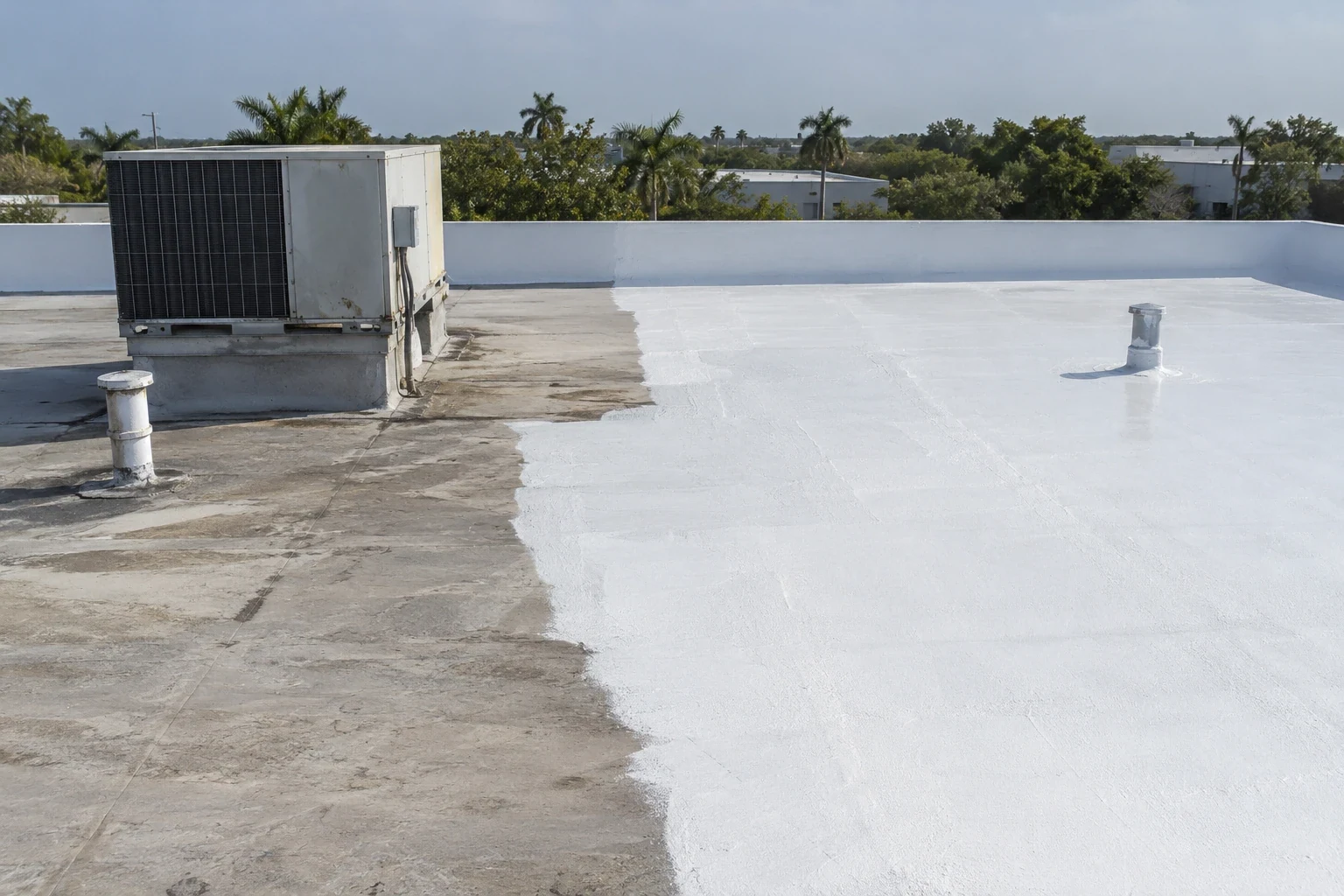
Preparation decides the result. We pressure wash the surface, remove loose material, repair open seams, replace failed flashing and patch punctures. Penetrations and curbs get reinforcing fabric and extra coating, since they are where thin films crack first. Primer goes down where the system calls for it, and a wet-film gauge confirms thickness during application.
Edges and drains need their own care. Coating thins where it turns over a parapet, rolls around a scupper or stops at an edge, and those are the first places a film wears through. We build up thickness at each, and we check that coating has not narrowed a drain opening or filled a gutter joint.
After cure we walk the roof again to look for pinholes, thin edges and missed spots, and we record thickness at selected locations with photographs. Weather controls the schedule: coatings need dry surfaces, moderate temperatures and no rain in the forecast during cure, which in South Florida means planning around afternoon storms. We start early, watch radar through the day and stop applying material when a cell is close enough to threaten an uncured film.
Restore or Replace
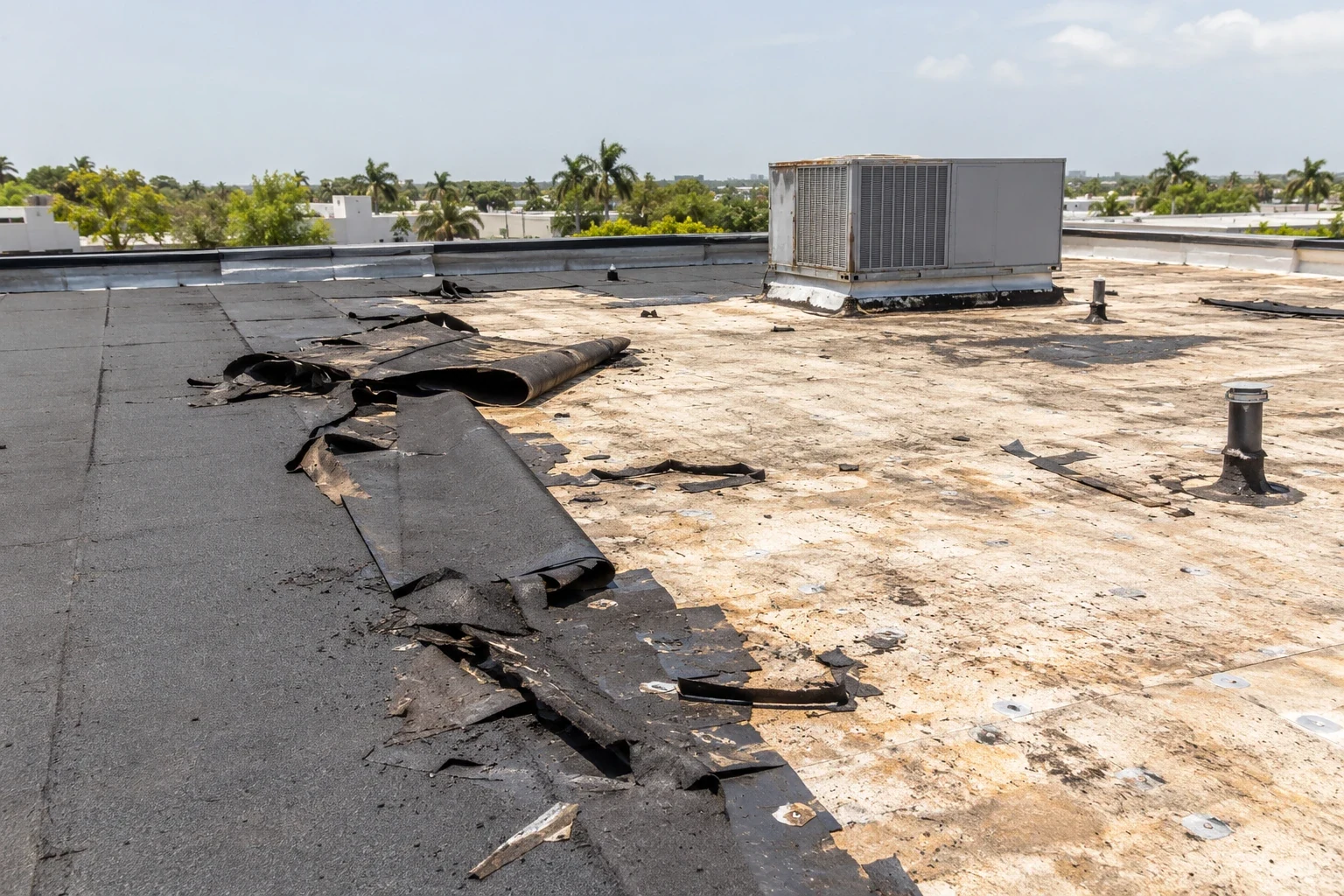
Coating suits a roof with surface aging and a sound assembly. Replacement suits one with wet insulation, brittle material or repairs stacked beyond usefulness. Between the two sits a mixed case: a roof with one wet corner and an otherwise sound surface can be restored after that corner is cut out and replaced.
We price the options side by side with their cost drivers: area, insulation condition, penetrations, access, surface preparation the number of coats and the access route for material. If the roof turns out to be beyond restoration, we move to a replacement plan and show the readings that led there. Larger roofing scopes can bring in the 2023 Florida Building Code and the building division's permit review, so we confirm requirements before a coating job is scheduled. Roof color and reflectivity ratings are another thing owners ask about, and we describe what a given product offers without promising a result for the building as a whole.
Warranty Questions and Maintenance
Some membrane warranties restrict what can be applied over the surface, so we ask for the paperwork first and flag any conflict in the scope. After a coating is applied, the roof needs periodic cleaning and a yearly look at seams, drains and coating thickness. That is the work of a maintenance program, and it keeps the coating on schedule for its expected life.
Owners with roofs in the Washington Park Industrial Area, along Johnson Street or in the Beach business district get the same file: test results, product, thickness measurements, photographs and a recoat plan.
Related Roofing Topics

