Need this roof reviewed?
Commercial roof assessment and repair on Hollywood Boulevard in the Historic Hollywood Business District, with sidewalk protection and assembly-first scoping.
Where a street was laid out for people on foot, the roof edge sits close to the sidewalk, and any loose coping or dripping scupper has an audience. Hollywood Boulevard between 21st Avenue and Young Circle forms the Historic Hollywood Business District, part of the original 1921 plan that mixed residential, business and recreational space in a pedestrian-friendly pattern. Commercial Roofers Hollywood works on low-slope and metal roofs for commercial buildings in the district, from repair to replacement, beginning with the edge condition and water entry points and keeping a protected route for people walking below.
A Pedestrian Street and the Roof Edge
On a walkable street, roof work is public work. A lift, a hoist or a falling tool all have to be kept away from people, so the first plan is the protection: a fenced work zone, a covered or closed sidewalk section where required, and spotters at any crossing point. Hoisting is scheduled for the lowest-traffic hours, and debris leaves by a chute or a sealed container, never over a public walk.
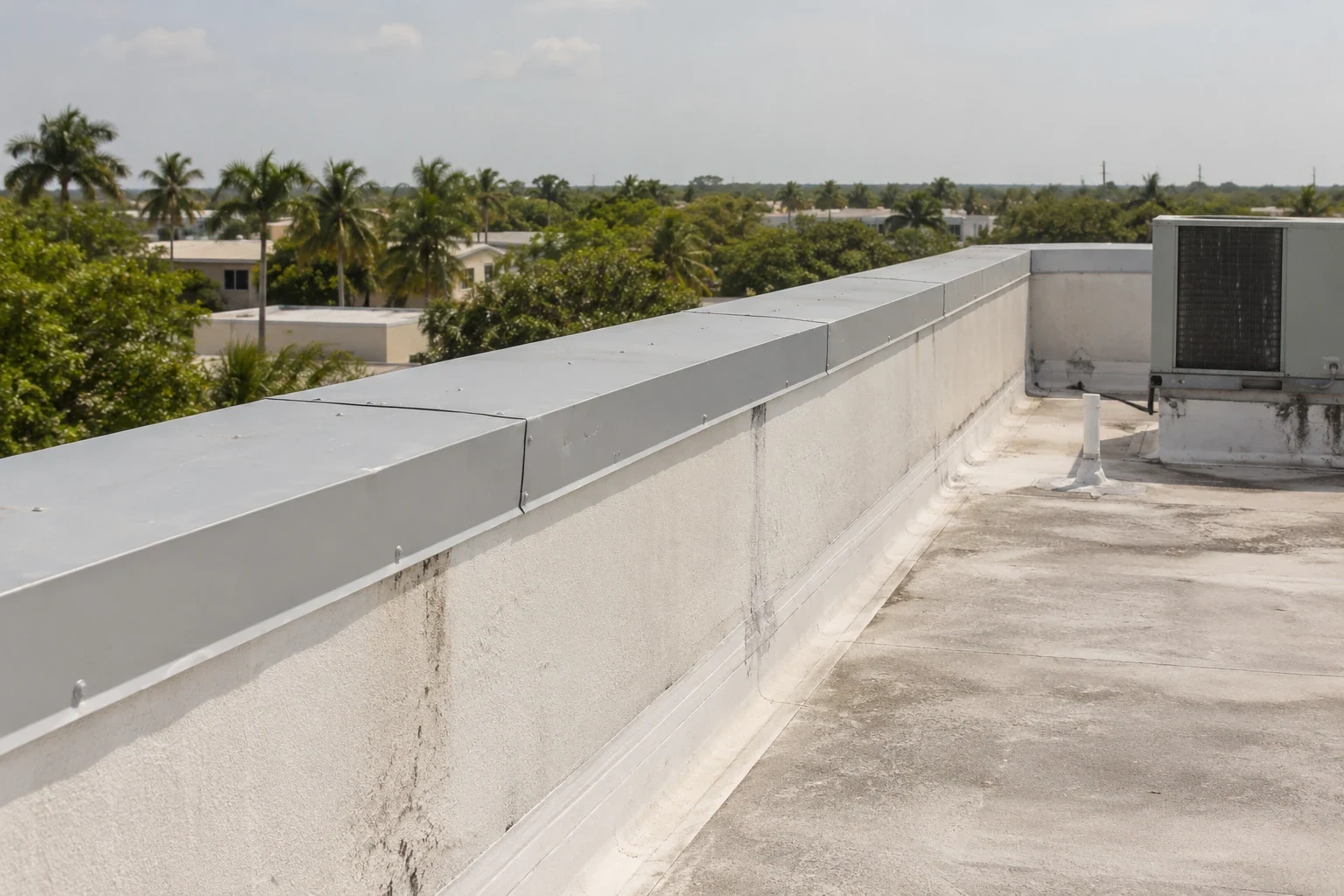
Edges get the most attention because they are closest to the street. Coping caps, edge metal returns, gutters and downspouts are checked for open joints, loose fasteners and sealant that has pulled away. A scupper that discharges onto a sidewalk is a nuisance and a liability, so we look at where each outlet sends its water and whether a leader or an extension is needed. Permits for sidewalk or lane closures belong to the city, and the schedule carries their lead time.
Reading an Assembly Nobody Documented
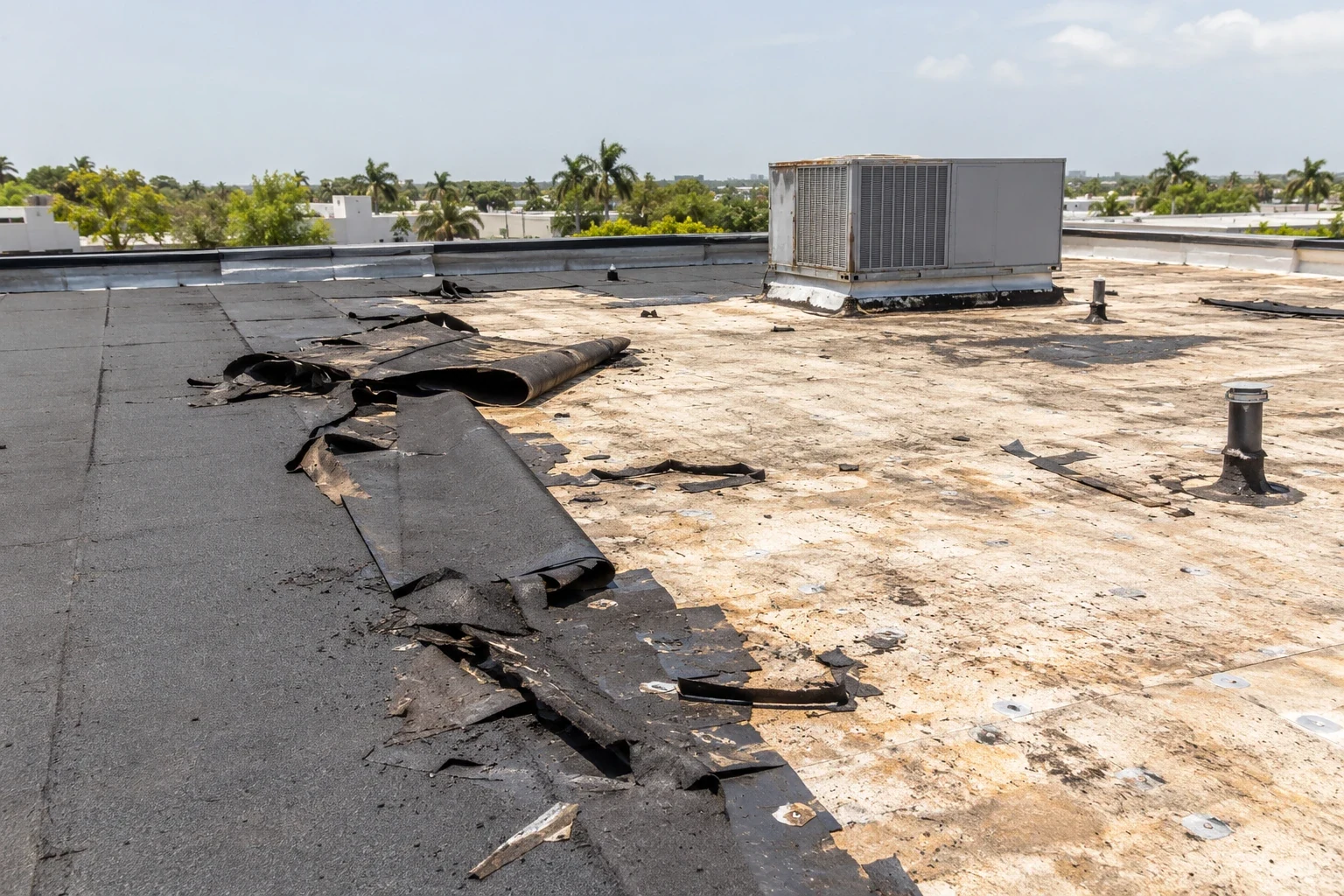
The district's plan dates to 1921, but the age of a plan does not tell us what is on any one roof. Any commercial roof may have been replaced, recovered or patched, and layers can hide beneath the visible surface. We do not assume a membrane, a layer count or a structure. We sample, probe and open the roof at test locations, record the assembly layer by layer and photograph each layer with a scale reference.
The record matters more where nothing else exists. An owner who inherits a building without roof drawings gains from a file that shows deck type, insulation condition, membrane type and the location of every prior repair. If a building is subject to historic preservation review, the owner confirms the requirements with the city before exterior roof or parapet work, and we supply the technical description of the proposed work in a form the reviewer can read.
Summer Heat and Wet-Season Rain
NOAA normals for Hollywood include a 76.1 degree annual mean, an August high of 89.9 degrees and monthly rain of 8.84 inches in June, then 8.67 in September. Storm risk concentrates between mid-May and early July in South Florida, which the National Weather Service calls the wet season's stormiest part. Heat drives thermal movement in seams and metal, and then the rain tests every membrane transition and every drain.
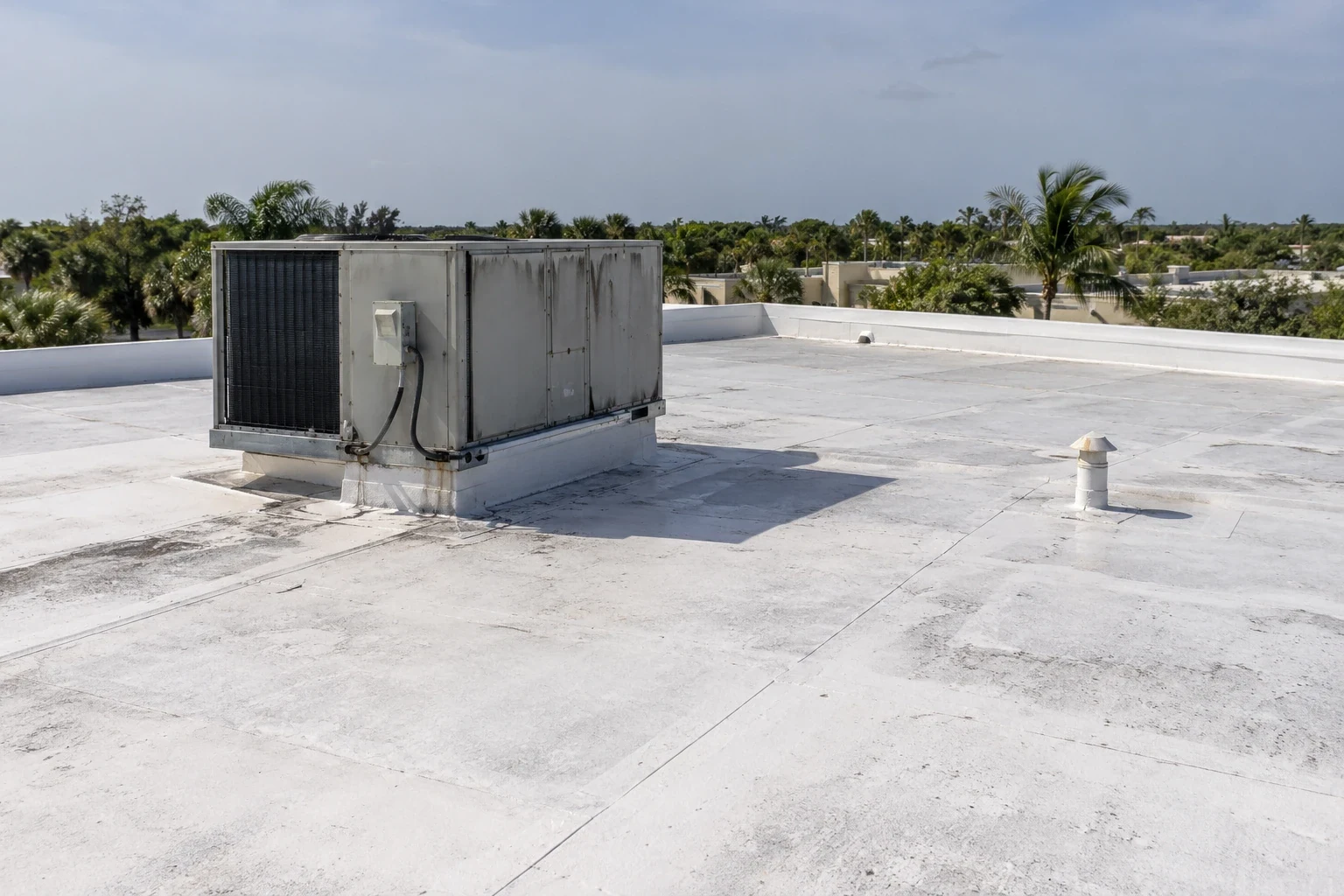
We check how the roof behaves across that cycle: ponding depth after a storm, the time water takes to clear, the condition of sealants at parapets and the state of flashing at walls. A roof that dries between storms has drying potential. One that stays wet for days is carrying water into its layers. The first walk is best done after rain, when the wetting pattern is visible.
Wind-driven rain adds another route. Water pushed sideways under coping, behind counterflashing or through a parapet joint does not follow the drainage plane, and it shows up on an interior wall rather than a ceiling. We trace those routes by checking mortar joints, sealant and flashing heights at every wall that rises above the roof, and we photograph the findings against the plan.
Choosing the Level of Work
Isolated defects with a dry assembly call for a repair. A roof with sound layers and a stable deck can sometimes accept a coating restoration after repairs. Widespread wetting or overlapping prior patches point to a replacement. Each option is priced on the same assumptions, and the proposal states what the cheaper option leaves in place.
Any reroof in the district is permitted by Hollywood's Building Division under the Florida Building Code, 8th Edition, effective December 31, 2023. We confirm the path for the specific scope and note the approvals that must be in hand before material is ordered.
Cost drivers are the same on a boulevard building as anywhere: wet area, layers, deck condition, penetrations, edge length and access. Sidewalk protection and street-side staging add their own lines, and so does phasing around open storefronts. We keep those separate so the owner can see how much of a price comes from the roof and how much from the setting.
Parapets, Counterflashing and Wall Transitions
On a street-front building, the wall that rises above the roof is often the most important water-control surface. Counterflashing laps over the base flashing and sheds water from the wall face, and when its sealant fails or its fasteners loosen, water runs behind it. The membrane turn at the wall base has to rise to a height the system requires and be fastened and sealed along its top. We probe each termination, press the sealant and check that the flashing height is sufficient where roof layers have been added.
Parapet caps are the other half. A coping cap with open joints lets water into the wall, and the wall then feeds it to the roof edge from above. The repair may be a resealed joint, a new cap run or a rebuilt termination, and the scope says which. Photographs from two angles of every corner and wall intersection go into the file, because corners are where flashing is hardest to make tight and most likely to be found open.
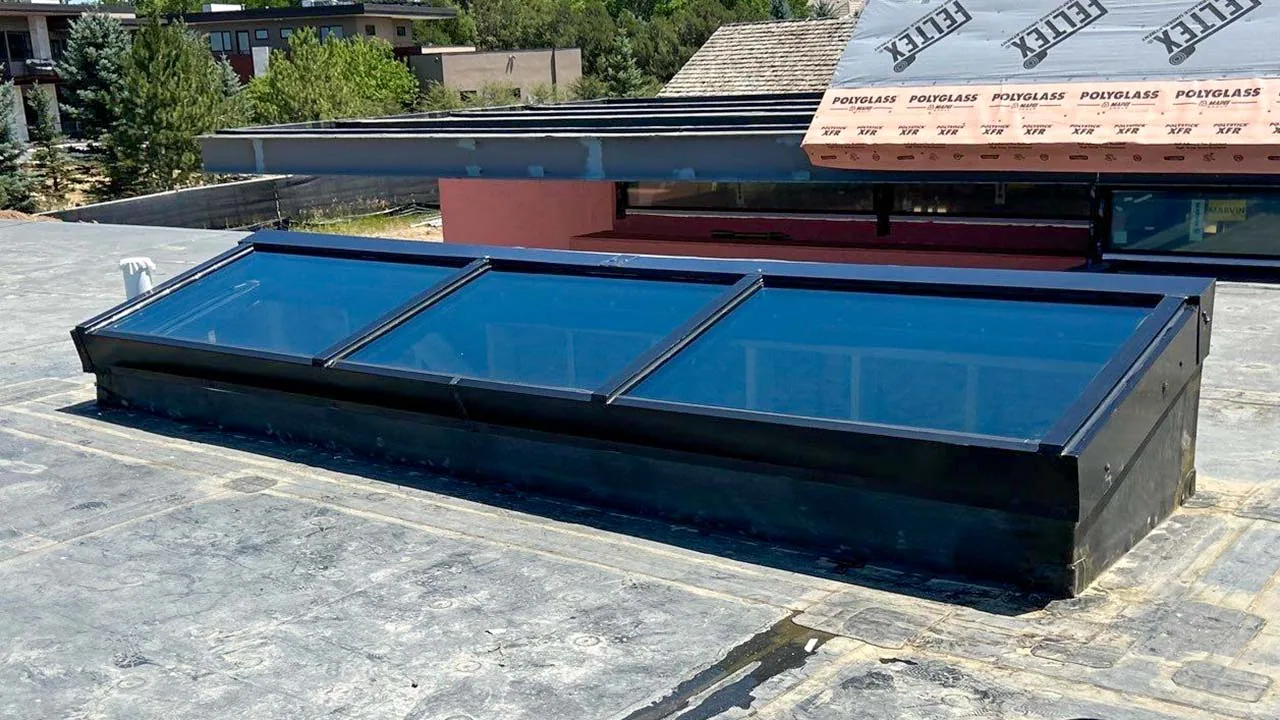
Where a wall meets a skylight or rooftop unit curb, the same logic applies. A skylight or penetration flashing is rebuilt from the curb up, not caulked at the top.
Shops, Offices and Residents Below
The district's mix includes business and, in the original plan, residential space, so a roof may sit over a storefront, an office or a home. We map what is below each roof zone, agree on quiet hours, protect interiors before the roof is opened and give tenants a notice with dates and a contact. For a restaurant roof, the kitchen exhaust and grease are part of the scope. Every section is closed to a watertight edge at day's end, and emergency calls are answered at any hour.
Records Across the Downtown Area
The closeout file holds the plan, layer-by-layer findings, photographs, test results, materials and open items. Owners with property in Downtown Hollywood or the Harrison and Tyler historic districts can have inspections arranged together, and the same format lets a manager compare buildings across the three areas.