
Need this roof reviewed?
Compare a commercial roof recover with tear-off in Hollywood, FL. We check moisture, attachment, edges and drainage before recommending another layer.
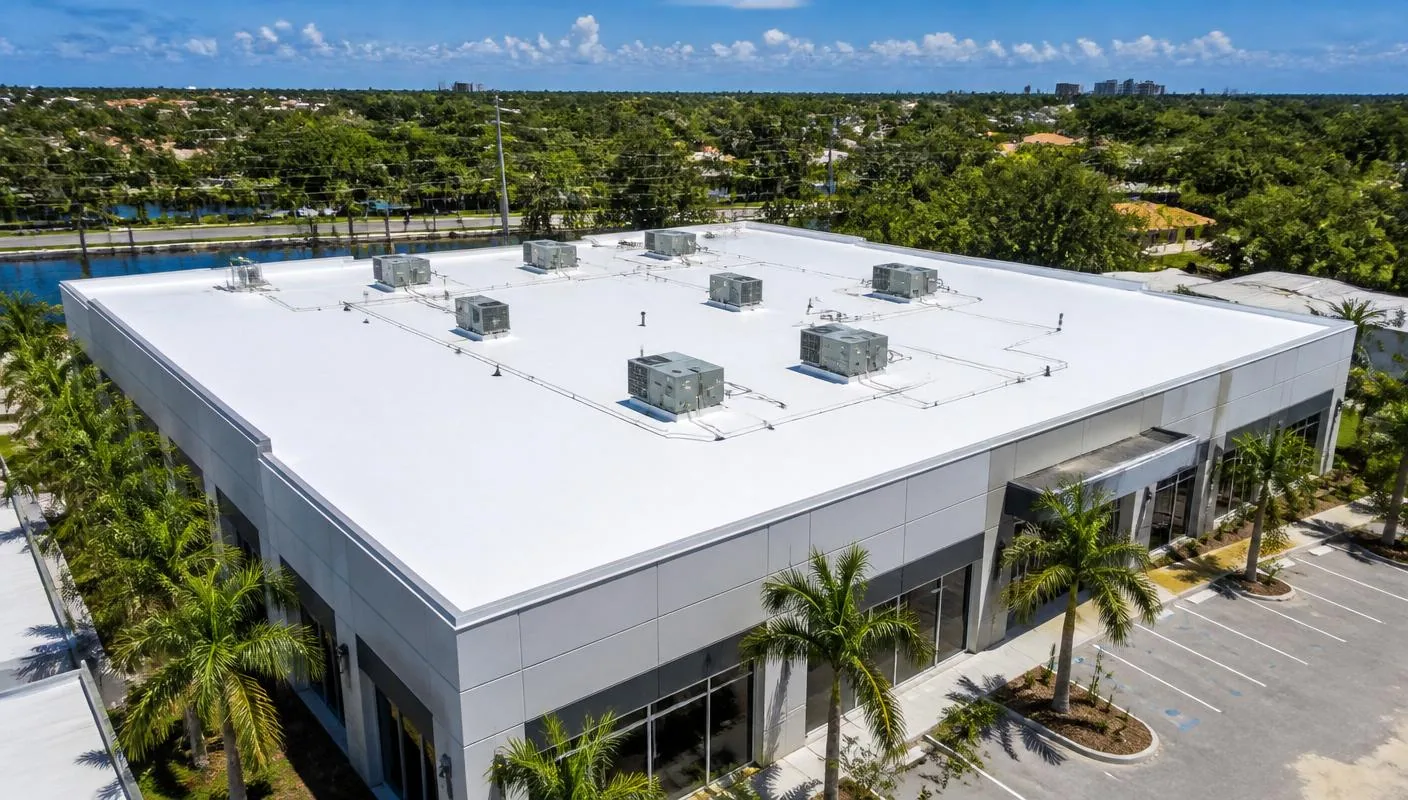
A recover adds a new roof layer without removing the existing membrane, but the shortcut only works when the old assembly can support it. In Hollywood, summer heat and intense seasonal rain put seams, drains and perimeter details under repeated stress. We inspect what is there, confirm whether moisture is present, and check whether another layer would conceal a problem instead of solving it. Whether the property is near the Washington Park Industrial Area, where the City runs a named redevelopment program, or in the Downtown Hollywood business area, the roof assembly decides whether recover is suitable, and access and staging are planned around the site. We document the findings, compare recover with removal, and identify the code, attachment and detail questions that need answers before approval.
Conditions that support a recover
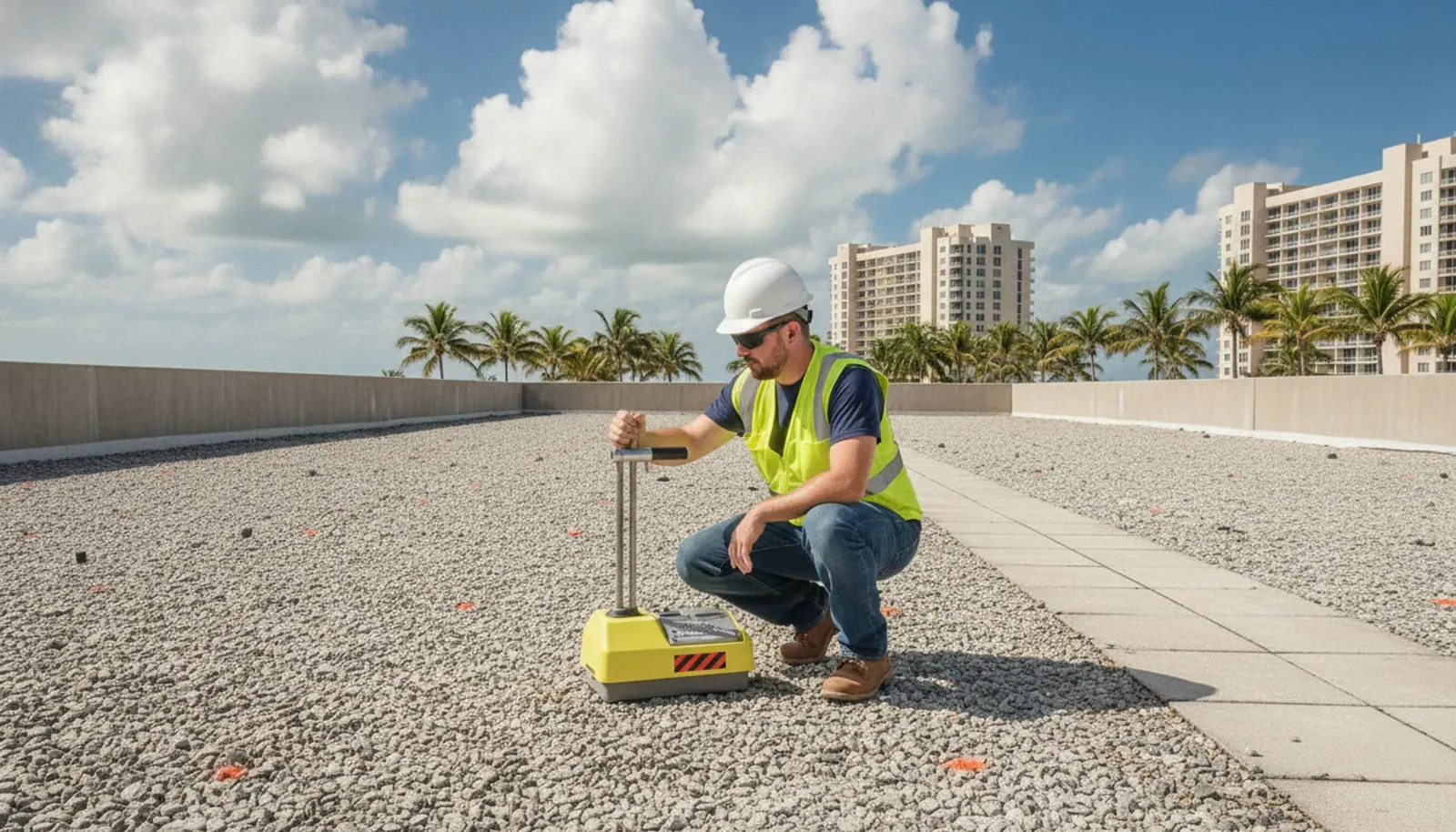
The existing membrane needs to be stable enough to receive the new system. We look for widespread wet insulation, loose or deteriorated substrate, recurring leaks, open seams, failed flashings and evidence that earlier patches have only moved water to another point. Small isolated defects do not automatically rule out a recover, but broad moisture or structural concerns call for a different scope. Core cuts at representative areas can confirm what visual inspection cannot.
We also review layer count and height at drains, curbs, doors and roof edges. A new assembly can raise these transitions. If parapet flashing, equipment supports or expansion joints do not have enough height, the extra layer may create detail problems even where the field is sound. The report should show the locations and explain how each issue affects eligibility. That is more useful than a yes-or-no answer without supporting observations.
In the Harrison and Tyler historic districts, where commercial and mixed-use properties stand alongside residential ones, we record the building’s actual layers, deck and transition details before a recover price is given. A hands-on roof inspection establishes that condition.
Moisture and concealed deterioration
Moisture below the membrane changes the decision. Trapped water can reduce insulation performance, weaken adhesion and keep a new layer from performing as intended. We look for staining inside, soft areas above, blistering, wet seams and drainage patterns that hold water, then select test points where results will answer a real question. If a core confirms wet insulation, we map the affected area and discuss removal or replacement of those sections before the new assembly is attached.
Infrared imaging can help locate temperature patterns that merit verification, but it is not a substitute for a core or direct inspection. The method and weather conditions matter. We explain what the scan indicates and which points should be opened. On a recover project, the test plan matters because concealing wet material can make future troubleshooting harder and may limit the available warranty path.
Hollywood’s citywide vulnerability assessment considers tidal flooding, storm surge and compound flooding among local risks. More than 11,000 Hollywood properties also sit in a FEMA Special Flood Hazard Area. For a recover, the useful step is to trace each roof outlet to its discharge point and record it in the condition report, since a slow ground-level system holds water on a roof that a new layer will not drain any faster. For an additional moisture check, a targeted infrared survey can be paired with cores at selected locations.
Attachment, height and code review
A recover must transfer wind forces through the new layers into a suitable assembly or deck. We check substrate, fastening zones, pull-out information when needed and roof edges. Fastener length and spacing depend on the tested design. If the existing membrane is loose or deck condition is uncertain, attachment needs more investigation before pricing is final.
Added height can change how a recover meets roof hatches, door thresholds, parapets and neighboring roof sections. We measure those transitions and show which metal or flashing details need adjustment. Where a roof has several prior layers, the owner should compare the added assembly against removal instead of assuming the least disruptive option will fit each detail. The selected scope needs a clear plan for how every edge will shed water after the new surface is installed.
We record the proposed assembly and transition details so the owner can compare an overlay against tear-off. If the proposed membrane is TPO, its attachment and seam details are compared with the substrate and perimeter details. The same plan should include a perimeter-metal review where the new layer changes edge height.
A recover plan that keeps the building working
Because the existing roof stays in place, staging and protection focus on the new work area, penetrations and drainage paths. We map access, material storage, equipment movement and the order of roof sections. At shift end, open areas need a secure tie-in so rain does not reach exposed material. The manager should know which entrances, loading areas or equipment zones may be affected and when the crew will move.
Before mobilization, we ask the property contact to identify delivery windows, loading requirements and tenant schedules. We confirm where materials can be staged and how equipment will move without blocking the building’s own operations. Curbs that need adjustment are coordinated with the responsible trade before the membrane is closed. Those details connect the work sequence to the actual site rather than to a generic calendar.
Recover may reduce removal and debris, but inspections, permits and temporary water protection remain part of the work. We provide a short look-ahead with work areas and decision points. If testing reveals a condition that changes the scope, we document it and present the option before proceeding.
Compare the full-life tradeoff
Recover often reduces removal and disposal work, but a lower initial scope does not automatically mean a lower total cost. Existing defects, additional detailing, height adjustments, future repair access and the next replacement cycle all matter. Tear-off can expose the deck and allow broad replacement of insulation, while recover leaves the old assembly in place. We explain which items are included, which remain concealed, and what each path leaves for later maintenance.
Use consistent quantities when comparing bids. One proposal may include wet-area replacement or new edge metal while another assumes the existing details remain. Each allowance should state what it covers and how added work is approved. A roof condition report keeps observations tied to photos and locations. If an acquisition is involved, a due-diligence survey can organize remaining-life and near-term repair findings.
Our recommendation follows the tested roof, not a preference for one construction method. We can walk through the core results, attachment assumptions and transition details with ownership. Then the property manager can choose recover, partial removal or full replacement with a clear record of the tradeoffs.
Related Roofing Topics