Need this roof reviewed?
Get emergency commercial roof repair in Hollywood, FL for active leaks, wind damage and exposed roof areas. We dry in, document and plan permanent work.
An active leak in an occupied building calls for two decisions: how to limit damage and how to reach the roof safely. We respond around the clock, including weekends and holidays, then separate emergency protection from permanent repair. A temporary cover is useful only when secured, drained and tied into sound material. In Hollywood, the National Weather Service identifies a stormiest South Florida wet-season phase from mid-May through early July, with damaging wind, lightning, hail and flooding among the likely hazards. A site in the Downtown Hollywood business area or near Washington Park Industrial Area still needs a response based on its roof, access and active conditions. We confirm the immediate risk, protect the interior where possible and leave a documented next step.
Make the first call useful
Tell us where water is entering, whether it is still dripping, what room or equipment is affected and how roof access works. Send photos if safe. Identify electrical equipment, sensitive inventory, occupied rooms and safety restrictions before a crew arrives. This helps us bring suitable protection and avoid delay at a locked hatch or controlled loading point.
Inside, move contents only when safe. Use a container for active drips and mark the stain so later changes are visible. Do not climb onto a wet roof or approach a damaged edge. If water is near electrical systems, follow the building’s emergency procedure and keep people clear. We coordinate with the person authorized to direct access and work.
Before the crew reaches the roof, the manager should identify one contact who can approve temporary protection and answer building questions. We confirm the affected rooms, access route, shutoff or equipment restrictions and the location where wet materials can be staged. A short handoff keeps the first visit focused on stabilization. If conditions change after dispatch, the contact can relay the change so the crew arrives with a safe plan.
Stop active entry and protect the assembly
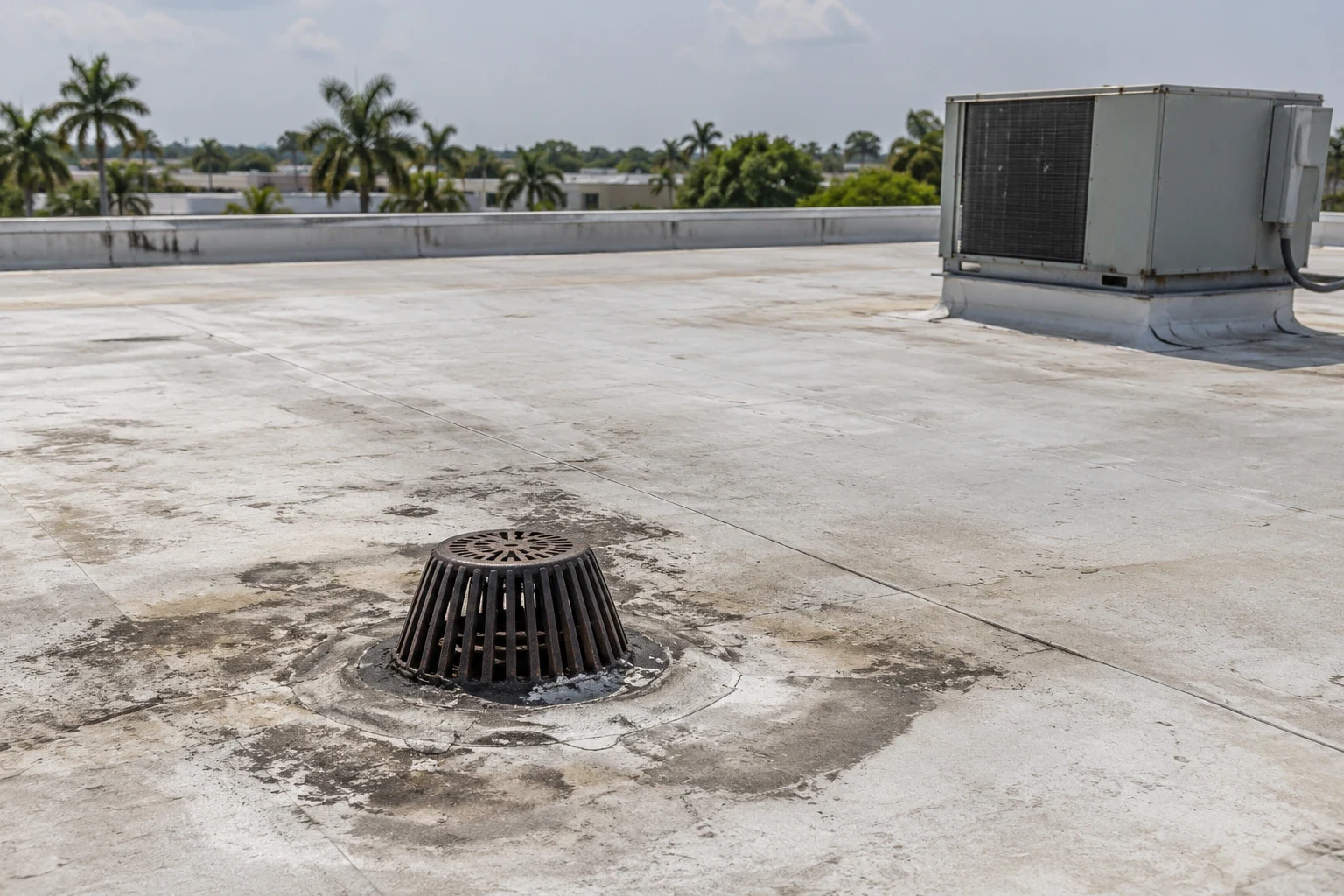
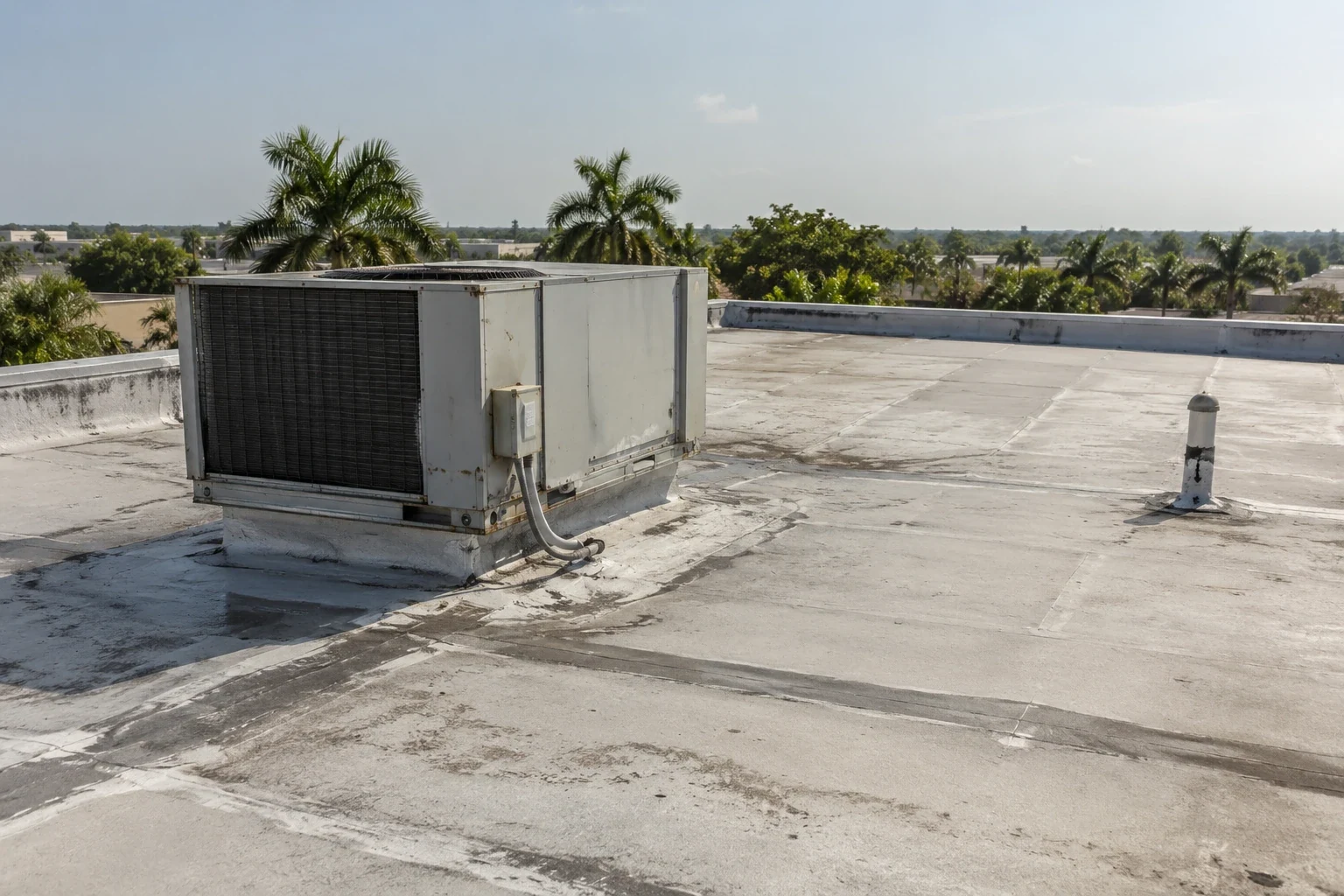
At the roof, we look for a safe route to the affected area and identify the likely opening. Wind can loosen sheet metal or membrane, while an open seam, damaged penetration or blocked outlet can admit water without obvious surface damage. We do not step onto unstable material or work near an unsecured edge. If access is unsafe, we explain the limit and coordinate an alternate protective step.
A temporary dry-in should direct water away from the opening and stay attached through the expected conditions. Loose plastic or a tarp laid over a roof can trap water or become a wind hazard. We secure the cover to sound areas, manage runoff and note where the temporary work begins and ends. If the membrane can be repaired under current conditions, we use a compatible method and record the preparation and finish.
The city’s stormwater program considers how rainfall interacts with tides when assessing flood risk. That is distinct from roof entry, but it reinforces the need to keep drains and discharge paths clear during emergency work. We remove debris created by the repair and check that outlets are not obstructed. A drain and scupper check can be part of the stabilization when an outlet contributes to the event.
Protect operations while the roof is exposed
We coordinate a work zone with the building contact, identify areas that need interior protection and agree on how crews and materials will move. In a warehouse, the manager may need to clear a bay or protect stock. At an office or retail property, the priority may be keeping a route open or isolating a ceiling area. The details change by building, so we ask for a contact who can make access and safety decisions.
For a building near Johnson Street, loading rules and tenant schedules guide arrival and equipment placement. In the Downtown Hollywood business area, access may depend on the property’s current delivery and parking conditions. We do not assume a district-wide rule applies to an individual property. The site manager confirms its own requirements, and we set a sequence that avoids leaving a roof section open when the crew must stop.
Once the area is stable, we photograph the roof, temporary work and affected interior conditions. The report distinguishes immediate measures from permanent repair recommendations. If the emergency work uncovers wet insulation, deck damage or a failed curb, we contact the authorized representative before expanding the scope. That keeps the emergency response clear and gives ownership control over additional work.
Move from dry-in to a durable repair
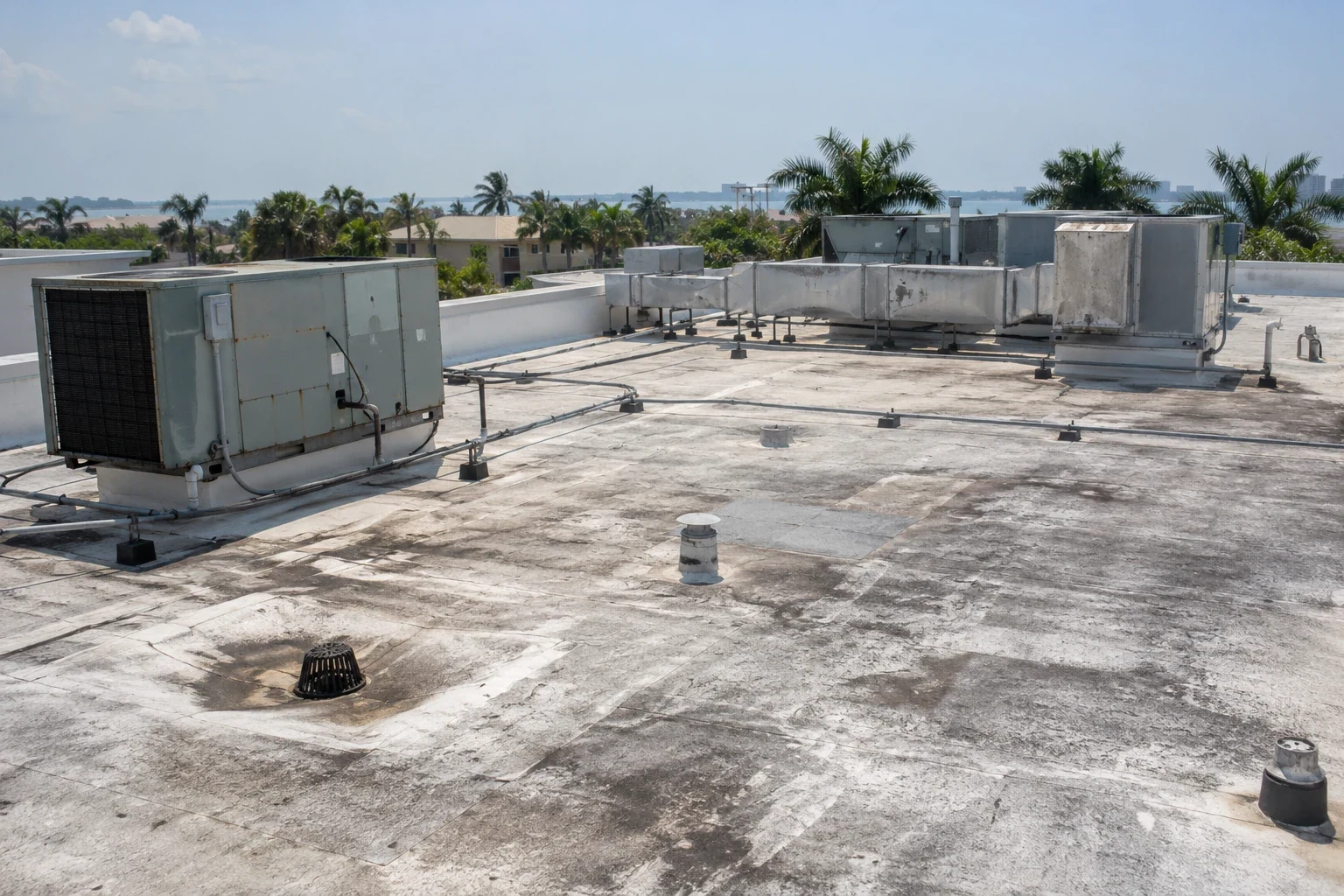
Emergency work buys time; it does not automatically solve the underlying roof condition. After the weather and access allow, we return to inspect the surrounding membrane, seams, flashing, drains and prior repairs. The permanent scope may involve a patch, replacement of a flashing detail, drain correction or a larger section of membrane. We explain which conditions were visible during the emergency and which require a closer inspection.
Repair material must match the roof system and substrate. We remove loose or contaminated material, prepare the repair zone and form a transition that sheds water. For coated roofs, we test adhesion and check the existing coating condition before applying more material. For a seam failure, we examine the adjacent run for movement rather than stop at the first open point. A planned commercial roof repair can address the full defect after temporary protection is removed.
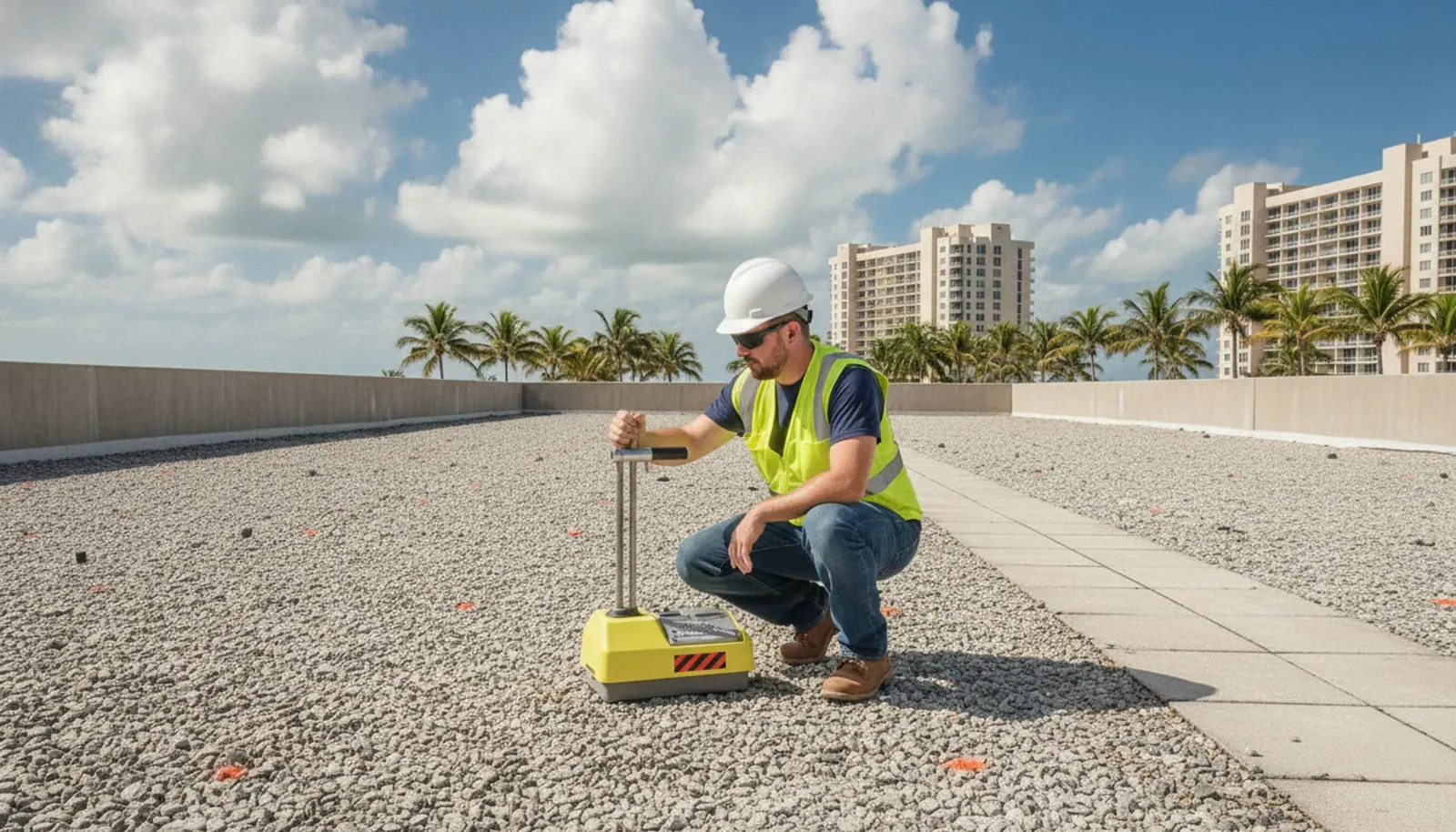
If a broader moisture pattern appears, a moisture survey or selected core cuts can help define the affected area. We document the test and avoid treating a temperature pattern alone as proof of wet insulation. A condition report gives ownership photos and locations for the follow-up decision.
Records for ownership and claims
Keep the emergency call notes, weather timing, photos, temporary protection details and permanent repair invoice together. A clear record shows when the condition was reported, what was accessible and what work was completed. If an insurer needs documentation, the manager can provide the roof observations and interior photos without relying on a memory of a fast-moving event.
We can organize observations for the property file, including roof plan markups, materials used and any limits on verification. The record should identify whether a cover remains in place and when it needs reinspection. After severe weather, another walk may be appropriate even if the first leak has stopped. The visible opening may have been only one result of the event.
Our emergency team serves Hollywood and nearby communities, including the Johnson Street commercial area, Washington Park and Hallandale Beach. Call with the entry point, building contact and roof access instructions. We will explain the safe immediate action, coordinate dry-in and set the permanent repair step.

