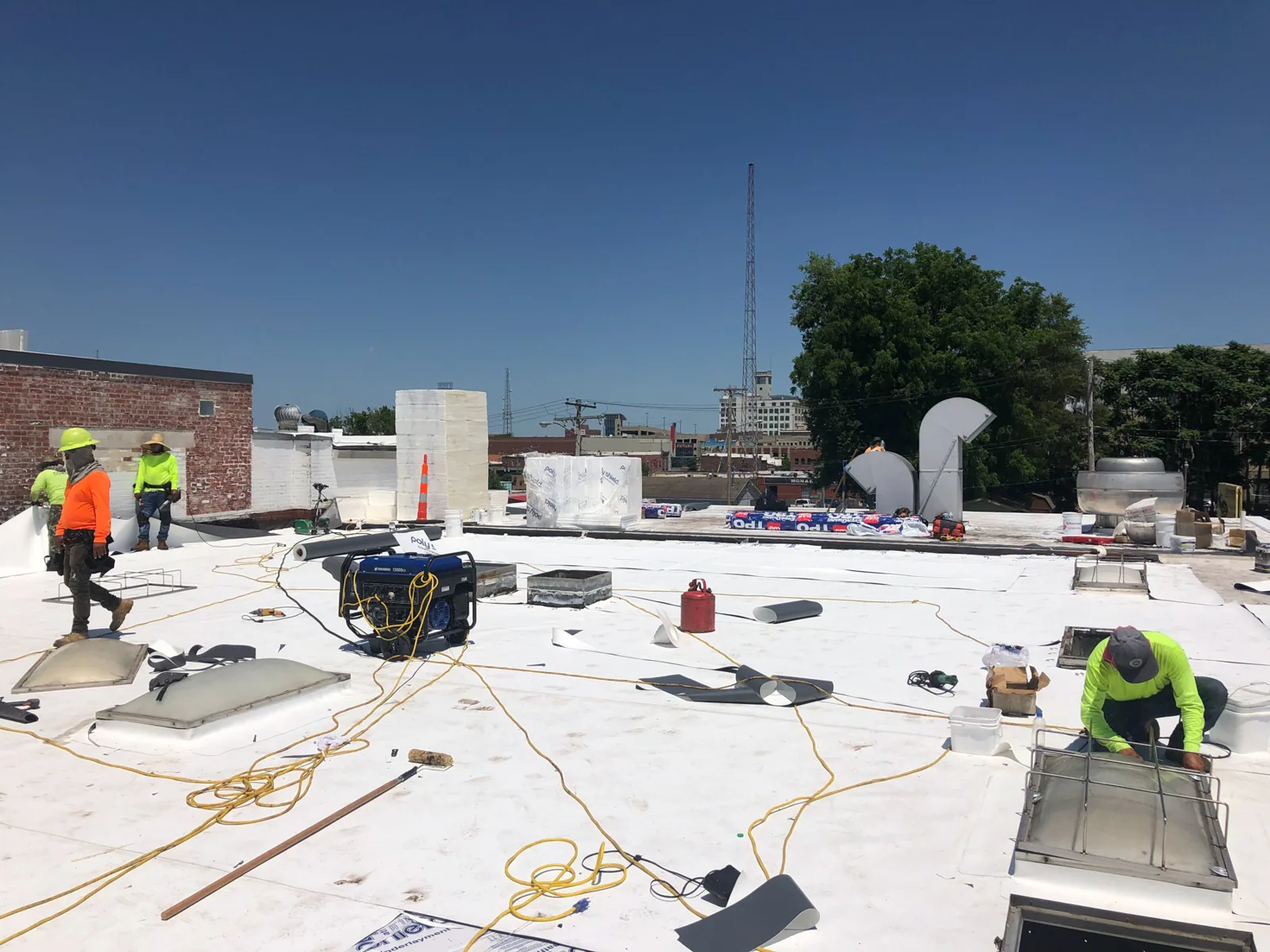
Need this roof reviewed?
Drain, scupper, cricket and ponding correction for commercial roofs in Hollywood, FL, with flow tests, depth readings and overflow checks.
On a low-slope roof, the drainage plane is only as good as its outlets. A blocked strainer, a scupper set above the roof surface or a bowl that sits higher than its surroundings turns a normal rain into a standing pond, and standing water finds every weakness in the membrane. In Hollywood, June brings about 8.84 inches of rain in the long-term normals and September about 8.67, so the outlets are tested hard and often.
Our work starts with a simple question: where does water go after it lands, and where does it stay? We trace the route from high points to outlets, measure how deep and how long water ponds, and decide whether the cure is cleaning, a new outlet, a slope correction or a membrane repair.
Rainfall, Tides and Outlet Demand
Hollywood's stormwater program models how rainfall and tides interact, and its citywide vulnerability assessment lists tidal flooding, storm surge and compound flooding among the hazards under review. A roof does not flood from the ground up, but the principle matters: a heavy rain that arrives when downstream conditions are already high puts maximum demand on the outlets, and any roof drain that depends on the same system can be slow to clear.
This is why overflow provisions matter. A secondary scupper set slightly above the primary outlet gives water a place to go if a drain clogs or the line backs up. Without one, water can climb the parapet flashing and enter the wall. We check whether an overflow exists, whether its opening is clear and whether it discharges where water will not cause its own damage. Water that pours onto a sidewalk, an entrance or a neighbor's wall creates a separate problem, and we mark those discharge points on the sketch.
Drain and Scupper Inspection
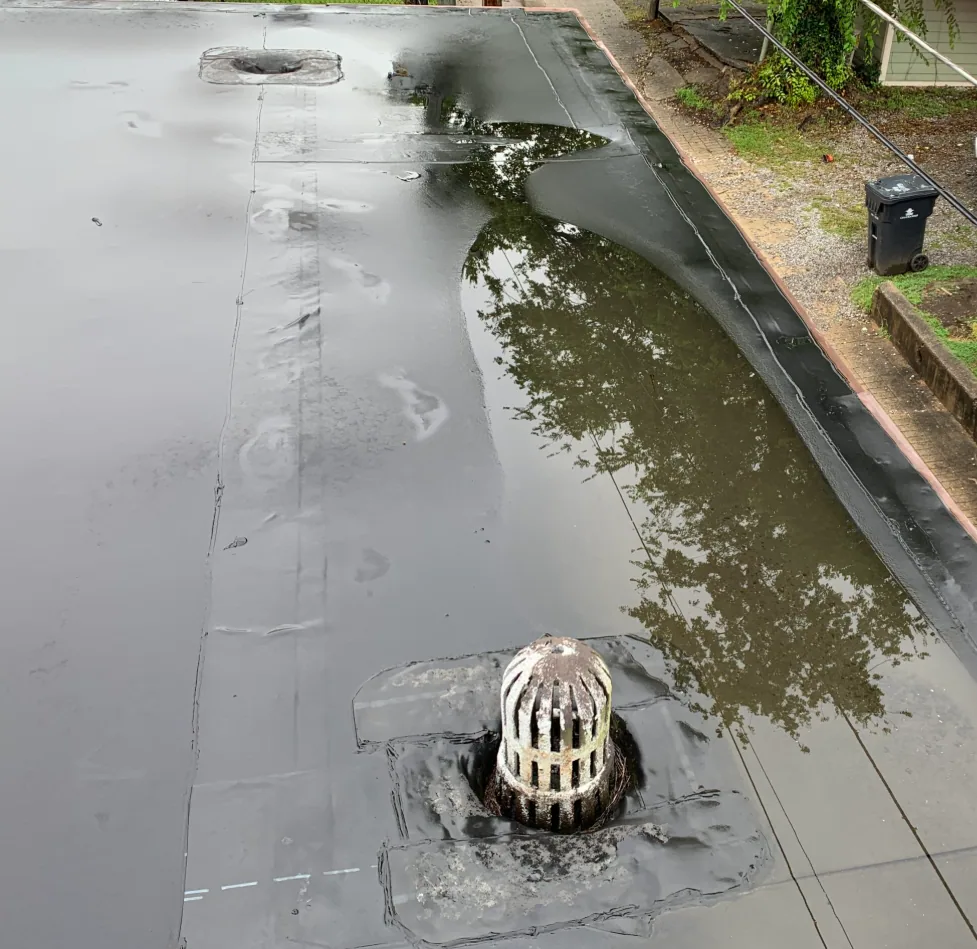
Interior drains are checked for the strainer, the clamping ring, the bowl, the flashing around it and the line below. We clear debris, pour water to test flow and watch how quickly the bowl empties. A hose run for a few minutes is enough on a dry day, and it shows whether the line carries the water away or backs up. A slow drain with a clean strainer suggests a restricted pipe, which we report for a plumber. A drain that clears fast while water stands nearby points to roof slope, not the outlet.
Heat plays a role in what we find. With August afternoons near 90 degrees, dark membranes and plastic strainers run far hotter than the air, and an old strainer can crack or warp. We replace damaged domes and rings, since a missing strainer lets debris into the line and a cracked ring lets water around the bowl.
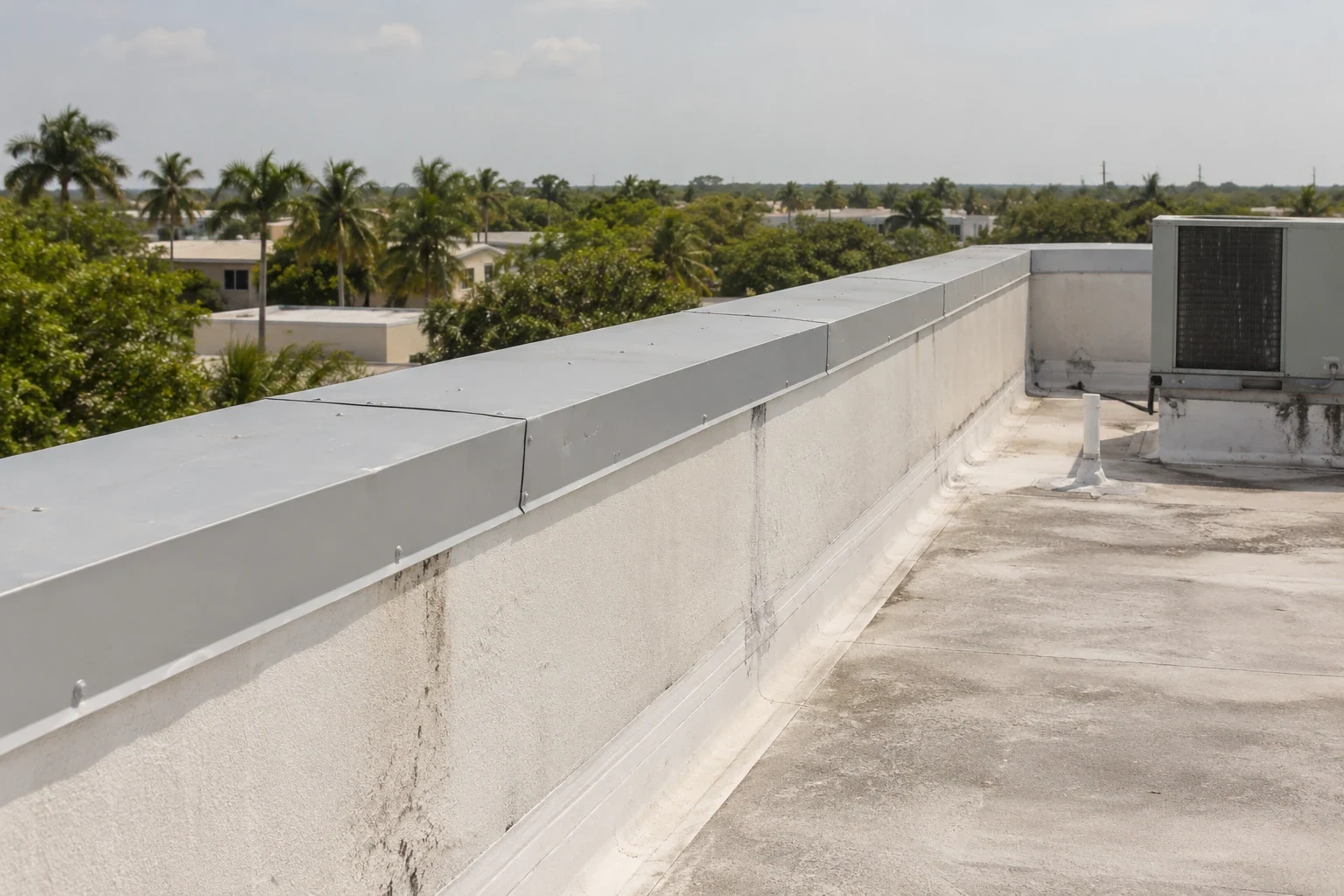
Scuppers pass water through the parapet or an edge. They are simple devices, and simple devices fail by being blocked, mis-set or poorly sealed. We check the opening size, its height relative to the roof surface, the liner or flashing around it and the discharge point outside. A scupper set above the membrane leaves a permanent pond behind it. A scupper whose liner has split lets water into the wall. Gutters and downspouts get the same review, with a look at whether leaf guards or screens are keeping the flow open or catching what they should pass, including joints, fasteners and the point where water finally leaves the building. The attachment details that keep them in place are part of our edge metal and gutter work.
Ponding Depth and Duration
Not every puddle is a problem. Brief ponding after a heavy rain is common. Ponding that persists beyond a day or two, or that returns in the same place every storm, is a condition to correct. We measure depth at the deepest point and note how long water remains after rain stops, then photograph the stain line left on the membrane.
Standing water ages seams, collects dirt and plant growth and adds weight. Where the deck has deflected, the pond deepens, and the added load makes the deflection worse. We look at the underside of the deck where it is reachable and flag any visible sag for a structural review before new layers are added. On membranes that have stayed wet too long, ponding water repair deals with softened seams, algae growth and delaminated patches.
Crickets, Tapered Insulation and Added Outlets
Correction options depend on cause. A cricket, a small sloped section built behind a curb or wall, diverts water around an obstruction that would otherwise dam it. Tapered insulation adds slope across a larger area and directs water to existing outlets. An added drain or scupper gives water a new exit where the structure allows one.
We recommend by measurement: how far water must travel, how deep it ponds and what the deck and framing can accept. Often a modest cricket and a cleaned outlet solve what looked like a membrane problem, and the cost is a fraction of replacement. Cost drivers are listed apart: the area to be sloped, the thickness of added insulation, the number of outlets, plumbing access and the membrane work needed to tie new material into old. If the structure cannot accept a new outlet, the proposal says so and offers the next best route. Where tapered material is part of a larger project, it ties in with insulation and cover board choices made at the same time.
Different Buildings, Different Outlets
Drainage layouts vary with building type. A roof along Hollywood Boulevard, a block near the Atlantic at the beach and a service building off Johnson Street can each have different parapet heights, different outlet counts and different downstream conditions. We do not assume a pattern. We read the layout on each roof and draw the water routes on the sketch.
For owners in the Historic Hollywood Business District or the Hollywood Beach Business District, we also ask whether a building sits within a historic designation, since changes that alter a visible scupper or gutter may need review before work.
Records and Seasonal Checks
Each visit records outlet condition with photographs, flow-test results and ponding measurements. A pre-season check in spring clears the winter's debris before the stormiest weeks of the wet season, which forecasters place at mid-May through early July. A post-season check confirms what the summer did. These entries, with photographs of each outlet before and after cleaning, become part of a maintenance record that shows whether conditions are stable or worsening.