Need this roof reviewed?
Commercial ponding water roof repair in Hollywood, FL: measured ponding depth, drainage correction, tapered insulation and drain work with photographs.
A pond on a low-slope roof is the visible end of a drainage problem, and how deep it is and how long it stays tell a roofer more than its outline. Commercial Roofers Hollywood measures and corrects ponding water on commercial roofs in Hollywood, FL, where June and September rainfall normals each exceed 8 inches and the heat between storms keeps the roof surface working. The first step is a record: depth at several points, time since the last rain, the nearest outlet and the condition of the membrane under the water. From that record we separate a blocked drain from a low spot, a sagging deck from a flat slope, and decide what repair actually removes the water.
Ponding depth and duration
Standing water has two measurements that matter. Depth shows how much load and how much membrane exposure the pond creates, and duration shows how much of the drainage plane is working. We measure depth with a straightedge or a level at the deepest point and at the edges, record the time since the last rain and return after the next one if the first visit is inconclusive. Water that is gone within a day or so points to slow drainage. Water that remains for days points to a low area that the outlets cannot reach. Photographs include a scale, a reference point and a wide view that shows the pond's relation to the nearest drain.
The membrane under the pond is checked at the same time. Prolonged water can accelerate algae growth, dirt accumulation, seam softening and surface wear, and it shows where the repair boundary should sit if a section needs replacement.
Outlets, strainers and discharge
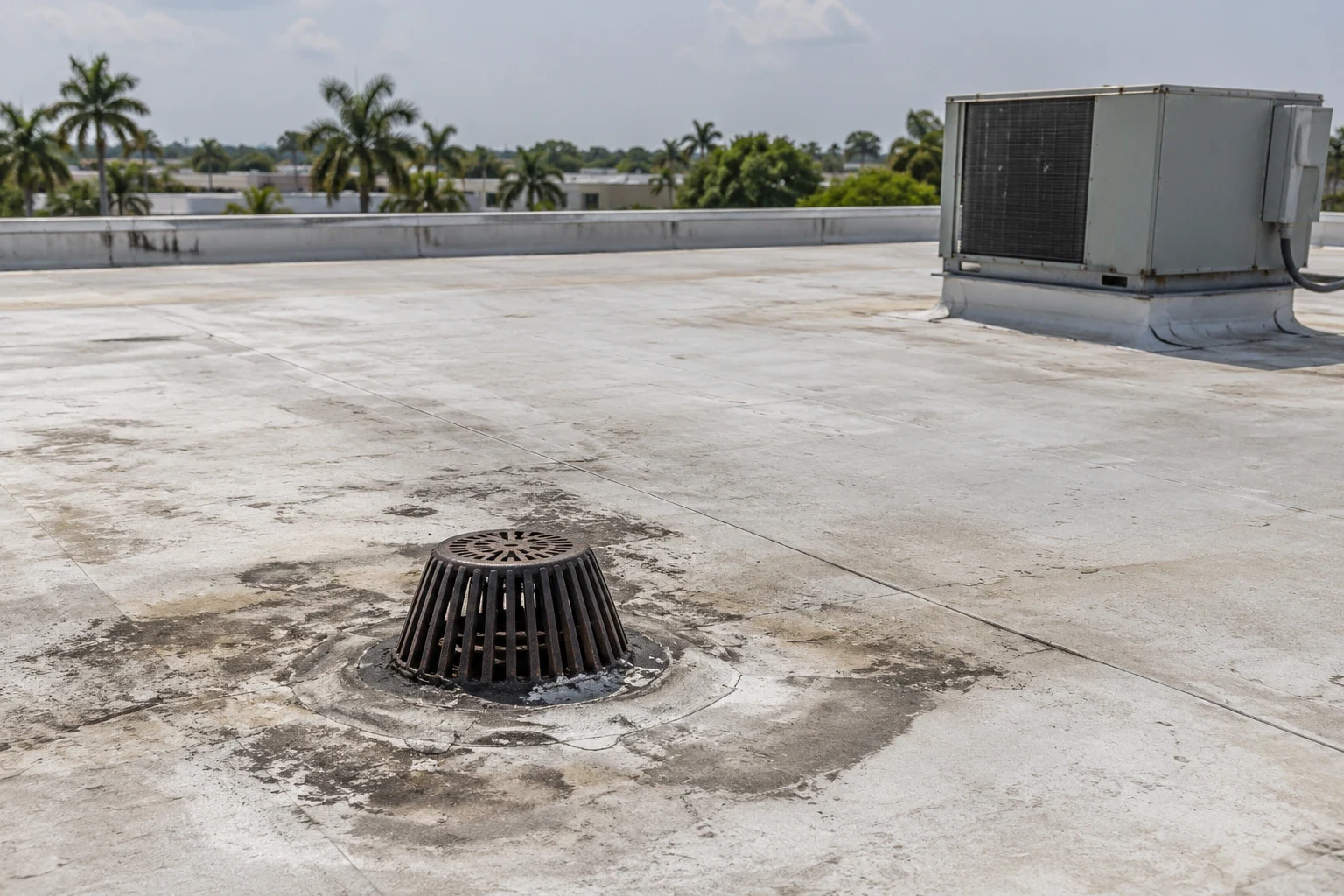
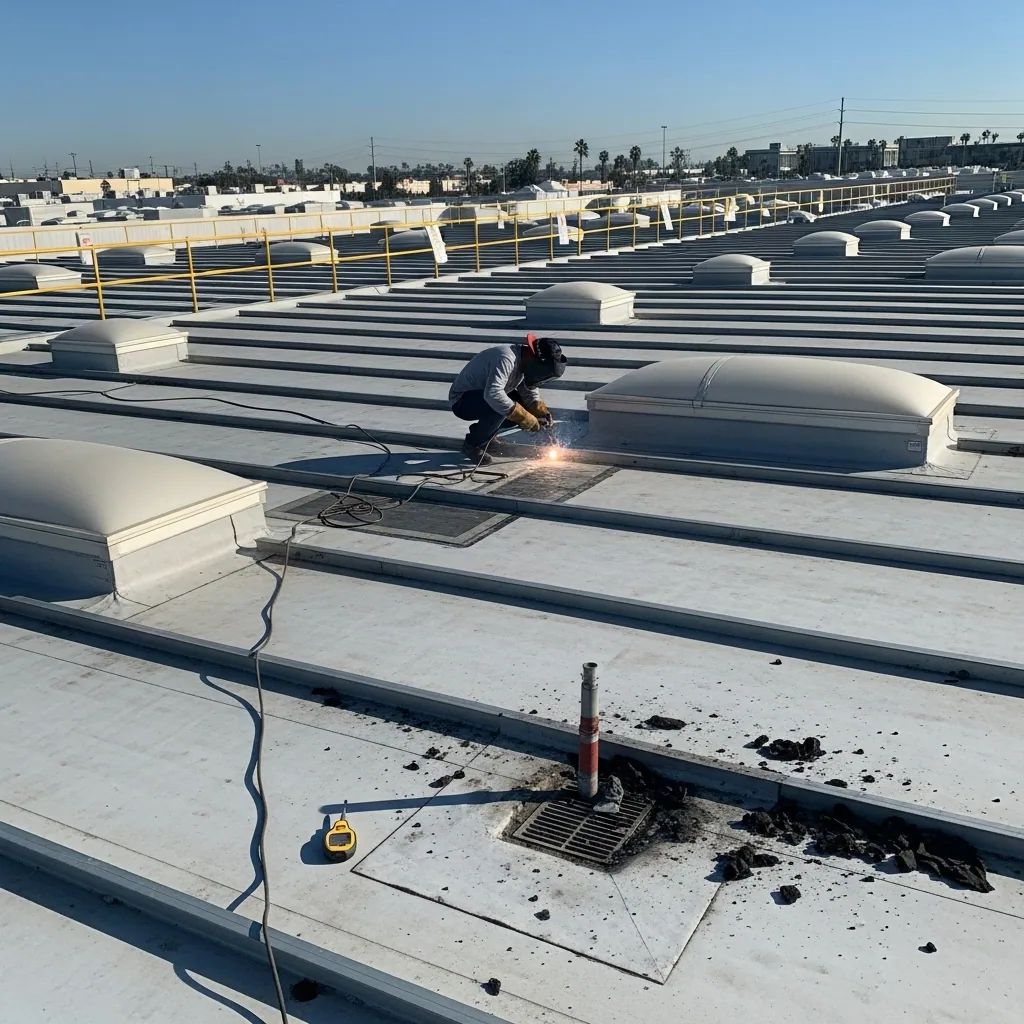
A large share of ponding is a maintenance problem. A strainer clogged with leaves, a drain bowl packed with grit, a scupper throat narrowed by roofing debris or sealant, or a downspout that backs up can hold water on the roof for hours. We clear and photograph each outlet, test flow with water if safe, and follow the downspout to its discharge point. The City's stormwater program models rainfall and tides together, so where a downspout discharges is checked rather than assumed. If a downspout connects to a system that backs up, no roof repair will fix the ponding, and the finding goes to the owner as a site drainage item. Clearing and repairing these outlets is roof drain and scupper work.
Overflow routes matter as much as primary drains. Code and good practice call for a secondary path for water if the primary drains clog, and a scupper set too high or blocked by a later wall addition offers no relief. We check the elevation of each overflow relative to the primary drains, confirm that it discharges clear of walkways and photograph the arrangement so that a later change is visible.
Slope, deflection and low spots
When outlets are clear and water still stands, the cause is shape. A roof may have been built with too little slope toward the drains, a deck may have deflected under equipment or long-term load, or insulation may have compressed in a patch. We check slope with a level or a laser between drains, look for deflection at joists and beams, and compare the pond location with the structure and equipment. The remedy depends on the cause: tapered insulation to create slope toward the drain, a cricket behind a curb to divert water, an added drain at the low point, or a structural repair by others if the deck has failed. The scope names which one the evidence supports and prices each separately.
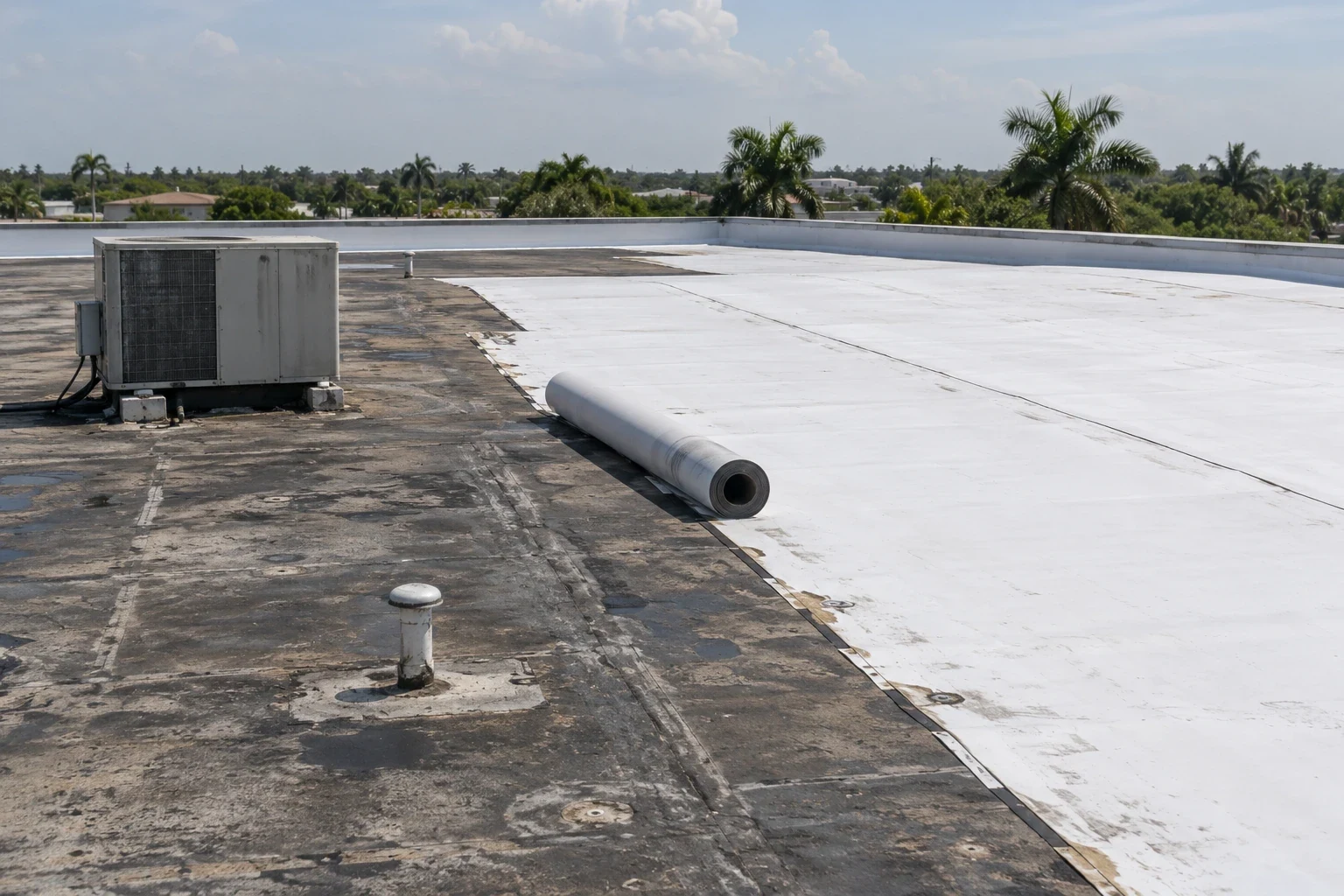
When a recover is considered over a roof with ponding, the slope problem has to be solved first. A new membrane laid over the same low spot holds the same pond. Tapered insulation installed as part of a roof recover can correct slope while adding thermal value, provided the deck can carry the added weight and the wall heights at flashings allow for the extra thickness. Both checks are made before the option is priced.
Wet insulation under a pond
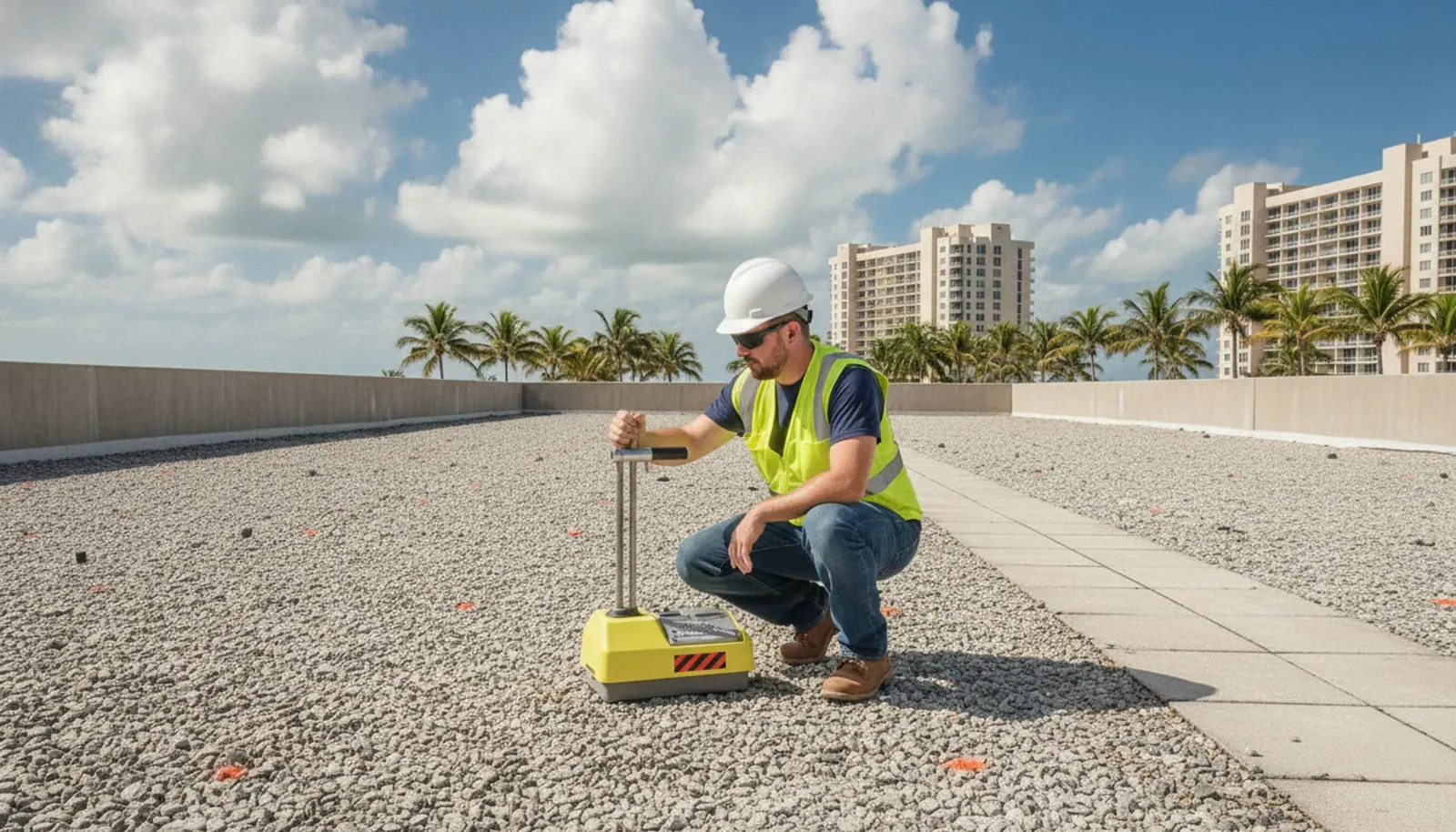
Water that stands for long periods raises a question about what lies below. A membrane that has been under water for weeks may have developed small leaks, and insulation beneath it may be wet. An infrared moisture survey maps temperature patterns that can indicate moisture, and core samples confirm what the scan suggests. If the insulation is wet, the repair boundary has to include it; sealing the top while moisture remains hides a problem that will return. If the insulation is dry, the repair can focus on drainage and surface. Records of the core locations, readings and photographs go into the file with the plan.
Maintenance that keeps ponds from forming
Most ponding that starts as a nuisance becomes a repair because nobody cleared the drain. A preventive maintenance visit before the wet season clears strainers, sumps and scuppers, removes debris from corners and behind equipment and records ponding depth from the previous season. A second visit after the heaviest months repeats the measurements and compares them. If a pond has grown, the cause is investigated before the next season. Photographs from the same positions each time make the trend visible, and the record also shows whether a repair worked. For owners with several buildings, the same visit pattern applies, and a shared format makes it easy to see which roofs are holding water and which are not.
Flashing failures often pair with ponding because water that stands against a wall flashing finds every gap. When a pond reaches a wall, the flashing is checked as part of the same visit, using the same steps as for a flashing failure.
Rain, heat and flood context
Averaging 76.1°F over the year, with August afternoons close to 90°F, Hollywood leaves a ponded membrane hot while it holds water. Drains should be cleared before the stormiest weeks of the wet season, which begin in mid-May. Tidal flooding, storm surge and compound flooding all appear in the city's vulnerability assessment, and more than 11,000 Hollywood properties fall in a FEMA Special Flood Hazard Area. For a roof in that setting, we ask that overflow openings be inspected before each wet season and sized to carry water if a primary drain is slow.
Where ponding shows up in business districts
A building with several roof levels has to be checked for water draining from an upper roof onto a lower one, which can wear a line in the membrane, and that check applies in Downtown Hollywood and the Historic Hollywood Business District along Hollywood Boulevard as much as anywhere. In the Johnson Street Business District (56th Avenue to US-441) and in the Washington Park Industrial Area, home to a named city redevelopment program, the walk starts at the outlets and works outward to the low spots. Repeated ponding often shows up alongside seam failure, and the two are inspected together.

