
Need this roof reviewed?
Distribution and fulfillment center roof repair and replacement in Hollywood, FL, planned around dock hours, with drainage review and moisture mapping.
Inside a fulfillment building, the roof competes with the schedule. Trucks load at dawn, pickers move through aisles all day and a leak over a conveyor or a high-value rack is a shipping problem as soon as it is a roofing problem. A distribution roof is a large, low-slope surface carrying rooftop equipment, drains and often skylights, and any one of them can be the water entry point. In Hollywood, FL, summer heat and a wet season that peaks in June and September test those details on a schedule the weather sets. We start with the roof layout, the interior leak marks and the operating hours, then inspect the field and the transitions, and we write a plan that fits the way the building works.
Operating hours and the work window
The first constraint on a distribution roof is time. Dock doors open at set hours, shifts change, trailers stage in lots and the building may run around the clock. A roof crew needs a window in which cranes, material staging and debris chutes do not conflict with truck movement or employee parking.
We ask for the dock schedule, shift change times and any seasonal peak, then lay out the work in zones. Active zones stay small, each opened section is dried in before the shift ends and interior protection goes over racking and equipment in the affected bays. The plan is written and shared with the property manager, so the roof schedule and the shipping schedule are one document.
The Washington Park Industrial Area is in a public redevelopment process, so a roof project there may overlap with changes nearby, and we note any construction activity that could affect crane placement or truck routes.
Dock canopies and perimeter details
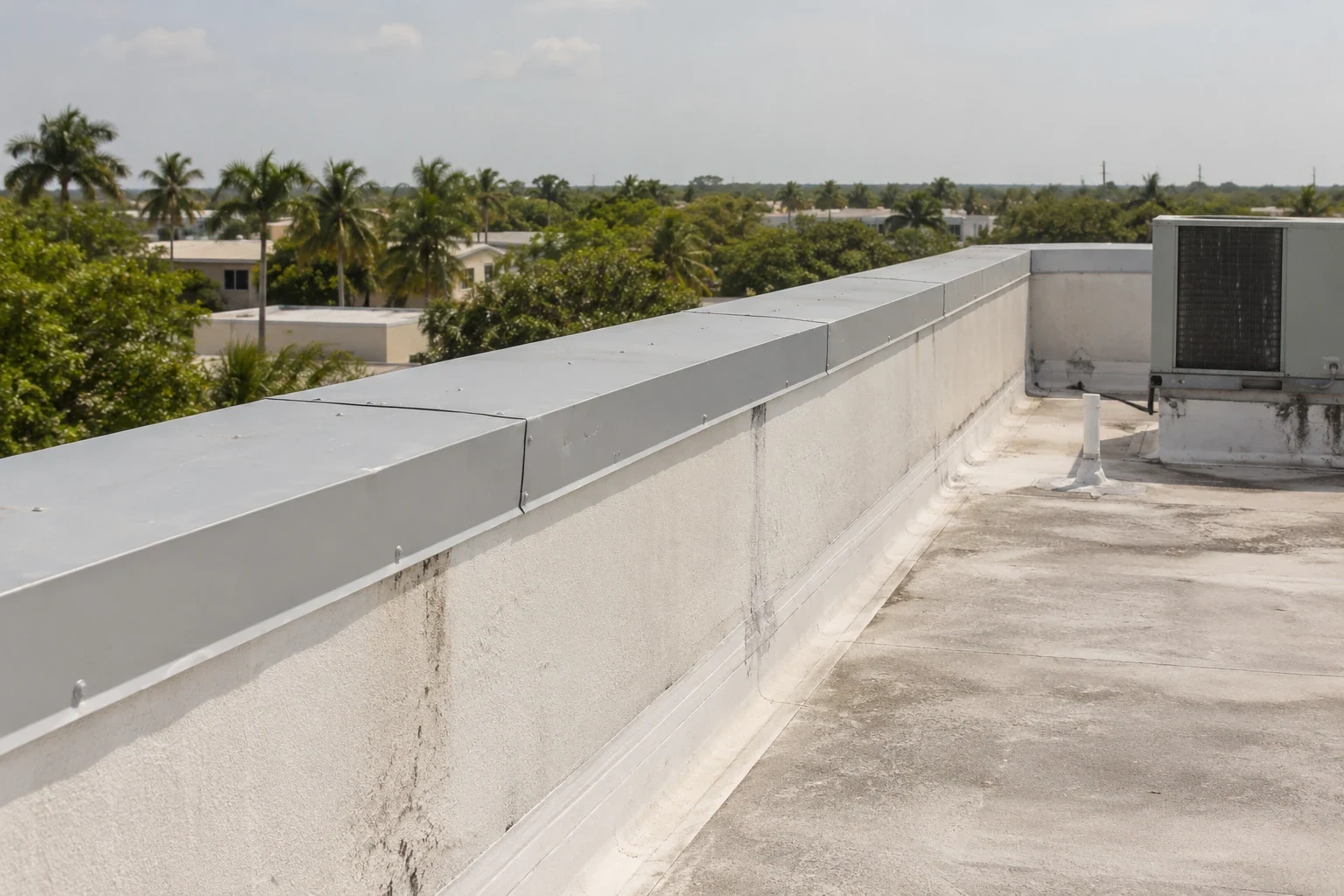
A dock-side roof edge sees more wear than the rest of the perimeter. Trailers bump the wall, canopies shed water onto a busy apron and gutters and downspouts discharge near traffic. Coping, edge metal and wall flashings take the movement.
We inspect the full perimeter, looking for loose metal, open joints, cracked sealant and flashings pulled from the wall. A leak at a dock door header often starts at the roof edge above it, and the repair is at the edge, not in the field. The coping, edge metal and gutter condition also tells us where wind and rain have been working. Every opening is photographed and logged.
Heavy rooftop equipment and curbs
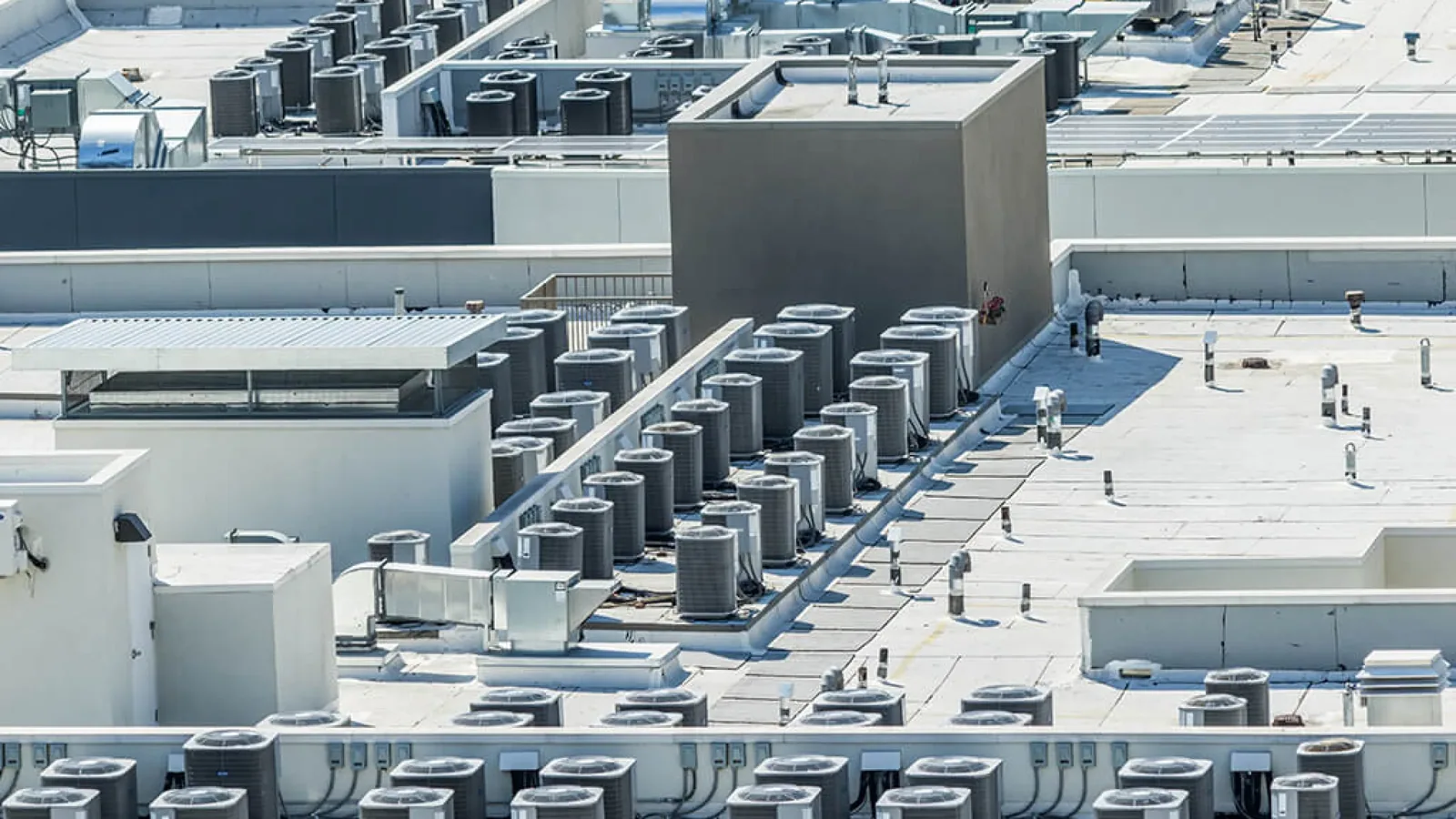
Cooling, ventilation, makeup air and exhaust equipment sit on curbs across a distribution roof, and each curb is a flashing detail. As equipment is added or replaced over the years, curb clusters grow and original flashings are cut or patched. Condensate lines, refrigerant lines and conduits cross the membrane.
We inspect each rooftop equipment curb and support for flashing condition, attachment and drainage around the base. Lines that rest on the membrane wear through it, so we recommend supports and walk pads on technician routes. When a mechanical contractor will be on the roof, we coordinate access, so a service call does not damage a fresh repair. Each cluster is logged by location in the roof file, with a photograph of every flashing, so a later technician can see what was there before the next service call.
Rooftop equipment replacement is also a chance to improve the roof. A new unit can be set on a better curb, with a fresh flashing and a walk route that protects the membrane, and we coordinate those details with the mechanical contractor.
Water entry over racking and conveyors
Water travels along the deck and drops where the structure allows it. In a distribution building, that can be directly over a conveyor, a sorting line or a sprinkler riser. We compare the interior marks with the roof layout, trace the likely route and test the seams, boots and drains along it.
When the source is not obvious, we scan for wet insulation or take core samples, then mark the wet area on the roof sketch. The map tells ownership how much of the roof is affected and whether a patch will hold. In the same visit we measure ponding depth after rain and check bowls, sumps and scuppers, because a clogged drain can turn a normal storm into a long soak over a large section.
Interior protection is not decoration. Plastic sheeting, drip pans and temporary diverters over high-value racking can save inventory while a roof is being repaired, and we place them before the first repair begins.
Heat, rain, and the storm calendar
Annual mean daily highs of 83.2°F at the NOAA Hollywood station climb to 89.9°F in August, and the roof surface runs hotter than the air. Mid-May through early July is the stormiest stretch of South Florida's wet season in NWS terms, so damaging winds, tornadoes, lightning, hail and flooding are most likely then, though a given site may see only a few.
We use those patterns for scheduling, not for assumptions. Spring inspections get ahead of the stormiest weeks, and a post-storm walk checks for confirmed damage only. A hail damage roof repair assessment documents bruising, punctures and displaced metal, and leaves unaffected sections out of any claim.
Due diligence for new and expanding tenants
Hollywood may grant qualifying new or expanding businesses in the Liberia Area Business Corridor an ad valorem exemption of up to 50 percent of the City's portion, subject to program requirements. A business weighing a move into a building in that corridor, or any corridor, benefits from a clear picture of the roof before signing.
Our due diligence roof survey reports the condition of each roof section, the moisture findings, the repair history that can be documented and the near-term needs that can be observed. The survey does not predict how many years remain; it records what is observable so lease and capital planning can proceed on facts.
Phasing and the repair decision
Findings sort the roof. Isolated defects over dry insulation get repaired. Sound sections over dry insulation may take a recover. Where insulation is wet or the membrane is spent, that section is a replacement candidate. Expect cost to track area, tear-off depth, insulation, penetration count, crane access and permitted work hours.
Permit review for reroofing falls to Hollywood's Building Division under the 2023 Florida Building Code, and we confirm the category and requirements before pricing. We then phase the work by section so shipping continues. A warehouse roof and a manufacturing plant roof share many details with a distribution roof, but the schedule is the difference.
At closeout the file lists sections repaired, products, moisture readings and photographs, plus a recommended walk after the first heavy rain.