
Need this roof reviewed?
Commercial hail damage roof inspection and repair in Hollywood, FL: impact marks mapped, moisture tested and documented before any scope is priced.
Hail leaves a pattern, and a pattern is evidence: bruises that line up in one direction, dents on metal that match the size of the marks on the membrane, fractured insulation under a surface that looks whole. Commercial Roofers Hollywood inspects and repairs hail damage on commercial roofs in Hollywood, FL, where hail is a listed hazard in the National Weather Service's stormiest wet-season phase. The first job is not a repair. It is a record of what the roof shows, location by location, so an owner and an adjuster can agree on what hail did and what age or foot traffic did.
What hail leaves on different surfaces
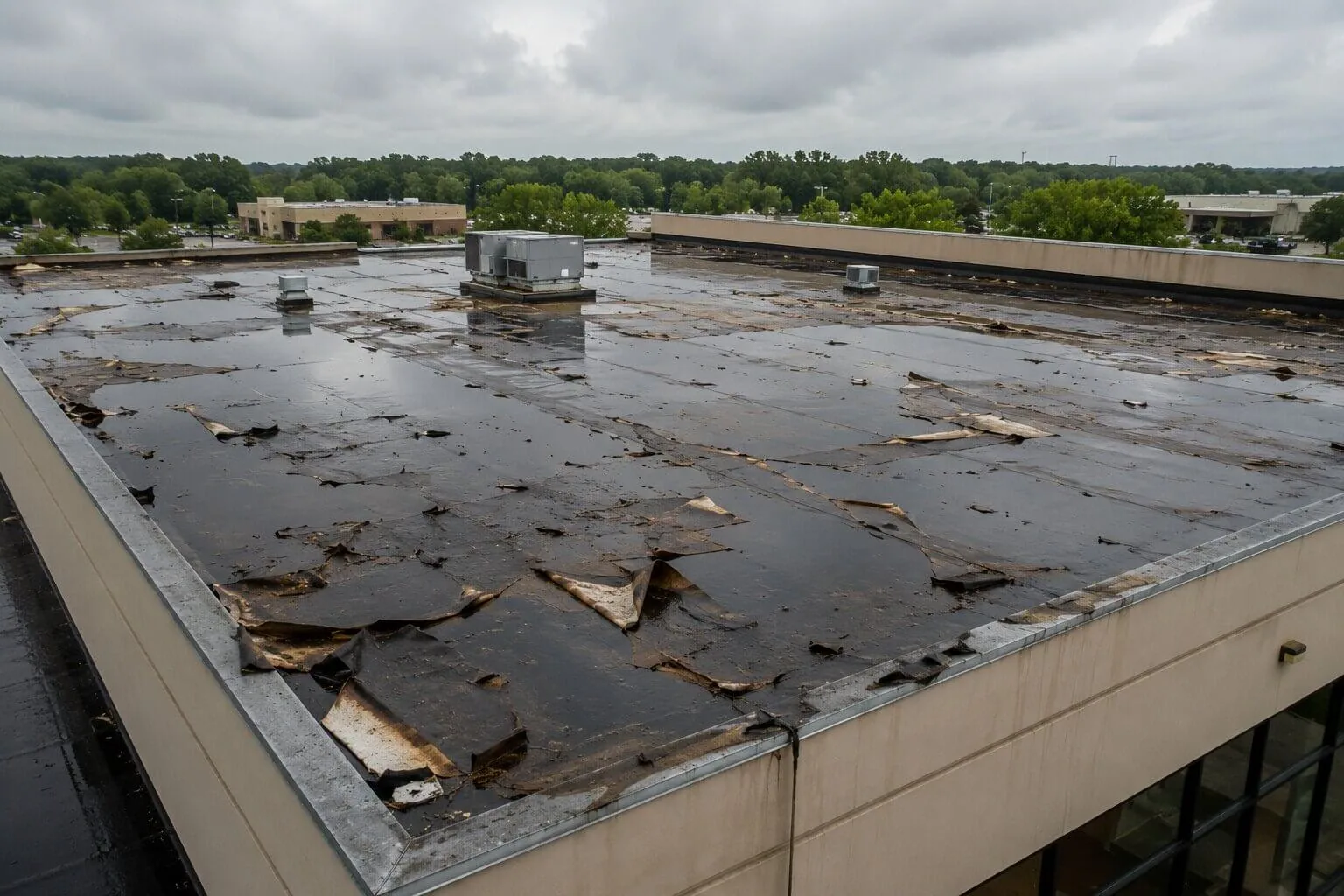
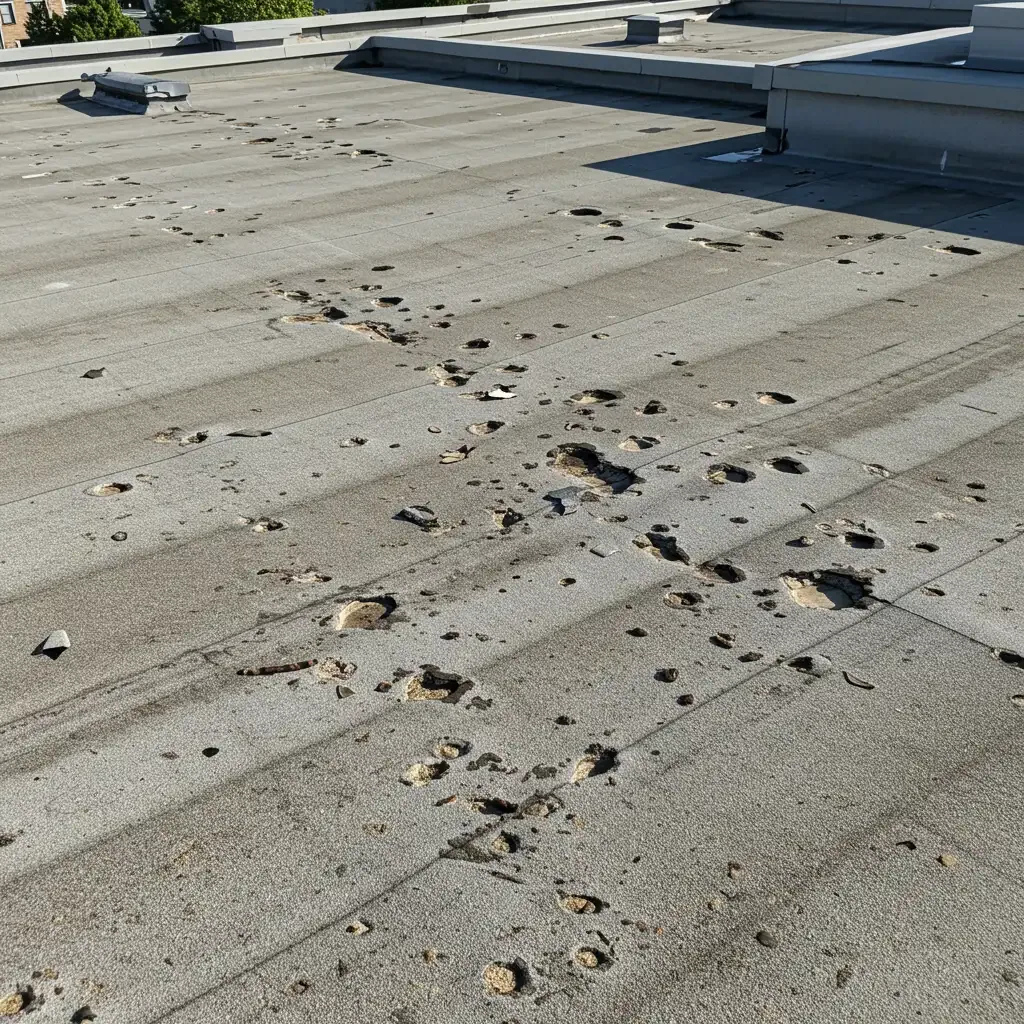
Each surface records impact differently. Single-ply membranes may show round bruises, fractures at the surface or tears at seams; the damage is easy to miss on a clean white roof. Built-up and modified bitumen roofs may show granule loss, bruising of the cap sheet and cracks in the coating. Metal roofs may show dents, scuffed paint and cracked sealant at laps. Rooftop equipment covers, vents and flashing metal often show dents that are easy to see and easy to count. We photograph with a low-angle light and a scale, mark each finding on the plan and compare the density of marks across different faces of the roof, since hail drives from a direction and leaves a distribution.
Older marks complicate the picture. A roof that has been through several storms may carry hail marks from more than one event, and surface weathering can soften the look of earlier impacts. Fresh marks tend to show clean edges and bright exposed material, while older ones are dulled and may have collected dirt. The distinction matters for a claim, so we describe the appearance of marks and record any that look older than the event.
Sampling and counting
On a large roof we do not count every mark. We divide the roof into zones, choose test areas on each, count and measure impacts within each test area and photograph them. The counts show whether damage is uniform, concentrated on one side or limited to a few spots. Cores and test cuts show whether bruises have fractured the insulation below, which can happen even if the membrane surface looks intact. The sampling plan is written down so a reviewer can repeat it. Results go into a table by zone: number of marks, size range, depth where measured, and condition of the layer beneath.
Safety and access influence sampling. Marks on a roof edge, near a parapet or at a skylight are harder to reach than those in the field, and we use harnesses and tie-offs where the plan calls for them. When an area cannot be reached safely, drone images supplement the record, and the report says so. Weather during inspection matters too: wet surfaces hide small marks, and hot surfaces make footwear leave scuffs, so inspection runs on dry mornings where possible.
Metal roofs, vents and equipment
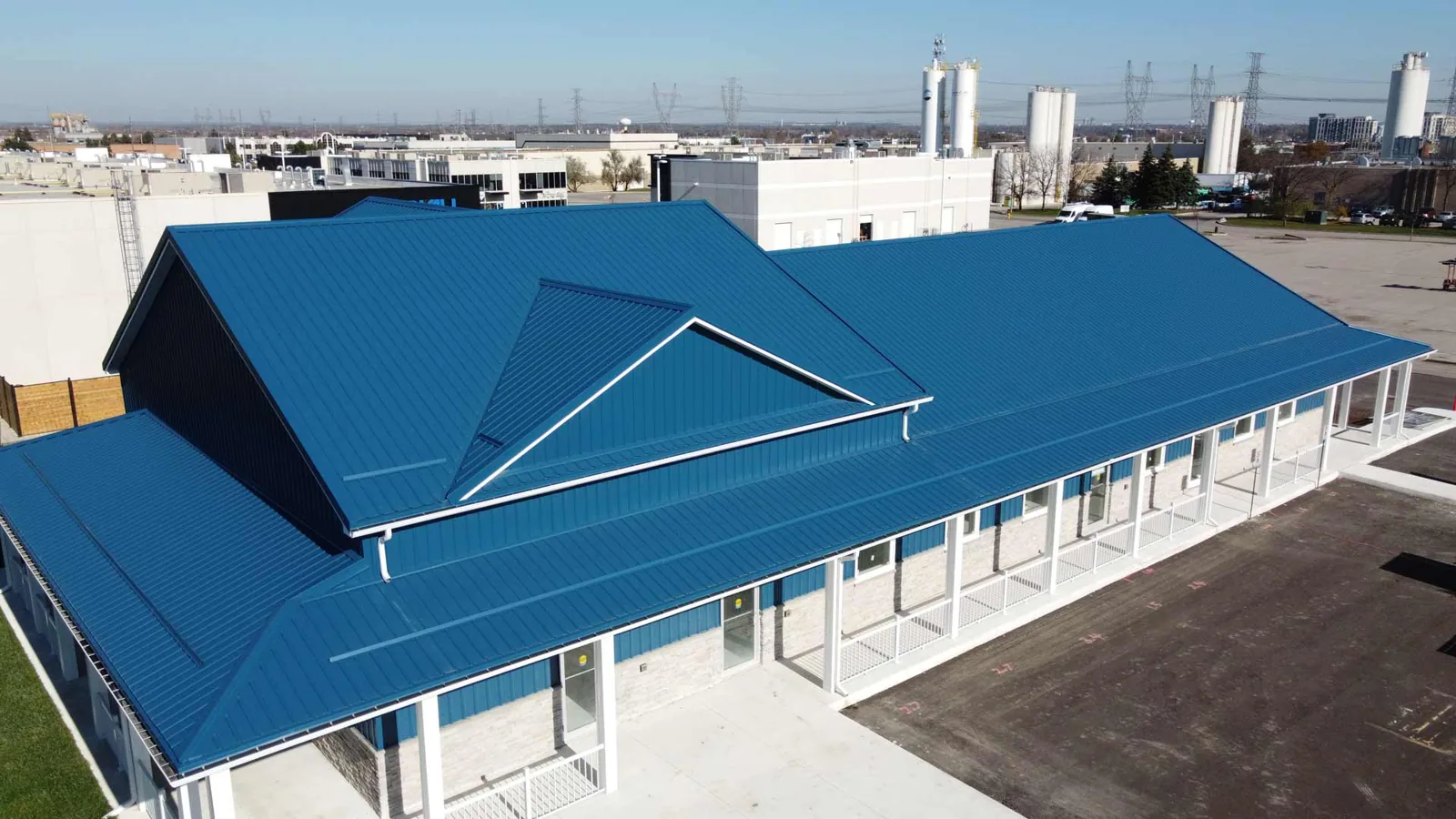
Metal reacts to hail with dents and finish damage, and the question is whether the dents affect performance. A cosmetic dent in a standing seam panel is different from a crushed seam, a cracked sealant at a lap or a deformed clip. We check seams and laps along dented panels, test sealant adhesion and photograph fasteners. On a standing seam metal roof, panels that have lost their seam closure are repaired or replaced, while panels with cosmetic dents only are documented and left for the owner and insurer to resolve. Equipment covers, skylight domes and plastic vent caps are inspected for cracks, since a cracked dome admits water even when the roof around it is intact.
Edge metal and coping take hail on their exposed faces. Dents that open a joint or crack a sealant line become leak paths, so we examine joints along each dented run. Wind often accompanies hail in a wet-season storm, and the two can combine to loosen edges, which is why wind damage is checked at the same visit.
Moisture after impact
Hail damage becomes a leak when water reaches the damaged spot, and with June and September rain averaging roughly 8.8 and 8.7 inches, the opportunity arrives quickly. We test for moisture with a meter, an infrared moisture survey where conditions allow and cores when the readings are high. Wet insulation changes the repair boundary, because sealing the surface over a wet layer hides a problem. If insulation is dry, repairs can focus on the damaged membrane. The report records each reading with its location, so a later check can show whether moisture is spreading.
Separating hail from other causes
Not every mark is hail. Foot traffic leaves scuffs in lines along service routes, debris leaves isolated impacts, aging leaves crazing and blistering, and chemical exposure leaves staining. We distinguish them by distribution and shape: hail marks cover broad areas with similar spacing and size, while other causes follow routes, equipment or exhaust. Pre-loss photographs, if available, are compared position by position. The report names what it attributes to hail and what it does not, and the insurer makes the coverage decision. Where debris has also pierced the surface, the same photographs and measurements support a membrane puncture repair.
Repair, restore or replace
The scope follows the findings. Isolated damage is patched or replaced in small sections, with the repair boundary drawn around each mark cluster. Broader damage with intact insulation may be treated with a restoration option such as a compatible coating, once seams are repaired and the surface is cleaned. Widespread fracture or wet insulation points to section or full replacement. Pricing follows roof area, access, how many penetrations interrupt the field, insulation condition and tenant hours. A storm damage roof repair scope covers emergency protection first and leaves the permanent decision to the evidence.
Location shapes access. The Hollywood Beach Business District, near the Atlantic, lists parking, transit and Broadwalk events among its concerns, and the historic business district near Young Circle follows a street plan laid out in 1921. Each setting changes staging, lifts and street conditions, and the plan for work in the Hollywood Beach Business District names them before material is ordered.
Records for owners and adjusters
A hail file contains dated photographs of each zone, the sampling plan and counts, moisture readings, core findings, a plan of marked areas and a written summary. Permit records are included, since the Building Division reviews permitted roof work against the 2023 Florida Building Code. Properties in the Downtown Hollywood area and elsewhere share a climate that can produce hail in the wet season, and owners with a baseline of their roof before the season can show what changed. Roof condition reports provide that baseline.
Related Roofing Topics

