Need this roof reviewed?
Commercial wind damage roof repair in Hollywood, FL: edge metal, flashing and membrane uplift documented, dried in and repaired with photographs.
Wind damage on a commercial roof starts at the edges, so a lifted coping joint or a curled corner of membrane is usually the first visible sign and the last place the water entered. Commercial Roofers Hollywood documents, dries in and repairs wind-damaged commercial roofs in Hollywood, FL. The sequence is the same on every building: protect the interior, photograph the damage where it lies, trace the path of displaced material, and then decide whether the repair can stay local or whether the uplift reached the attachment of a wider area. The report ties each observation to a location and a next step, because an owner has to decide between a repair and a larger scope with evidence on the table.
Edge condition and uplift
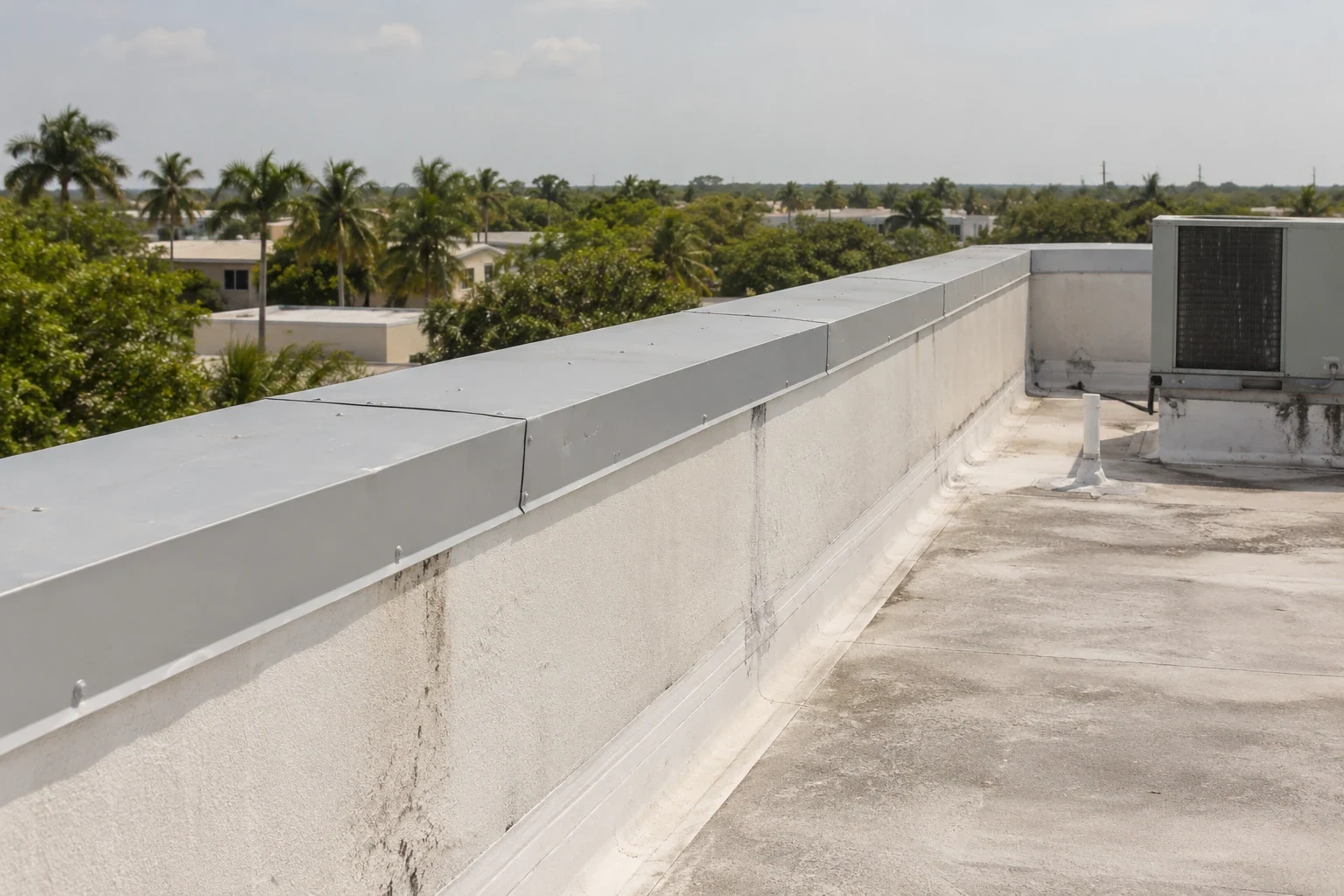
Wind pulls hardest at corners, perimeters and parapet caps, where air turns over the building and creates suction. A loose coping joint lets air under the cap, a lifted edge metal flange pulls fasteners, and a curled membrane edge opens a path for the next rain. We walk the full perimeter first, pressing and probing coping, drip edge and termination bars, photographing every joint, fastener and sealant line, and noting which direction the damage faces. Corners get a second look because they carry the highest loads. A single open joint on a long run is a local repair, while a pattern of lifted fasteners along one side suggests the attachment itself needs review, and the scope changes accordingly.
Metal roofs behave differently from membranes. On a standing seam roof, we check clips, panel seams, ridge and eave trim and end laps for movement, since wind that lifts a panel can open a seam without tearing the metal. On a low-slope membrane, we check the seams and attachments along the perimeter and at penetrations. Both get a probe or a pull check at a sample of locations, and the results are recorded by zone so the owner can see where attachment is sound and where it is not.
Debris impact and displaced material
Wind carries material, and the roof records where it landed. Bent curbs, dented covers, torn flashings and punctured membrane often line up in a direction that shows how the wind moved. We map debris and impact marks on the plan, collect or photograph loose material and look for secondary damage where a displaced unit cover exposed wiring or a drain. A torn flashing near a punctured area may mean a second leak path that the first inspection missed. Rooftop equipment is checked for displacement on its supports, and any unit that has moved is photographed before it is touched, since a shifted curb can tear the membrane around it without leaving an obvious cut.
Roof drains collect storm debris, and a blocked drain after a wind event turns the next rain into a ponding problem. We clear strainers, record what was found and photograph the outlet before and after, so a drainage defect is not mistaken for storm damage later.
Wet-season wind in South Florida
Wet-season wind peaks in the weather service's stormiest phase, mid-May into early July, alongside tornadoes, lightning, hail and flooding. For a property manager, that is the window when edge condition should be good, drains clear and loose items secured. Before the season we recommend a walk with photographs of every edge, cap and corner; after any wind event, a second walk compares the same positions. The comparison shows what changed, which is the information an adjuster, a lender or an owner needs. The same walk applies after tornado damage and hurricane damage, though the debris patterns differ.
Dry-in before the permanent repair
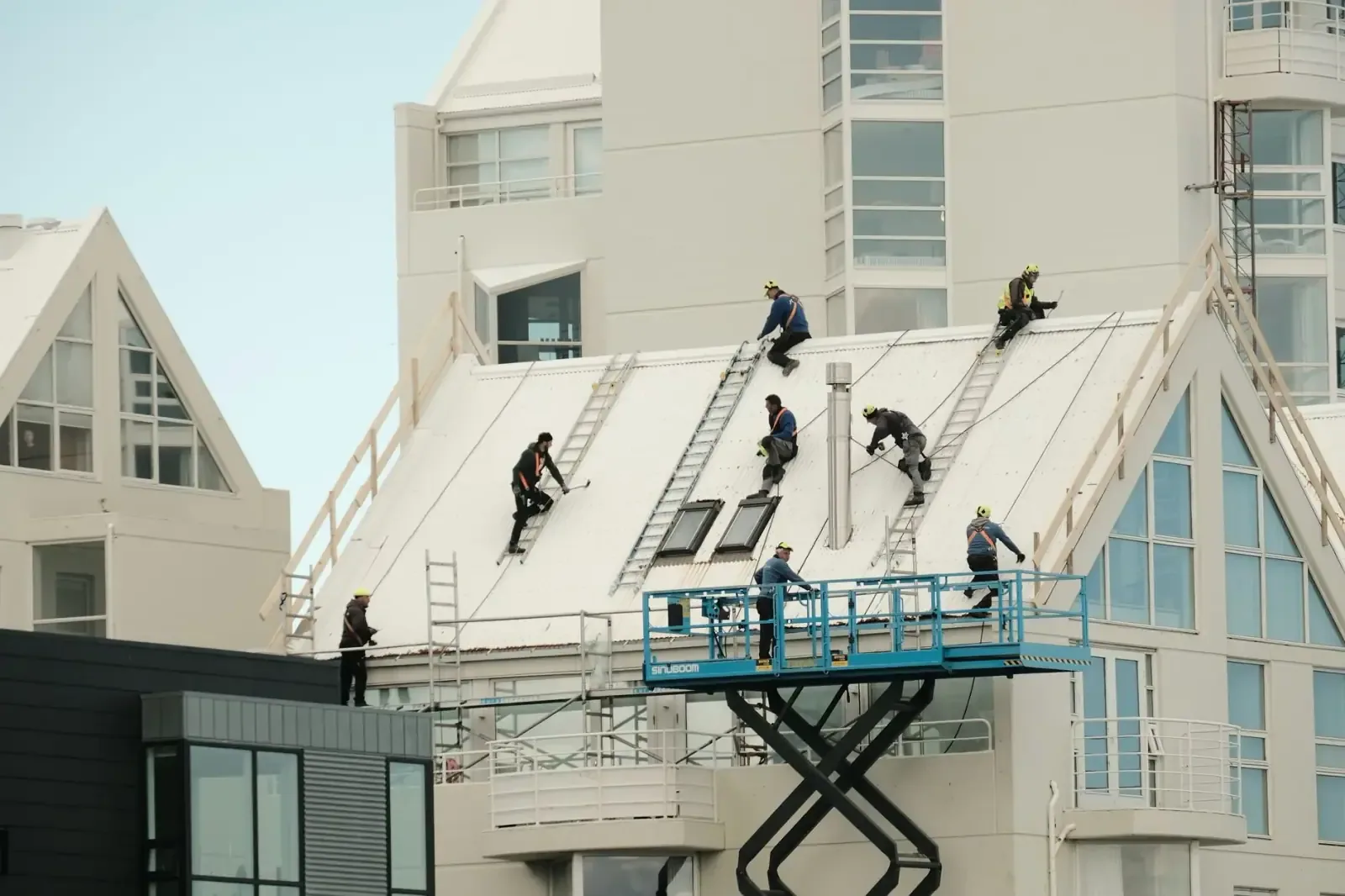
If wind has opened the roof, the first job is to keep water out. Temporary measures include securing edge metal, sealing torn membrane, covering exposed insulation and closing penetrations. Each measure is logged as temporary with photographs and a revisit condition, and the permanent repair is scheduled separately so the file shows both. Emergency roof repair crews can reach a storm-opened roof at night or on a holiday. Interior protection is coordinated with the building contact, and wet insulation is flagged for moisture testing before the permanent scope is priced, since sealing wet insulation under new material hides a problem.
Repair choices after wind
The repair follows the damage. Loose edge metal is reset with new fasteners and sealant, or replaced where the metal has deformed. Torn membrane is cut back to sound material and patched with a compatible repair, with a clean tie-in width. Damaged flashings are rebuilt. Where uplift has loosened a wider area, the scope can include re-securing or a section replacement. Cost follows area, access, penetrations, insulation condition and tenant hours. Permit and wind-uplift requirements are identified in the scope under the 2023 Florida Building Code as the Building Division applies it. Edge work is detailed under edge metal, coping and gutters.
Claim records and documentation
Wind claims turn on the physical record. Insurers and adjusters look for dated photographs, a plan of findings, evidence of cause and a clear separation between storm damage and existing wear. We photograph before disturbing anything, mark each finding on a plan, note the direction of displaced material and record moisture readings where water may have entered. Pre-loss photographs, if the owner has them, are compared with post-loss images position by position. The report states what the roof shows and leaves coverage decisions to the insurer. Owners who want a baseline before the next season can build one through roof condition reports, which makes any later comparison straightforward.
When repairs end, the file gains finished-work photographs, product data, permits and a drawing of what was repaired. Permit records matter because the Building Division reviews plans and inspects methods and materials for compliance with state and local codes. A complete file shortens the final stages of a claim and serves as the starting point for the next inspection.
Coastal and inland exposure
Wind exposure differs between the beachfront and the inland corridors. The Hollywood Beach Business District lists events on the Broadwalk and parking among its concerns and sits near the Atlantic, where edge metal and fasteners also meet salt, while the historic business district around Young Circle follows the 1921 street plan and its roofs get their own edge-by-edge check. We do not assume what any property has on its roof. Staging and lifts for work in the Hollywood Beach Business District are planned around district traffic and events.
Where a Downtown Hollywood building shares a parapet or roof edge with a neighbor, a lifted cap on one can affect the next. We check shared parapets and adjoining roof edges and note which party owns each. Work in Downtown Hollywood is staged with the event calendar in view.

