Need this roof reviewed?
Commercial tornado damage roof repair in Hollywood, FL: structural safety, debris impact mapping, emergency enclosure and permit-ready repair scopes.
A tornado can damage one building severely and leave its neighbor untouched, and the roof records which path the storm took. Commercial Roofers Hollywood evaluates and repairs tornado-damaged commercial roofs in Hollywood, FL, where the weather service names tornadoes among the risks of the wet season's stormiest weeks (mid-May to early July). The work begins with safety, because a tornado-struck roof may have lost sections, carry hanging material and rest on a damaged structure. It continues with documentation of impact marks and uplift, emergency enclosure of openings and a repair scope that an adjuster and a code reviewer can follow.
Narrow tracks and mixed damage
Tornado damage is local. Within a single roof, one corner may be stripped while the opposite corner shows only dust. Debris scattered across the roof comes from several directions as the vortex moves, and metal panels, curb covers and signs may end up far from where they began. We map damage on the plan by zone: lost sections, partial uplift, torn flashing, impact marks, displaced equipment and areas that appear unharmed. The map shows the shape of the event on that building, and it helps separate tornado damage from wind or earlier wear. Adjacent buildings are noted too, since damage patterns that line up across a block tell a story.
Waterspouts that come ashore can also leave narrow tracks. Whatever the source, the roof report describes the pattern of damage on the building, not the storm that caused it, and leaves classification of the event to the weather service and the insurer.
Structural safety before roofing
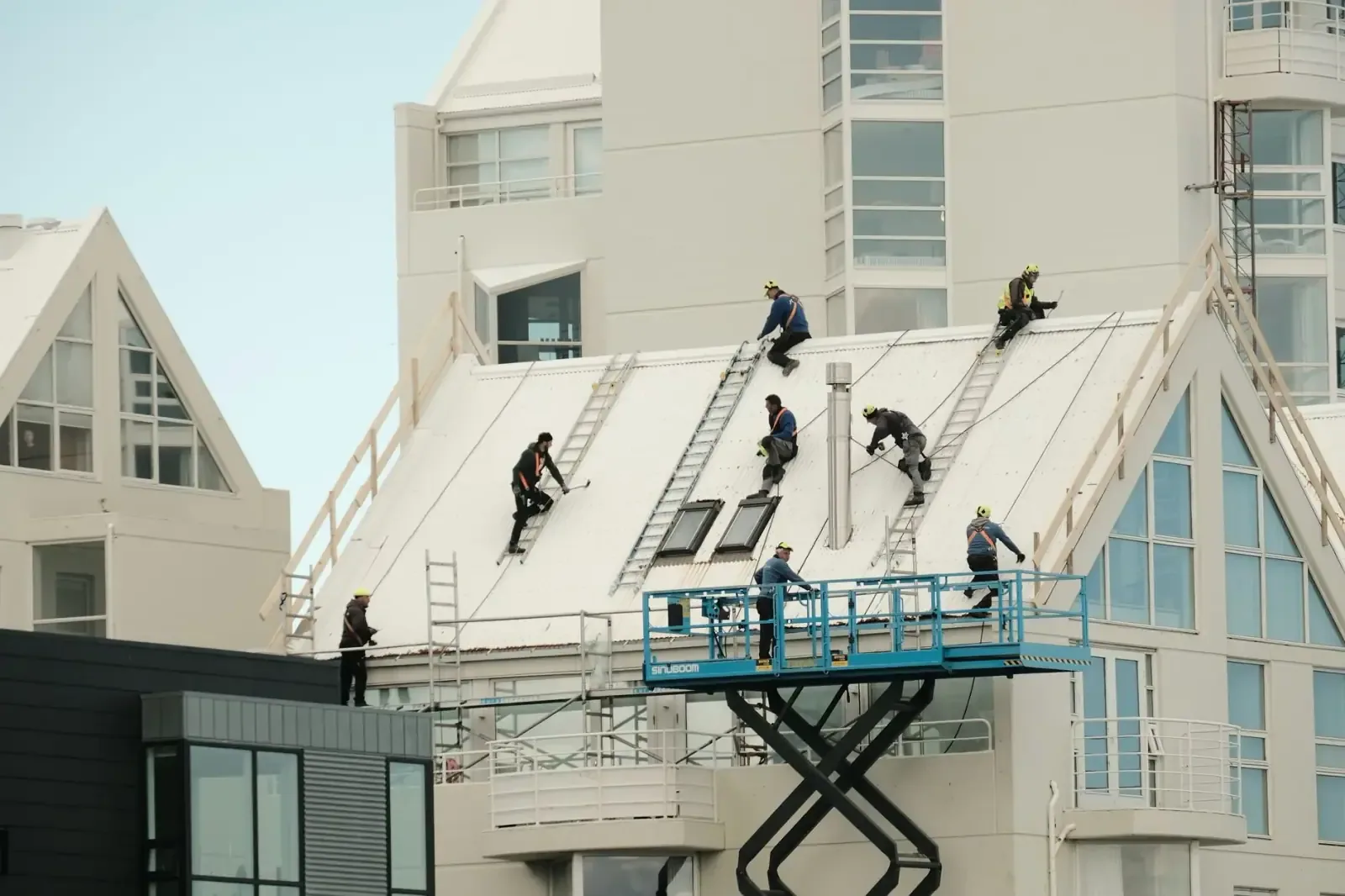
A roof that has been partly lifted can have damaged connections, bent purlins, cracked decks and unsupported edges. We do not walk a roof until an engineer or the facilities lead confirms it is safe, and we inspect from the edge or by drone in the meantime. Hanging membrane, loose panels and unsecured equipment are hazards for the crew and the public, and the first physical step is to make the area safe: barricades, removal of loose material, and shoring where an engineer calls for it. The report lists areas not reached so the owner knows what remains unseen, and the structural evaluation is a separate item for the engineer.
Utilities are part of the hazard. Fallen lines, damaged gas piping to rooftop units, and wet electrical equipment can make a roof unsafe even when the structure holds. We ask the facilities contact to confirm utility status, and we avoid any rooftop unit that has been shut off until the proper trade clears it.
Debris impact and puncture patterns
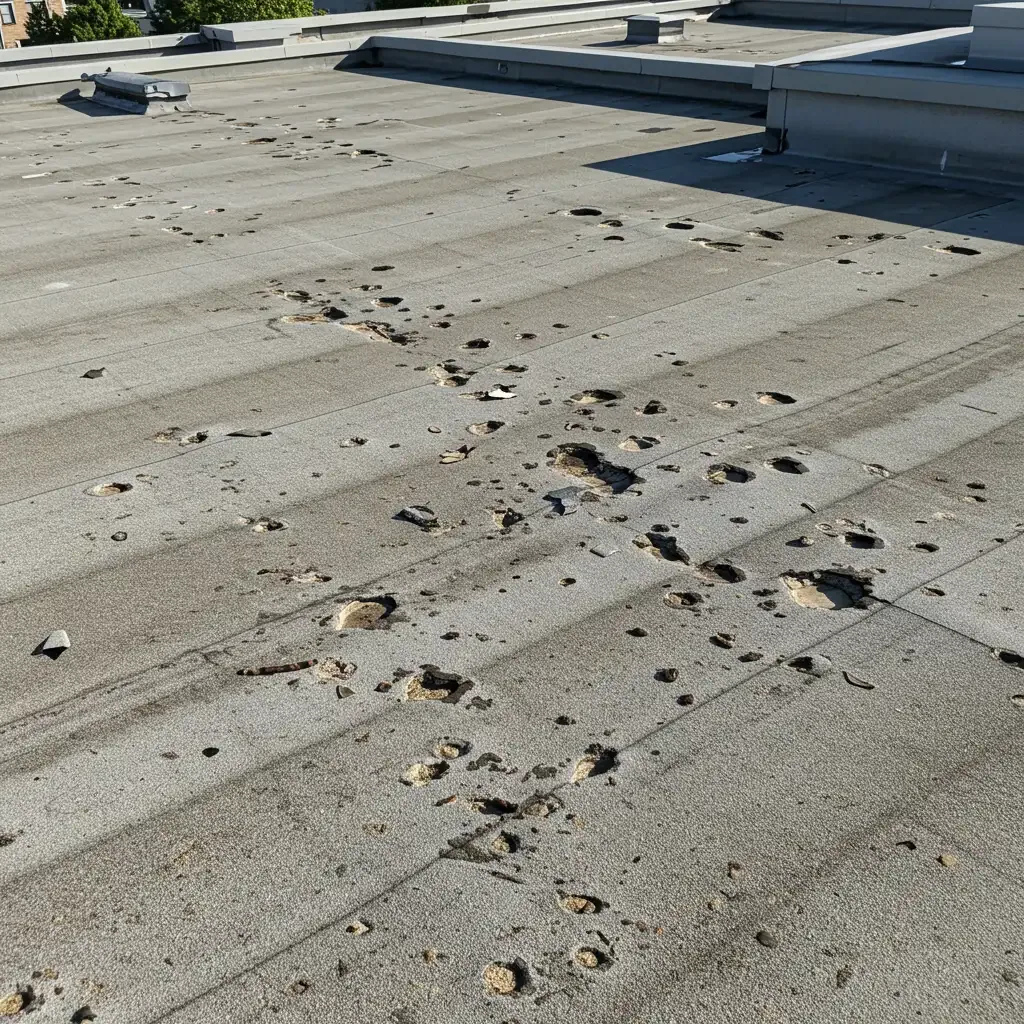
Flying debris leaves marks: punctures, gouges, torn membrane, dented metal and cracked equipment covers. We photograph each with a scale, map it, and look for a direction. Punctures often go through insulation to the deck, so test openings and moisture readings accompany visible marks. Roof drains are checked for debris that could block them in the next rain. Because tornado debris can be large and heavy, we also check for crushed membrane under fallen objects, which can hide a crack. Related damage from small objects resembles membrane puncture repair cases, and the sampling approach is similar.
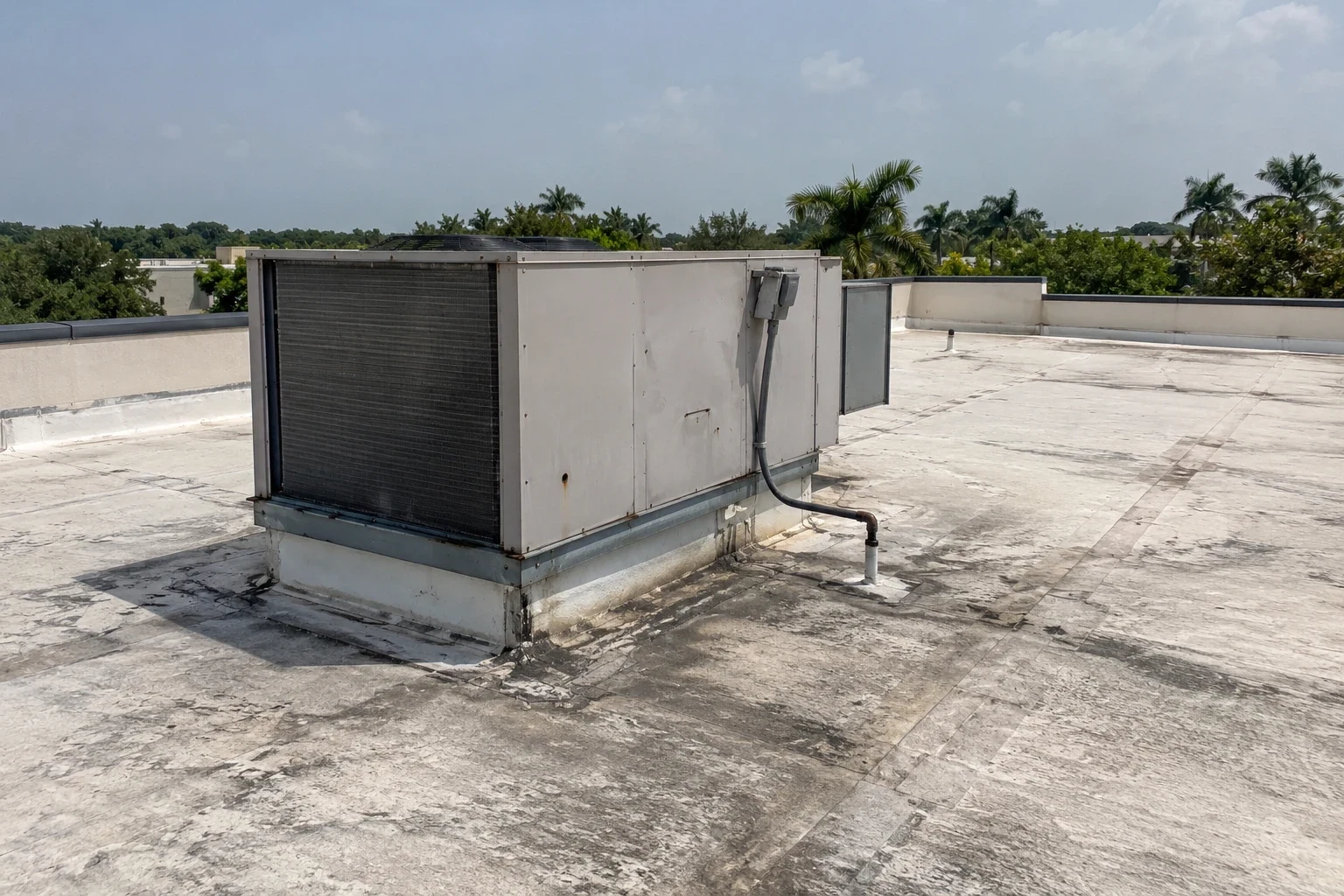
Rooftop equipment deserves its own pass after impact. Units may have shifted on their curbs, refrigerant and electrical lines may be stretched, and covers may be cracked or missing. We photograph each unit and curb, record displacement and flag any unit whose connections look strained, so the mechanical contractor can inspect it before restart. Curb flashing is checked for tears even when the unit looks intact.
Uplift, lost sections and edge failure
Uplift in a tornado can be extreme and sudden, so partial roof loss is possible. We look for lifted membrane, peeled edge metal, missing sections of panel, torn fasteners and deck damage along the path of loss. The edges and corners tell the story of how uplift began. Once the roof is open, the priority is enclosure: temporary decking if the structure is sound, tarps or temporary membranes secured to sound material, and closures at penetrations. Every temporary measure is logged with photographs and a date to return. Calls for emergency roof repair are answered at any hour.
Where roofs have lost sections, interior water damage is likely, and early dry-in matters more than finish quality. The temporary enclosure is built to survive the next storm, with fasteners into sound structure, edges lapped and sealed, and weights placed on loose areas. It is inspected after every rain until the permanent repair starts.
Claims and documentation
An adjuster looking at a tornado loss needs three things: a record of what the roof looked like before, the condition after, and a clear distinction between storm damage and existing wear. We photograph before cleanup, mark everything on a plan and record moisture readings. Flood risks the city has assessed, including storm surge and compound flooding, can add water damage on the same property, and the report keeps wind and tornado findings separate from water findings. Coverage belongs to the insurer. The same order carries into roof insurance claim assistance when an owner files.
Access in Hollywood's districts
After a tornado, access can be limited by debris, closed streets and utility work. Downtown Hollywood's event-day limits on deliveries and parking can stack with storm cleanup. The Johnson Street Business District and the historic business district each have their own street conditions. We check routes before sending a crew or a truck, use smaller loads when streets are limited and log delays, because those delays matter to tenants and to the claim. Properties in Downtown Hollywood are planned with the property manager and the district's event calendar in mind.
Tenants need guidance too. We tell the building contact which rooms are most exposed to the next rain, so contents can be moved, and we provide a short written status after each visit: what was protected, what remains open and when we will return. For multi-tenant buildings, the status goes to the property manager for distribution.
Repair scope, code and permits
Scopes after a tornado range from repair of isolated damage to partial or full replacement. Hollywood's Building Division reviews tornado repairs against the 2023 Florida Building Code, and its permit information lists structural reroof categories. The scope identifies the permit path, attachment and wind-uplift requirements, and any structural repair by others. Items discovered during demolition are priced as separate lines with measured areas and photographs. Owners in the Historic Hollywood Business District and elsewhere should confirm any extra review with the city before work starts. Attachment and edge checks follow the same steps used after hurricane damage.