Need this roof reviewed?
Repair seams, flashing and drainage details on commercial roofs in Hollywood, FL. We trace the failure, document the repair and plan follow-up checks.
A repair should connect a visible defect to the path that lets water in. A split seam, lifted flashing or backed-up drain may be the entry point, but the wet ceiling can sit several feet or a room away. Hollywood roofs also face high summer surface temperatures and concentrated seasonal rainfall, so an older patch can be tested soon after it is installed. We start with the roof layout, access conditions and leak history, then inspect the field and nearby transitions. In the Washington Park Industrial Area or the Downtown Hollywood business district, the work still needs to be matched to the membrane, substrate and actual water route. The repair scope identifies what we can correct now, what remains uncertain and how the manager can check the result.
Trace the roof defect
We begin at the reported leak and map the roof area above it, including drains, curbs, walls, seams and prior patches. A moisture mark inside can help narrow the search, but framing and insulation can carry water sideways. On the roof, we look for open laps, punctures, failed sealant, loose metal, split corners and changes in membrane texture. Each observation is photographed and assigned a location so the property manager can compare it with earlier visits.
Repairing the first visible flaw without checking nearby details can leave another entry point active. We test adjoining seams and transitions carefully, then separate confirmed defects from clues that need monitoring. If the source remains unclear, we explain whether a controlled water test, infrared scan or small opening would answer the question. The owner should know what the test can establish before paying for it.
The Downtown Hollywood property owners association focuses on leasing strategy, tenant mix, buildouts and permit coordination. Tenant turnover and buildouts are a reason a repair report should give a manager clear locations and next steps. A commercial roof inspection can document a broader set of conditions when the leak is not isolated.
Match the repair to the membrane
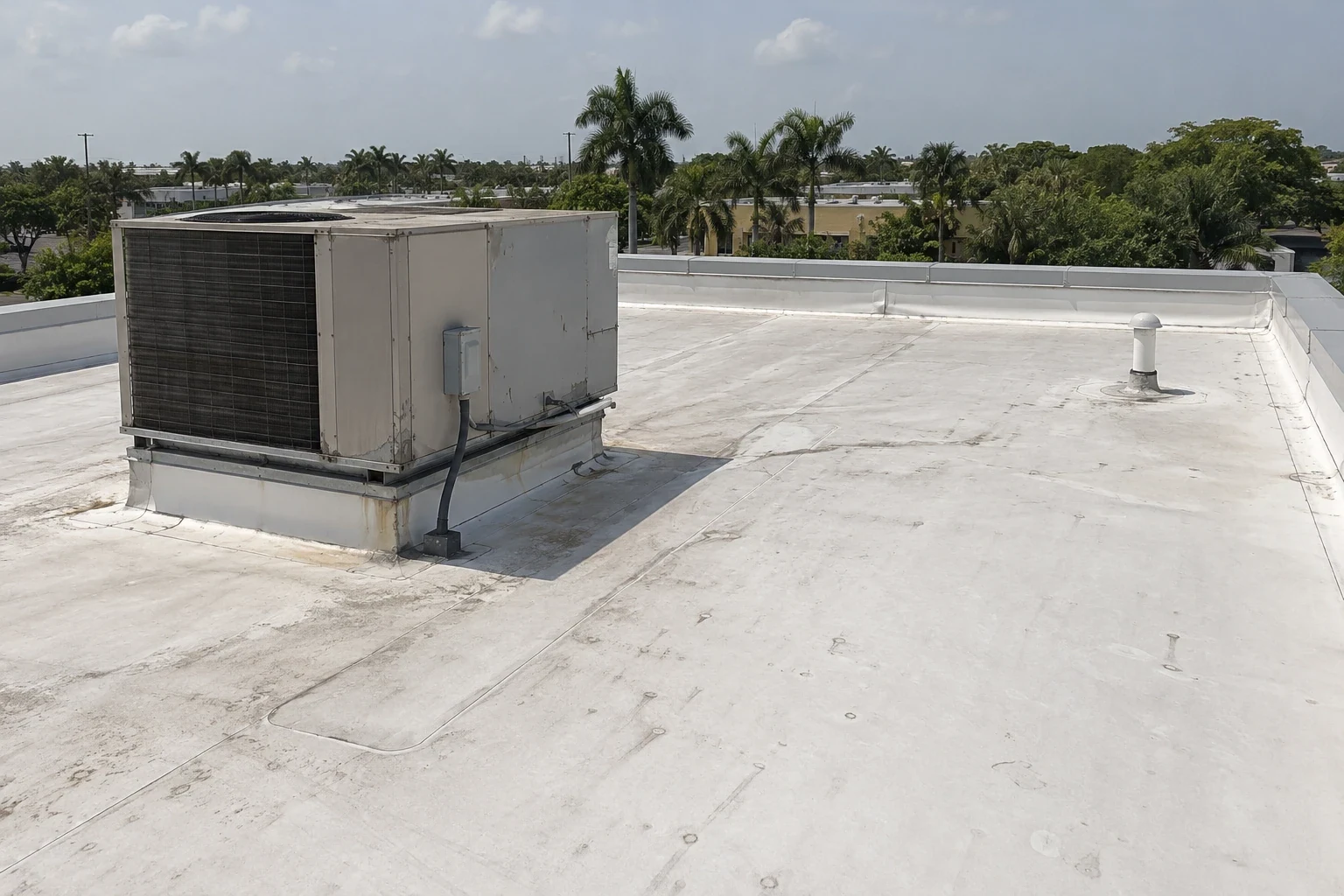
Material compatibility comes before a patch. We identify whether the roof is TPO, PVC, EPDM, modified bitumen, built-up, coated or metal, then choose a repair method that bonds or fastens to that assembly. Surface cleaning, primer, seam preparation and cure conditions matter. A repair compound that looks sound on one material may not adhere to another, and coating over contamination can hide rather than correct a failure.
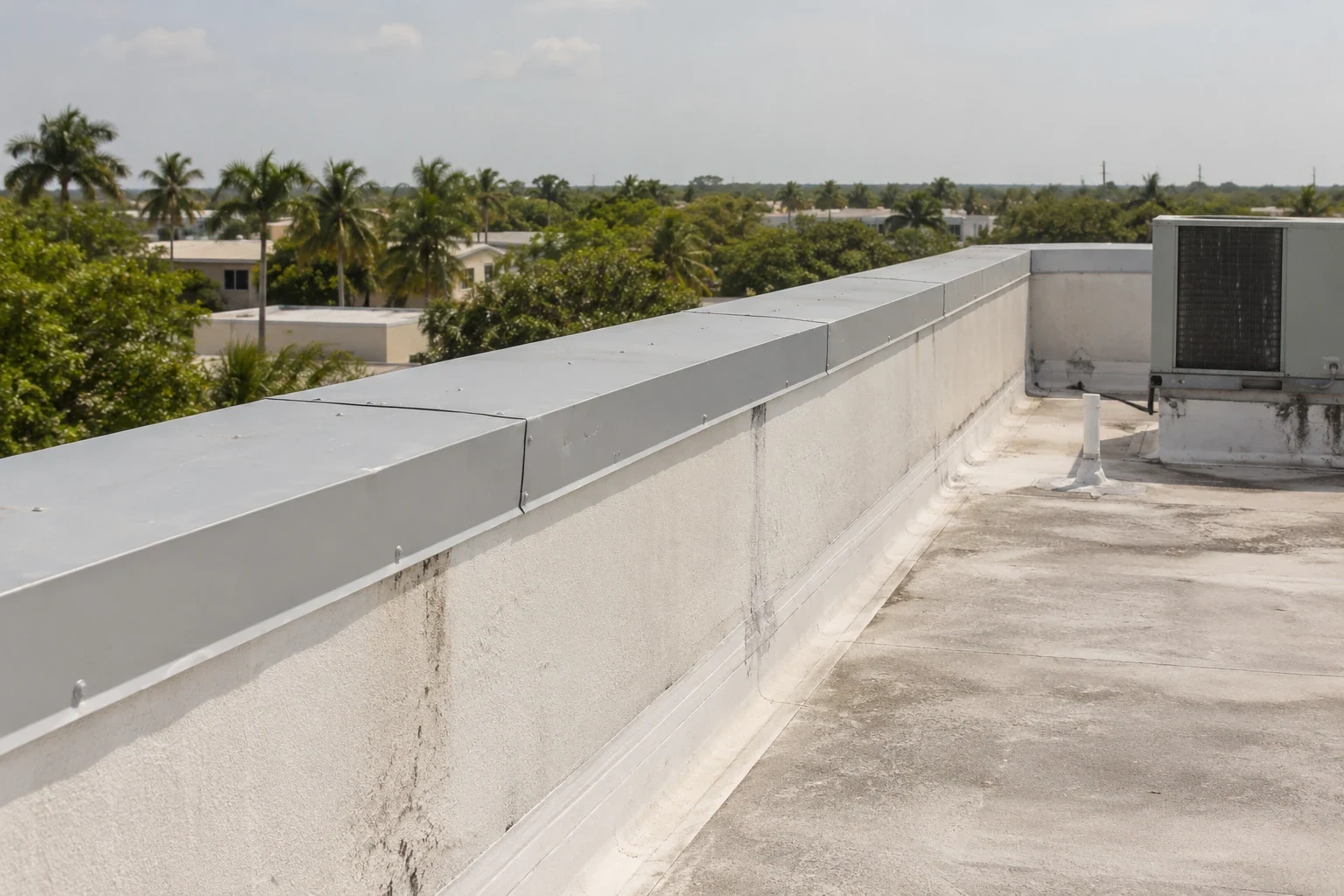
At a seam, we check whether the weld or adhesive failed along a short segment or whether movement has opened a longer run. At a penetration, we inspect the boot, clamping details, counterflashing and support movement. At metal edges, we look for loose fasteners, corrosion and water paths behind the coping. The repair should restore continuity and leave enough accessible material for future inspection.
When the field membrane itself has a puncture or damaged lap, a TPO repair approach differs from a rubber membrane detail. We record the product type where it can be identified and avoid assuming the roof’s manufacturer from color alone. A coping and edge review helps find water paths that bypass the field patch.
Drainage and repeat leak clues
Water that remains after a repair can point to a second defect or a drainage issue. We check drain strainers, bowls, scuppers and overflow paths for debris and damage. We also look for slope changes caused by settling insulation or earlier patch work. Standing water can stress seams and obscure the path to a leak, so photos should show both the defect and its surrounding drainage area.
Hollywood’s city materials identify rainfall and tide interaction as part of stormwater risk analysis, while the flood-map information calls for careful review in eastern areas of the city. On the roof, the repair question is whether water is leaving the assembly at the intended outlets and whether any detail holds it against a seam or penetration. We keep that inspection separate from parcel-level flood review.
For a leak near a blocked outlet, the drain and scupper service can address the water path as part of the repair. If the owner needs a written photo record for maintenance, a condition report connects each observation with its location and recommended action.
Repair access in an active building
We plan access and protection around the building’s hours, loading points and rooftop equipment. A repair crew may need to pass through controlled doors, protect landscaped areas or keep materials clear of tenant routes. Before mobilizing, we confirm where to stage tools, how the roof is reached and who can authorize a scope change if concealed damage appears. The manager receives a clear arrival window and knows which work zone will be active.
The city’s 2026 guide notes that event-area closures on Hollywood Boulevard between US-1 and 21st Avenue can affect Downtown parking, deliveries and employee access. We confirm present conditions with the site contact; the guide is not a live traffic schedule. For a building near Johnson Street, the property manager’s delivery and tenant rules determine the best arrival time. A small repair can still disrupt service if a ladder or lift blocks a loading area.
When the affected area cannot be left open, we install a temporary dry-in and secure the repair before the crew leaves. If rain is forecast, the sequence prioritizes the leak path and any exposed substrate. Photos before and after the work help the manager explain what was repaired and keep later trades from disturbing the finished detail.
Repair record and verification
The closeout should state where the defect was found, what material was removed or prepared, what repair method was used and which nearby details were checked. We include dated photographs and note any access limits or unverified areas. If a repair remains provisional pending dry weather or a later observation, we write that clearly instead of presenting it as a permanent correction.
Follow-up is useful when water entry was intermittent or the source was difficult to isolate. The manager can compare the next rainfall with the recorded leak location and report whether the stain returns. A maintenance file should keep the repair map with the roof plan, warranty information and earlier work orders. That record can reveal a recurring pattern that a series of isolated invoices would hide.
For properties around Washington Park and Downtown Hollywood, we can review the roof, explain the active defect and price the defined work before it begins. If the inspection finds broader membrane deterioration or repeated seam failure, we will show the owner the larger condition rather than repeatedly patch a roof that needs a different decision.
Related Roofing Topics

