
Need this roof reviewed?
Commercial roof repair and replacement in Hollywood's Harrison and Tyler historic districts, planned around mixed-use blocks, neighbors and roofline detail.
A decorative cornice or a stepped parapet changes how water leaves a roof, and it changes how a repair crew can reach the edge. The City describes Harrison and Tyler as historic districts centered on streets that once sat at the heart of Hollywood's commercial and residential growth, with residential, commercial and mixed-use properties, many reflecting Mediterranean Revival and other 1920s styles. Commercial Roofers Hollywood repairs, replaces, recovers and coats commercial roofs in this setting, and the work starts with the building's edge conditions, the water entry points and the neighbors on both sides.
Residential, Commercial and Mixed Use on One Block
A commercial roof in these districts is rarely isolated. The City describes the properties as a mix of residential, commercial and mixed-use, so a commercial roof may sit close to homes, and a mixed-use building may have living space beneath the roof. That adjacency shapes the plan. Noise hours, debris paths, staging space and parking for the crew are agreed with the owner and, where the roof is close to a neighbor's windows or yard, communicated to the neighbor in advance.
The mix also affects water. A roof that drains toward a shared wall, a scupper that discharges onto a neighbor's property or a gutter that overflows onto a walkway creates a dispute as well as a leak. We trace each outlet to its discharge and record where water goes, so the repair solves the problem on the owner's side of the line and the file shows it.
Where living space sits under a commercial roof, interior protection is part of the plan: dust sheets, covered furnishings and a clear way for a resident to reach us if water appears. The notice we write for residents gives dates, hours and a phone number that is answered at any hour.
Architectural Detail and the Roof Edge
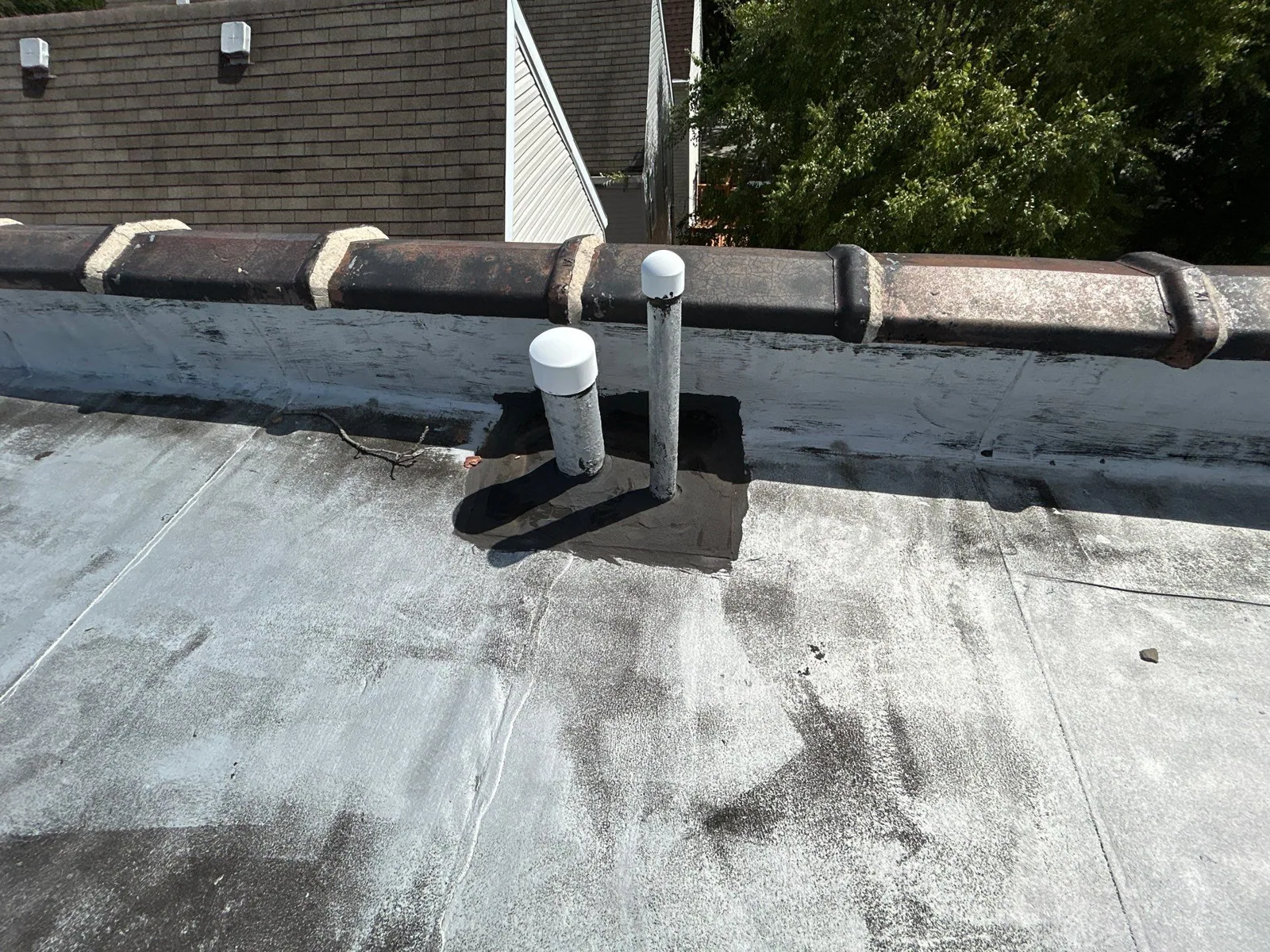
A style popular in the 1920s tends to put its character at the roofline, in parapets, cornices, coping and wall details. Those features are also where water enters most often. A cracked cap, a failed joint in a decorative parapet or a flashing that was cut to clear an ornament leaves an opening that is easy to miss from the street. We inspect the roofline close up, probe terminations and photograph each feature, then describe what each repair involves.
A style name does not tell us what a given roof is made of, so we do not assume masonry, tile or any particular substrate. We identify the assembly by sampling and testing. Where a repair would alter a visible feature, we say so before work begins, so the owner can decide with the city's requirements in view and with a clear description of what will change.
Gutters and downspouts on a commercial roofline get the same attention. A leader that discharges at a wall base can soak masonry or stucco and send water back toward the roof edge, so we trace each one to its end.
Heat Path and Wetting Pattern in Warm, Wet Months
For the Hollywood area, NOAA reports a yearly mean temperature of 76.1 degrees, an August daily high of 89.9 degrees and rainfall of 8.84 inches in June and 8.67 inches in September. Wind and hail are most likely during the National Weather Service's stormiest weeks, mid-May to early July, so loose edge metal and flashing are secured before then. Sustained heat raises surface temperature and drives thermal movement at seams and metal, and heavy rain then finds any opening.
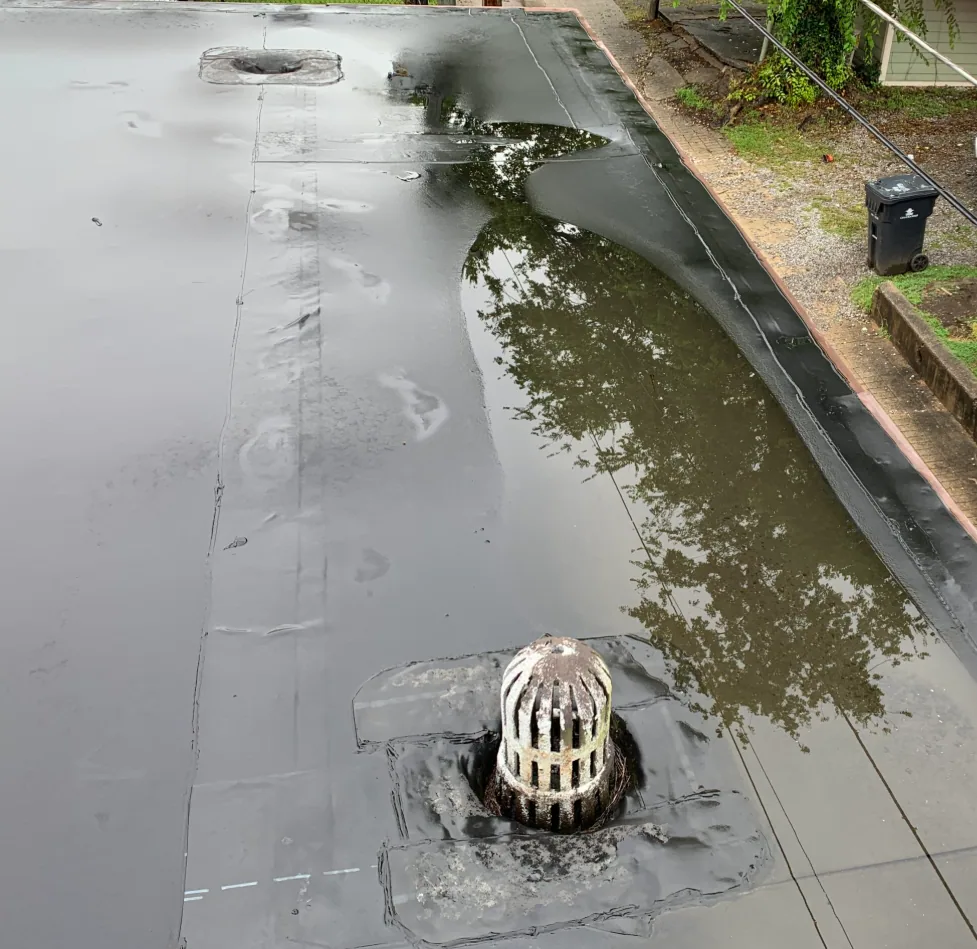
On small commercial roofs with few drains, a single blocked outlet can put the whole roof under water. We check drains, scuppers and overflows first, measure ponding depth after rain and look for a moisture route from the roof into the wall below. The wetting pattern on an interior ceiling or wall, compared with the roof layout, usually points to the entry point.
Hidden Layers, Decks and Moisture
Any building can carry layers that nobody recorded, so the first scope includes test openings and a moisture survey where the roof allows one. An infrared moisture survey run on a dry afternoon and evening maps temperature patterns that may indicate wet insulation, and a core at each suspect area confirms what the pattern means. The deck beneath is probed and its fastener condition checked, since a deck that has lost attachment changes the scope before any membrane is chosen.
Wood, concrete and metal decks fail differently. Soft wood, corroded steel or spalled concrete each call for a repair that is separate from the roofing and may need an engineer's opinion. The report identifies the deck type, the condition and the extent of repair, and prices the deck work as its own line, so the owner can see what is roof and what is structure. Surprises discovered at tear-off are photographed, measured and priced at agreed unit rates before work proceeds.
Scope Choices That Respect the Building
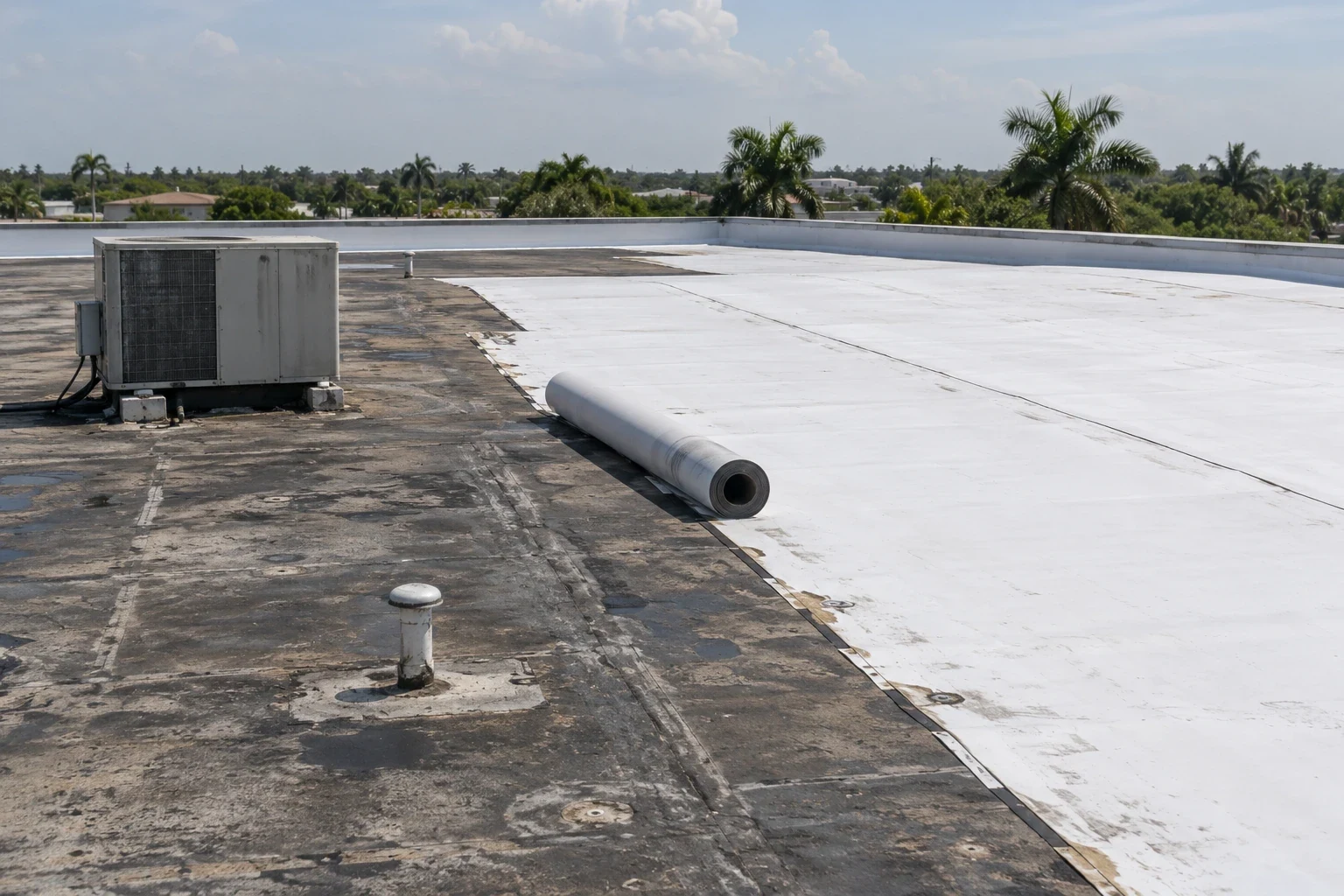
The least invasive choice that solves the problem is usually the right one. A localized repair suits a sound roof with an isolated defect. A coating can extend the life of a dry, sound membrane after repairs. A recover limits tear-off where layers allow it, and a full replacement is the answer when moisture is widespread. We price the options on the same assumptions and state what each leaves in place. Material choices consider the existing system, the exposure to heat and sun and the demands of the roofline. A recover is considered only after moisture testing confirms the layers are dry.
Timing is the other half of the choice. Hollywood's wet season is concentrated in the summer months, so large exposures are planned for drier stretches where the calendar allows, and each section is closed to a watertight edge before the crew leaves. A phased plan lets an owner fund a roof over two budget periods without leaving the building open between them. The proposal states the weather assumptions behind the schedule and what happens if a storm interrupts a section.
Permits, Review and Records
Work on these older buildings follows the Florida Building Code, 8th Edition, in force since December 31, 2023. Hollywood's Building Division enforces it and reviews construction for compliance, and the City's permitting information lists reroof categories. If a building falls under a historic review, the owner confirms those requirements before exterior work, and we supply the technical description of the work. Closeout records hold the plan, layer findings, photographs, materials and open items. Visits can be combined with buildings in the Historic Hollywood Business District or Johnson Street Business District, and emergency roof repair is available at any hour.
A building that changes hands, or a manager who joins mid-lease, can pick up the file and see what was found, what was done and what is still open. That continuity is the practical value of the record.
Related Roofing Topics

