

Need this roof reviewed?
SBS and APP modified bitumen roof repair, recoating, and replacement in Hollywood, FL, with lap checks, blister review, flashing inspection, and records.
A blister on a modified bitumen roof is a small bump with a larger story underneath. Air or moisture trapped between plies expands in afternoon heat, pushes the cap sheet upward and leaves a thin spot that traffic and weather can open. Hollywood, FL supplies both ingredients: long summer heat and a wet season heavy enough to keep moisture in play. We start with the surface, because granule wear, open laps, ridges and blisters tell us how the layers beneath are behaving. Where readings call for it we probe, scan or sample, and we note which areas can be repaired, which can be monitored and which have taken on water that needs to come out.
SBS, APP, and how to read the sheet
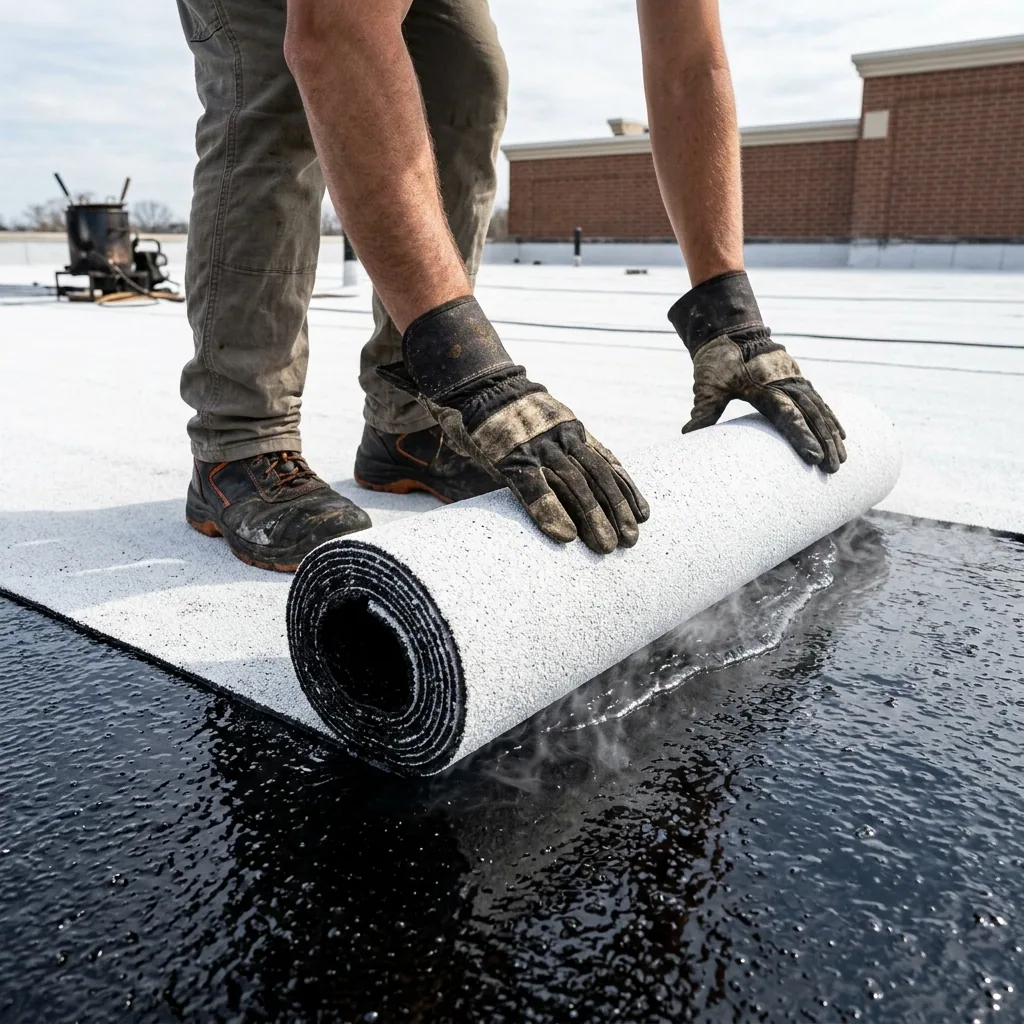
Modified bitumen is asphalt blended with a polymer. SBS is rubber-like and flexible, and APP is plastic-like and stiffer at low temperature. Both are rolled onto the roof in overlapping sheets, usually as a base ply and a granule-surfaced cap sheet, and both rely on their laps to shed water.
Identifying which polymer a roof carries helps predict how it ages. We read the sheet by its thickness, surface, lap construction and any labels, and we confirm by sampling when records are missing. The answer affects repair method: torch-applied patches suit some sheets, cold adhesives suit others and self-adhered sheets suit specific conditions. A Soprema specification, for example, includes several sheet types, so the product name alone does not settle the repair.
Adhesive compatibility matters in repairs. A cold-applied adhesive that suits one sheet can soften another, so a small test area is treated first, and we record the product and the result for the file.
Laps, granules, and surface wear
The lap is the weakest line in a bitumen roof. We press along each side lap and end lap looking for open edges, curled corners and bleed-out that has cracked. Where granules have worn away, the asphalt beneath is exposed to ultraviolet light, which ages it faster, and we map those areas on the roof sketch.
Wear shows most at drains, walk routes and roof edges. A path to a rooftop unit often has bare patches in a straight line, and a drain sump can show a ring of worn surface. These marks tell us where water has stood and where people have walked, which are the places repairs should be reviewed again. A heat and UV damage repair may be a patch, a new cap section or a coating, depending on how far the wear extends.
Ridges deserve a separate note. They often follow insulation board joints and may indicate that the boards have moved or that the membrane was applied over a joint without a cover board. We note their length and direction.
Blisters, ridges, and trapped moisture
A blister forms when moisture or air between layers expands with heat. Small blisters with intact surfacing may only need monitoring. Large or broken blisters let water in. A ridge along a board joint can be caused by insulation movement and may crack with time.
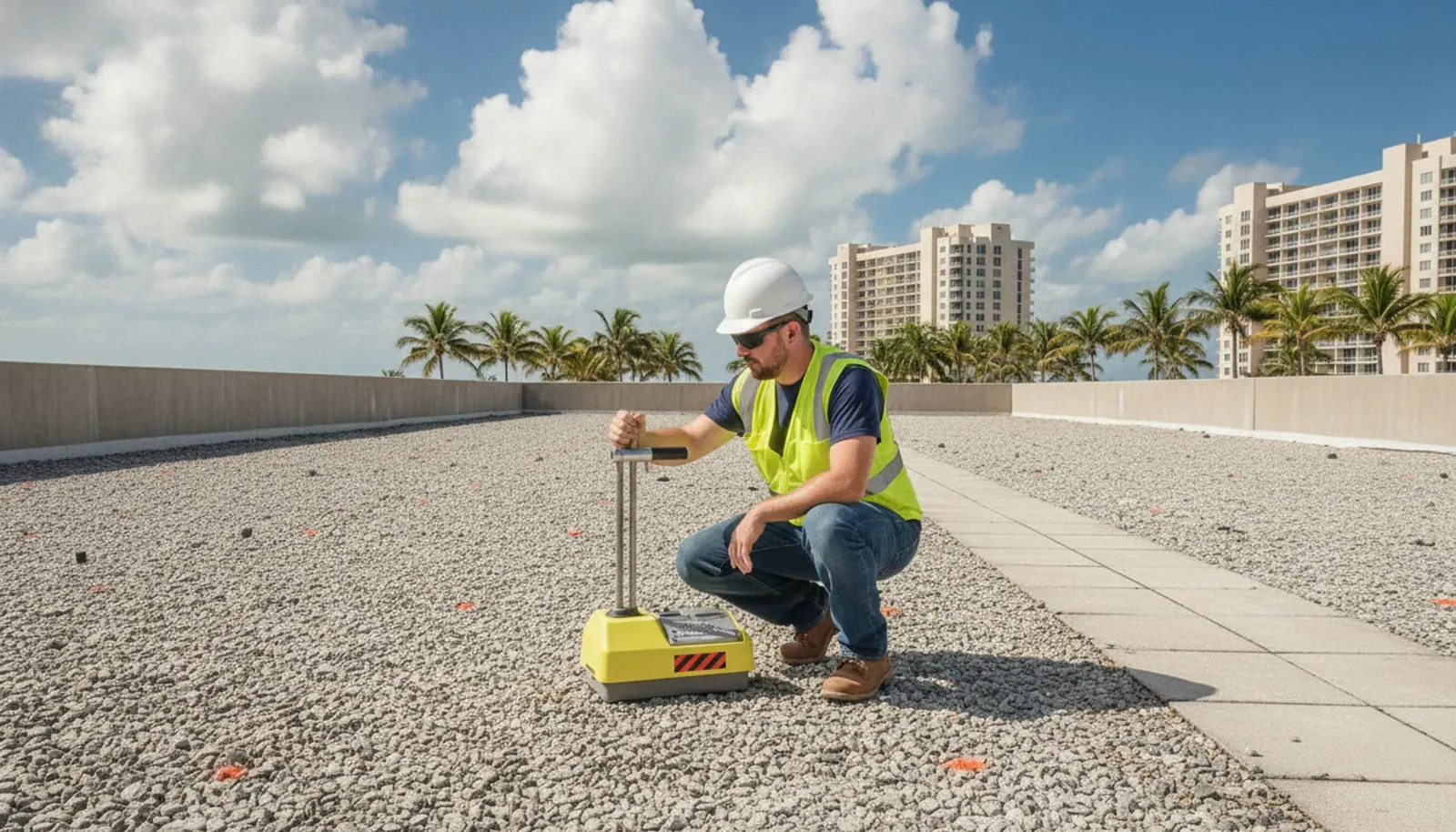
We press each blister, look for splits and take moisture readings. If the felt beneath is wet, the area is cut open, dried and patched with plies that tie into the surrounding sheet. Cutting open a blister is not routine; it is done where a reading or a visible crack justifies it. An infrared moisture survey can show whether wet insulation extends beyond the visible blister, and that determines whether a patch is enough or a section needs replacement.
Application method and fire planning
Modified bitumen can be applied with a torch, in hot asphalt, with cold adhesive or as a self-adhered sheet. Each method has a different fire risk, odor profile and schedule. Torch work requires a fire watch that continues after the crew leaves. Cold-applied and self-adhered options avoid open flame and may suit buildings where air intakes sit near the work.
We choose the method with the building in mind. A hotel near the beach, an office in Downtown Hollywood or an industrial building in the Washington Park Industrial Area each have different neighbors and occupancy, and the fire plan, permit and air-intake protection are agreed with the owner before any flame comes onto the roof.
Tools and materials arrive on the roof by hoist or crane, and for a building in a closure-prone business district the delivery date is checked against the local event calendar before the crew is scheduled.
Heat, rain, and the wet season
The NOAA Hollywood station shows an August average daily maximum of 89.9°F. Asphalt softens in that heat, so foot traffic on a hot afternoon can scuff the surfacing and displace granules. We schedule detailed walking for cooler hours when we can, and we protect ladder landings and equipment paths.
Rain adds its own checks. The stormiest phase of South Florida's wet season runs from mid-May through early July by NWS description, with damaging winds, tornadoes, lightning, hail and flooding most likely. After a storm, we look for lifted laps, torn flashings, displaced gravel stop and punctures, and we photograph confirmed damage only. Hail and wind are the reasons for that walk.
Older buildings and layered roofs
Hollywood's Harrison and Tyler historic districts contain residential, commercial and mixed-use properties, and many buildings there reflect Mediterranean Revival and other styles popular in the 1920s. The roof can differ from the style below it. A flat section may carry several generations of bitumen, a later single-ply and patches from different hands.
We cut a small test sample where the building owner allows it, count layers and check each for moisture. A historic district property may also have preservation review for visible changes. We ask the owner about that early and note any approval needs in the scope, so the roofing schedule and the review process move together.
Repair, recoat, or replacement
The findings sort the roof. Isolated lap, flashing and blister defects over dry insulation get repairs. A sound but weathered surface may accept a restoration coating. Wet insulation, widespread cracking or exhausted surfacing points toward replacement of that section. Pricing reflects tear-off depth, insulation, penetrations, access and work hours. A built-up roof has similar questions with more plies to read.
A comparison with a single-ply option, such as a TPO roof, belongs in the same discussion when ponding, access or budget changes the question. We price the same section both ways and list the details each system needs, so ownership sees scope, not slogans.
Records finish the job. The closeout file lists sections repaired, plies added, products used, moisture readings and photographs. For a roof with a blister history, we mark each blister location and recheck after the next wet season, because a patch that held through June and September rain has been tested by the heaviest months in the normals.