Need this roof reviewed?
Soprema roofing in Hollywood, FL: Sopralene SBS membranes, Alsan liquid flashing and polyiso insulation, applied and repaired for local heat and heavy rain.
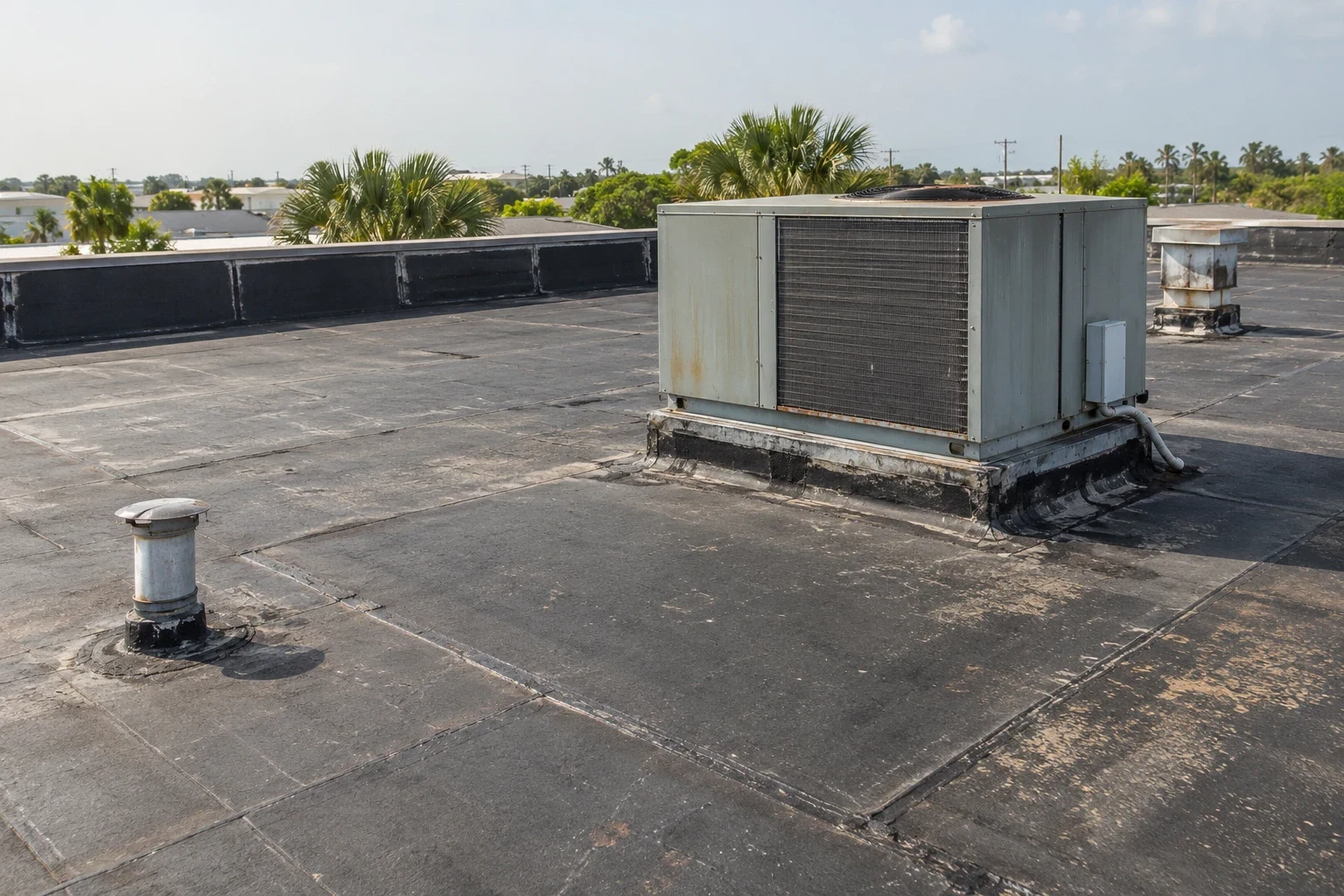
Around a cluster of pipes and conduits, a sheet membrane often runs out of room, and the leak that follows is rarely in the sheet. Soprema addresses that problem with liquid-applied flashing resins such as Alsan RS, and it makes Sopralene SBS-modified bitumen membranes and polyiso insulation for the field of the roof. August afternoons in Hollywood, FL approach 90 degrees and the wet season drops heavy rain on every roof, so laps, penetrations and the path water takes off the roof decide how a bituminous system performs. We identify which Soprema products are on a roof, read their condition and choose repairs that suit them.
Sopralene membranes, Alsan flashing and insulation
Sopralene is Soprema's line of SBS-modified bitumen membranes, available in torch-applied sheets known as Flam and self-adhering sheets known as Stick. SBS polymer gives the asphalt flexibility, and a granulated or coated cap sheet protects it from sun. Alsan RS is a liquid-applied resin used for flashing and detailing, curing into a continuous layer around irregular shapes. Sopra-ISO is Soprema's polyiso insulation board.
Each part has a job. The membrane keeps water out of the field. The resin handles the awkward spots. The insulation holds heat and provides the substrate. Our modified bitumen roofing work addresses each of these layers on its own terms and records which are present.
Compatibility between layers is part of every repair. Asphalt-based products, polyiso boards and liquid resins do not all tolerate contact with one another, and a primer or a separator sheet is sometimes required. The existing layers are read first, so a new product is never placed where it will attack its neighbor or fail to bond.
Warranty papers for any of these products set their own conditions, and we ask the owner for the document and list what it requires. Repairs follow the procedure it describes, and photographs and dates go in the file.
Torch-applied, self-adhering and cold-applied methods
A torch-applied sheet is bonded by heating the underside of the roll as it is unrolled, which gives a strong lap but introduces an open flame to the roof. A self-adhering sheet bonds to a primed surface without a torch, which can suit occupied buildings or locations where a flame is not acceptable. Both depend on clean, dry substrates and sound laps.
We choose the method after reading the building. Fire safety, combustible materials near the work, access and the operator's tolerance all weigh. Method and product documentation go to the Building Division with the permit request, because Hollywood reviews and inspects reroof work under the Florida Building Code, Eighth Edition (2023), before any membrane is rolled out.
Temperature and moisture limit the work. Primers need a dry surface, self-adhering sheets bond best within a stated temperature range and torch work needs clear fire-safety controls with a watch period after the last pass. In the wet season we plan around storm windows and protect any open area at the end of each shift.
Where liquid-applied flashing earns its place
Sheet flashings suit regular shapes. Liquid-applied flashing suits irregular ones: clusters of pipes, odd curbs, penetrations through uneven surfaces and repairs around old patches. The resin is applied over a prepared surface, often with reinforcing fabric, and cures to form a continuous layer. It bonds well to many substrates, but only if they are clean, dry and compatible.
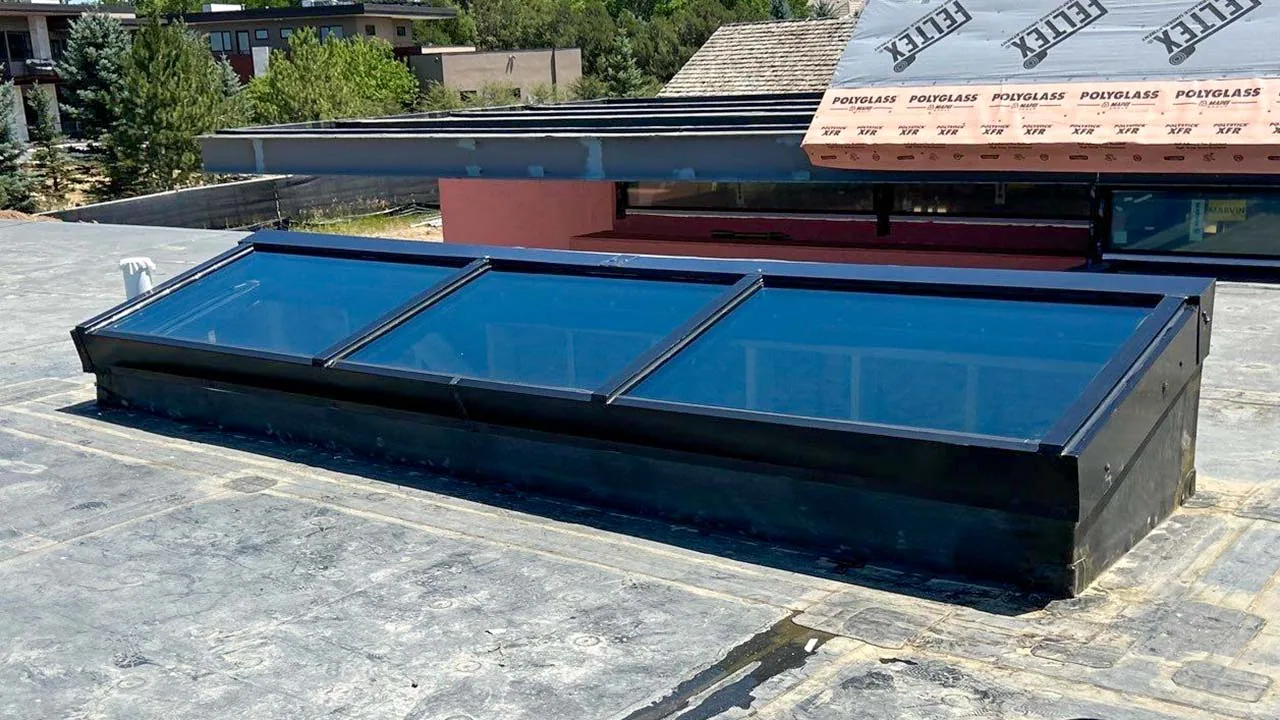
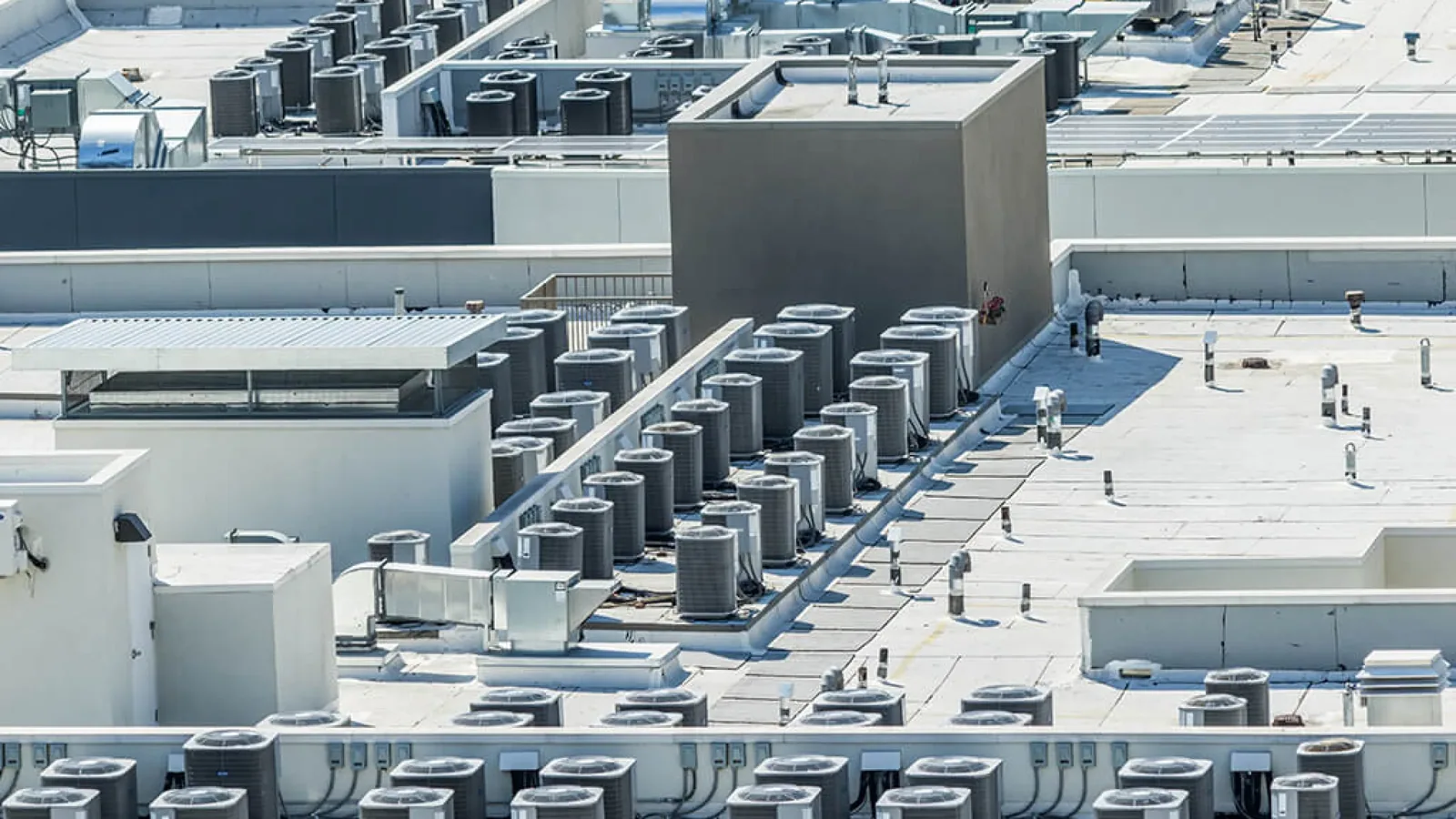
Our work on skylight and penetration flashing and on rooftop equipment curbs and supports uses liquid flashing where it fits and a prefabricated or sheet detail where that is better. We test adhesion, check cure time against the forecast and photograph the finished layer, since rain on an uncured resin ruins it.
Reinforcing fabric strengthens the layer at corners and joints, and the number of coats and their thickness govern durability. We record the product, the coats and the area covered, because a future repair needs to know what the resin was applied over.
Heat, granules and surface wear
The August average daily high at the Hollywood station is 89.9 degrees, and a bituminous surface in direct sun gets hotter than the air. Sun and heat soften the asphalt, move laps and wear the granule surface. We look for granule loss, exposed reinforcement, blisters, ridging and alligator cracking, then trace each to a cause before opening it.
A blister may hold air, moisture or both, and the right response differs. A surface worn through can sometimes be restored with a compatible coating if the plies beneath are dry, while a roof with wet insulation needs more. Walk pads along service routes protect the surface where technicians visit.
A cap sheet that has lost most of its granules is near the end of its protective life, and the choice between coating, recover and replacement turns on what lies beneath. The moisture survey and test openings answer that question before money is committed.
Wet-season drainage and edge detail
June normals reach 8.84 inches of rain and September normals 8.67, while mid-May through early July is the stormiest phase of South Florida's wet season. Roofs in that climate depend on drains that move water. We measure ponding depth and duration, clear and test outlets and check that overflow openings are set correctly.
Edges get the same attention. Metal returns, copings and terminations absorb wind and water first, so we tighten whatever has shifted. On Johnson Street, in the Johnson Street Business District, or in Downtown Hollywood along Hollywood Boulevard, the same weather reaches roofs with different drainage. Each building's outlets, overflow height and edge metal are measured and logged with photographs before a repair is priced, because on a bituminous roof the laps and flashings are the first places to fail where water collects.
Repair, restoration and comparison with other bituminous systems
A Soprema roof with dry insulation and isolated defects can be repaired. A bonded, dry surface may accept a restoration coating. When wetting is widespread or the same failure keeps returning, replacement becomes the sounder scope, with insulation and cover board matched to the building. Cutting test openings and measuring moisture come before any of these calls.
For comparison, owners can review Johns Manville and GAF bituminous systems on laps, application method, flashing approach and repairability. The roof and the building's use decide, and the written scope explains why.
Cost drivers follow the building: tear-off depth, insulation, flashing count, access, and the method chosen. We list them on separate lines, with allowances where the roof must be opened, so the owner can compare options on equal terms.

