
Need this roof reviewed?
Curb flashing, equipment supports and pipe supports for commercial rooftops in Hollywood, FL, coordinated with unit swaps, crane access and tenants.
A rooftop unit sits on the roof like a table on a rug, and every leg, curb and pipe that touches the membrane creates a wear point. In Hollywood, with an August average daily high near 90 degrees, the air handler or condenser adds its own heat, and the membrane near it runs hotter and ages faster. Condensate drips, vibration and maintenance traffic add to the load. When a leak shows up near a unit, the curb and its flashing are the first places we look.
Our work covers three connected things: the flashing and curb that seal the opening under a unit, the supports that hold equipment and piping off the membrane and the coordination with the trades who service or replace the equipment.
Curb Construction and Flashing
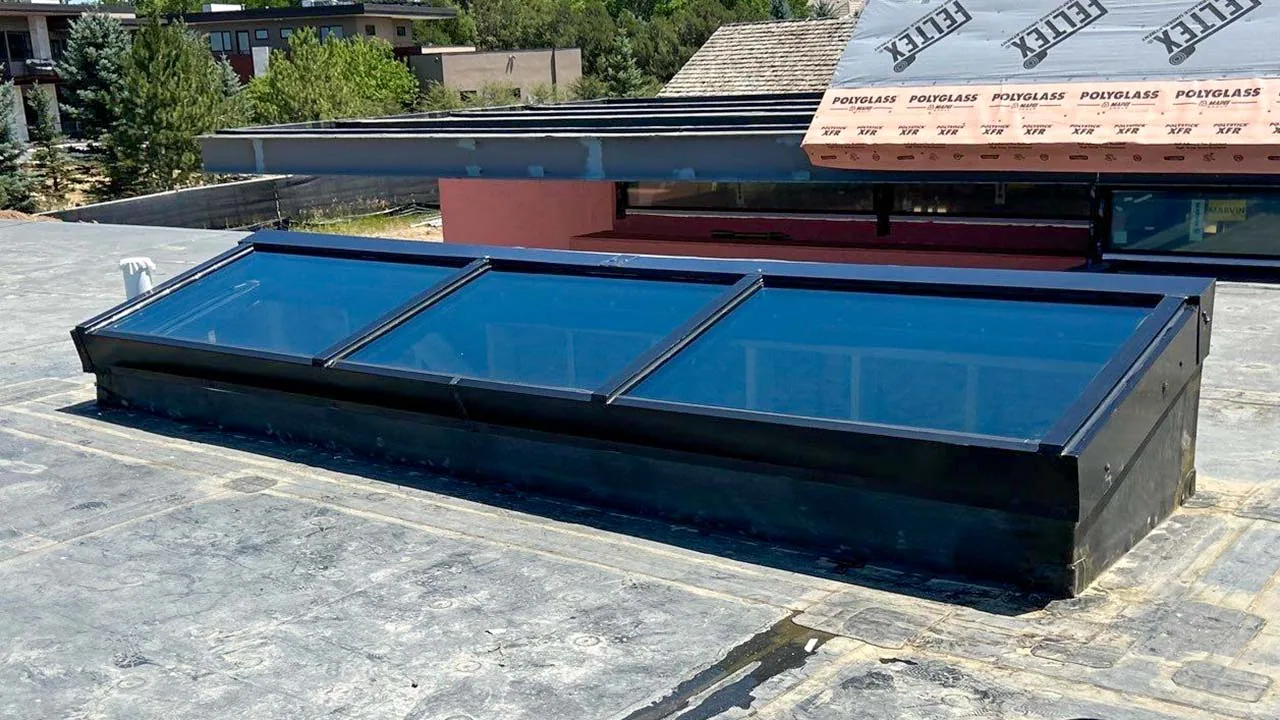
A curb is a raised frame that lifts the unit above the roof surface and gives the membrane something to turn up against. The flashing runs up the curb face and is capped by counterflashing or a termination bar. Water gets in where the flashing cracks, the sealant fails, the corners open or the curb itself shifts.
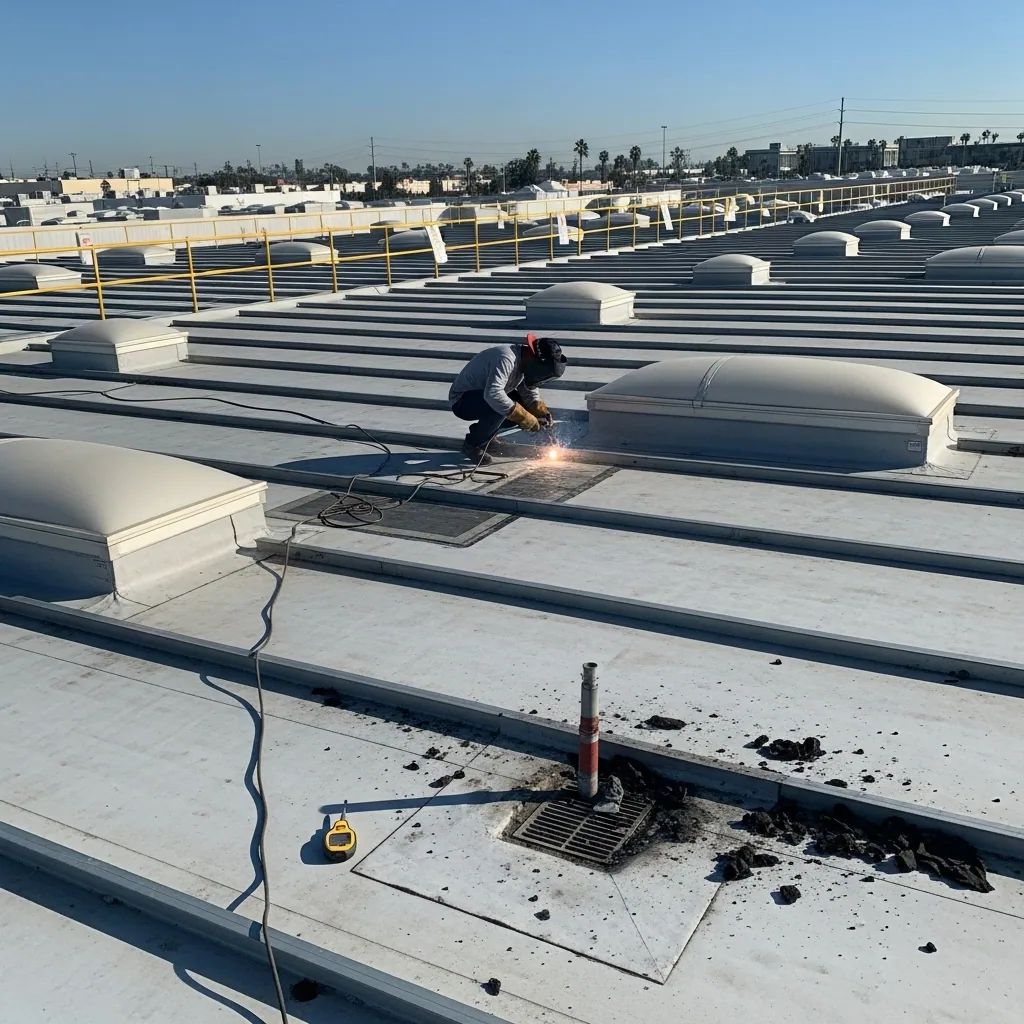
We check each curb for height, level, corner condition and attachment to the deck. Flashing should rise high enough to stay above standing water and wind-driven rain, and it should be fully adhered or welded to the curb face with a clean termination. A curb that has settled or tilted collects water on its upslope side, so we measure level, note staining and look for dirt rings that show how high the water has stood against the flashing. Where the curb is sound but the flashing has failed, reflashing with matched materials restores it. The new flashing is lapped onto sound membrane, tested at its edges and finished with a termination that sheds water outward. Where the curb is damaged, rebuilding it comes first.
We also look at what the curb sits on. The deck beneath a heavy unit can deflect over time, and a deflected deck turns the curb into a low spot where water collects around the unit. Soft spots around a curb, felt by pressing the membrane, point to wet insulation, and the repair becomes a section replacement with the curb reflashed on top.
Unit Replacement and Reflashing
A replacement unit rarely matches the old footprint exactly. An adapter curb bridges the difference, and every change in size or position alters the flashing. A unit swapped without reflashing its curb is a common source of leaks that appear weeks later, once the first heavy rain finds the gap.
We coordinate with the mechanical contractor before the unit is lifted. We agree on curb dimensions, the sequence for disconnecting and setting the unit and when the roofer reflashes. Ideally the roofing work is done before or immediately after the lift, with the membrane protected during the crane operation. We record the new curb size, the flashing materials and the date in the roof file, so later work starts from facts. If the unit is heavier than the one it replaces, we ask whether the deck and framing have been checked, since added load on an old deck can show up as ponding around the curb within a year.
Where the schedule is tight, we provide a temporary seal at the curb the same day the unit is set and complete the permanent detail when conditions allow.
Equipment Supports and Pipe Supports
Not all equipment sits on curbs. Many units, fans and pipes rest on rails, sleepers or individual supports that bear on the membrane. If the base is a hard rail on a soft membrane, it punches through under load and vibration. Pipe supports that slide on a hard surface wear a groove.
We check each support for a protective pad, a wear plate or a pedestal that spreads the load. Piping that runs across the roof needs supports at intervals that keep it off the surface, with allowances for movement. Condensate lines that discharge onto the membrane leave a constant wet patch, and we extend them to a drain or a splash pad. Refrigerant lines and conduit that lie directly on the surface wear through it where they rub or sit in water, so we lift them onto supports at a regular spacing. Pipes that pass through the roof need penetration flashing, and the supports we describe here hold the same pipes above the membrane between those openings.
Securing Equipment Against Wind
Equipment must be fastened to the structure, not just set on it. Wind season matters here: damaging winds are most likely from mid-May to early July, the stormiest part of the wet season, and a unit that is not tied down becomes a hazard in a squall. We look at straps, hold-downs, base rails and fasteners at each unit, and at whether the curb itself is fixed to the deck, note rust or missing hardware and report items that need attention before storm season.
Equipment installation and the roofing around it fall under the 2023 Florida Building Code and the building division's permit review, which we confirm when a project involves new curbs or relocated equipment.
Crane Days, Deliveries and Operations
Setting equipment calls for a crane or lift, a staging area and a closed work zone. In the Downtown Hollywood event area along Hollywood Boulevard, Hollywood's 2026 business resource guide notes that closures can affect employee access, deliveries and parking, so a lift day needs a check against the event calendar. On Johnson Street, where businesses line the road between 56th Avenue and US-441, the plan has to address street access and neighboring operations.
For owners in the Downtown Hollywood or Johnson Street areas, we write access, closure and delivery windows into the work order. A shutdown of cooling for a tenant is planned in advance with the manager, with an eye on the heat: in a place where the average August high is near 90 degrees, a long outage can make a suite unusable, so we keep it short and schedule it for cooler hours.
Records and Related Work
The closeout file lists each curb and support, the work done, the flashing height measured and photographs. It supports a later maintenance visit, and on office building roofing where many units share a roof, it becomes the map of every opening. If equipment replacement is part of a larger roof replacement, the curb list sets the order of work.

