
Need this roof reviewed?
Commercial heat and UV roof damage repair in Hollywood, FL: chalking, crazing, shrinkage and brittle membranes tested, repaired or restored with scopes.
Heat and sunlight do slow work on a roof, and the first sign is rarely a leak: a chalky film on the surface, fine cracks in the coating, a membrane edge that has pulled back from a wall, a curb flashing that has shrunk away. Hollywood averages 76.1°F across the year, with an annual mean daily maximum of 83.2°F and August afternoons near 89.9°F, and a roof surface can run well above all of those. Commercial Roofers Hollywood inspects roofs in Hollywood, FL for heat and ultraviolet damage and repairs, restores or replaces them in the order the evidence supports, starting with simple tests of how flexible, how bonded and how intact the surface still is.
Surface temperature and the heat path
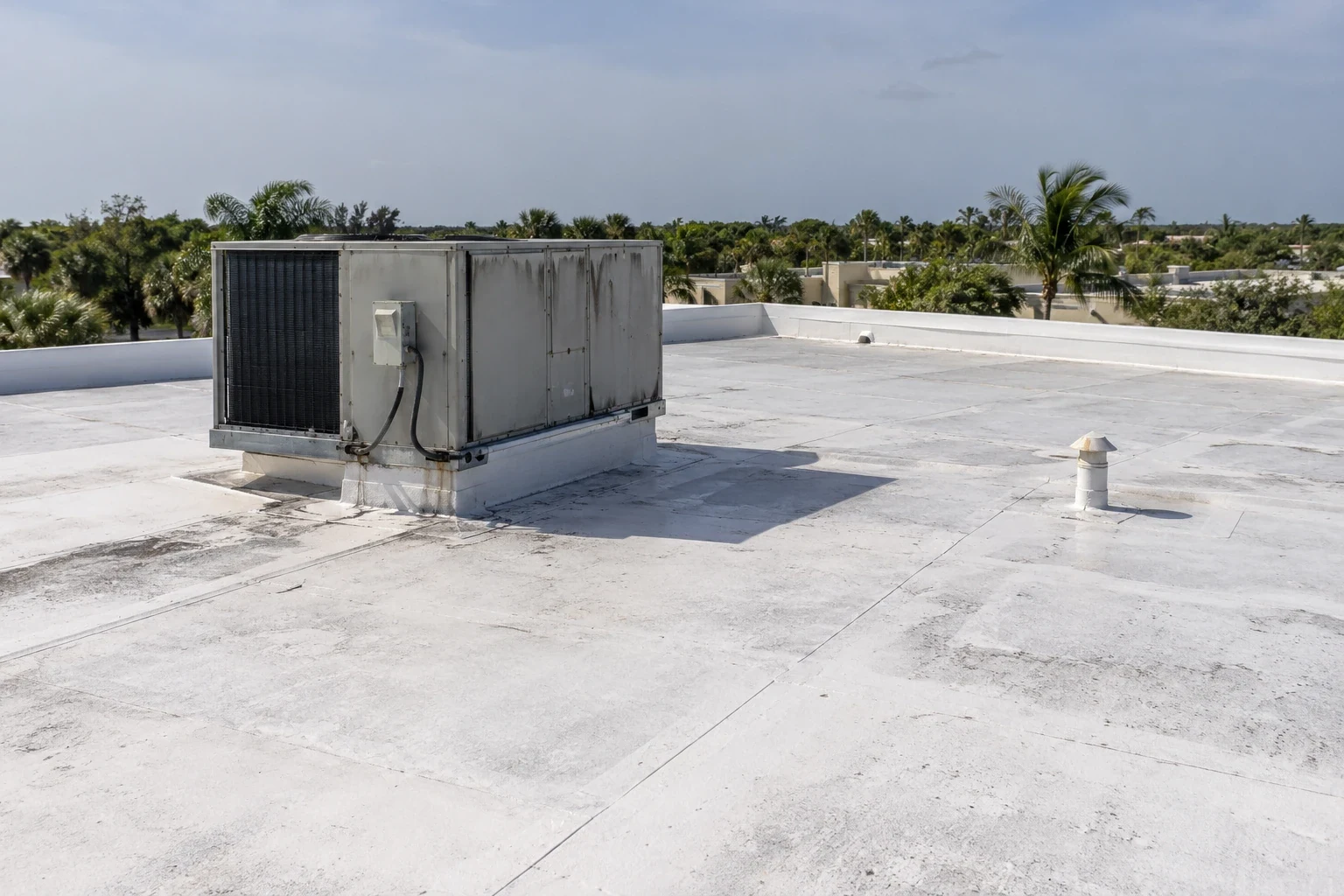
Heat enters a roof from above and, in some buildings, from below. Dark surfaces absorb more sunlight, reflective ones reflect more, and the difference can be large on a calm afternoon. Rooftop equipment, exhaust discharges and reflected heat from adjacent walls and glass add to local temperatures. We map where the heat load is highest, photograph the surface in those zones and compare condition with the less exposed areas. Wear that clusters around exhaust discharges, near rooftop units or against south-facing walls points to local heat sources, while wear spread evenly across the field points to general exposure and age.
Interior heat matters as well. Roofs over cooled space shed heat differently from roofs over uncooled storage, and the difference shows up in cracking patterns and in how insulation ages. We note the building's use and cooling load when judging whether added reflectivity or added insulation is worth pricing.
UV, chalking and loss of reflectivity
Ultraviolet light breaks down the surface of many roofing materials over time. Single-ply membranes can chalk and lose reflectivity, coatings can crack or craze, and bitumen surfaces can lose granules and oxidize. Chalking is often cosmetic at first; as it progresses, the wear layer thins. We test with a hand wipe and photograph the residue, measure thickness where practical and look for exposed reinforcement scrim, which marks the end of a membrane's surface layer. Where the surface is only dirty, cleaning restores appearance. Where it is worn, the choice shifts toward restoration or replacement, and the scope states the condition that supports each.
Dirt, mildew and algae often sit on top of UV wear and make it look worse or better than it is. Hollywood's heat and rainfall support organic growth on shaded or damp areas, so cleaning is part of the inspection, and we clean a test patch with a method that will not damage the membrane before we judge what is underneath.
Brittleness, shrinkage and pulled flashings
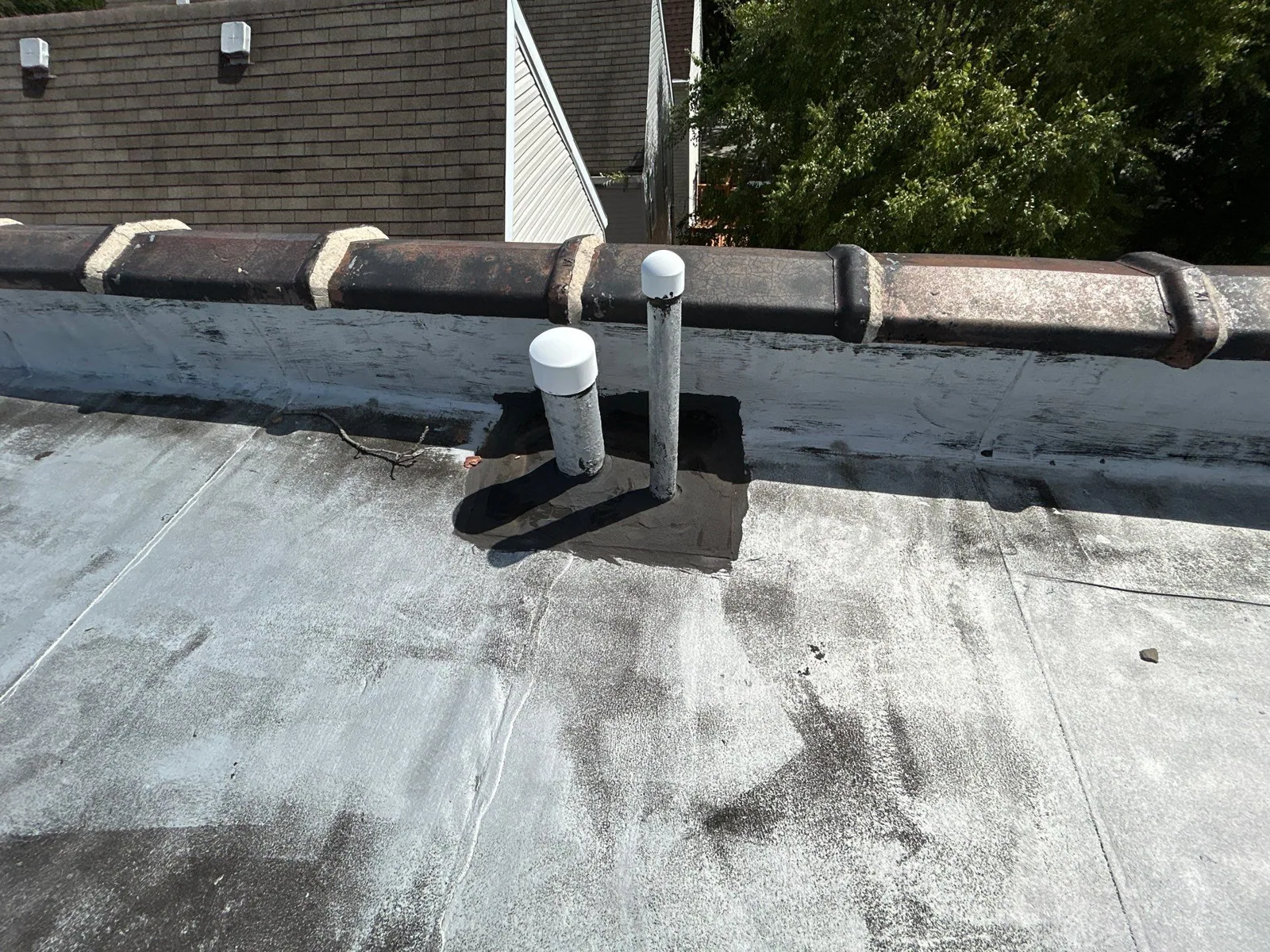
Heat can drive plasticizers out of some membranes and cause others to shrink. A brittle membrane cracks when flexed, and a shrunken one pulls on its terminations. We bend a small cut sample, inspect edges at walls and curbs for pullback and gaps, check the tension on fasteners and probe seams. Signs include a membrane drawn tight over a corner, bridged inside corners, flashings pulled off their substrate and seams opened along their length. Shrinkage near a wall flashing connects directly to flashing failure, and open laps connect to seam failure, so we inspect all three at the same visit.
A brittle membrane is also fragile underfoot. Walking on it can crack the surface and open a path that was not there before the inspection, so we plan the walk on boards where the surface is suspect, limit the number of people on the roof and record the cracking pattern before any repair work begins. Photographs taken at the start protect both the owner and the crew from later argument about what was already damaged.
Testing a worn surface
Visual wear is a starting point, and a few simple tests turn it into a decision. A flexibility test bends a small sample over a mandrel to see whether it cracks. A bond test pulls a coating or a patch to see how well it adheres. A thickness check measures what is left of a wear layer or a coating. A moisture scan checks that the insulation is dry before any restoration is priced, because a coating over wet insulation traps the moisture. The infrared moisture survey maps temperature patterns that may indicate wet areas, and core samples confirm them.
Results are recorded by zone with photographs and numbers where we have them, and we say when we do not. A report that states which tests were done, where and what they showed lets the owner compare the roof with itself a year later. If a test fails, the report explains what the failure means for the options. If it passes, the report says so and notes the next check date.
Daily and seasonal thermal movement
A roof expands in the afternoon and contracts at night, and metal, membrane, insulation and masonry move by different amounts. Over years that movement works on every joint: sealant fatigues, fasteners back out and edge metal opens. The wet season adds about 8.8 inches of June rain and 8.7 inches in September, and storms cool a hot surface quickly, which adds thermal shock. We examine expansion joints, edge metal joints, coping and curb flashings, looking for gaps, dried sealant and loose fasteners, and we recommend details that allow movement, such as slotted fasteners or expansion joints, where the existing detail does not.
Restoration, cool roofs and replacement
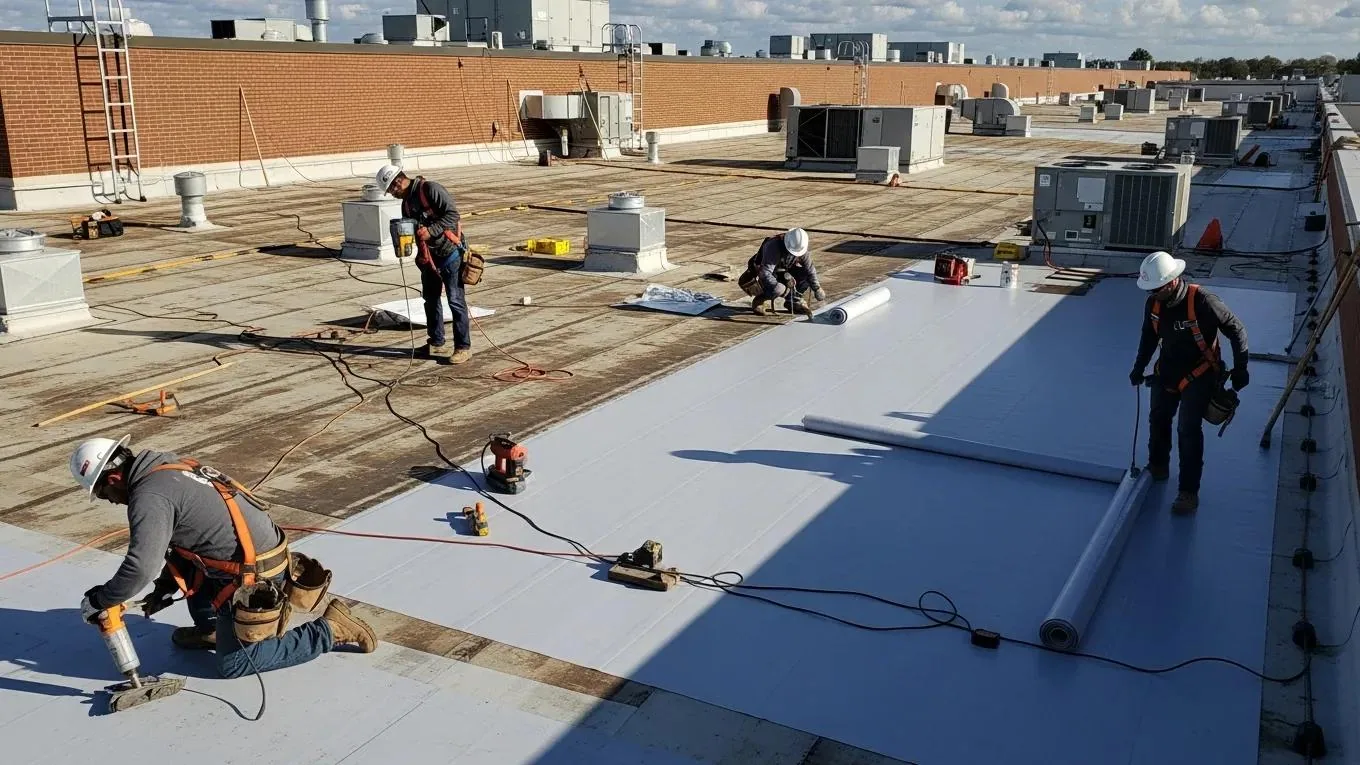
The options follow condition. A roof that is dry, bonded and flexible may take a cleaned surface and a reflective coating, which restores reflectivity and adds a protective layer; roof coating restoration begins with seam repair and moisture checks. A roof that is nearing replacement may be a candidate for a reflective replacement membrane, and a cool roof installation can reduce surface temperature and some cooling load, depending on insulation and building use. A brittle or shrunken membrane with wet insulation points to replacement. Each option is priced by area, access, penetrations and tenant hours, and the report shows what each leaves behind.
Insulation and drainage get a final look before the choice is made. Adding insulation during a replacement lowers heat transfer through the roof, and a correction of slope removes ponds that speed surface wear. Neither is a substitute for sound seams and flashings, and both are priced as separate items so the owner can decide on each.
Records across districts
The same exposure reaches every part of the city, though building types differ. Downtown Hollywood and the Historic Hollywood Business District follow the original 1921 layout, the Hollywood Beach Business District sits near the Atlantic, and the Washington Park Industrial Area is being treated through a named redevelopment program. We inspect each property on its own condition and keep dated photographs and test results, so changes can be tracked from year to year. A property near the Washington Park Industrial Area or elsewhere benefits from a baseline taken before the next hot season, and a preventive maintenance visit refreshes it.
Related Roofing Topics

