Need this roof reviewed?
Reflective cool roof membranes and coatings for commercial buildings in Hollywood, FL, with surface temperature, soiling and moisture issues spelled out.
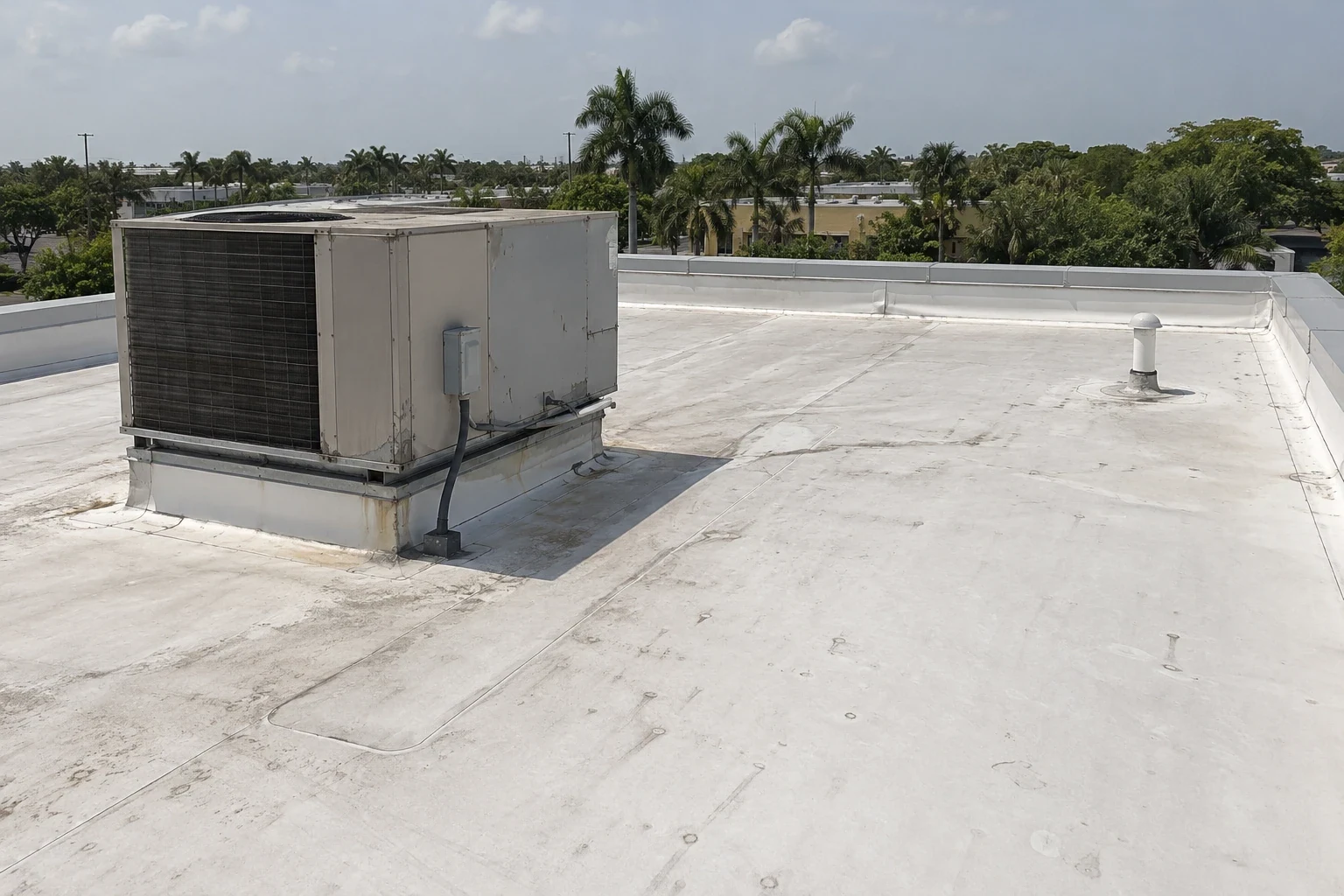
A dark roof in South Florida sun is a heat collector. A mean annual temperature near 76 degrees and August afternoons close to 90 keep Hollywood's roof surfaces well above the air temperature most of the year, and the heat that does not reflect either passes through the assembly or cycles the membrane. A cool roof reflects more sunlight and sheds more of what it absorbs. The result is a lower surface temperature, less thermal movement at seams and flashings and, in many buildings, less load on cooling equipment.
That is the principle. The practical question is whether a given roof should go that way, and how: reflective membrane, reflective coating or a lighter-colored surface over an existing system.
How a Roof Becomes Reflective
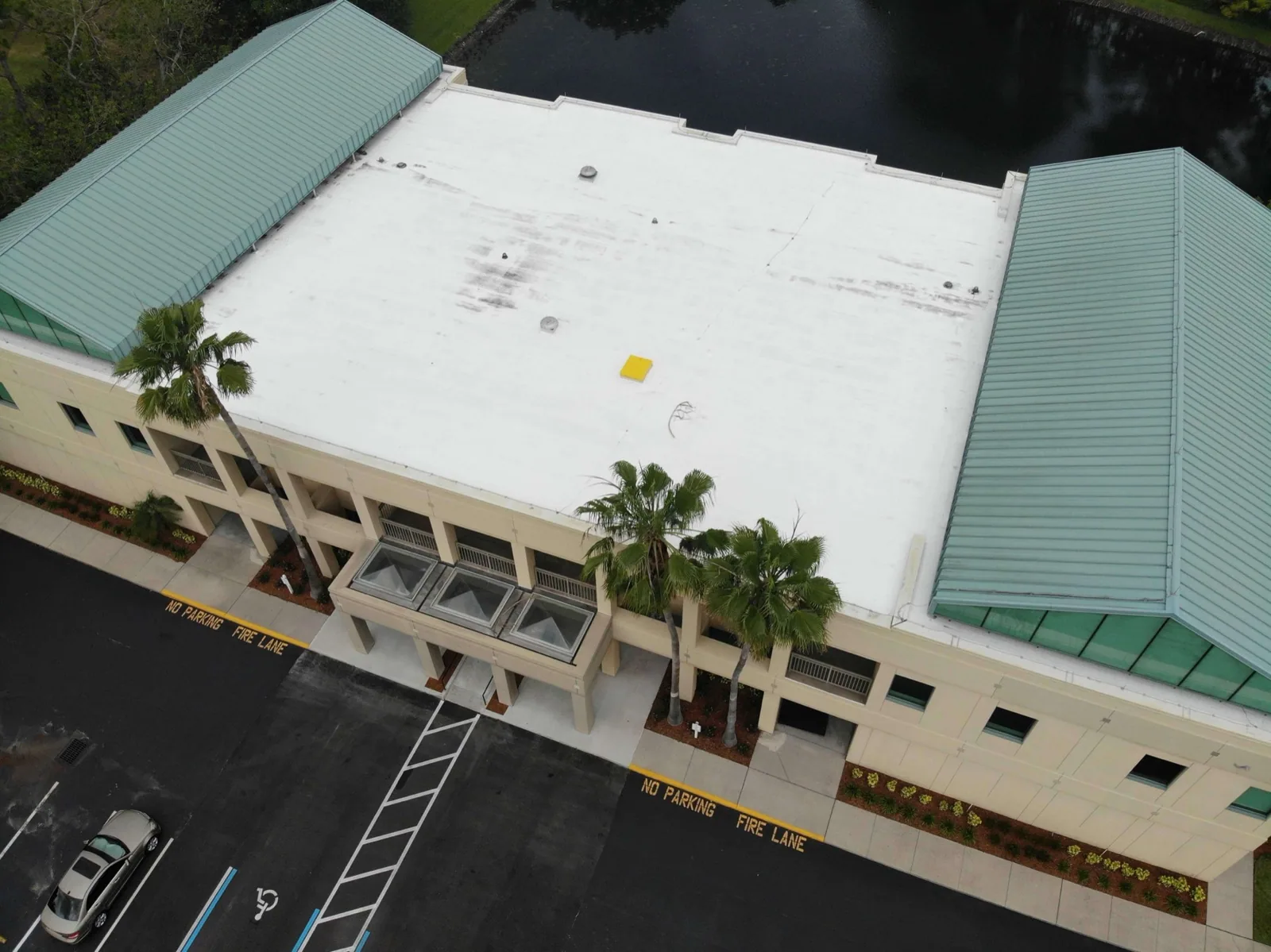
There are three common routes. A white or light single-ply membrane, such as TPO or PVC, is reflective from the factory. A reflective coating, such as an acrylic coating or a silicone product, brightens an existing membrane. A cap sheet or surfacing with light granules can do the same for modified bitumen.
Metal roofs have their own path: a factory-applied reflective finish, or a field-applied coating on a roof whose panels and fasteners are sound. Because metal moves with temperature, a lower surface temperature means less movement at laps and fasteners, which is part of the durability case for a cool metal roof. Each path has its own cost, life and preparation needs.
For a roof that is due for replacement anyway, the reflective membrane adds little complexity: the installation steps are the same as for any single-ply system, and the color is a choice of product. For a roof that is not due, a coating is a smaller step but depends on the tests below, and it brings a recoat schedule the owner should plan.
Two properties matter: solar reflectance, how much sunlight the surface bounces back, and thermal emittance, how readily it releases the heat it holds. Product data lists both, and independent rating programs publish values for many products. We read the listed values against the roof's insulation, ventilation, building use and cooling equipment, since those set the actual energy result.
Is the Existing Roof a Candidate?
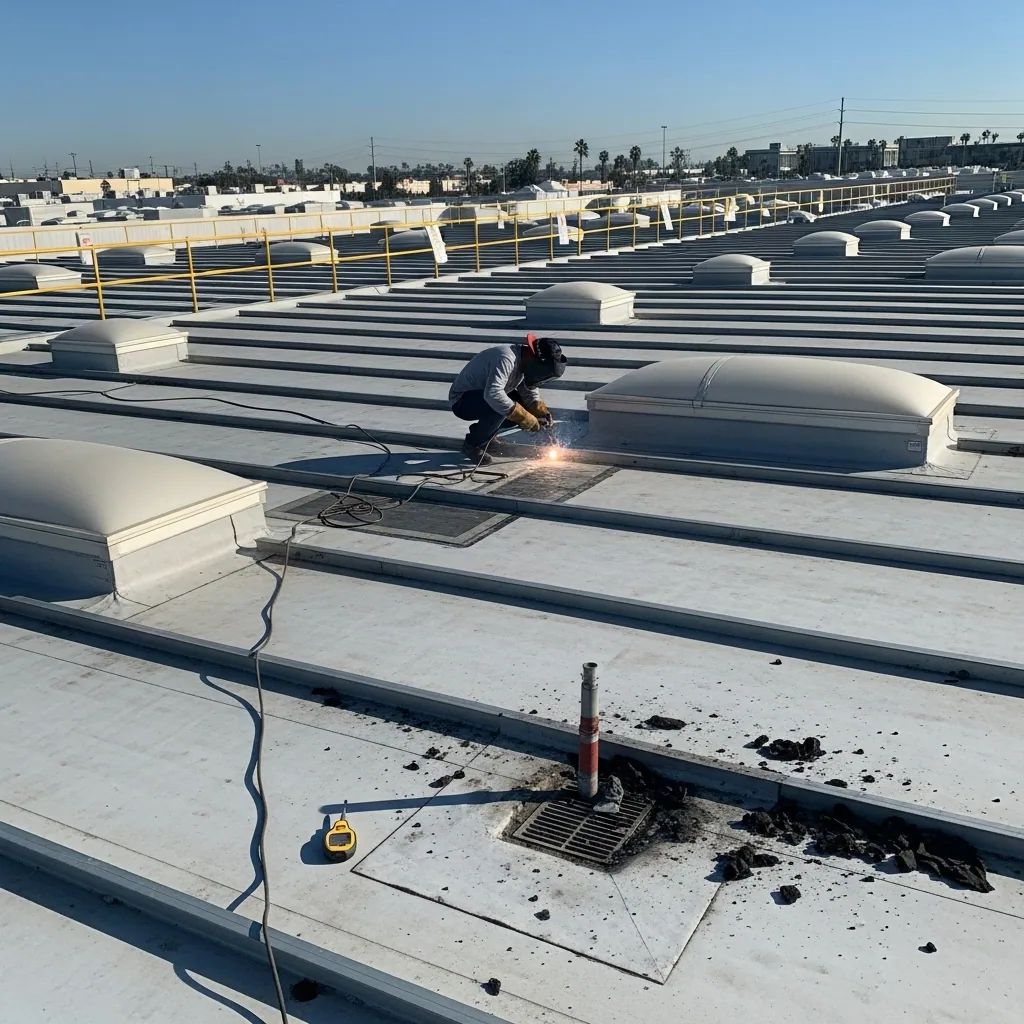
A coating over an existing roof requires the same tests as any restoration: bond, moisture, seam and flashing condition and surface cleanliness. We probe, scan and test a sample before proposing it. If the insulation is wet, a reflective surface will not cure the problem, because trapped water lowers insulating value regardless of color, and heat will keep driving moisture through the assembly. In that case, replacing the wet sections and then applying the coating, or replacing the membrane with a reflective one, is the sound route.
For a full replacement, a reflective membrane is installed over new insulation and cover board as part of the system. The tests for an existing roof are the same ones used in roof coating restoration: bond, moisture, seams and surface cleanliness, in that order.
Soiling, Algae and Reflectance Over Time
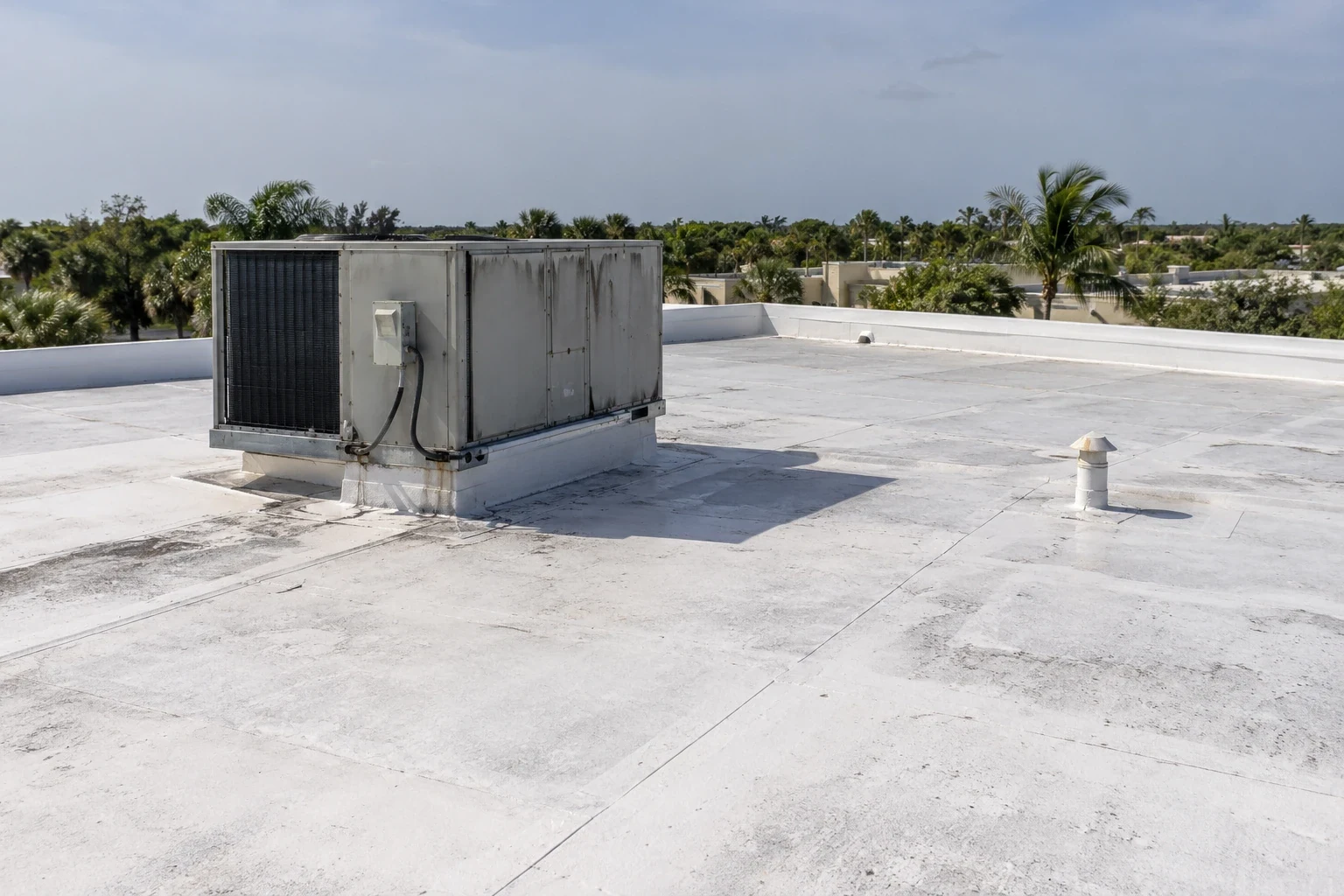
A new white surface is brighter than it will be in three years. Dirt, pollen, mildew and algae all dim it, and a humid climate with heavy summer rain encourages growth, especially where water ponds. Normal rainfall above 8.5 inches in both June and September feeds algae and mildew, and ponded areas on a white surface stain first.
Maintenance preserves performance: periodic washing, clearing drains so water does not stand and treating biological growth. Shade from a parapet or an adjacent tall building can slow drying and encourage growth in a strip along the wall, so those strips are checked first. We include cleaning in a maintenance plan and record condition at each visit. Cleaning method matters: harsh washing can damage a coating, and a soft wash with a mild cleaner usually does the job on a membrane. We follow the product maker's cleaning guidance and note the date, the method and the result. If a coating thins or chalks, the file shows it, and recoating is planned before the base membrane is exposed.
Thermal Movement and Detail Life
Lower surface temperature reduces expansion and contraction, which is the main lever on seam and sealant life. A reflective membrane still moves, but through a narrower range, and seams, sealants and flashings are stressed less. That durability benefit holds whatever the effect on the cooling bill.
Details still need care. Dark walls, equipment curbs and metal edges beside a white roof remain hot, and the flashing that bridges them takes the largest temperature swings. We check termination heights, sealant condition and attachment on those details whether the field is reflective or not.
Surface temperature is worth measuring when the question is serious. A simple infrared thermometer reading of a dark and a light area on a sunny afternoon shows the gap in a way that numbers on a data sheet do not. We take those readings on request and record the time, the sky and the surface type with them.
Code and Permit Questions
The 2023 Florida Building Code has roofing and energy provisions, and Hollywood's building division reviews permitted reroofing, so reflectance and insulation rules are checked early. Whether a given project has requirements for reflectance, insulation levels or attachment depends on the scope and the building, so we confirm them before design is final. Where a project uses a reflective product, we record the product, the listed reflectance and the area covered, and the product data sheet goes into the permit file so an inspector or a later buyer can see exactly what was installed over which section of the roof.
Permits and inspections follow the scope. A coating over an existing roof may be treated differently from a replacement, and the building division can tell us which category applies. We ask before ordering material, since a reflective product chosen without regard to the permit path can force a change late in the schedule.
Where Cool Roofs Are Considered
An office suite in Downtown Hollywood and a business in the Liberia Area Business Corridor can carry different cooling loads and budgets, so the cool roof question is answered building by building. Hollywood may grant a conditional property-tax exemption to eligible new or expanding businesses in the Liberia corridor, a question for the owner's tax advisor. The roof itself is priced on its own cost drivers: area, surface preparation, insulation, coating or membrane, edge details and access.
Related Roofing Topics

