Need this roof reviewed?
Acrylic roof coating evaluation and restoration in Hollywood, FL, covering ponding limits, cure windows in the wet season, surface preparation, and records.
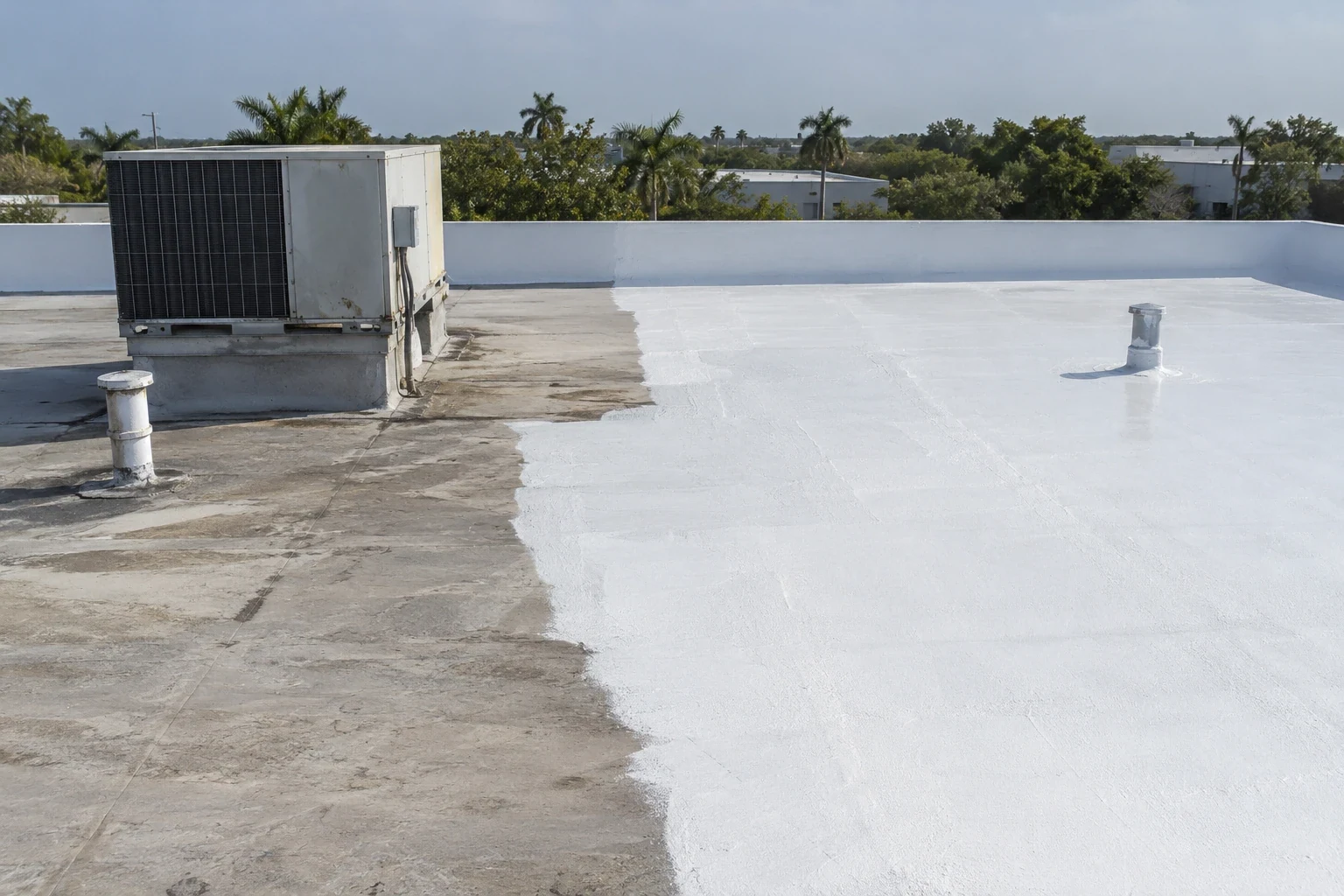
Water-based acrylic coatings fail in a particular way: they soften where water stands. That one trait shapes almost every decision about where an acrylic coating fits on a roof. It goes on easily, reflects sunlight well and can restore a weathered but sound surface, yet it asks for a dry cure window and a roof that drains. Hollywood, FL has heat that makes reflectivity valuable and a wet season that makes drainage and timing difficult. So we start by finding where water stays after rain, how the surface looks, and whether the membrane and insulation beneath are dry enough to coat. Then we say plainly whether acrylic fits, what must change first and what the coating is expected to do.
The same walk looks at edges, drains and penetrations, since a coating only protects a roof whose details are already sound.
How acrylic behaves on a roof
Acrylic coatings are water-based and cure by evaporation, forming a flexible, reflective film. They resist ultraviolet light, bond well to many surfaces and are generally easier to apply and repair than other coatings. They are widely used over metal, spray foam, built-up and modified bitumen surfaces after proper cleaning and priming.
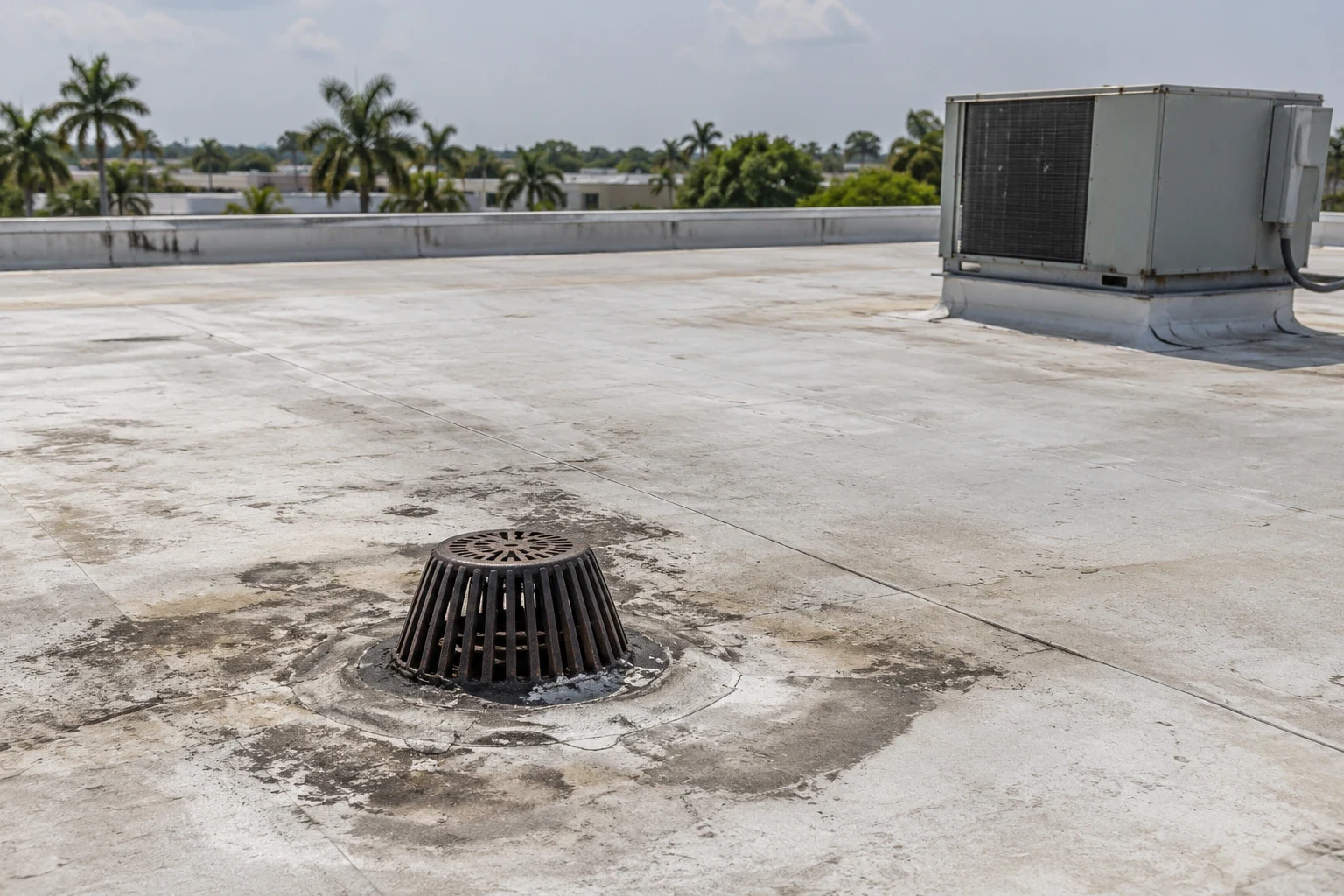
The limit is water. Standing water can re-wet an acrylic film, soften it, and in time cause blisters or loss of adhesion. So acrylic suits roofs that drain fully, or roofs where drainage can be corrected first. A flat roof that ponds regularly may be better served by another coating type, or by a drain and slope fix before any coating goes.
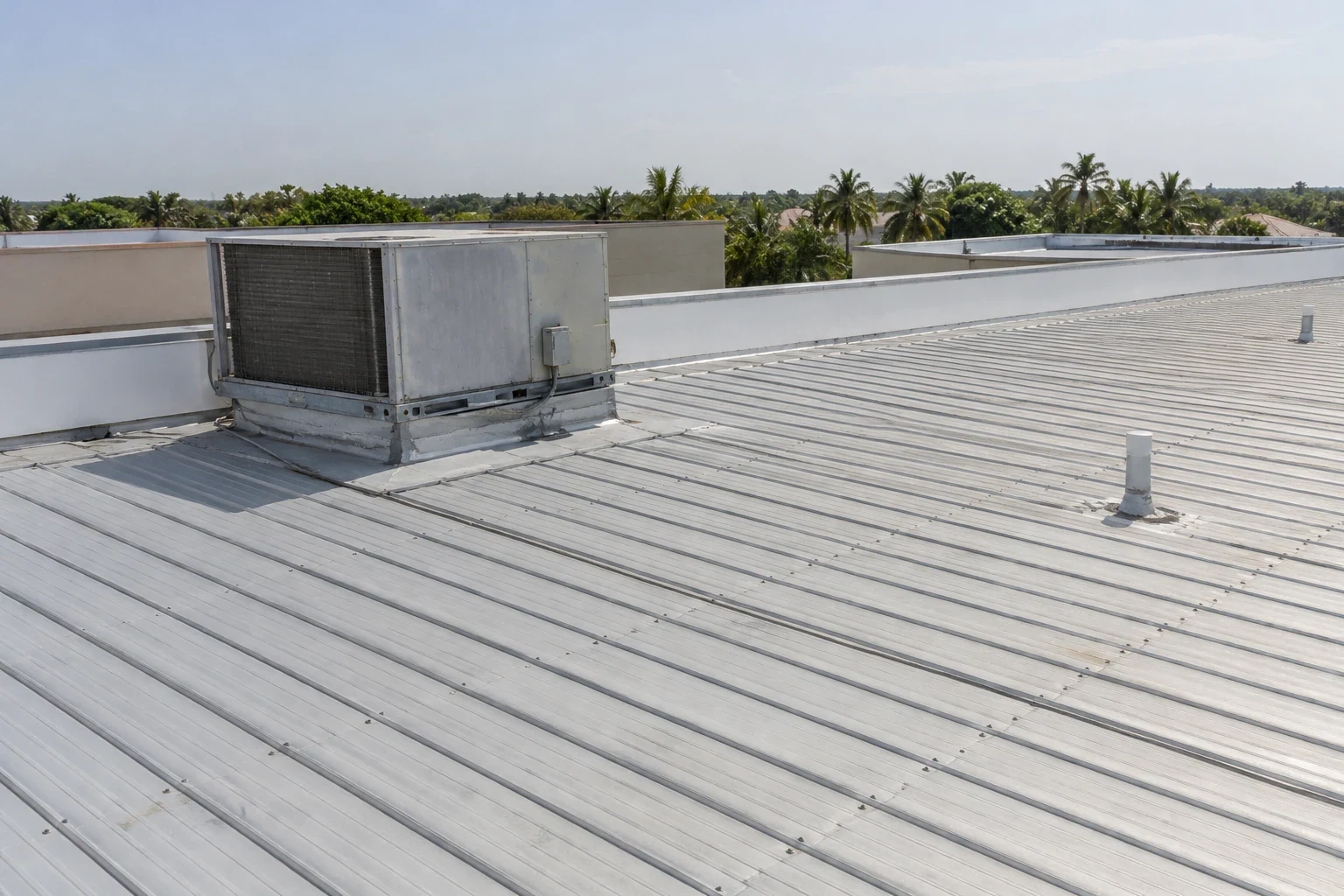
Foam roofs and metal roofs are the common pairings: an SPF roof needs a protective film, and an exposed-fastener metal roof can be sealed and reflective after fasteners are reseated.
Ponding depth, duration, and decisions
We measure ponding depth and how long water lasts, because those two numbers decide whether acrylic is reasonable. A shallow puddle that dries within a day is a different case from a pond that persists for days. Photographs the morning after rain, and again two days later, give us the pattern.
If ponding is present, we look for the cause first: a drain bowl set high, a clogged scupper, deck deflection or compressed insulation. A drain and scupper correction may eliminate the pond altogether. If slope is the issue, tapered insulation can be added during a recover. If neither is feasible, a more water-tolerant system, such as silicone, may be the better path. The decision is recorded with the readings that led to it.
Any repeat pattern, such as ponding at the same low spot after every rain, is photographed and logged, so the cause is proven by evidence instead of memory.
Cleaning, priming, and surface preparation
A coating adheres to a clean surface, not to dirt. Roofs are pressure-washed or cleaned with a detergent, mildew is treated, loose coatings and granules are removed and failed sealants are cut out. Rust on metal is treated and primed. Bitumen surfaces may need a primer to block bleed-through of oils.
We test adhesion on a small area after cleaning and priming. A patch of coating is applied and checked after cure. If the film lifts, we change the preparation or the system. The test is cheap compared with a failed roof, and the result goes into the record with a photograph.
Contaminants include exhaust residue, tree sap and old roof cement. Each is identified and treated, because a single oily patch can lift a section of coating after cure.
Cure windows and the wet season
Acrylic must dry before it meets rain. Hollywood's wettest months, June at 8.84 inches and September at 8.67 inches by NOAA normals, bracket a season in which cure windows are scarce, and NWS puts the stormiest phase between mid-May and early July. Those months leave few reliable windows for coating work.
We plan around them. Application is scheduled for dry days with enough cure time, and crews watch the forecast through the afternoon. If an afternoon shower threatens, the work stops and the area is protected. Coating in the drier part of the year avoids most of that risk, and we discuss the calendar before the contract is set. Fresh coating exposed to rain can wash out and need redoing.
Seams, flashing, and reinforcement
Acrylic works best when the details beneath it are sound. Seams are checked and re-sealed, penetrations are flashed and corners and edges are reinforced with fabric or mesh embedded in a base coat. Rusted fasteners on metal roofs are reseated and sealed.
We do not coat over a failure. A seam failure repair comes first, because a lifted seam under a new film will open again. After the details are repaired, base coats and topcoats are applied to the specified thickness, and thickness is checked as the work proceeds. The result is a continuous film with reinforced details, not a paint job over problems.
Downtown Hollywood buildings and others near the events along Hollywood Boulevard between US-1 and 21st Avenue need delivery planning, since closures can affect access, and coating materials arrive in drums that need staging space.
Use across Hollywood's building mix
The City identifies a variety of commercial settings, including the Downtown and Beach business districts and the Johnson Street Business District. Roofs in each can differ in age, use and access. A Hollywood Beach hotel, a Downtown retail building and a Johnson Street shop may all be coating candidates, but each needs its own moisture reading and adhesion test.
We do not assume a roof's system from its address. The roof is identified by sampling, tested for moisture and walked for ponding, and only then does a coating proposal follow. Reflectivity helps, since August highs average 89.9°F at the NOAA Hollywood station, but it does not replace a sound roof.
After work, the closeout file lists the coating products, thickness, base preparation, reinforcement locations and photographs, plus the recommended wash and recoat inspection interval.
Coat, repair first, or replace
Findings sort the roof. A sound roof that drains, with dry insulation and repaired details, is an acrylic candidate. A roof with ponding, wet insulation or failing seams needs repair first or a different system. Cost follows area, substrate, preparation, thickness, access and weather. A roof coating restoration review compares acrylic, silicone and other paths on the same section.
Reflectivity is not permanent. Dirt, mildew and ponding residue lower it, and a wash on a set schedule keeps the film working. We write the interval into the record, adjusted to tree cover, traffic and nearby exhaust, and we check thickness at recoat time so the second coat builds on a known base. Where the first coat has worn thin at drains and walk routes, those spots are built up first.