
Need this roof reviewed?
Spray polyurethane foam (SPF) roof evaluation, repair, and recoating in Hollywood, FL, with substrate moisture review, coating checks, and clear records.
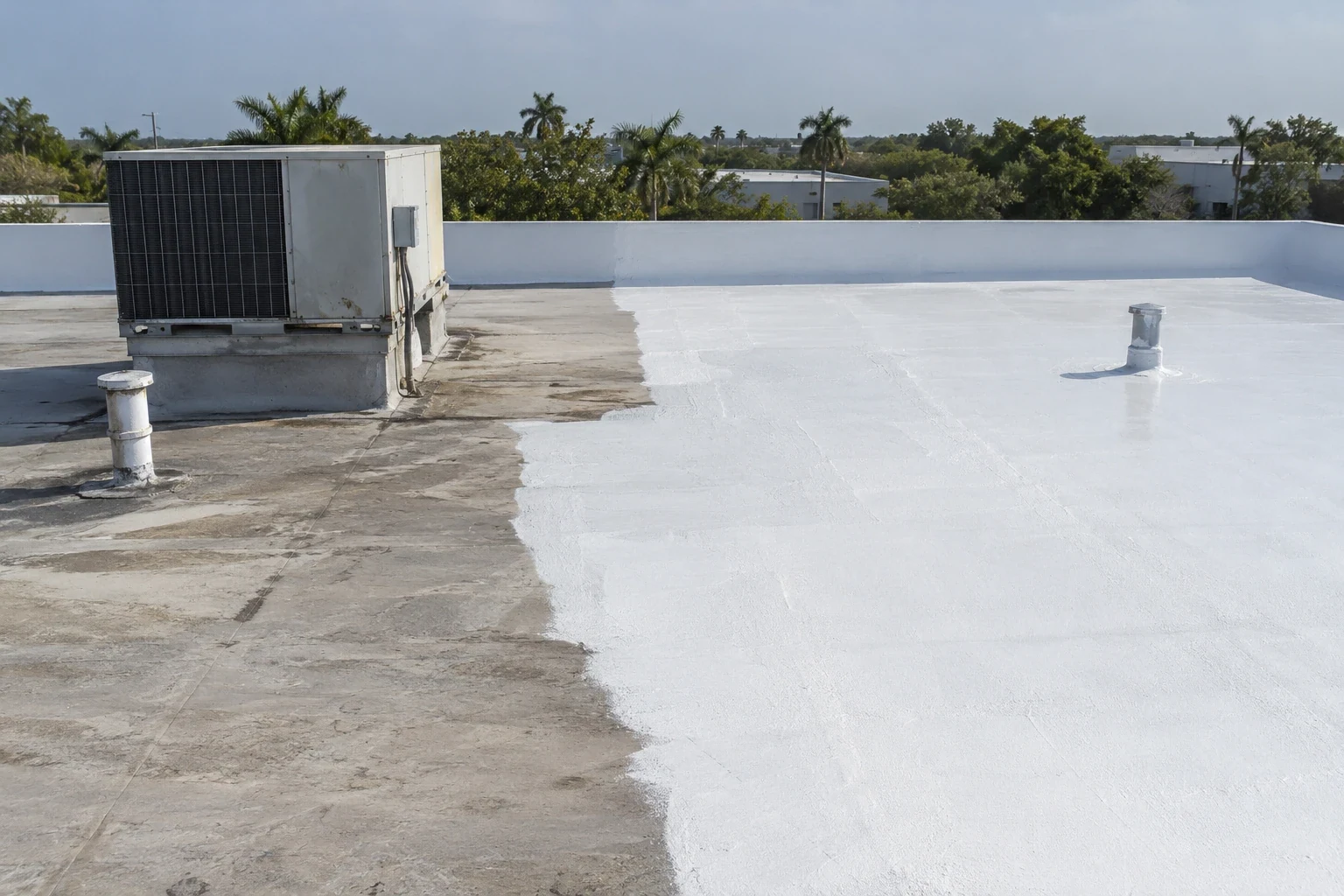
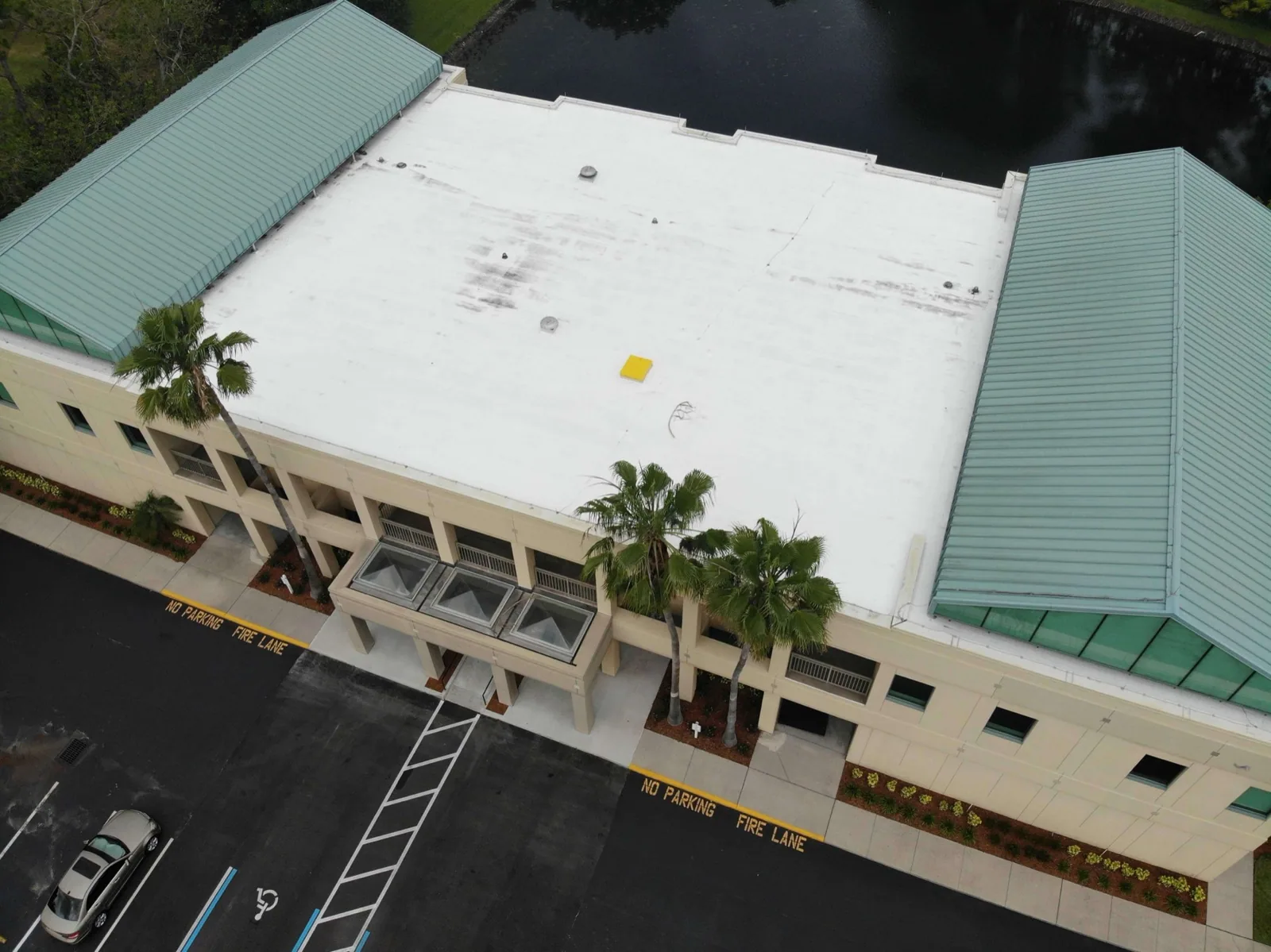
Foam is only as durable as the coating over it. A spray polyurethane foam roof is a continuous layer of closed-cell insulation that adheres directly to the substrate, and a thin elastomeric coating shields that foam from sunlight and water. When the coating chalks, thins or cracks, ultraviolet light begins to break down the surface of the foam, and rain finds the damaged spots. In Hollywood, FL, strong summer sun and a heavy wet season put that coating through a hard cycle every year. We start with what shows on the surface: color, chalk, blisters, pinholes, footfall damage and ponding. Where readings call for it we test, probe and sample, and we note whether the roof needs a recoat, a repair or a larger decision.
A roof walk also finds the small things that matter later: a boot with a thin coating, a drain ring with a gap or a spot where a tradesperson stepped through the surface during other work.
Foam, coating, and what each does
SPF is sprayed as two liquids that react on the roof and expand into a rigid foam. The foam provides insulation and a continuous, largely jointless surface, which can be an advantage over sheet membranes at crowded penetrations. It does not tolerate sunlight, so a protective coating, often silicone or acrylic, is applied over it, sometimes with granules for traffic areas.
The coating is the part that wears. Foam beneath a healthy coating can last a long time. Foam under a failed coating can erode, absorb water and lose its bond. So the inspection concentrates on coating thickness, adhesion and surface condition, and on whether the foam beneath has been damaged. A roof with chalked but intact coating is a recoat candidate, while a roof with exposed or soft foam needs repair first.
Because SPF is a continuous layer, there are no laps to probe. Leaks tend to start at coating breaks, foam cracks and details, so the inspection looks closely at those places and at areas where foam meets metal.
Substrate moisture and adhesion
Foam adheres to what is under it, and what is under it must be dry and clean at the time of spraying. A moist substrate prevents adhesion and can trap vapor, leading to blisters and delamination. For an existing SPF roof, we want to know whether water has entered the foam or the substrate below.
We check with moisture meters, an infrared moisture survey where conditions permit and small core samples where readings are unclear. Wet foam is heavier, darker and often soft. Dry foam is firm and springy. Marking the wet zones on the roof sketch tells ownership how much area needs to be cut out and replaced, and how much can be recoated.
Where foam has been repaired before, we check the seam between old and new material. A poorly feathered patch can hold water at its edge and fail at the bond line.
Thickness, density, and slope
Foam can be sprayed to build slope, because the thickness is adjustable. That makes it useful where ponding is a problem, but it also means thickness varies across a roof. Thin areas are more vulnerable to impact and heat. We measure thickness with a probe at several locations and compare readings with what we expect.
Standing water on SPF is a warning. Some coatings tolerate ponding better than others, but water that stays for long periods can break down the surface and promote algae. June brings 8.84 inches of rain to Hollywood on average, so foam that looks fine in spring can show trouble by midsummer. We measure ponding depth and duration and propose slope correction or drain work where they would solve the problem.
Where a deck deflects, foam can build slope, but the deflection itself must be understood first. We check whether the deck has moved, rusted or been overloaded, since foam on a failing deck only hides the problem.
Application conditions and overspray
Spraying foam is weather-sensitive. The substrate must be dry, the surface temperature within the product's range and the wind low enough to control the spray. In South Florida's wet season, a dry morning can turn into a downpour by afternoon, so crews watch the forecast and stop before conditions change.
Overspray is the other concern. Fine foam particles can drift onto cars, windows and neighboring roofs. On a site in the Hollywood Beach business district or Downtown Hollywood, where buildings sit close together and parking is shared, we plan wind direction, masking and protection before any spraying. The owner receives a map of the protected zones.
Coating wear and recoat intervals
A foam roof maintains itself only if the coating is kept up. We check the coating for chalking, cracks, blisters, pinholes and thin areas, and we perform adhesion and thickness checks. Recoat timing depends on the coating type, the exposure and the condition, not on the calendar alone.
An silicone coating sheds ponding water well, while an acrylic coating is easier to apply but less tolerant of standing water. Sun is the main enemy of exposed foam: August highs average 89.9°F at the NOAA station, and a roof surface runs hotter than the air. Reflective coatings reduce that heat load, and cleaning before recoating improves adhesion.
Records matter for coated roofs. We note the product, the thickness applied, the date and the weather window, so a later recoat can be matched to what is already there.
Penetrations, drains, edges, and traffic
Foam wraps penetrations well, but each one still needs a thick, continuous coating and a sound termination at the top. Drains need clean transitions, and edges need metal or a coating-reinforced cap. Rooftop equipment brings foot traffic, and foot traffic cuts into foam if there are no walk pads.
We inspect each curb and drain, look for punctures and compressed areas, and note any place where hail, tools or dropped objects have broken the surface. A small puncture is repaired with matching foam and coating. A large damaged area may be cut out and re-sprayed. Both repairs are recorded by location.
Repair, recoat, or replace the section
Findings sort the roof. Coating wear over dry foam calls for recoating. Isolated damage calls for patching. Wet foam, widespread delamination or failed thickness calls for removal of the affected area. A roof coating restoration is the common outcome when the foam is sound. Cost follows area, thickness, coating type, access and weather windows.
Impact is a particular concern for foam. After a storm, a hail damage roof repair assessment looks for bruised, punctured or compressed foam and cracked coating. NWS counts hail among the hazards most likely in the stormiest phase of the wet season, though any one roof may escape. We photograph confirmed impacts only and mark them on the roof sketch.