Need this roof reviewed?
Silicone roof coating evaluation and restoration in Hollywood, FL, with adhesion testing, ponding review, seam and flashing preparation, and written records.
A silicone coating can only seal what it sticks to, so the work that decides the result happens before any liquid is applied. Dirt, mildew, loose granules and moisture in the roof assembly all keep a coating from bonding, and silicone is more particular than most about what it will go over. In Hollywood, FL, a hot summer and a wet season press a coating hard, and standing water after rain is a regular feature of flat roofs. We begin with cleaning tests, adhesion checks and moisture readings, then move to the seams, flashings and drains where coated roofs usually fail. The report states whether a coating fits the roof, what must be repaired first and how long the surface should be watched afterward.
What silicone does well on a flat roof
Silicone coatings cure into a flexible, water-resistant film that tolerates ponding better than many alternatives, shrugs off sunlight and stays elastic across a wide temperature range. That makes silicone a common choice for low-slope roofs that hold some water, where a water-based coating might soften or wash out.
The same chemistry creates limits. Silicone is slick and attracts dirt, so reflectivity drops over time unless the roof is cleaned. Once silicone has been applied, other coating types generally do not bond well to it, so a roof with silicone is likely to stay a silicone roof. The decision to coat is a long one, and we explain that before the work begins.
For a roof in the Washington Park Industrial Area, where the City is running a redevelopment process, or in Downtown Hollywood, the choice between a restoration coating and a longer-term replacement often depends on how long the owner expects to hold the building. We write that question into the report, because a coating that buys several seasons is a different decision from one meant to carry the roof to its next major project.
Substrate review and adhesion testing
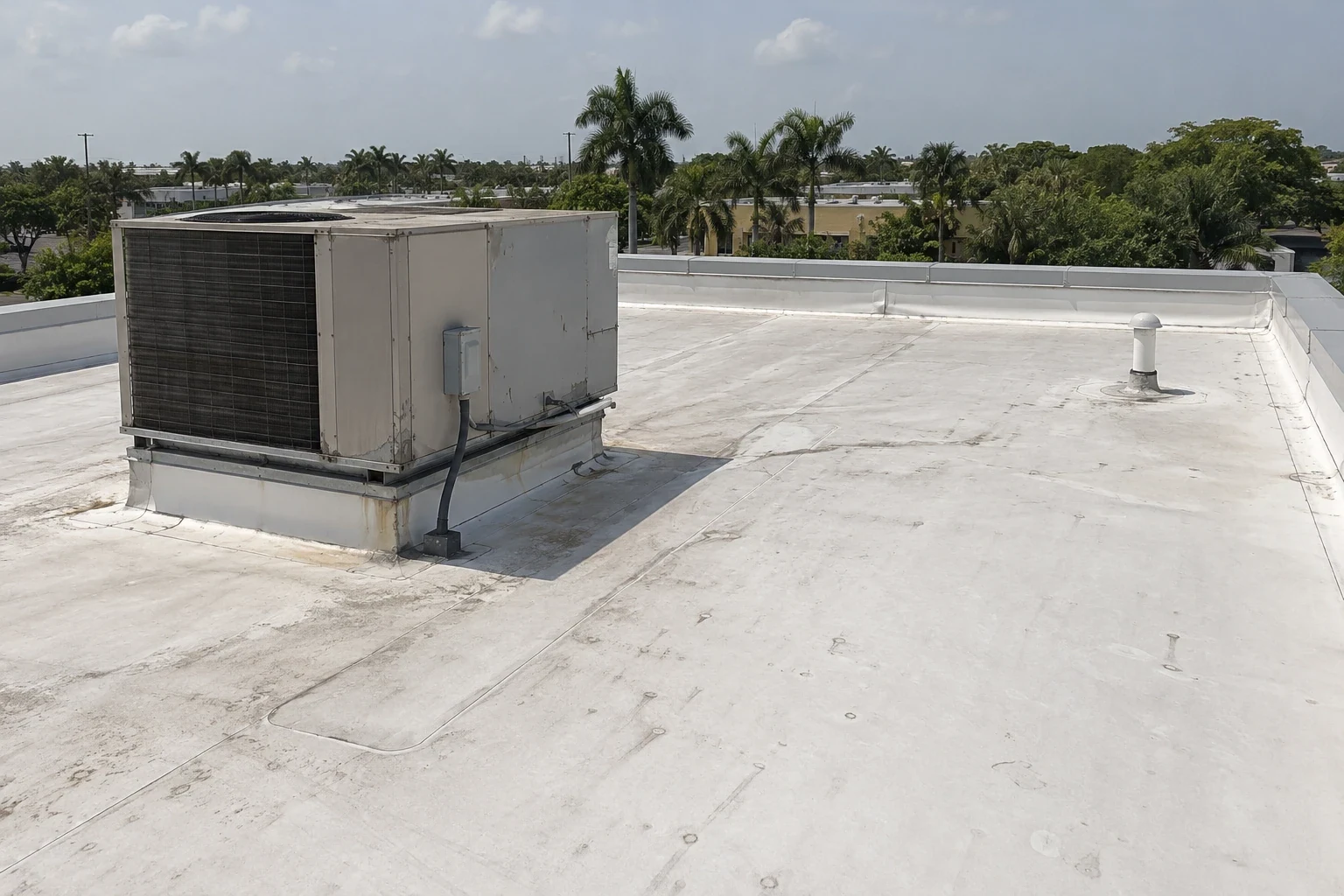
Every roof substrate reacts differently. A coating over a TPO roof may need a primer, a coating over EPDM may need a specific bonding system and a coating over metal needs rust treatment and a compatible primer. Built-up and modified bitumen surfaces can bleed oils that interfere with adhesion.
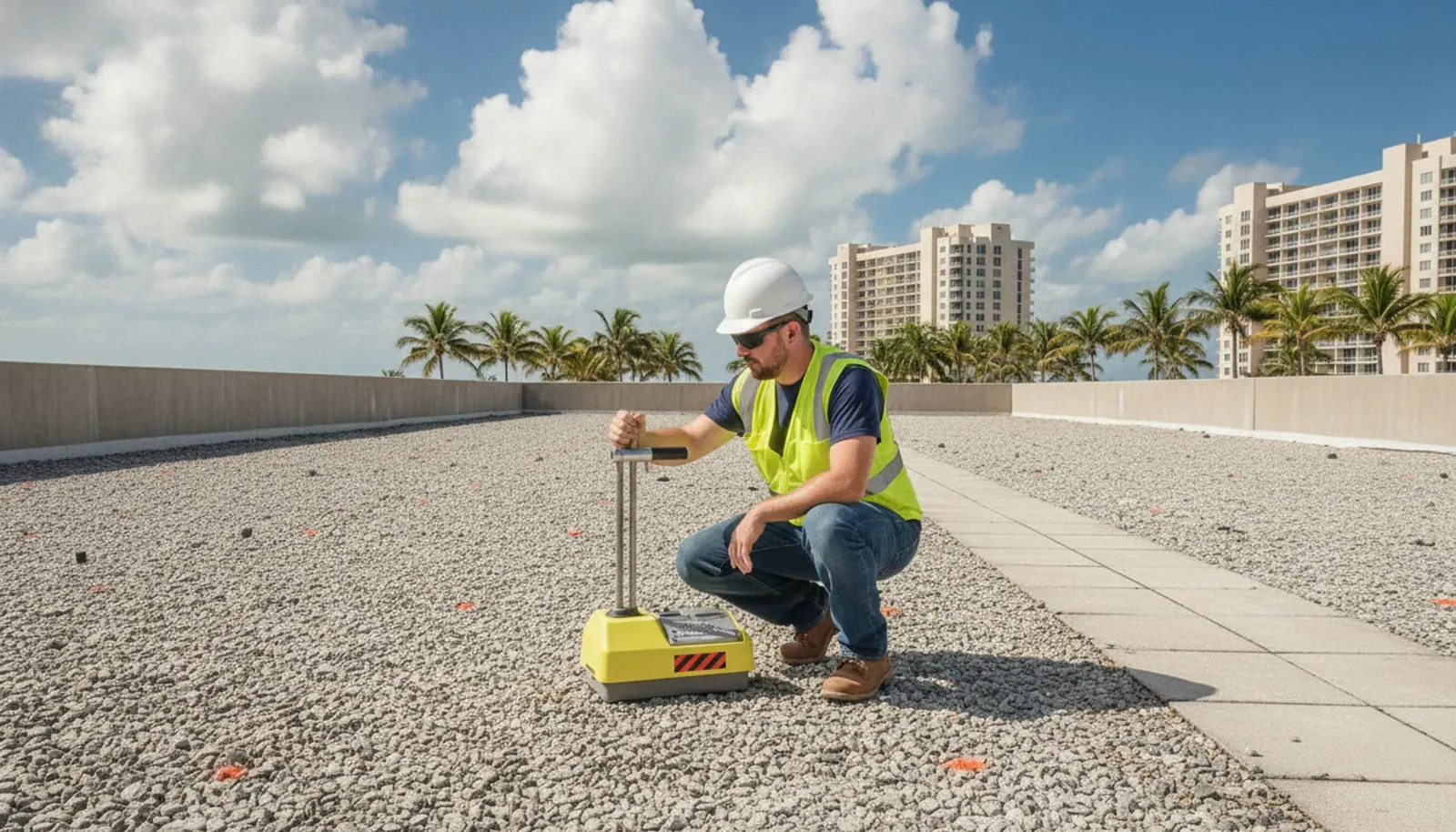
We test small areas first. After cleaning, a trial patch of coating is applied and checked after cure with a peel or cross-hatch test. The result is photographed and recorded. If adhesion is poor, the scope changes: more cleaning, a different primer or a different treatment. Skipping this step risks a coating that looks fine for a season and then peels in sheets.
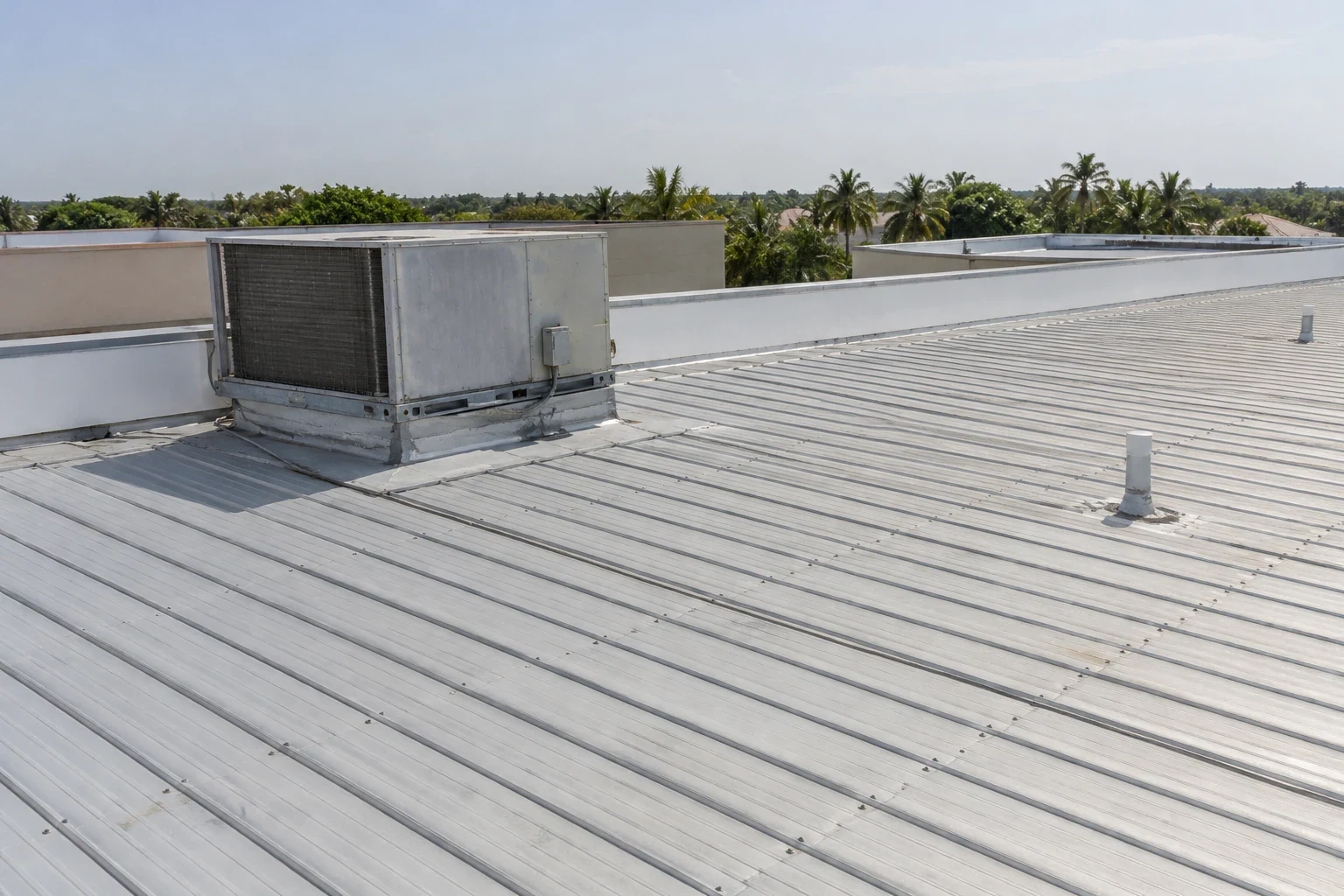
Weathered metal panels deserve a separate step. Rust is converted or removed, fasteners are reseated and laps are sealed before the coating goes on, and an exposed-fastener metal roof gets particular attention at screw heads.
Moisture in the roof assembly
Coating a roof with wet insulation seals moisture in, and trapped water turns to vapor in the heat and lifts the coating in blisters. So the moisture scan comes first. An infrared moisture survey, moisture meter readings and core samples show whether the roof is dry enough to coat.
Wet areas are cut out and replaced before coating. The map of those areas goes into the record with photographs, so ownership sees what was found and what was done. A coating is a restoration tool for a roof that is still fundamentally sound, and the moisture work is how we find out whether that is true.
Core samples are small and are patched the same day with matching material and photographed, so the roof is never left with open test cuts overnight.
Ponding, drainage, and tides in the city context
City planning documents consider sea-level rise, tidal flooding, storm surge and compound flooding alongside rain-and-tide modeling. At roof scale the question is narrower: do outlets work when rain is heavy and the receiving system is full?
Silicone tolerates ponding, but it does not cure the cause. Standing water collects dirt, grows algae and loads seams. We measure depth and duration, check drain bowls, sumps and scuppers, and recommend slope or drain corrections where they would help. Coating over a problem drain only makes a sealed puddle.
The drain check is identical on every roof we coat, whether it sits in the Johnson Street district, the Beach district or elsewhere in the city.
Seams, flashings, and fabric reinforcement
Coatings are not strong at details. Seams, corners, penetrations and edges move and collect water, so they get reinforcement: a fabric or mesh embedded in a base coat, then topcoats over it. We check that old seams are sound before sealing them, since coating a lifted seam locks in the defect.
Penetrations get pipe boots or flashing built up with the coating system. Curb corners get extra thickness. Edge metal is cleaned, primed and sealed. A skylight or penetration flashing that has failed needs replacement, not coating. These preparation steps are the difference between a roof that stays tight and one that leaks at the first corner to move.
Fresh coating is slippery and easily scuffed, so we mark the roof as a no-traffic zone during cure and restrict equipment access until the film hardens.
Application windows and thickness
A coating performs according to the thickness applied, so we specify coverage and verify it as work proceeds. Application also depends on weather: a dry surface, temperatures within the product's range and no rain during cure. In South Florida the stormiest phase of the wet season, mid-May through early July by the National Weather Service's description, narrows the best windows.
We schedule work for dry days, watch the forecast through the afternoon and keep tarps ready for sudden showers. Where August highs average 89.9°F, as they do at the NOAA Hollywood station, a hot surface can flash-dry a coating too fast, so crews adjust their timing. Thickness checks and photographs are part of the closeout, along with the date and weather at each application.
Coat, repair, or replace
A coating fits a roof with a sound membrane, dry insulation and details that can be repaired. A roof with wet insulation, widespread seam failure or structural problems needs another answer. Cost follows area, substrate, preparation, thickness, access and weather. A comparison with acrylic roof coatings or with a recover belongs in the same review.
The closeout file lists the coating product, the coverage applied, adhesion results, areas of reinforcement and the photographs, plus a recommended cleaning interval. A coated roof stays reflective only when it is washed, and the interval depends on trees, traffic and nearby exhaust.
Warranty terms, where a coating manufacturer offers one, are set by that manufacturer and depend on application records. We keep the records the manufacturer asks for and do not quote terms ourselves.