Need this roof reviewed?
Exposed-fastener metal roof restoration and retrofit in Hollywood, FL, with fastener and lap review, rust assessment, coating or retrofit options, and records.
On an exposed-fastener metal roof, every screw is a small decision made years ago, and the washer under its head is what keeps rain out. Heat cycles loosen the screw, sunlight hardens the washer and the hole elongates until water follows the thread into the purlin or the insulation. The panel itself can be sound while hundreds of fasteners fail one at a time. Hollywood, FL supplies both the heat and the rain to speed that process. We begin with a fastener sample and a lap check on each slope, then follow the moisture route from any ceiling stain back to the likeliest source and write down whether restoration, a retrofit or replacement fits what the roof shows.
Fastener back-out and washer failure
Exposed-fastener panels are held down by screws with sealing washers. As the panel expands and contracts, the screw works loose, the hole enlarges and the washer cracks or flattens. Water then enters beside the fastener, runs down the thread and shows up inside as a rusty stain or a drip.
We sample fasteners in a pattern across each slope, noting spacing, rust, elongated holes and cracked washers. A roof with only a few failures can be restored by replacing fasteners with larger ones and fresh sealant. A roof where failure is widespread, or where the framing has lost its grip, needs a different answer. The sample tells us which situation we have, so the owner does not pay for a full retrofit when restoration would do, or the reverse.
A commercial roof inspection that includes a fastener count gives the owner a number to work from. A roof with a few dozen failed fasteners is a maintenance item, while a roof with hundreds is a budget item.
Lap sealant and panel ribs
Panel laps rely on a bead of sealant or tape between the overlapping ribs. Sunlight hardens that sealant, and thermal movement cracks it. We press along each lap, look for daylight, staining and displaced sealant, and check end laps where one panel sits over another along the slope.
Ribs themselves can be damaged by foot traffic and by hail. NWS lists hail among the hazards most likely when South Florida's wet season is at its stormiest, mid-May through early July, though a particular roof may escape. We look for dents, flattened ribs and fractured paint, and we photograph confirmed damage only, leaving unaffected panels out of any claim.
Rust, perforation, and framing check
Rust tells the age of a metal roof better than any date. Surface rust at fastener heads and cut edges can often be treated, while perforation at laps and valleys cannot. We probe rust spots with a tool to see how deep they go and check the underside of the deck from inside the building when possible.
The framing below matters as much as the panel. Purlins that have rusted or rotted cannot hold new fasteners, and a roof-over scheme depends on them. If the structure is in doubt, we recommend an engineer's review before any retrofit is priced. That step protects ownership from buying a new roof that the building cannot carry.
Gutters and valleys collect leaves, dirt and standing water, and they rust from the inside. We look at the metal beneath debris, because corrosion hides there until it opens a hole.
Restoration: fasteners, sealant, and coating
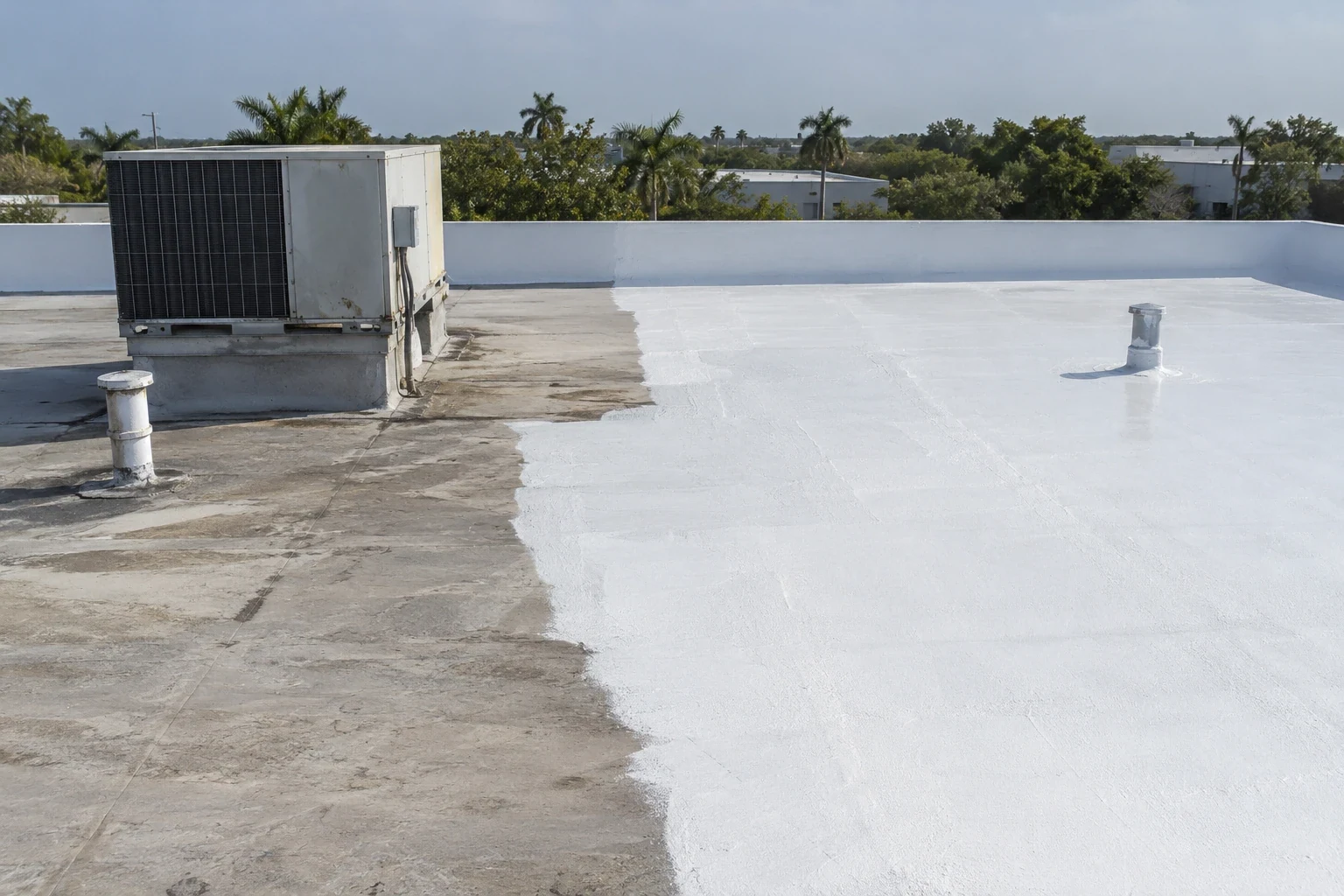
Restoration keeps the existing panels and treats their weak points. The sequence is clean, replace failed fasteners, seal laps and penetrations, prime rust, then apply a coating if the panel surface and adhesion tests support it. A reflective silicone coating or an acrylic coating can seal the surface and reduce heat gain, but only on a panel that is sound underneath.
Adhesion tests are part of the scope, because a coating on a contaminated panel peels. We clean, test a small area and record the result before committing to a full application. Rain windows matter too, since coatings need a dry cure period, and the wet season shortens the available days.
Touch-up is not an afterthought. Cut edges, scratched paint and exposed fastener heads get primed and sealed before the coating goes on, because a small bare spot will rust under the film and lift it.
Retrofit: new panels over the old roof
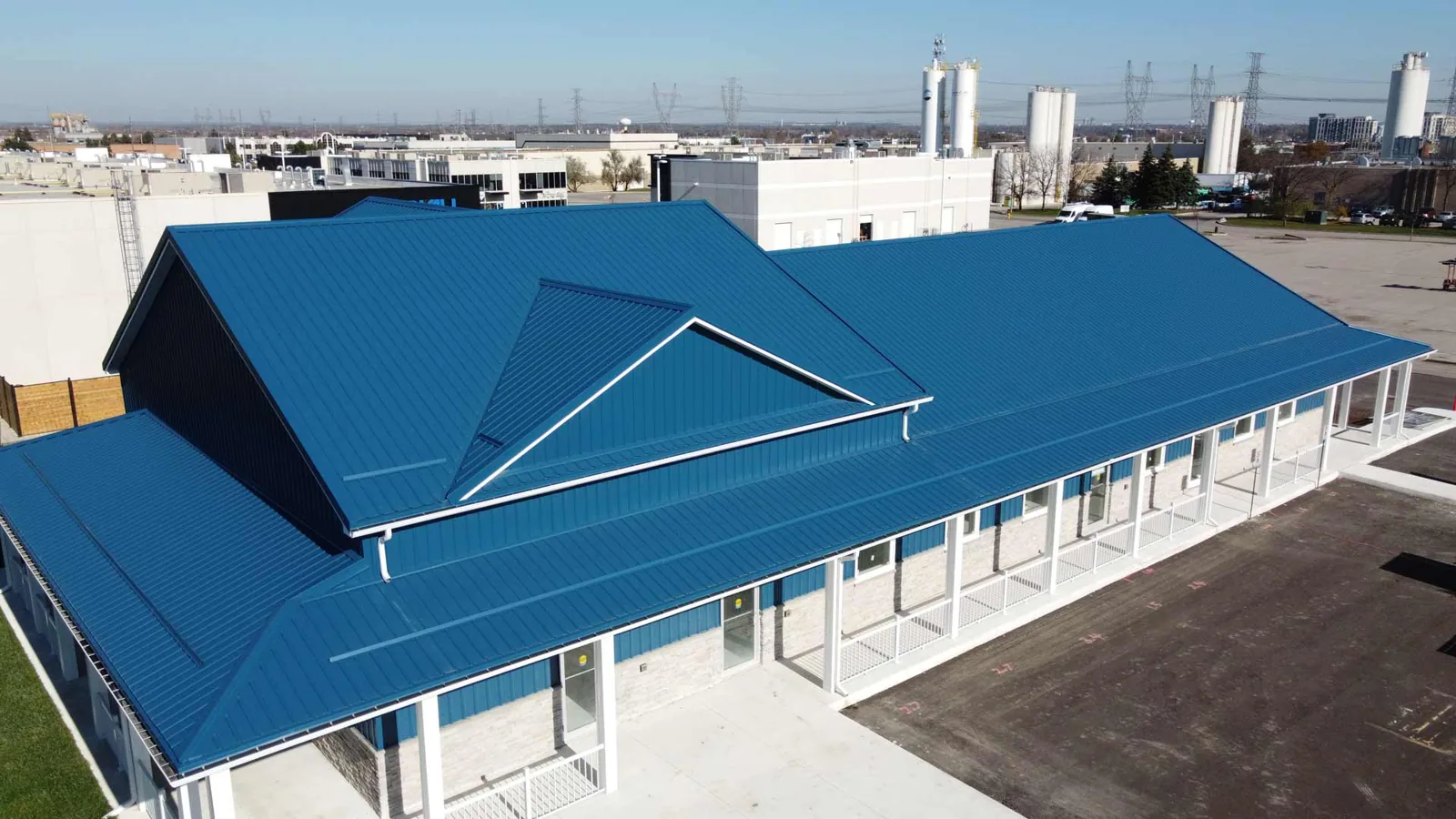
A metal retrofit installs new panels, often standing seam, over the existing roof using sub-framing or spacer systems. It avoids tear-off, keeps the building in use and can add an insulation layer. The tradeoffs are weight, height at edges and penetrations, and the need to deal with moisture trapped in the old roof.
Before recommending a retrofit, we check the old deck, insulation and framing, confirm drainage and review how the new panels will tie into flashings and walls. A standing seam metal retrofit adds clips that allow movement, but it also changes the roof edge profile, so gutters and trim are reviewed. The project is priced against restoration and replacement for the same section.
Insulation and condensation deserve a separate check. Many metal buildings have thin insulation or none, and a retrofit that adds insulation changes the dew point, so the vapor path is reviewed before the design is final.
Permit, code, and uplift
Hollywood's Building Division enforces the Florida Building Code, whose 8th Edition (2023) became effective on December 31, 2023, and its permit pages list structural reroof categories. A retrofit may require engineered drawings, fastener schedules and an inspection plan.
We confirm the permit path before pricing a retrofit and note any required product approvals, so the scope reflects what the inspector will check. On Johnson Street between 56th Avenue and US-441, in the Johnson Street business district, the same permit path applies to each property.
Retrofit work also changes how the building is accessed after installation. New panels can be slick when wet, clips and trim create fresh walking hazards and service routes to rooftop units may need walk pads and ladders re-set. We include those items in the scope so maintenance staff are not left to improvise.
Decision and cost
The sample sorts the roof. Light fastener failure and sound panels favor restoration. Widespread fastener failure with sound framing favors a retrofit. Perforated panels, rotten framing or wet insulation favors replacement. Cost follows panel area, fastener count, access, insulation and how much of the building must stay in use. A recover is the related term when a new roof goes over an old one.
The closeout record lists fasteners replaced, laps sealed, coatings applied, adhesion test results and photographs. A follow-up walk after the first heavy rain confirms the work and updates the watch list.
Related Roofing Topics

