Need this roof reviewed?
Low-slope and metal roof repair, replacement, coating and maintenance for industrial buildings in the Washington Park Industrial Area of Hollywood, FL.
Industrial roofs fail at the places where water has nowhere easy to go: a clogged scupper, a sagging bay between purlins, a curb that sits lower than the field around it. Washington Park is the part of Hollywood, FL that the City treats as its own industrial area, with a named redevelopment program, and a roof in that kind of setting is usually judged on how well it drains, how well it sheds heat and how little it interrupts the work underneath. We handle commercial roof repair, replacement, recover, coating and maintenance for buildings across the area, and we start every visit with a roof walk rather than an assumption about what the building has on top.
Rain, Heat and Tide Pressure on a Flat Roof
Rain at the Hollywood station averages 8.8 inches in June and 8.7 in September, and the weeks from mid-May to early July bring the highest odds of damaging wind, tornadoes, lightning, hail and flooding across South Florida, the National Weather Service says. A low-slope roof has to move that water off the surface quickly, through outlets that are open and set at the lowest point. When a roof cannot do that, the water sits on seams, flashing laps and fastener heads for hours.
Heat works on the same roof from the other direction. Hollywood's August high averages 89.9 degrees, and a dark or aged membrane runs well above air temperature. Repeated daily expansion and contraction, called thermal movement, loosens seams and lifts base flashing over time. The city's own vulnerability assessment also names tidal flooding, storm surge and compound flooding among its risks, so owners here have reason to care about drainage planning on every low roof.
The Redevelopment Program and Roof Planning
The City of Hollywood runs a Washington Park Industrial Area Redevelopment Program by name. An October 2025 community open house started a round of public engagement and a walking audit, and staff say community feedback and technical analysis shaped a recommendations report for the area. An owner or tenant who has been through that process will know it is still a planning effort, and a roof decision made today sits alongside it.
That is a practical reason to match the roof scope to the planning horizon. A building that may change hands, change use or be reworked in a few years is a candidate for a targeted repair or a coating that extends service life. A building the owner intends to hold is a candidate for a full commercial roof replacement with insulation and drainage corrected at the same time. We lay both options out in writing with the repair route priced separately from the replacement route.
What a First Roof Walk Covers
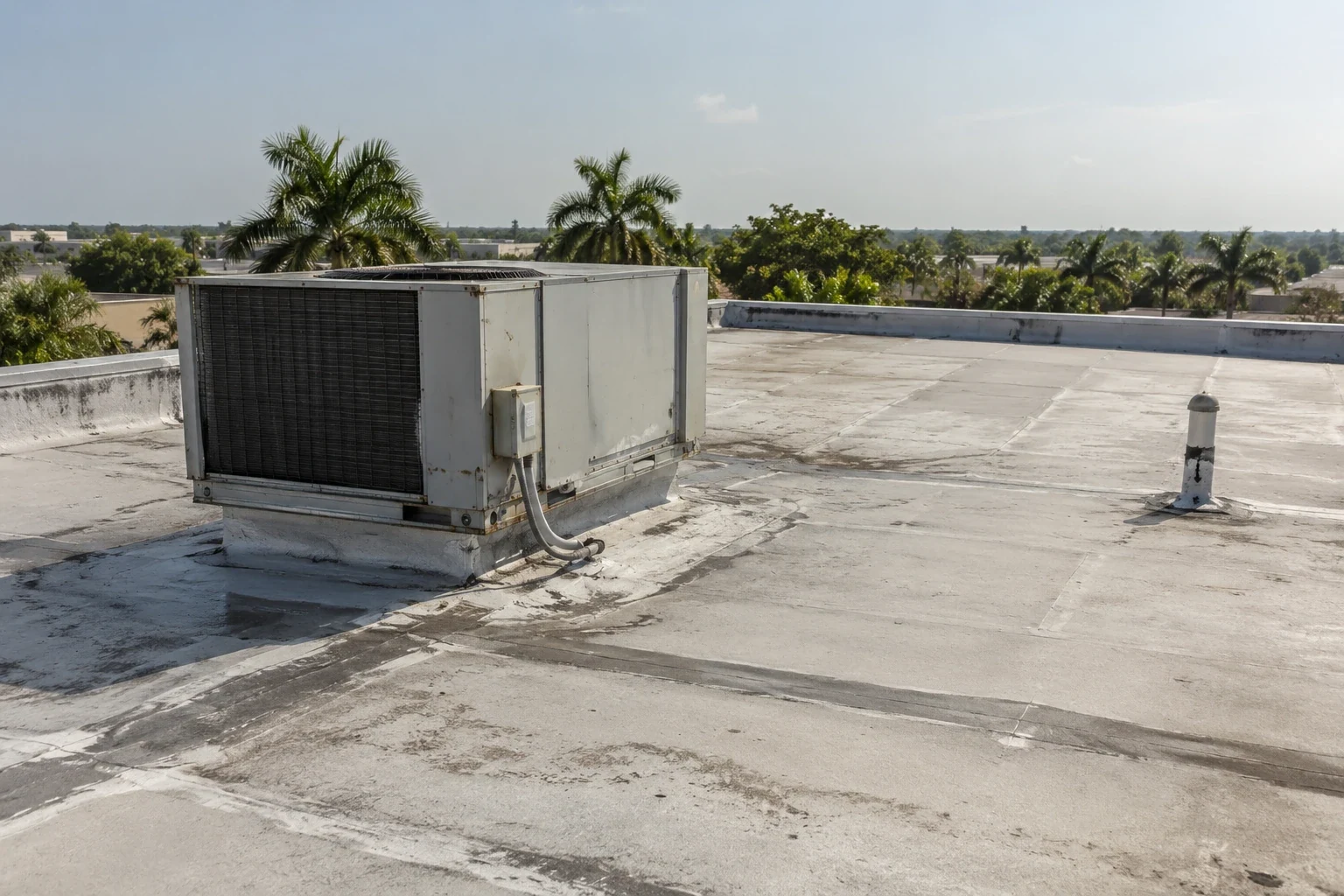
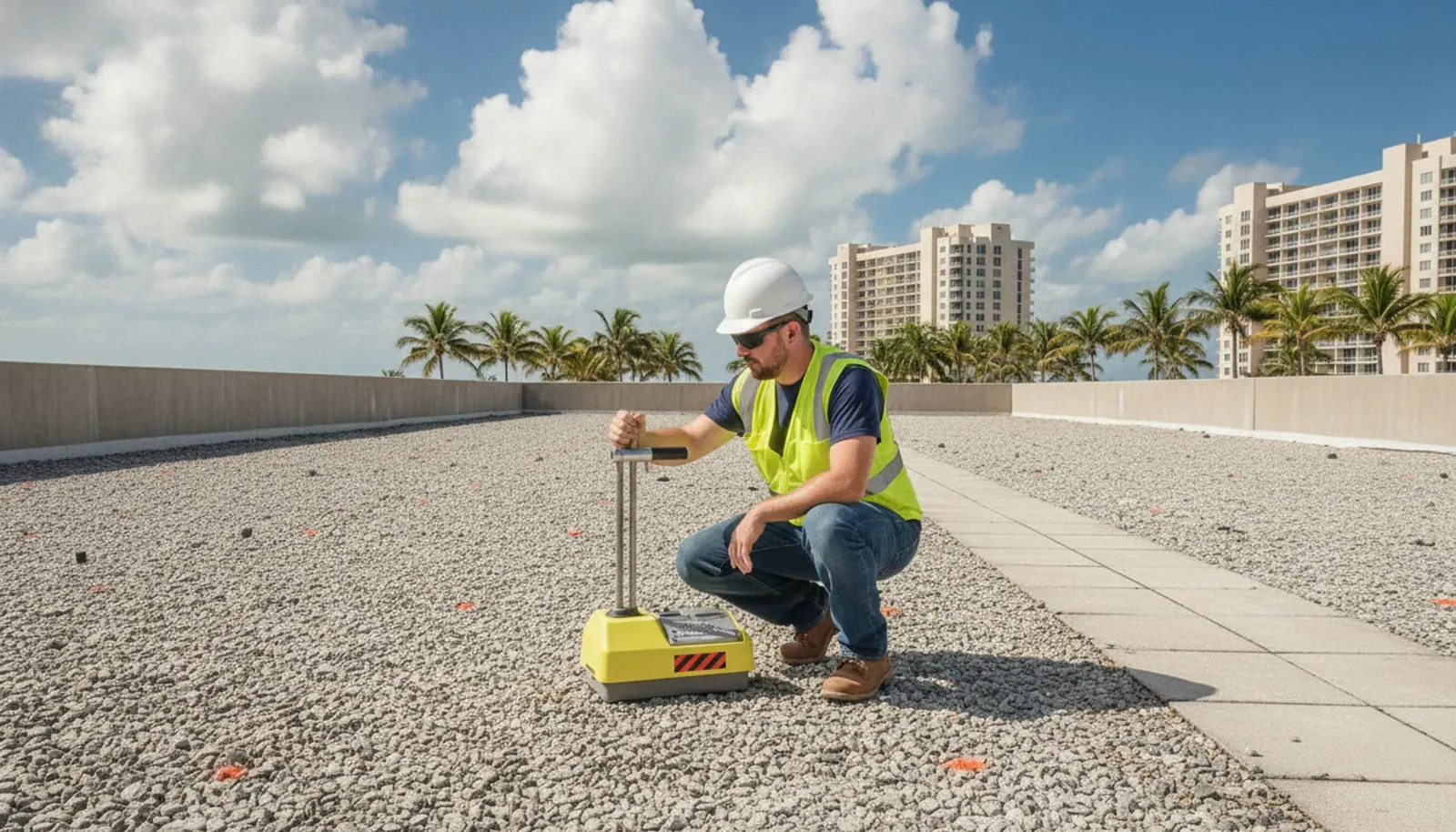
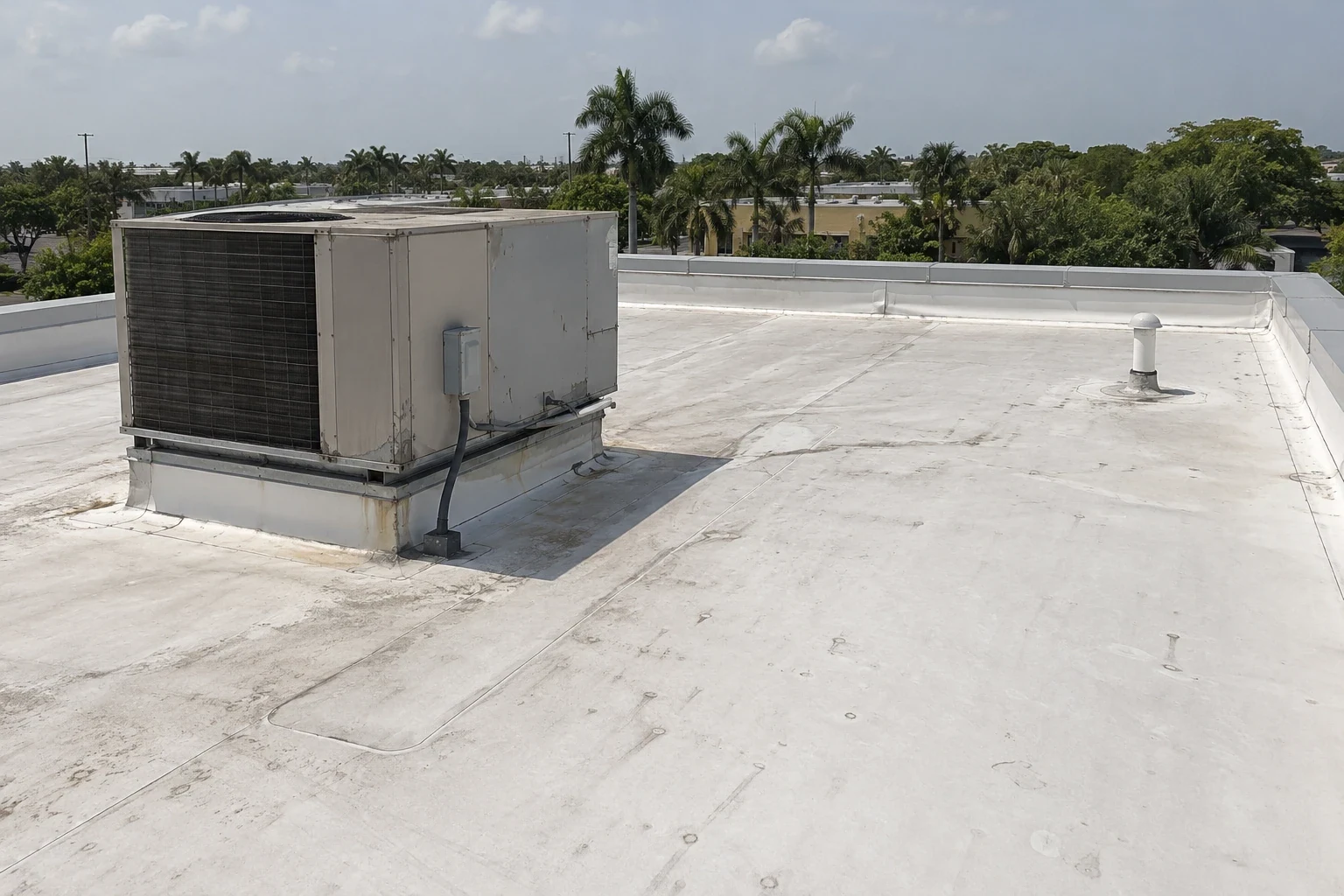
On an industrial building we begin at the drains and work outward. We note which outlets are open, how far each sits from the nearest high point, and whether water marks on the membrane show a wetting pattern that follows the intended drainage plane or breaks away from it. Then we look at the transitions: where the field membrane meets a parapet, a curb, a rooftop unit stand or a wall penetration, because those are where most water entry points start.
- Seam condition and any lifted or open laps
- Ponding depth and how long water remains after rain
- Edge metal, coping and gutter attachment
- Condition of pipe, conduit and equipment flashing
- Signs of wet insulation under the membrane
When the surface alone does not show whether insulation is wet, an infrared moisture survey separates damp areas from dry ones so a repair can be limited to what is actually wet. Photographs and a written report follow the walk, tied to locations on a simple roof sketch.
Membrane and Metal Choices for Industrial Buildings
The right system depends on what is already on the building and how the owner wants to spend. Single-ply membranes such as TPO roofing are heat-welded, reflective and quick to install over an insulation layer, which suits large unobstructed roofs. PVC resists chemical exposure from exhaust, which matters near process vents. Modified bitumen and built-up roofs add redundancy in layers and tolerate foot traffic from service crews. Metal roofs shed water fast but depend on fastener and seam condition for their life.
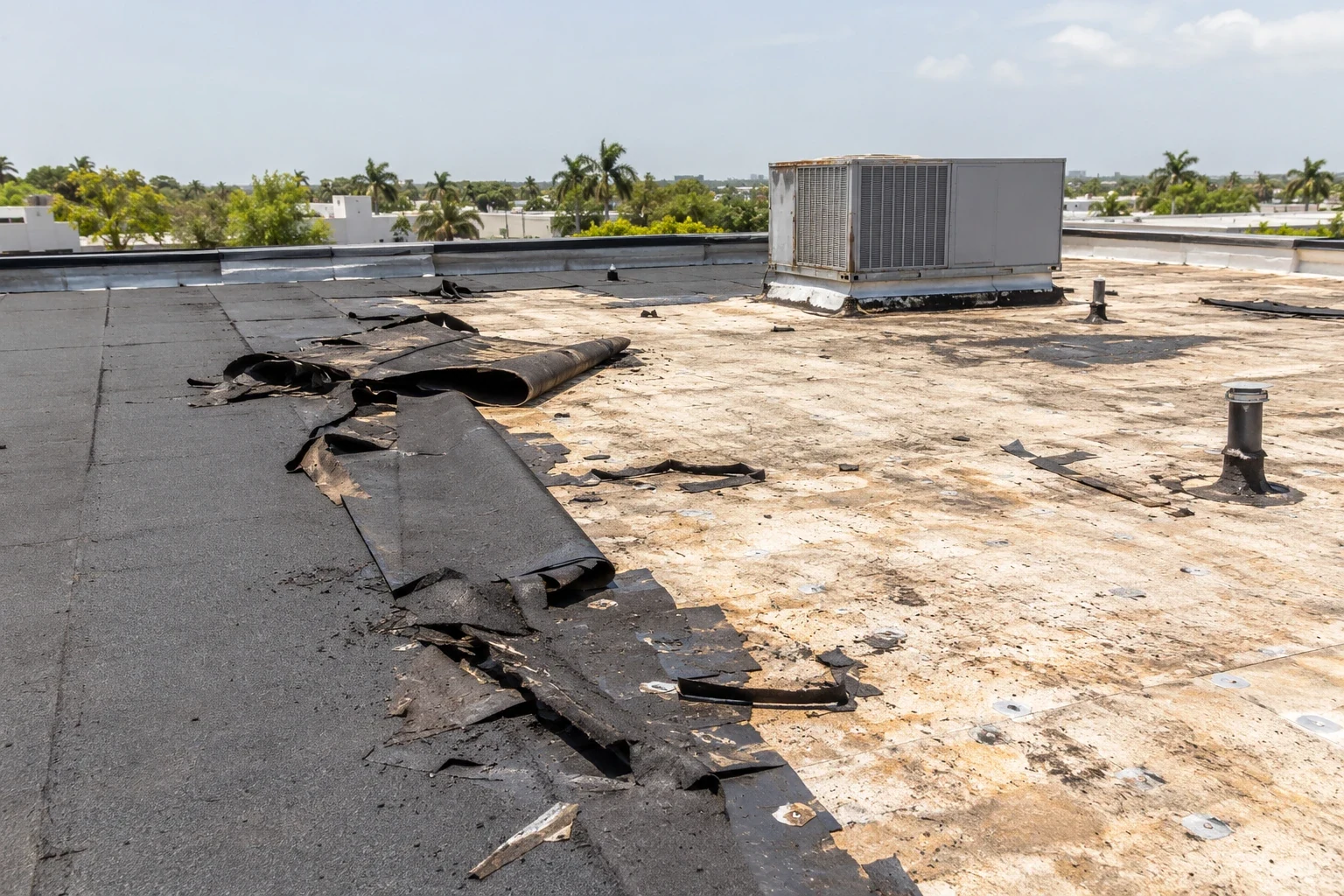
We install and repair each of these, and we choose among them by looking at drainage, penetration count, equipment loads and the schedule inside the building. Where a sound deck carries an aging membrane, a recover or coating can add service years without a tear-off, as long as moisture testing shows the insulation is dry enough to keep.
Keeping Operations Running During Roof Work
Industrial tenants do not stop receiving trucks because a roof is being repaired. We plan staging, hoisting and tear-off sequence around dock hours, forklift routes and any process that cannot tolerate dust or debris. Work is divided into bays or sections so that each area is dried in before the crew leaves. Where interior contents are sensitive to moisture, temporary protection goes in before the first panel or membrane layer is lifted.
We also coordinate with trades already on the roof. Mechanical contractors who service rooftop equipment, fire protection crews and electricians all disturb flashing when they work, so a roof walk at the end of their visit prevents later leaks from being blamed on the membrane. For owners with several buildings, our multi-site roof programs group repairs and replacements by urgency so the budget goes first to the roofs causing the most damage. Owners with property in Downtown Hollywood or Hallandale Beach as well can fold those buildings into the same schedule.
Maintenance Records and Permits
Hollywood's Building Division enforces the Florida Building Code and reviews construction for compliance, and the City's permit information includes structural reroof categories. The Florida Building Commission lists the 8th Edition (2023) as effective December 31, 2023. We prepare reroof scope documents with those requirements in mind and keep photos of each stage so the file shows what was removed, what was added and what was left.
In the gaps between projects, a pre-season preventive roof maintenance visit clears drains, resets loose flashing and catches small membrane punctures from service traffic. A single missed scupper can send water into the building, so these visits target the outlets first. Owners who keep a short log of each visit have a clear record when an insurance claim, a lease turnover or a sale calls for proof of roof condition.
Related Roofing Topics