Need this roof reviewed?
Commercial hurricane damage roof repair in Hollywood, FL: readiness walks, post-storm dry-in, flood-aware equipment planning and permit-ready scopes.
A hurricane puts three loads on a roof in sequence: wind that lifts edges and tears flashing, rain that finds every opening, and, in low or coastal areas, water at ground level that affects what sits near the building. Commercial Roofers Hollywood prepares for, dries in and repairs hurricane-damaged commercial roofs in Hollywood, FL. The work follows the same evidence-first order as any storm repair, but the scale changes it: many buildings are damaged at once, crews and materials are scarce, and the order of work matters. A written plan, a baseline record and a ranked list of buildings turn a chaotic week into a sequence an owner can follow.
Wind, rain and surge on the assembly
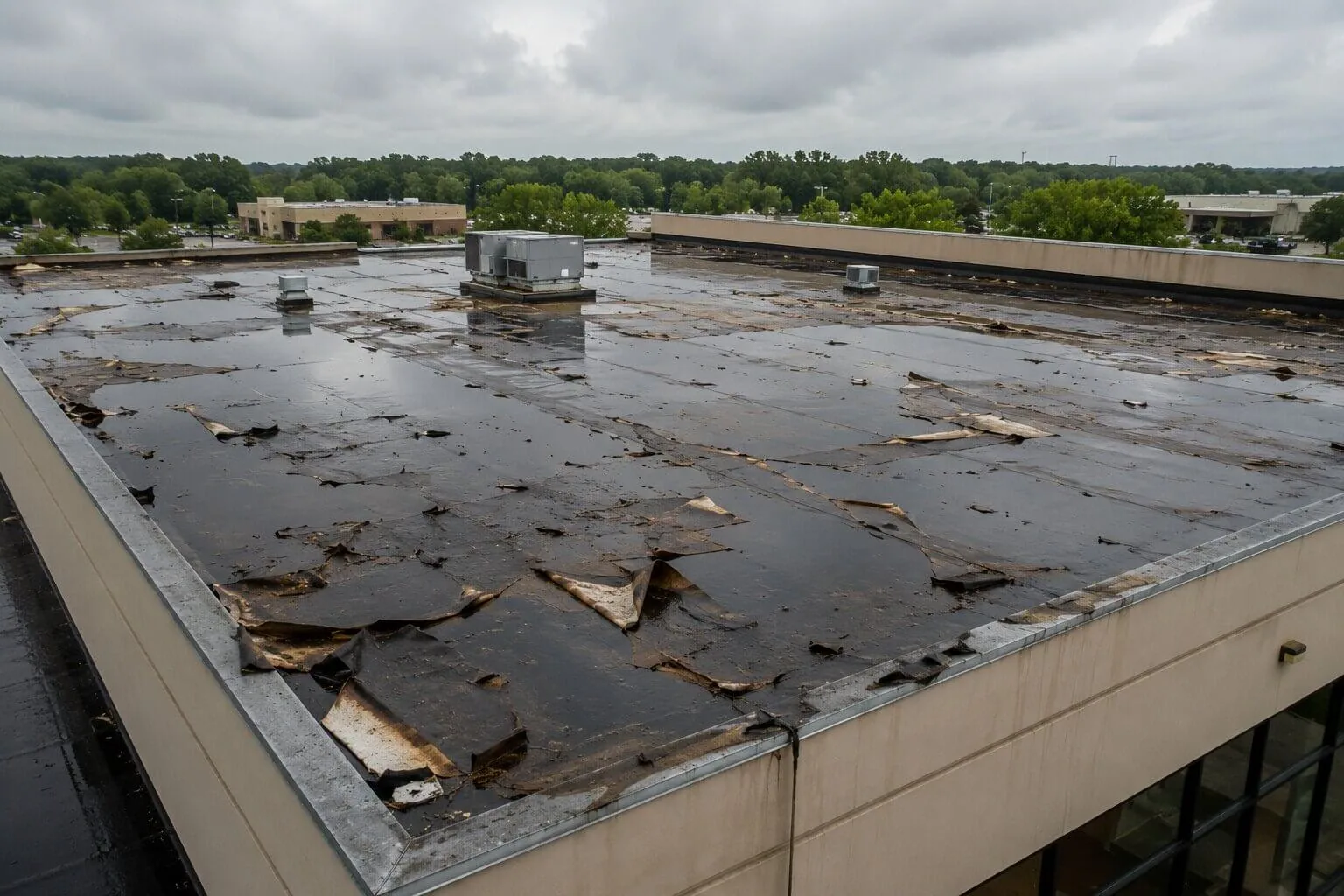
Wind lifts membranes and metal from edges and corners, tears loose flashings and sends debris across the roof. Rain then enters through every opening wind creates, and a roof that loses edge metal can lose insulation within hours. The city's vulnerability assessment weighs storm surge, tidal flooding and compound flooding, and its stormwater program pairs rainfall with tides in its models. Water at ground level does not reach the roof, but it affects drainage outlets, ground-mounted equipment and access. We describe each load separately in the report so the owner can see which damage came.
The roof also carries what people place on it. Antennas, signs, solar arrays and unsecured equipment covers can become debris in strong wind and damage the membrane before they leave. We map those items and recommend securing or removing them before a storm.
Readiness before the season
A roof is ready when its weak points have been found and fixed. Before hurricane season we recommend a walk with photographs of every edge, cap, corner, flashing, penetration and drain. Loose fasteners are tightened, open sealant is resealed, strainers are cleared, equipment covers are secured and loose items are removed. The photographs become the baseline, so a post-storm walk can compare position by position. We also confirm access routes, roof hatch keys and the contact list, since a storm can close roads and make a simple site visit difficult. Owners with several buildings rank them by exposure and criticality so the readiness walk starts with the highest risk. A preventive maintenance visit covers most of the list.
Metal and membrane roofs ask for different checks. On metal, we look at clips, panel seams, trim and end laps for movement. On a low-slope membrane, we look at seams, attachment along the perimeter, penetrations and flashing terminations. In both cases the perimeter gets the most attention, since wind lifts a roof from its edges, and a corner with loose fasteners is the first place a storm will find.
After the storm: safety, dry-in and documentation
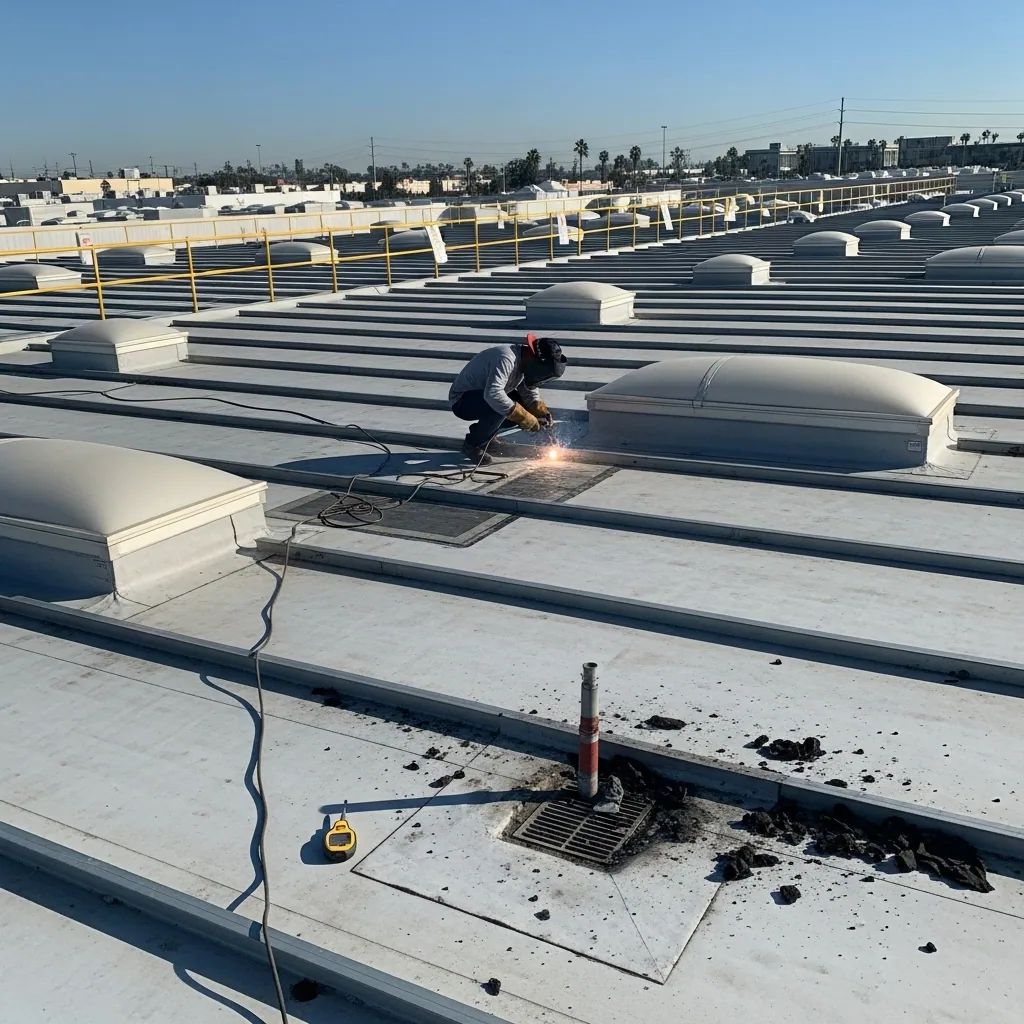
The first visit after a storm begins with safety: downed lines, weakened decks, loose material and standing water. If access is not safe, we inspect from the edge or by drone and say which areas were not reached. When access is clear, we photograph before disturbing anything, record damage by zone and place temporary protection over openings. Emergency roof repair response runs around the clock, though after a widespread event crews and materials are in demand and the order of work is explicit: active leaks and exposed insulation first, then edge and flashing damage that will worsen in the next rain. Each building gets a written priority and a revisit date.
Interior protection is the building contact's responsibility, but the roof findings help: we tell the contact which areas are most likely to leak again so that furniture, equipment and records can be moved before the next rain.
Flood elevation and rooftop equipment
Applicable buildings inside Hollywood's FEMA Special Flood Hazard Area, a zone covering more than 11,000 properties, have to meet local flood-elevation requirements. Local flood-map review pays particular attention to the city's eastern side, including areas east of US-1. For a roof project, that matters when equipment is replaced or moved: rooftop placement keeps critical equipment above ground-level flooding, and a reroof may be a chance to relocate equipment from vulnerable ground locations to the roof, provided the structure can carry it. The design professional and the Building Division confirm the requirements for each property; our scope lists the roof-side details.
Crews, tarps and materials after a widespread event
After a widespread storm, everything is short: crews, tarps, sealant, membrane, fasteners, lifts, dumpsters and fuel. A plan that assumes normal supply will stall. Before the season, we recommend that owners identify the buildings that need priority, confirm contact information, and agree on the authorization process for emergency work so that a crew can act on a call without waiting for a purchase order. Material for temporary protection can be staged in advance, and a list of lift and dumpster sources is kept current. After the event, we ration scarce items by consequence: tarps and sealant go to open roofs first.
Staging after a storm is also affected by street conditions. Debris, closed roads, power outages and traffic signals out of service change delivery routes. Downtown Hollywood already has event-day access limits, and storm cleanup adds to them. We check conditions before sending a truck, use smaller loads when streets are limited and keep a log of delays caused by access, because those delays matter to a claim and to the owner's tenants.
Permanent repairs follow the temporary ones as supplies and permits allow. The sequence is written and shared with the owner and adjuster, and each building's status is tracked in a short table: protected, assessed, scoped, permitted, scheduled, complete.
Permits and code for storm repairs
Storm repairs go through Hollywood's Building Division, which applies the 2023 Florida Building Code and lists structural reroof among its online permit categories. After a storm, permit workloads rise, so we prepare submittals early: product data, attachment and wind-uplift documentation, and drawings of repair areas. Repair versus replacement thresholds, and what triggers code upgrades, are confirmed with the Building Division for each property and date. The scope identifies code-driven items separately so an adjuster can see why they exist. Edge and attachment questions that arise are the same ones raised by wind damage.
Records for owners and insurers
A claim after a hurricane draws on three sets of evidence: the pre-storm baseline, the post-storm documentation and the repair record. We keep all three in one file, dated and located on the plan. The report separates wind damage, water damage, debris impact and existing wear, and leaves coverage decisions to the insurer. Owners with multiple buildings, such as those near the Hollywood Beach Business District or inland, receive the same format for each, so a portfolio view is possible. The claim process itself is supported through roof insurance claim assistance, and tornado damage uses the same evidence order.

