Need this roof reviewed?
Commercial roof inspection, repair, replacement and maintenance for warehouses, offices and retail buildings in Miramar, FL, along the Turnpike and I-75.
Buildings near high-volume highways wear their roofs differently from buildings on quiet streets, because trucks, grit and exhaust leave a film that changes how a membrane sheds heat and water. The City of Miramar lists I-75, Florida's Turnpike, US-27 and US-441/SR 7 among the major corridors crossing it, while I-95, I-595 and SR 826 appear as nearby regional routes. On commercial buildings in Miramar, FL our work spans inspection, repair, replacement, recover and coating of low-slope and metal roofs, and it starts from the roof's drainage and heat load, since those determine how a building behaves in a wet South Florida summer.
Roofs Along the Turnpike, I-75 and US-27
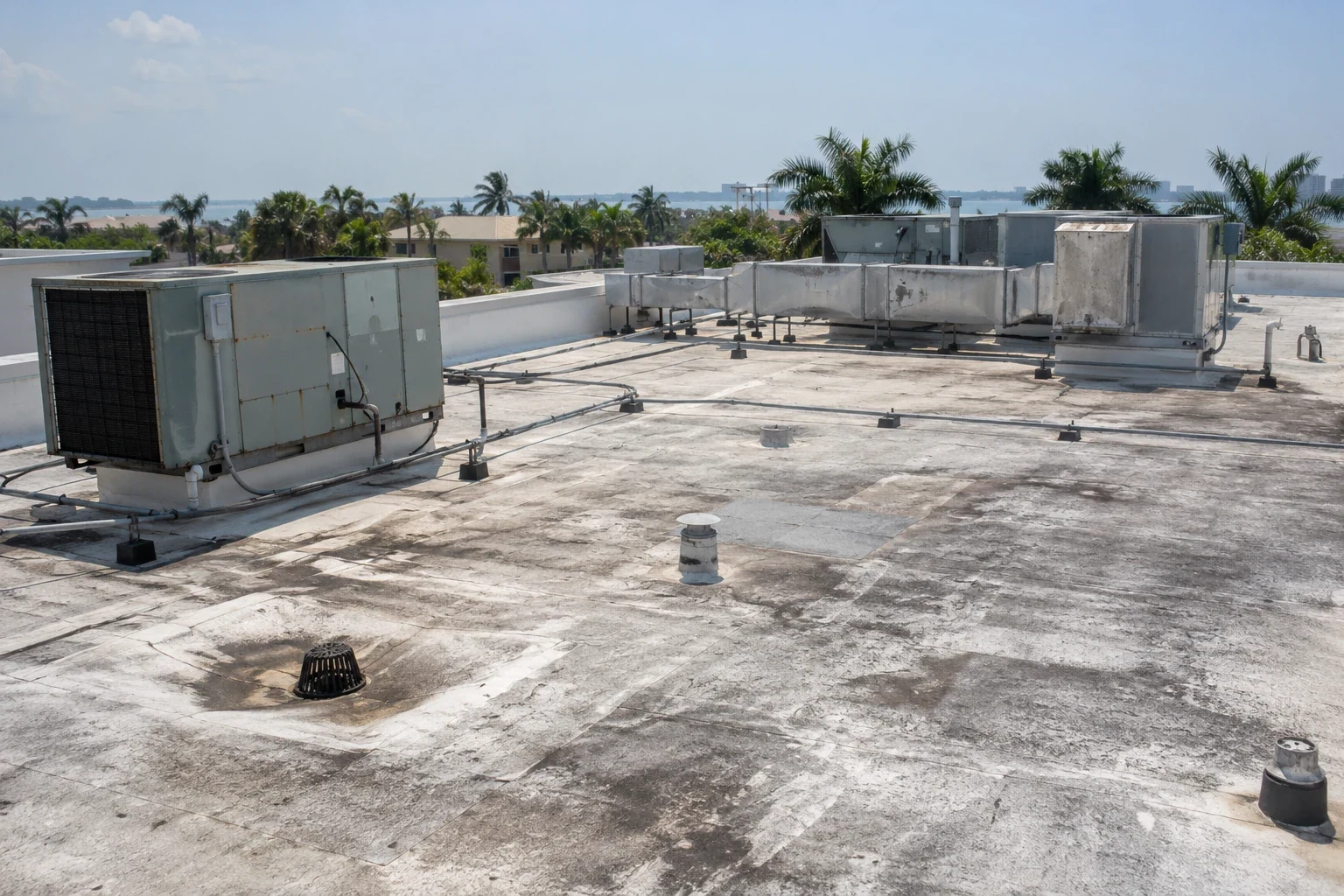
Commercial buildings along corridors like these fall into a few roofing families, and each brings its own concerns. A distribution or warehouse building usually has a large, uninterrupted low-slope roof where ponding and seam condition decide the service life. An office building has a smaller footprint with more equipment per square foot. A retail center has long parapets, multiple tenants and a lot of penetrations from exhaust fans and signage.
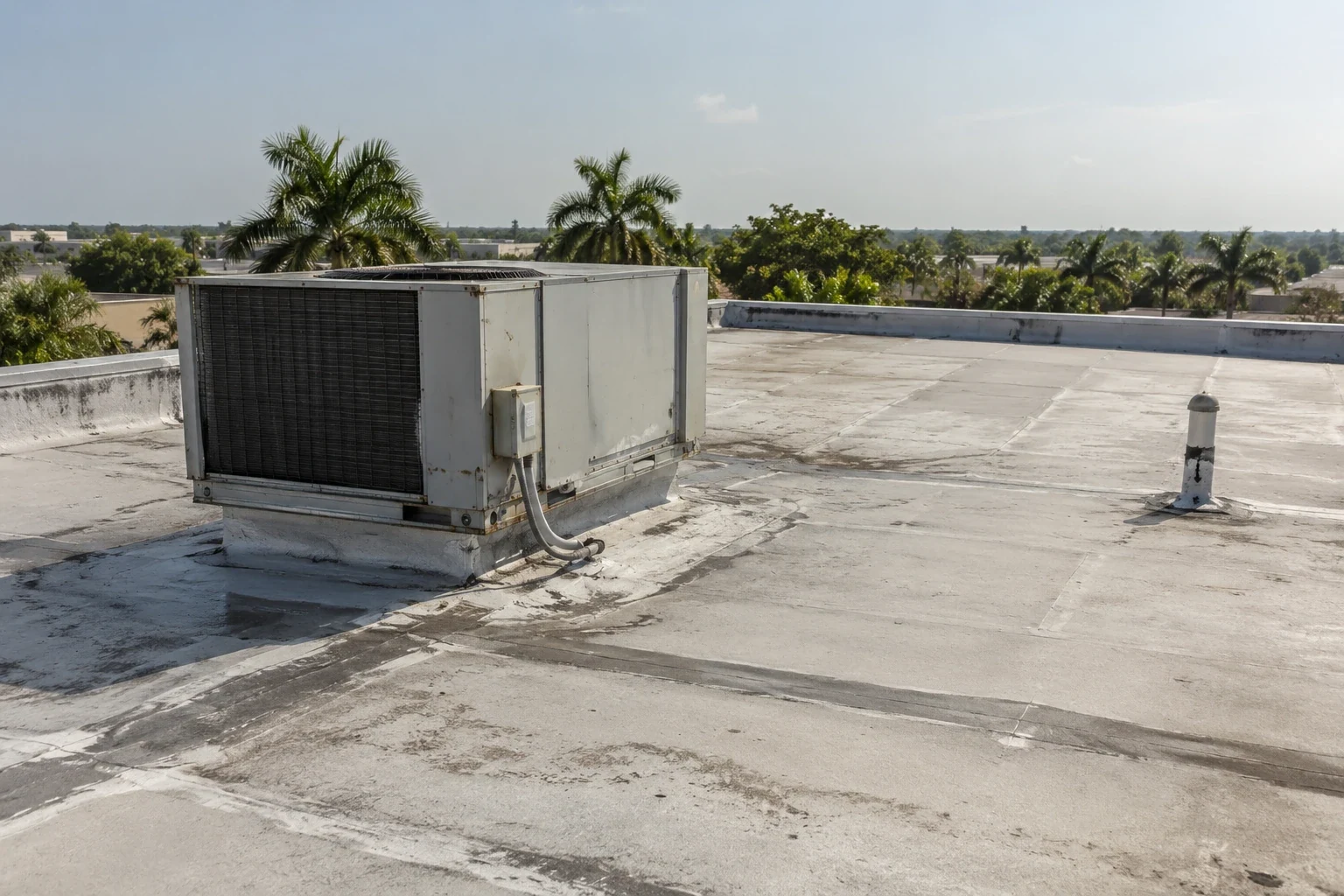
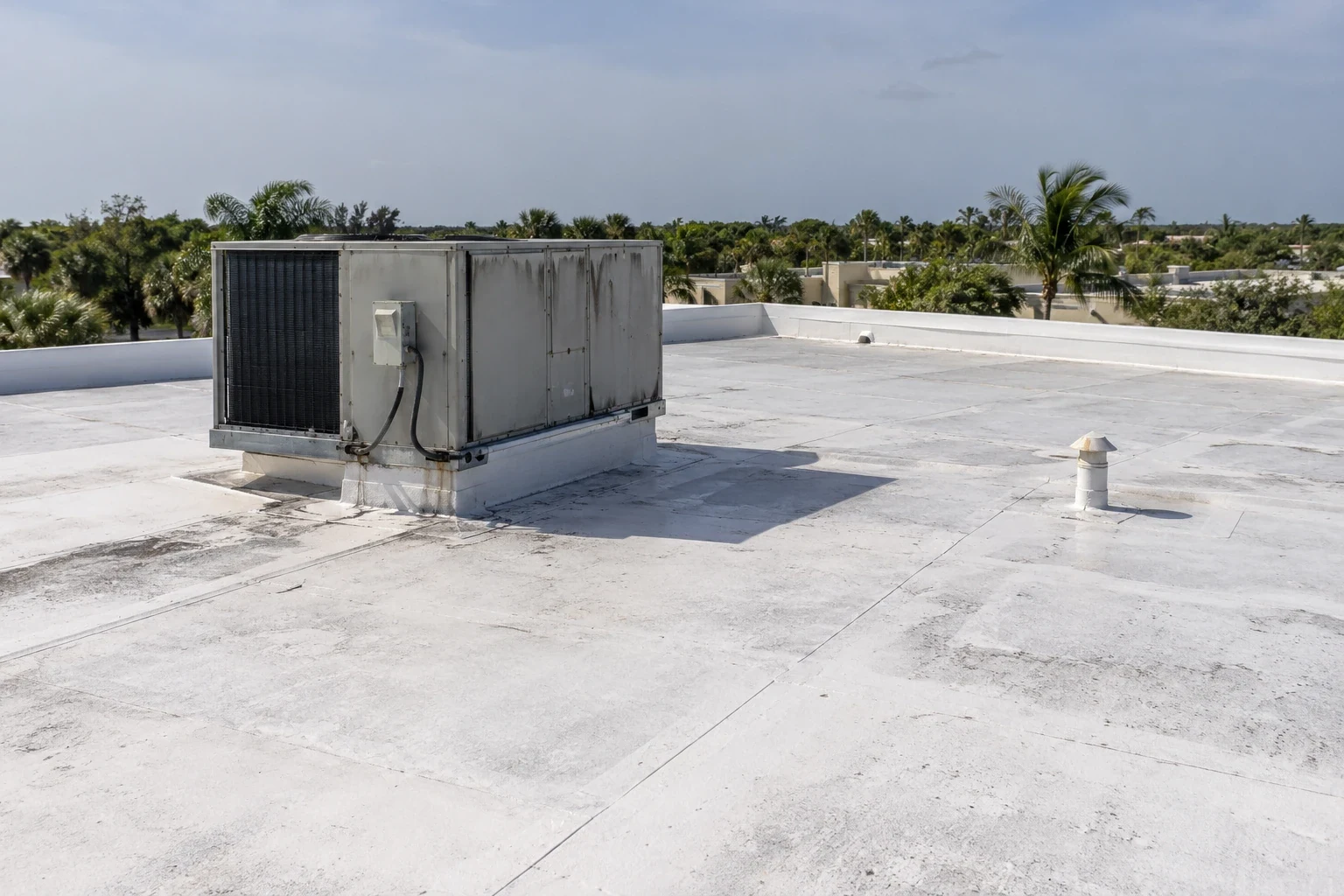
We do not assume what any given building has on top. The first walk records the system, the drainage layout and the penetrations, and the written report describes what is there. That report becomes the basis for pricing a repair, a coating or a replacement, and it holds up when a tenant, lender or insurer asks for roof information.
Access matters on large roofs. Ladders, roof hatches and permanent stairs determine how safely a crew can reach the work, and the route often decides how materials are lifted. We note those details on the first visit so the schedule reflects real access and not an assumption. Fall protection and walkway planning go into the scope for any roof where the approach is awkward or the edge is low.
Summer Heat and Seasonal Downpours
Hollywood's normals, our market-city reference for the area, give an August average high of 89.9 degrees, with 8.8 inches of rain in a typical June and 8.7 in September. Heat drives thermal movement, a daily cycle of expansion and contraction that tests seams and flashing. Heavy rain puts that same roof through a drainage test, with water finding any open lap or damaged sealant.
From mid-May through early July the National Weather Service sees the wet season's worst weather arriving: damaging winds and tornadoes, lightning, hail and flooding all become more likely across South Florida. Large roofs can shed enormous volumes of water in short bursts, so outlet count and condition matter. We check the number of drains against roof area, look for debris at strainers and note any overflow provisions.
Wind is the other half of a storm. Uplift acts hardest at corners and edges, where air turns the roof edge and pulls at the membrane and metal. We check edge metal for loose cleats, open joints and missing fasteners, and we note how the membrane is attached at the perimeter. A roof that has aged under sun may have lost adhesion at those points before any storm arrives, and a pre-season fix is far simpler than a post-storm one.
The Town Center Area and Mixed Commercial Roofs
The City locates its Town Center between Miramar Parkway, Red Road, Hiatus Road and Miramar Boulevard. A manager responsible for several buildings in a compact area like that may oversee roofs of different ages and systems. The practical value of a consistent condition report is that the manager can compare them and fund repairs in order of urgency.
We keep the report format the same from one building to the next: system, age, drains, penetrations, wetting pattern, repairs and recommended action. Over time, the file shows how each roof changes from season to season, and that supports capital planning. For owners interested in that approach, roof condition reports are built to be updated at each visit.
What Lies Under the Membrane
A roof is more than its top layer. Insulation resists heat flow, the deck carries the load and the membrane sheds water. When a membrane is breached, insulation absorbs water and loses its value, and a steel deck may begin to corrode. Surface leaks are cheaper to fix than wet assemblies, so finding moisture early matters.
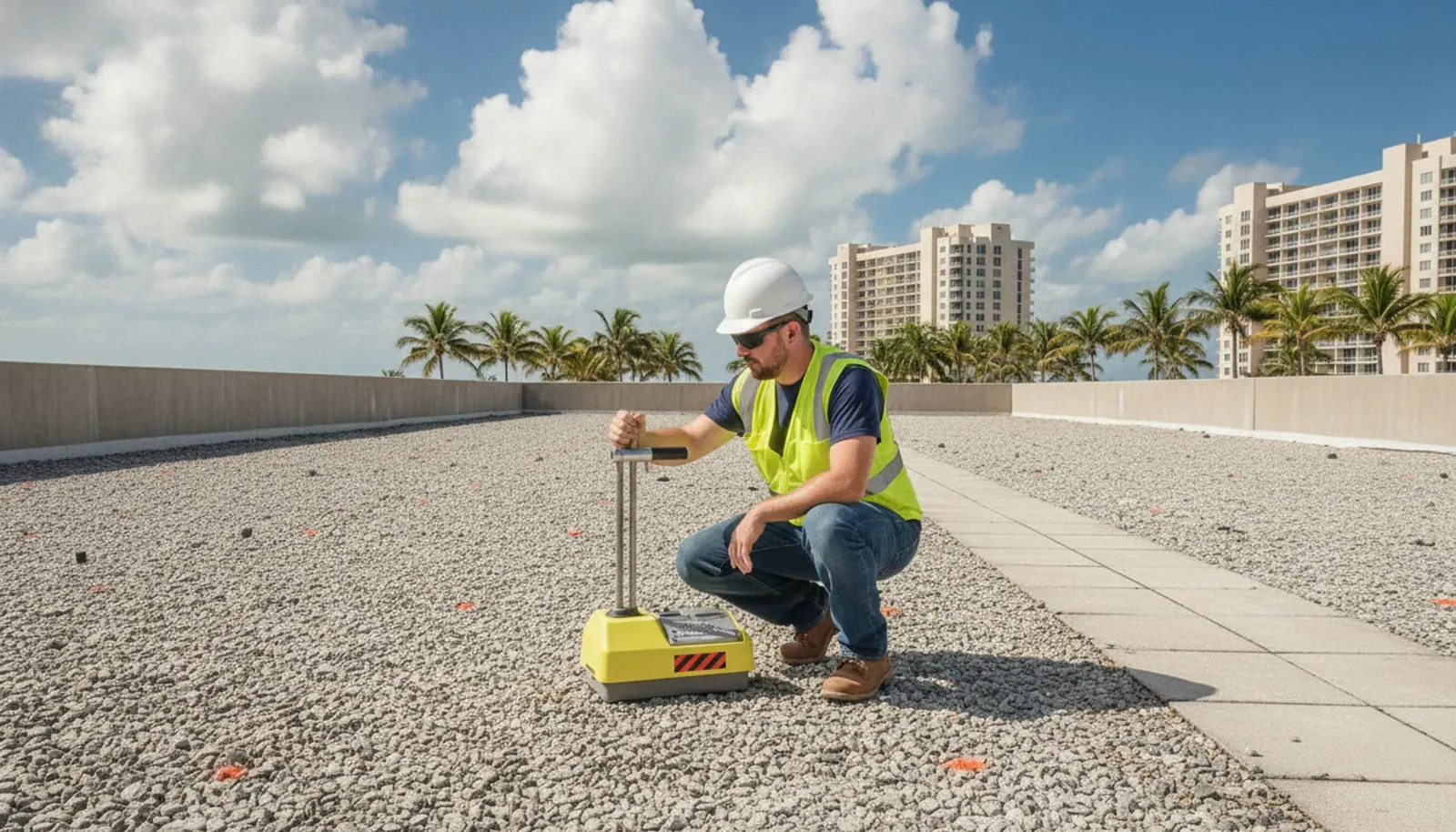
We use visual checks, moisture meters and, where warranted, an infrared moisture survey to find trapped water without cutting the roof. Core samples confirm what the scan suggests. The map that results shows exactly which areas must be removed and which can stay, and it prevents both unnecessary tear-off and a repair that traps moisture under new membrane.
Once the wet areas are known, the owner can choose among three paths. The first is a limited tear-off of the wet sections with new insulation and membrane tied into the sound roof. The second is a broader replacement when wet areas are spread. The third is monitoring, which is reasonable for small, stable wet patches with a clear plan to rescan. Each choice is documented with photographs and moisture readings, which makes later comparison simple and keeps the decision tied to evidence.
Repair, Recover, Coat or Replace
A repair suits a sound roof with local defects. A coating suits a dry, weathered membrane that still has life. A recover suits a dry roof where tear-off is not needed. A replacement suits a roof with widespread moisture or end-of-life seams.
Cost drivers include roof area, insulation, tear-off, penetrations, access and disposal. Timing depends on weather, tenant schedules and material lead times. We write each option with scope and consequences, and we flag items that would trigger permit review. The Florida Building Code, 8th Edition (2023), has been effective since December 31, 2023, and our reroof scopes follow it.
Planning the Work Around Operations
A building that ships, sells or treats patients on a schedule needs a roofing schedule that respects it. We agree on staging areas, dumpster placement, hoisting windows and quiet periods before the first day. Work is broken into sections so each area is dried in before the crew leaves, and temporary protection goes over any area where interior contents are sensitive to water.
Rooftop equipment is handled in coordination with the tenants or service firms that operate it. Shutdowns are scheduled in advance, lines and conduit are protected and each penetration is photographed after sealing. The property manager receives a short progress note each day so tenants can plan for what comes next.
Neighboring Cities and Maintenance
Owners with properties across the region can use the same format in Pembroke Pines, Davie and Hallandale Beach. A seasonal maintenance program before the wet season clears drains, resets flashing and photographs conditions.
Related Roofing Topics

