Need this roof reviewed?
Commercial roof repair, replacement, coating and maintenance in Davie, FL for industrial, healthcare, education and distribution buildings, planned by use.
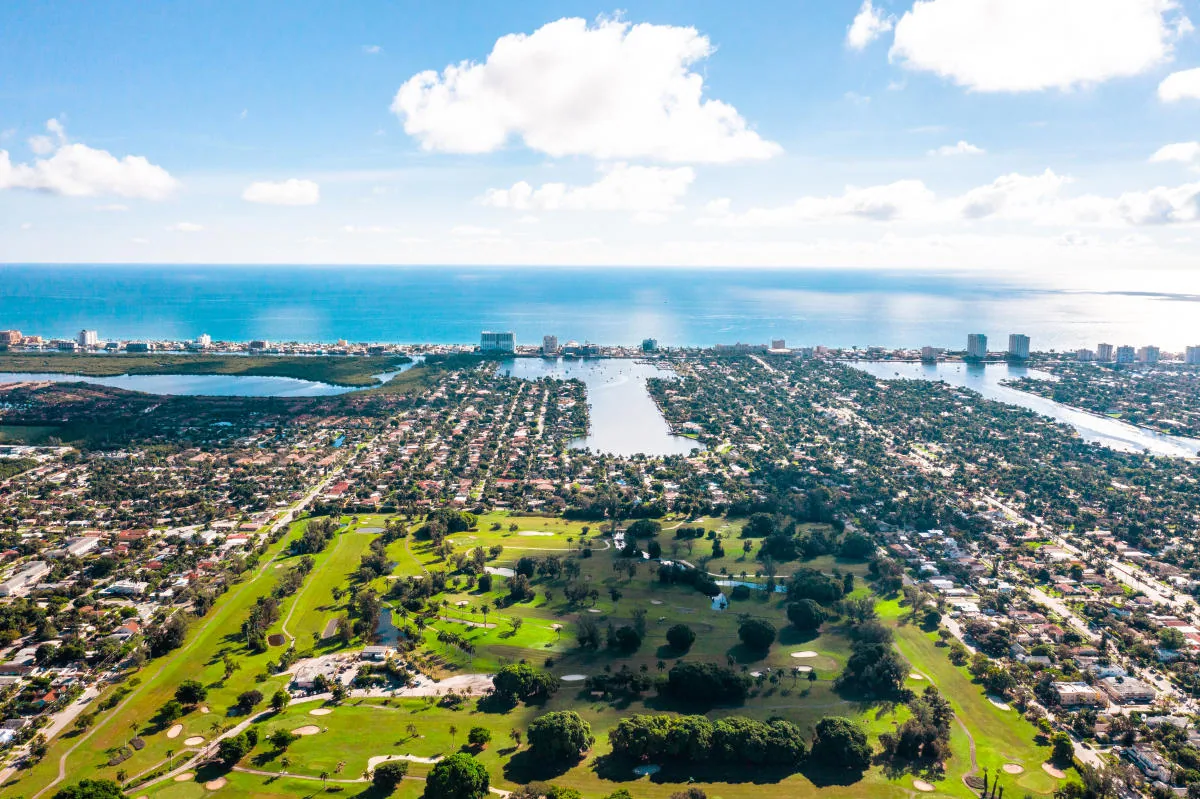
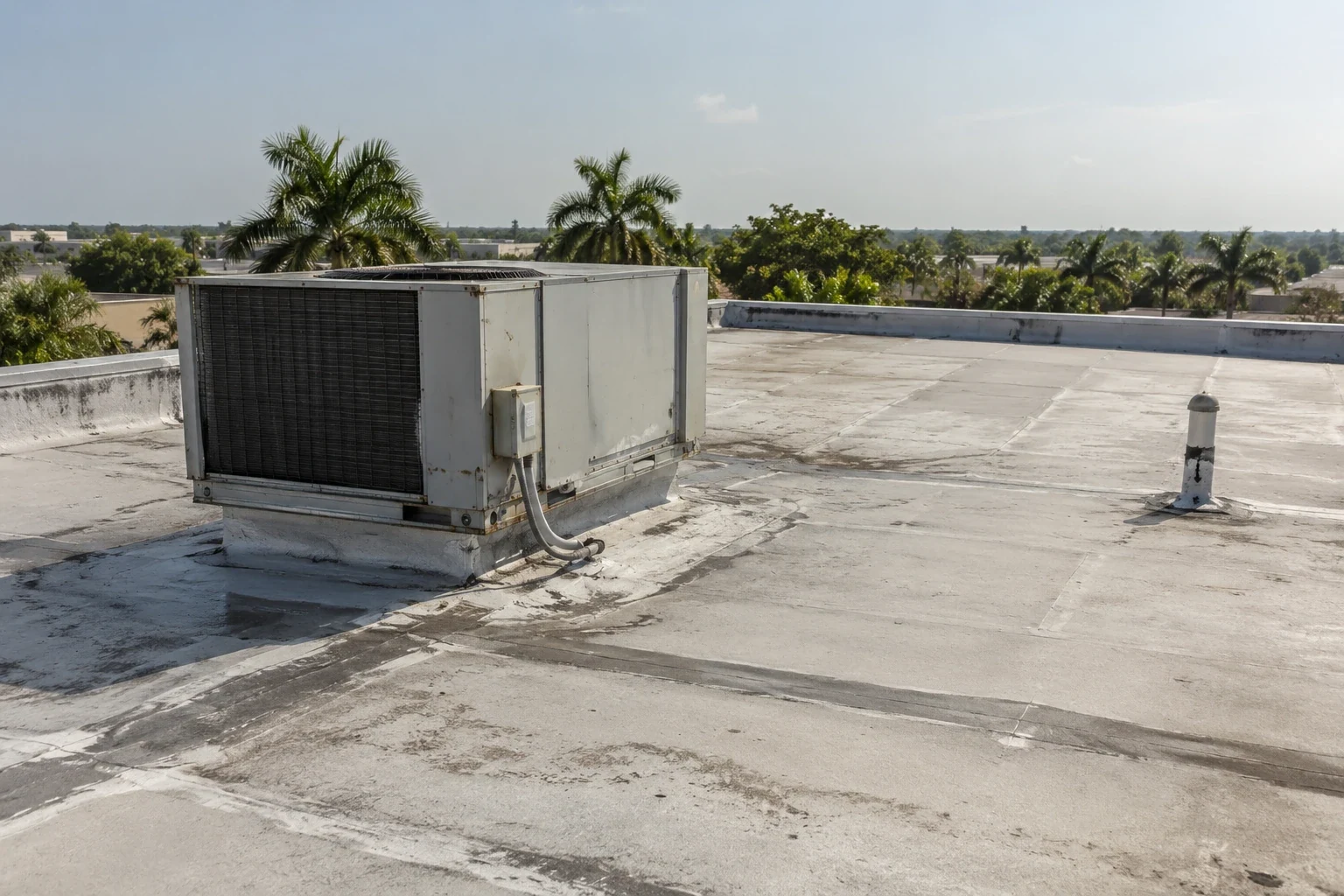
Surface heat and hard seasonal rain meet at the same low-slope seams, and in Davie, FL the roofs that carry that load sit over a wide mix of uses. The Town lists aerospace, biopharmaceutical, distribution, education, healthcare, manufacturing, maritime and technology among its industries, and it reports more than 900 acres of industrial-zoned land. A roof over a distribution floor and a roof over a clinical or laboratory wing share a climate but not a tolerance for water entry. We begin each Davie walk with the use below the roof, then read the drains, edges and transitions in light of it. Hollywood's NOAA station gives August an average daily high of 89.9°F, a fair indicator of how much heat a dark Davie membrane takes into its seams each summer.
Use-Driven Roof Priorities
Davie's industry list covers buildings that need very different things from a roof. A distribution building cares about dock hours and keeping product dry; a healthcare or education building cares about odor, dust and noise above occupied rooms; a manufacturing or technology tenant may have process equipment whose curbs and supports multiply the penetrations. We ask for the tenant use before we ask for the roof age.
That order matters because the same defect carries different consequences. A split seam over racking stops a shipment; the same seam over a corridor stops a class. The first walk records the use below each roof section so the repair sequence follows the consequence, not the building's address. A roof with several tenants gets a plan that marks which section sits over which operation.
Laboratory, clinic and technology uses usually add exhaust stacks, make-up air units and supports, and each one is a membrane turn that has to stay tight through thermal movement. On those roofs we count penetrations, check the corner reinforcement at curbs and look for sealant that someone added later over a flashing that was never repaired. A manager who knows which tenant owns which unit can also see which crew was last on the roof when a new leak appears.
Heat, Rain and Thermal Movement
Daily heating and cooling expand and contract a membrane, and the movement collects at fixed points: wall bases, curb corners, pipe boots and seams. NOAA's Hollywood normals give a yearly mean daily high of 83.2°F, with August about seven degrees hotter, which makes summer movement the stage of the cycle to examine on a Davie roof.
Rain finds whatever that movement has opened. The Hollywood station records more than eight inches of rain in June and in September, and mid-May to early July is when the National Weather Service expects the most damaging winds, tornadoes, hail and flooding in South Florida's wet season. Those regional conditions explain why the edge condition and the first row of fasteners deserve attention before the season opens.
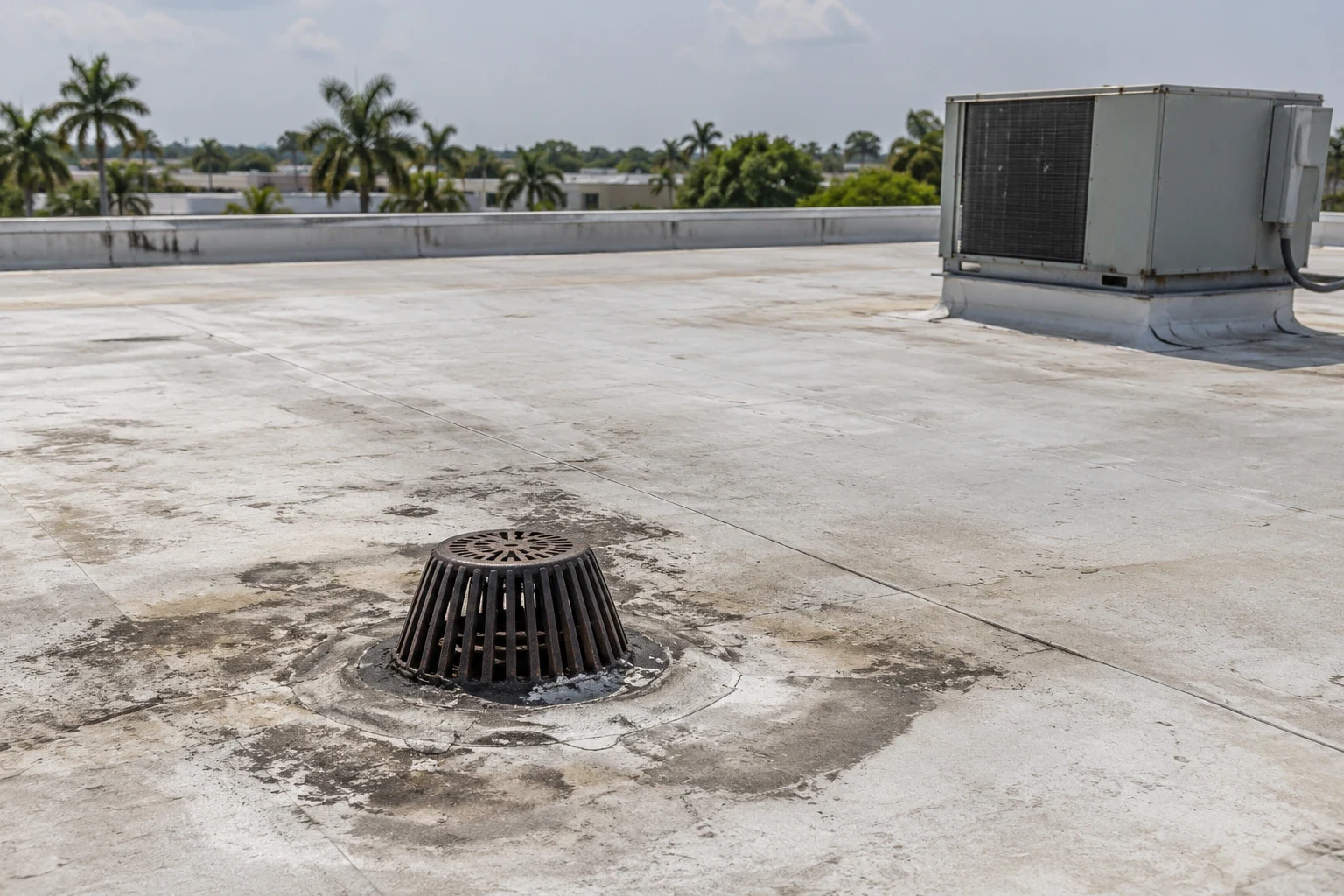
Drainage decides how long that rain stays on the surface. Drains and scuppers are checked for open strainers, intact bowls and a clear path to the discharge, and low areas are measured for ponding depth after rain rather than judged by eye. Water that remains for days speeds membrane wear at seams, so the duration of ponding is recorded alongside the depth.
What the First Roof Walk Records
We start at the outlets and work toward the high points, recording whether strainers are open, whether the surface shows a wetting pattern that follows the drainage plane and how long water stays after rain. Then we look at transitions where the field membrane meets parapets, curbs, equipment stands and wall penetrations, since those are the common water entry points.
- Seam and lap condition, including lifted edges
- Ponding depth and drying time
- Coping, edge metal and gutter attachment
- Flashing at pipes, conduit and equipment supports
- Signs of wet insulation beneath the membrane
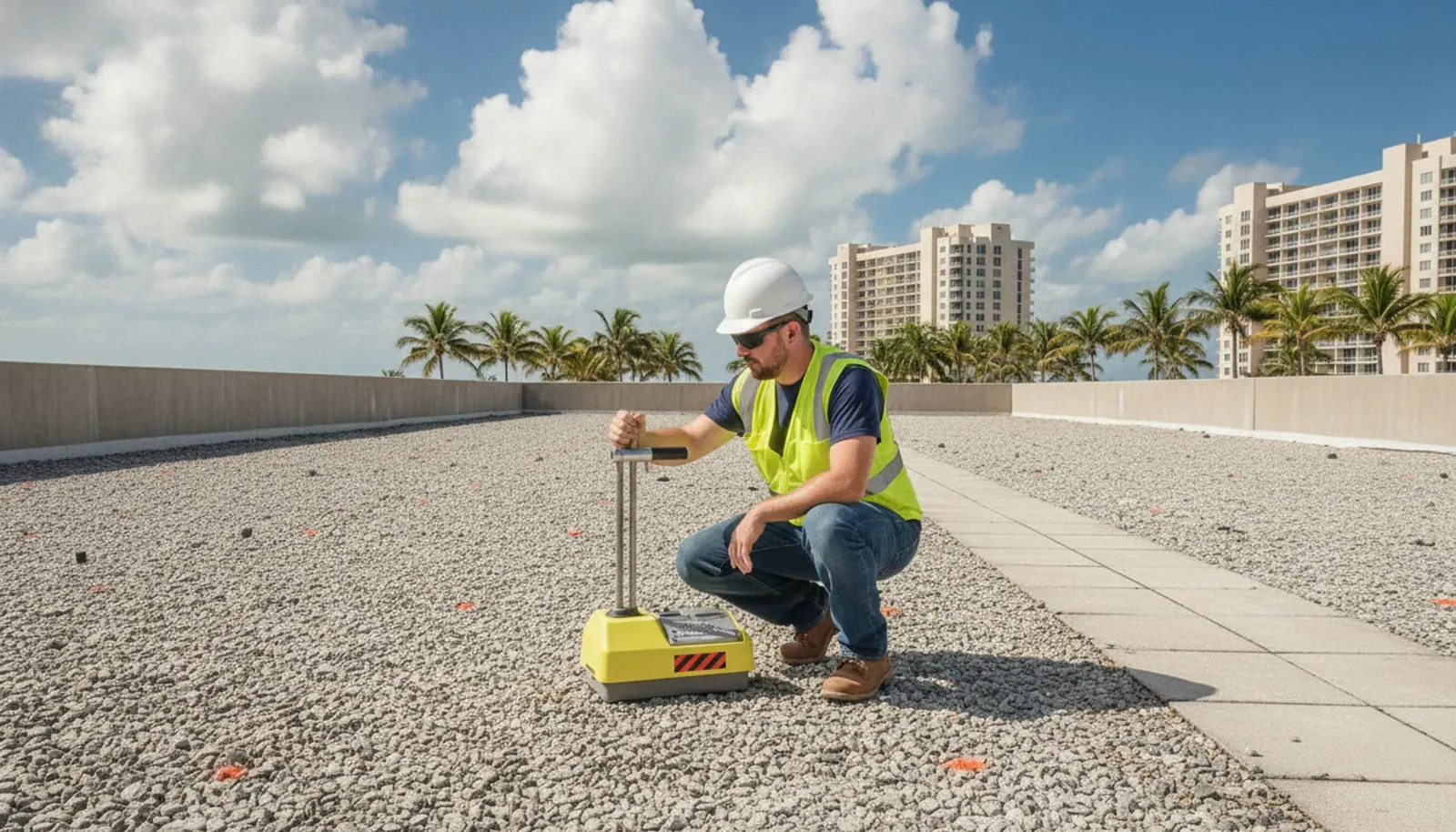
Where the surface cannot show whether insulation is wet, an infrared moisture survey narrows the area to open, so a repair is limited to what the readings support.
Repair, Coating or Replacement
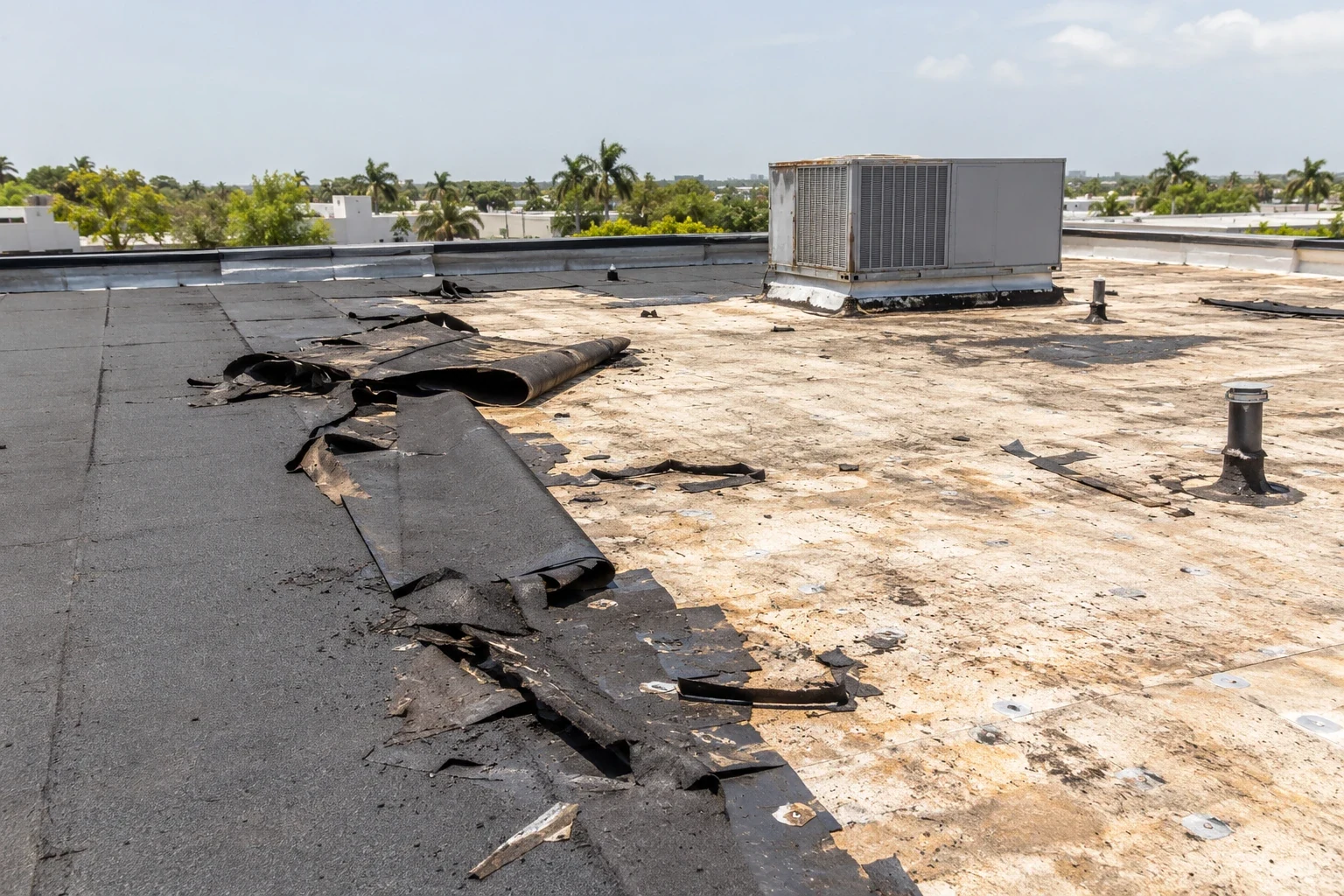
A building's age alone does not choose the repair. A roof with sound insulation and local seam failure is a candidate for commercial roof repair. Coating is worth pricing when the membrane is dry, attached and repairable once the seams and flashings have been reset. A roof with wet insulation across a wide area points toward replacement of the wet layers.
Timing and cost depend on access, roof system, number of penetrations, wet-area extent, deck condition and the tenant schedule. We write the options side by side, with the evidence behind each, so ownership can compare a repair now with a larger project planned for a capital cycle.
Records, Permits and Deliveries
The Town's location information points to access to Port Everglades, PortMiami and international airports, and a tenant with time-sensitive shipping will care how roof work touches dock operations. At a dock-served building the lift stays off the active bays, materials come in between shipments, each work area is closed to weather before the crew leaves, and the tenant sees the sequence in advance.
Reroof permits follow the Florida Building Code, 8th Edition (2023), which the state commission lists as taking effect December 31, 2023, and the local building department reviews each application. Stage photographs and a brief note on what came off, what went on and what stayed make up the file. Owners with properties nearby in the Davie Industrial Area or in Pembroke Pines can keep one format for every building.
Information That Speeds the Walk
A few documents shorten the first visit and improve the written report that follows it. A roof plan, even a hand sketch, lets us tie findings to locations. Leak dates and the rooms affected help match ceiling reports with roof details and with the tenant who occupies each space. Repair invoices show which patches already exist, and permit records show earlier reroof work.
We also ask about access: hatch or ladder location, restrictions on lifts, quiet hours and any area where entry needs an escort. With those in hand, we spend the visit on conditions and write the findings so urgent protection and planned work stay apart.