
Need this roof reviewed?
Roof repair, maintenance and replacement for hotel owners and hospitality groups near Hollywood Beach and across Hollywood, FL, around guests and events.
Salt, sun and rain meet a hotel roof from three directions at once, and the first sign is often a rust stain at a fastener or an edge, not a leak. Commercial Roofers Hollywood works with hotel owners and hospitality groups in Hollywood, FL, from properties near the Atlantic to those along the inland business corridors, and the roof walk begins with the surfaces that take the most exposure: edge metal, equipment curbs, pool-deck transitions and the membrane around kitchen and laundry exhausts. Findings are tied to the rooms and amenities below, so an owner can see which roof areas protect revenue and which protect finishes.
Coastal exposure and metal components
The Hollywood Beach Historic District includes hotels, cottages and other historic buildings near the Atlantic, with Mediterranean Revival and Art Deco examples, and the Hollywood Beach Business Association lists parking, transit and events on the Broadwalk among district concerns. Properties near the water see salt in the air, which accelerates corrosion on exposed metal: edge flashing, fasteners, rooftop equipment frames and handrail posts. We photograph fastener heads and metal joints, check coatings for blistering and rust bleed, and recommend replacement of components that have lost section. No assumption is made that a given hotel has a particular roof type, and each property is inspected on what it has.
Wind and rain driven off the water reach edges and parapets first. We check coping joints, termination bars and the sealant along wall flashings, and we look for staining that shows where water has run behind them. Historic detailing, such as parapet ornaments and decorative cornices, adds flashing junctions that need their own photographs, and a specialist may be needed for masonry or ornamental metal while we cover the low-slope and metal roofs.
Guest rooms, quiet hours and occupancy
Revenue per room makes quiet and dry a priority. We map the roof to room blocks, mark meeting space, restaurants, spas and back-of-house areas, and rank open items by what each protects. Loud steps are scheduled in hours the general manager chooses, with rooms directly below held back if the property prefers. Pool decks, entrances and arrival drives stay clear of overhead activity, and hoisting uses routes that avoid guests. A leak log by room and date turns guest complaints into data that can be matched to roof zones, so repairs follow evidence and not the nearest ceiling stain. An occupied building reroof at a hotel relies on that coordination.
Brand standards and insurance requirements can add conditions: approved product lists, inspection hold points, certificates of insurance and notice periods. We ask for those documents before pricing so they are part of the scope and the schedule, not discovered halfway through the job.
Kitchens, laundries and rooftop equipment
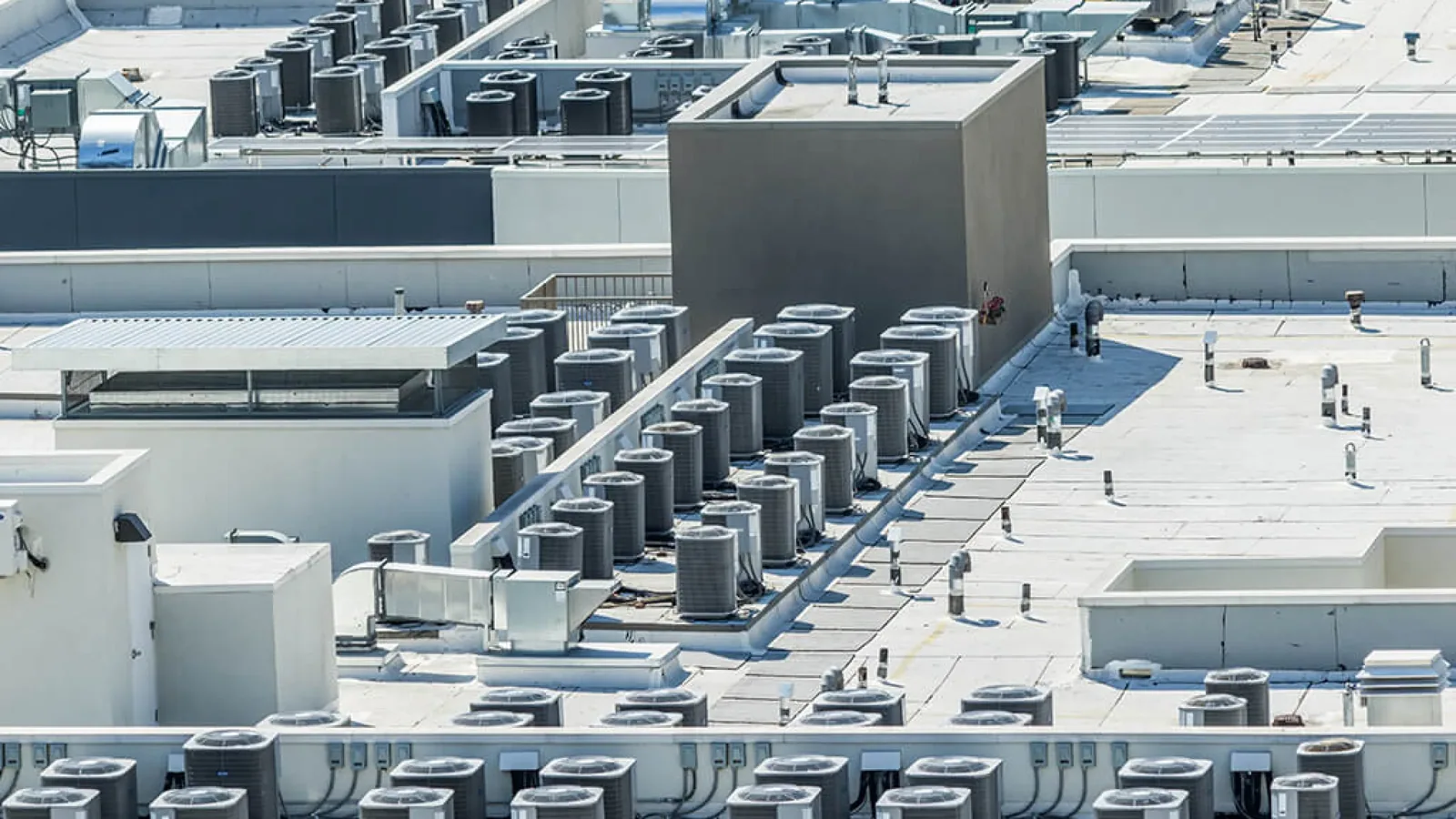
Hotels concentrate heat and exhaust on their roofs: kitchen hoods, laundry vents, boiler flues, chillers, cooling towers and large air handlers. Grease and lint settle on the membrane near discharges, and condensate stains the surface where it lands. We inventory equipment, check curbs, supports and flashing, and flag grease or lint buildup near drains. Walk paths protect the membrane from technician traffic. When equipment is replaced, the curb and flashing are checked before the new unit is set, and the roof contractor and mechanical contractor share crane time. These practices are the core of rooftop equipment curbs and supports work.
Pool decks, terraces and amenity roofs
Many hotels put guest amenities on top of waterproofing: pool decks over meeting space, terraces over lobbies, rooftop bars over guest floors. The surface can be pavers, pedestals, planters or concrete, and the waterproofing under it cannot be seen. When water appears below, the source may be a drain under the pavers, a failed joint, a flashing at the deck edge or a penetration for a railing post. We plan access by lifting sections, inspect the membrane, and replace sections with protection boards where wear is evident. Guests lose use of the area only while a section is open, and notices at the front desk give the dates.
Drainage under amenity surfaces gets special attention because a blocked drain below pavers holds water against the membrane for weeks. We photograph drain bowls and strainers, confirm that overflow routes work and recommend access points so future checks do not require removing the deck. Owners who manage hotels through a third-party operator share these records with property management companies, which keeps the roof file with the building, not with the operator's staff.
Peak season, storm season and the calendar
Hospitality calendars have high seasons, event weekends and storm seasons. Hollywood averages 8.84 inches of rain in June, 8.67 in September and 89.9°F on August afternoons, and the stormiest wet-season weeks run from mid-May to early July. Heavy roof work is therefore scheduled outside peak occupancy and with storm margins, with daily dry-in and a plan for protecting the deck when weather approaches. Before the wet season, we clear drains and photograph edges and equipment covers; after it, we record ponding depth and new staining.
Hurricane preparation for a hotel is partly a roof task: loose items secured, drains cleared, rooftop equipment covers fastened and a post-storm inspection plan agreed with the engineering lead in advance. After a storm, rooms are protected first, and the roof walk follows once access is safe. The report separates damage from existing wear for the insurer, with dated photographs from before and after.
Hallandale Beach, Aventura and beyond
Hallandale Beach's master plan describes beachfront A1A towers as its highest residential concentration and envisions office and hotel uses in a higher-density mixed-use Gateway West area adjacent to I-95. Aventura lists retail and medical uses among its major economic drivers. These planning descriptions show where hospitality fits within broader mixed-use areas. Hotels in a mixed-use area share streets, loading access and sometimes roofs with neighbors, which affects staging and noise. A property in Hallandale Beach or the Hollywood Beach Business District gets a staging plan that matches its street.
Records for owners, brands and lenders
Owners answer to brands, lenders and insurers. A roof file holding dated photographs, a plan, the repair history, product data and permit records supports each. Reroof permits run through the city's Building Division, and the city's vulnerability assessment, which lists storm surge and compound flooding among its climate risks, makes equipment placement relative to flood elevation part of any replacement conversation, along with where the crane will stand and which guest entrances stay open. Groups with several hotels compare them through multi-site roof programs, and restaurant brands inside a hotel face the same kitchen exhaust questions.

