
Need this roof reviewed?
Reroofing Hollywood, FL commercial buildings while tenants stay open: phased dry-in, noise and dust control, protected entrances and clear schedules.
Reroofing an occupied building is a scheduling problem as much as a roofing one. Tear-off makes noise, dust and vibration directly above people who are working, and an open roof section is one rain cell away from an interior loss. The stormiest phase of the wet season runs from mid-May into early July here, and summer afternoons bring heat that limits how long a crew can work on a dark surface. The plan has to fit those facts to the building's own rhythms.
We begin with the occupants, not the roof: who is below each section, what hours they keep, what equipment must stay running and where people and deliveries enter. Then we divide the roof into sections that can be opened and closed within a working day.
Buildings differ in what they can tolerate. A multi-tenant office building has desks, calls and meetings under the deck, while a retail strip has customers entering below. Each calls for a different notice, a different set of quiet hours and a different protection plan, and the work order spells them out.
Phasing and Daily Dry-In
The rule is simple: never open more roof than can be made watertight before the crew leaves. We size each day's section to the crew, the material, the forecast and the number of tie-ins to be sealed, check radar through the day and keep temporary seals ready at every edge. Tie-ins between old and new roof are sealed and tested each evening. Where weather turns before a tie-in is complete, the crew stops other work and finishes the seal first.
Phasing also follows the building. A section over a storeroom can open before one over a reception area. Sections over sensitive equipment, records or food service go last or go in off-hours, and the manager sees the sequence before it is final. The sequence is written down, with dates, section numbers and the occupants affected by each, and shared with the manager before work starts.
Tear-off method matters in an occupied building. Cutting the old roof into panels and lifting them out creates less dust than ripping it up in strips, and removing insulation in whole boards limits crumbs. We choose the method with the building in mind, not just the crew's habit, and we list it in the work order so the manager knows what to expect.
Noise, Dust, Odor and Vibration
Tear-off is loud. Fastener removal, cutting and hauling carry through a deck, and loud work over a call center, clinic or classroom needs its own plan. We schedule the loudest operations when the space below is least sensitive, and we hold quiet tasks, such as inspection, sealing and cleanup, for sensitive hours.
Dust and odor have remedies too. We vacuum or contain debris at the point of removal, use chutes and enclosed hoppers, and choose adhesives and primers with low odor where the building has tenants who are sensitive to fumes. Air intakes are located on the roof plan, and work near them is timed or shielded. Where tenants have special needs, such as a lab or a medical suite, we ask early and write the controls into the work order.
Heat belongs in this plan as well. Crews working on a dark membrane in South Florida summer sun face surface temperatures far above the air, so we start early, rotate people and stop hot work when the forecast shows a storm building. That protects the workers and also protects the quality of adhesives and sealants, which do not cure well on an overheated surface.
Interior and Entrance Protection
Falling debris and wet insulation are the two interior hazards, and both are preventable. Overhead protection at entrances, covered walkways and barricaded zones keep people out of drop areas. Inside, we ask the manager to cover or move sensitive equipment and to clear ceilings beneath the section being opened. A drop cloth does not stop water, but a dry-in plan does, and the plan comes first. For roofs over finished ceilings, we also ask where the sprinkler heads, lights and ductwork run, since a fastener that reaches too far can damage them.
We keep fire lanes, accessible routes and emergency exits clear and mark them on the site plan. Dumpsters and lifts sit where they do not block those routes, and the crew reviews them at the morning huddle. If a tenant reports water inside, a named contact answers, and the crew responds to the roof section above the report first.
Rooftop Equipment and Utilities
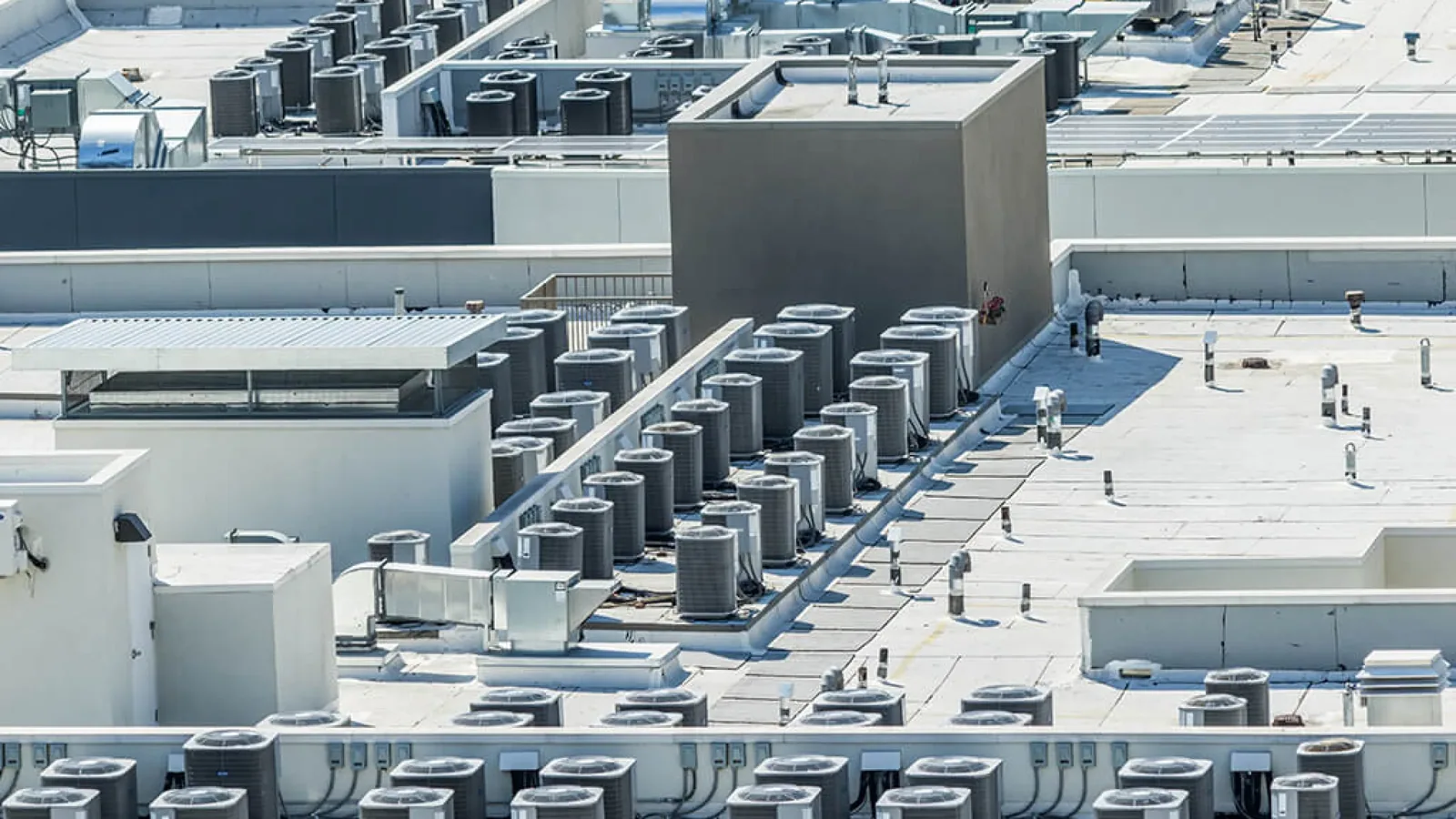
Units on the roof often serve occupied suites. Moving, disconnecting or shutting them down for flashing work is a tenant matter before it is a roofing one. We list every unit, ask which are critical and agree on shutdown windows with the manager. In Hollywood's heat, with an August average daily high near 90 degrees, a long cooling outage is serious, so we plan short shutdowns for cooler hours.
Where equipment must be lifted for reflashing, the curb and support work is coordinated with the mechanical contractor and the crane schedule, and temporary seals protect the opening in between.
Downtown Schedules and Event Closures
When Hollywood Boulevard is closed for events between US-1 and 21st Avenue, staff access, deliveries and parking suffer, so a lift day or a material delivery must avoid those dates. Tenant mix and permitting coordination are what Downtown Hollywood's property owners association works on; for a reroof they translate into two early items, the written tenant notice and the confirmed permit path.
For buildings in Downtown Hollywood or the Historic Hollywood Business District, we check the event calendar, plan deliveries for early hours and keep sidewalk closures as short as the work allows.
Notices, Permits and the Closeout File
Each tenant receives a written notice with the dates, hours, noise periods and a contact number. A reminder goes out a day before each phase, and a short note follows when the phase ends, so tenants know the noise above them has stopped and the section is closed. Reroofing permits go through the building division under the current Florida Building Code, and we confirm the permit path before scheduling. A roof replacement on an occupied building adds inspections to the calendar, and we plan around them.
At closeout the owner receives photographs, a list of the sections completed and the date of each, product data and open items, with a maintenance visit scheduled to inspect the new roof. The file also lists each notice sent and the date it went out, so a tenant who asks later what happened above their suite gets a dated answer.

