Need this roof reviewed?
Carlisle SynTec roofing in Hollywood, FL: Sure-Weld TPO, Sure-Seal EPDM and PVC assemblies, with seam, flashing and drainage checks for local heat and rain.
An EPDM seam fails differently from a TPO seam, and a repair that works on one can be wrong for the other. Carlisle SynTec makes membranes in each of the main single-ply families, so a roof described only as a Carlisle roof could be a black rubber sheet with taped splices, a white thermoplastic sheet with hot-air welds or a fleece-backed system adhered to the deck. In Hollywood, FL, those roofs sit under August afternoons near 90 degrees and a wet season that loads every drain. We identify which Carlisle system the building carries, read its seams and flashings, and write a scope that matches the sheet instead of the brand.
Sure-Seal EPDM, Sure-Weld TPO and PVC
Sure-Seal is Carlisle's EPDM line, a synthetic rubber sheet available in black and in white, joined with seam tape or splice adhesive and flashed with accessories made for the system. Sure-Weld is the TPO line, a thermoplastic sheet that welds with hot air and reflects sunlight. Carlisle also makes PVC membranes, and fleece-backed versions of its sheets are adhered with a bonding adhesive.
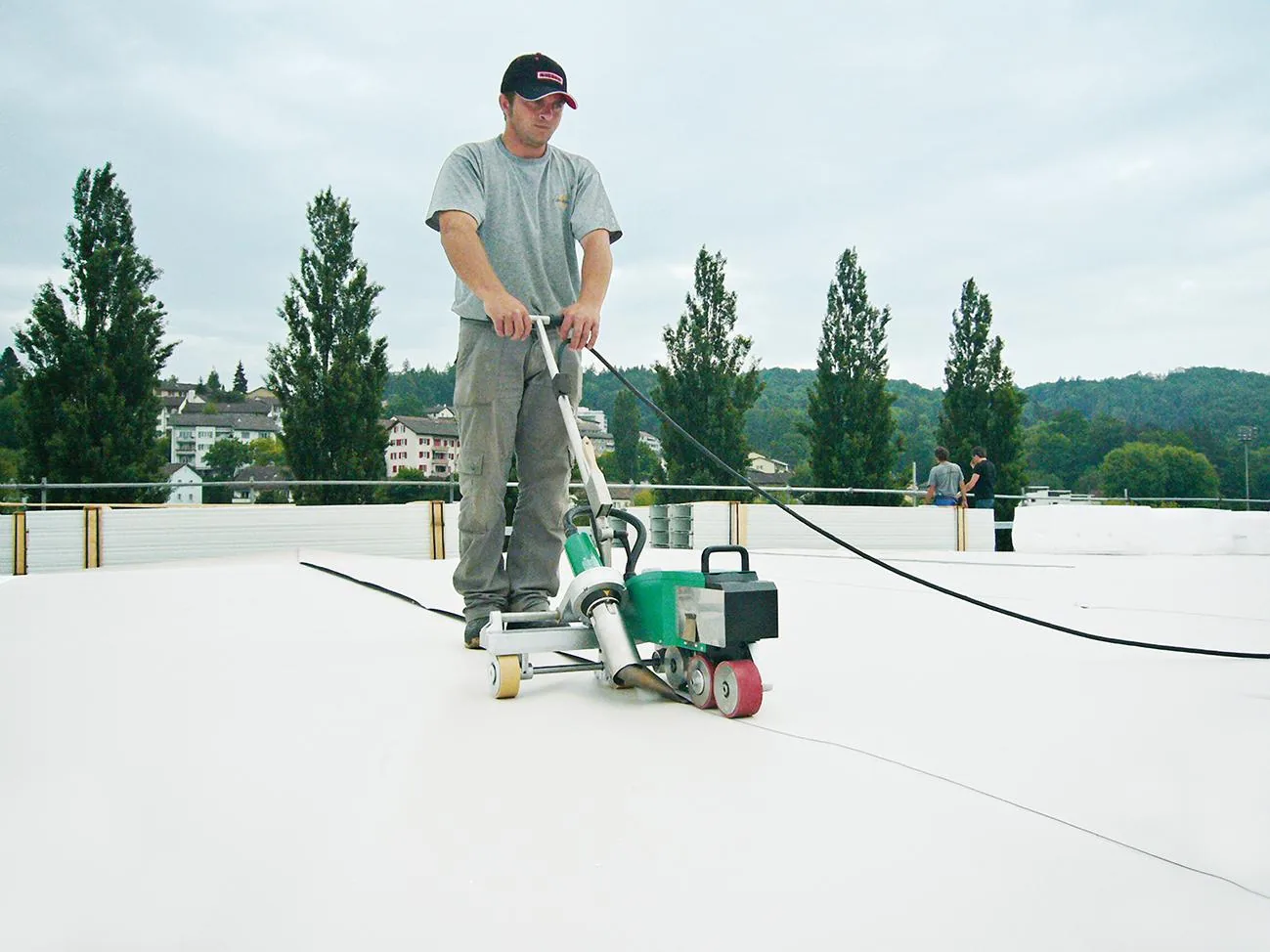
Each behaves its own way. EPDM stretches and recovers, tolerates ponding well and absorbs heat when black. TPO and PVC weld into a single continuous surface, and their seam quality depends on clean, correctly heated joints. Our EPDM roofing, TPO roofing and PVC roofing work follow those differences.
Accessories are matched to the sheet. Primers, seam tapes, adhesives and sealants are made for specific membranes, and swapping one for a lookalike is a common source of early failures. We keep a list of the accessories used on each roof in the file.
Splices, welds and how each one fails
An EPDM splice relies on adhesive or tape that has to bond to a clean, primed surface. When it fails, the edge lifts, dirt works under it and water tracks along the lap. A TPO or PVC weld fails differently: a skipped area, a cold weld or a cross-seam that was not fully fused leaves a channel. We probe both along their full length, because a lap that looks closed from above can peel under a thumbnail.
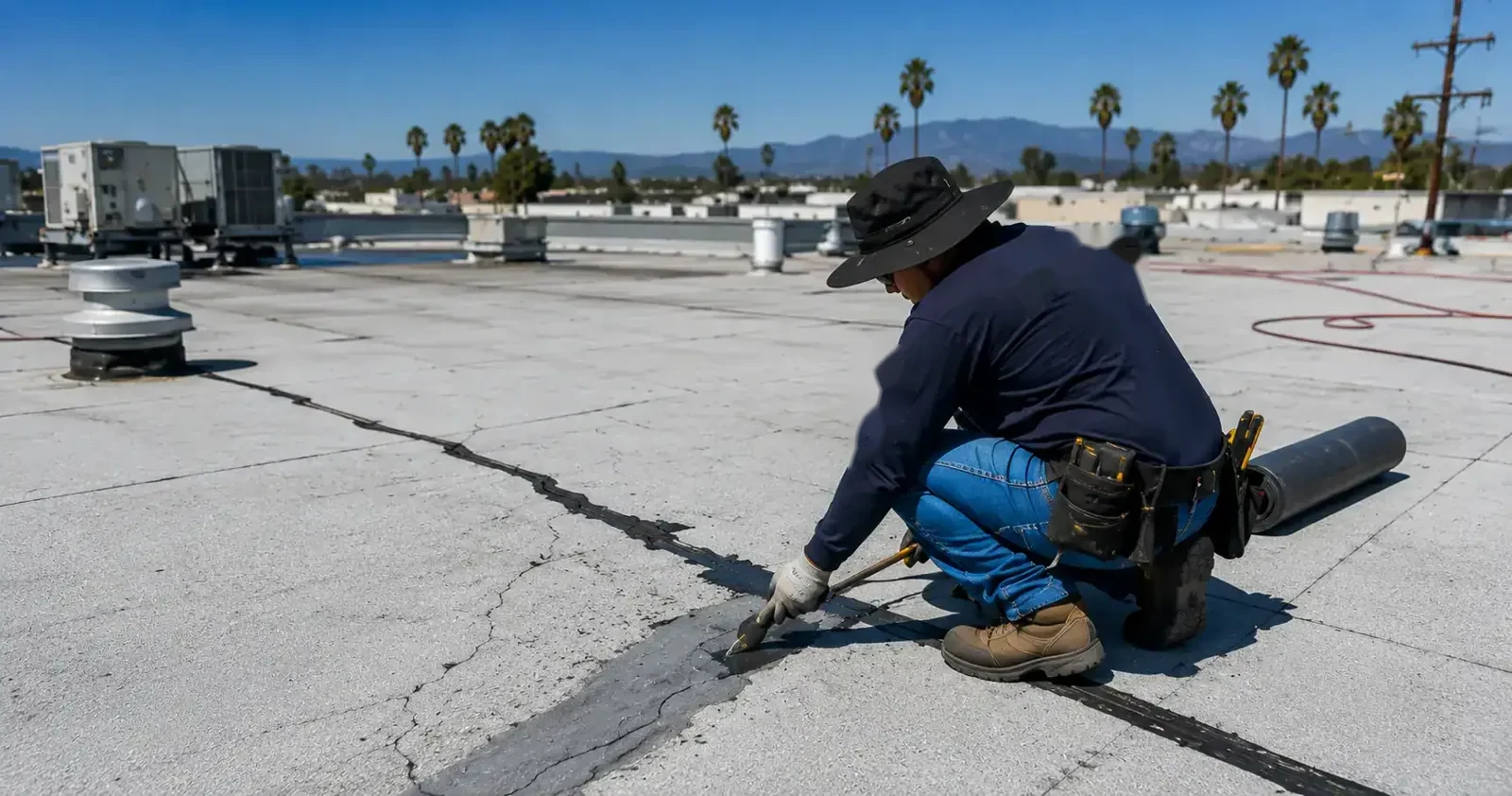
Repairs follow the failure. An open EPDM splice is cleaned, primed and re-spliced with the right tape, with a cover strip across the area. A thermoplastic weld is cleaned, tested for weldability and capped with a welded patch that extends past the damage. The location, the cause and the date go into the roof record.
Seam tape and adhesive have working conditions. Cold, damp or dusty surfaces defeat a bond, so splice repairs are scheduled for dry weather and clean substrates, and in the wet season we work in windows between storms. The area is tested after the repair cures, and the result is logged with a photograph.
Flashings, curbs and edge terminations
Carlisle systems use prefabricated and field-formed flashings at walls, curbs, pipes and drains. Their quality depends on the substrate beneath and the termination above. We check termination bars, counterflashing and sealant at every wall and curb, and we look at how the membrane turns into each drain. A loose bar or a split sealant bead lets water behind the flashing, where it travels well beyond the entry point.
Edge metal deserves attention in the wet season. Wind finds a loose coping before it finds a sound field, and the stormiest phase of South Florida's wet season, mid-May through early July, brings damaging winds that test every perimeter detail. Our commercial roof leak repair traces a leak to its entry and rebuilds that detail.
Penetration clusters get a closer look. Several pipes and conduits placed within a small area leave little room for a flat flashing, and a molded boot or a pitch pocket may last longer than a hand-cut patch. We choose the detail that gives the sheet the most surface to bond.
Surface color, heat and drainage
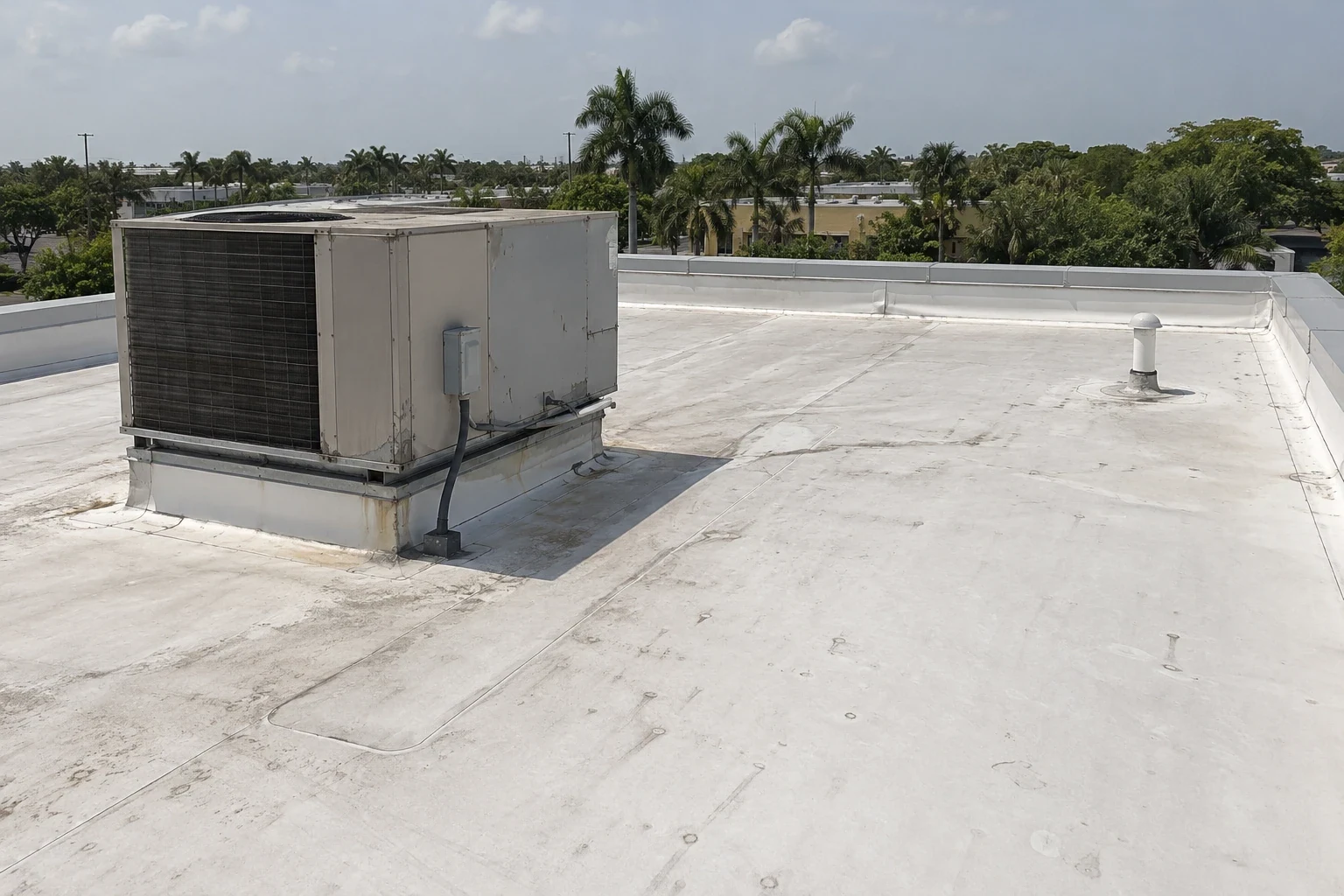
Heat and rain both work on a single-ply sheet here: the August daily high averages 89.9 degrees at the Hollywood station, while June (8.84 inches) and September (8.67 inches) bring the most rain. A black EPDM surface absorbs more of that heat than a white one, which affects the sheet and the building below, while a white EPDM or TPO surface reflects more. The choice is a design decision tied to insulation and equipment, not a quality ranking.
Drainage matters for every family. EPDM tolerates standing water better than most sheets, but water that stays on any seam adds stress, grows algae and carries dirt. We measure ponding depth and duration and check each outlet. Near the Hollywood Beach business district, the checks add how scuppers discharge and how edge metal is fastened.
Cleaning belongs in the maintenance plan. Dirt on a white surface reduces its ability to shed heat, and debris at drains slows water. A scheduled wash and drain clearing before the wet season keep both working as designed.
Existing roofs, recovers and fleece-backed adhesion
A fleece-backed membrane is adhered with a bonding adhesive and can suit a recover over a suitable existing surface, or a new deck. The base must be clean, dry and sound, and the adhesive has to be compatible with the layers it touches. We test moisture and adhesion, count layers and check the structure before recommending a roof recover.
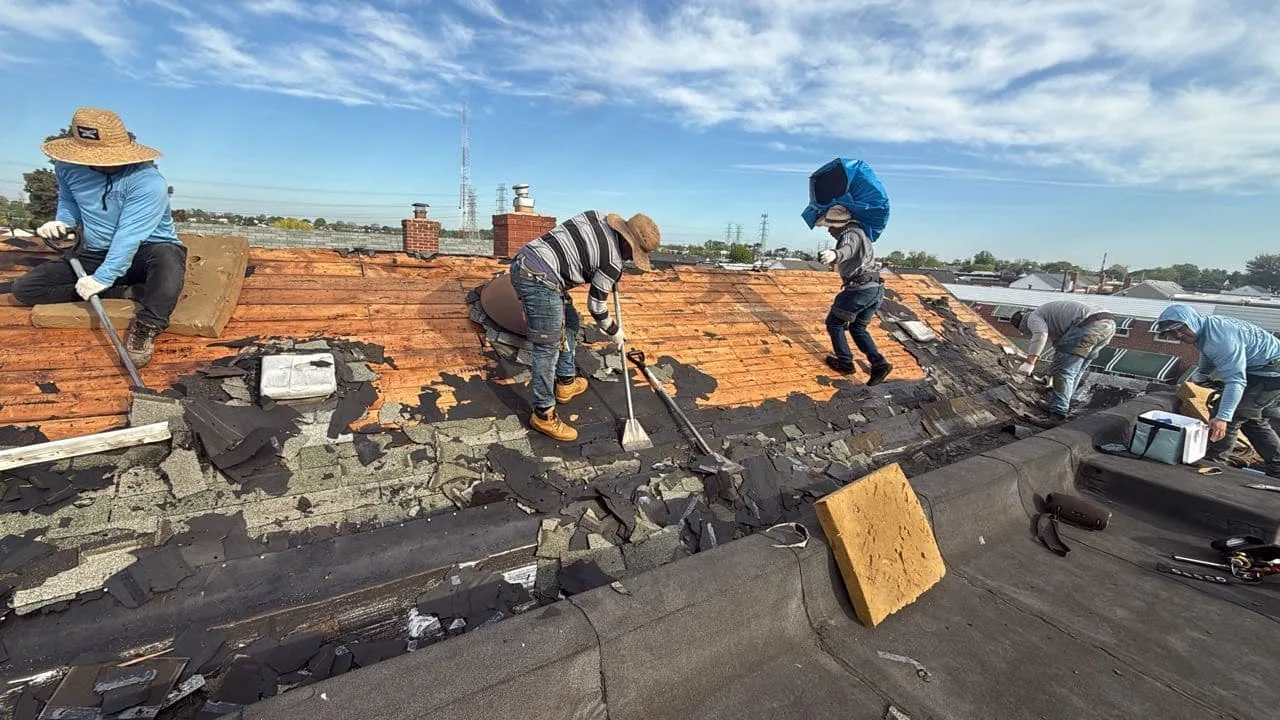
If the existing roof fails, a tear-off follows. Before any permit goes in, we settle attachment, wind resistance and product documentation, because the Building Division reviews reroof plans in Hollywood under the Florida Building Code, Eighth Edition (2023). The proposal lists each layer and its purpose.
Cover board and insulation decisions sit under the sheet. A firm board resists hail and foot traffic and gives adhesive a stable face, while the insulation type must suit the attachment method. The proposal names each layer so the owner can see what the sheet is resting.
Warranty papers and comparison with similar sheets
The warranty document sets the conditions for a given roof: approved procedures, notice periods and maintenance expectations. We ask for it, list its requirements and keep a dated record of every repair. Owners comparing single-ply options can look at Versico and at GAF using the same criteria: seam method, flashing details, substrate needs and repairability.
The choice should follow the building. A roof with heavy exhaust, a roof that ponds or a roof that will carry solar equipment each favors a different sheet, and the written scope says why.
A property in Downtown Hollywood or along Johnson Street with more than one roof section can carry more than one sheet type. The record notes which sheet covers which section, so a repair on one never borrows materials meant for another.
Related Roofing Topics

