Need this roof reviewed?
Versico single-ply roofing in Hollywood, FL: VersiWeld TPO seams, scrim, fasteners and hail exposure read on the roof before any repair or recover is priced.
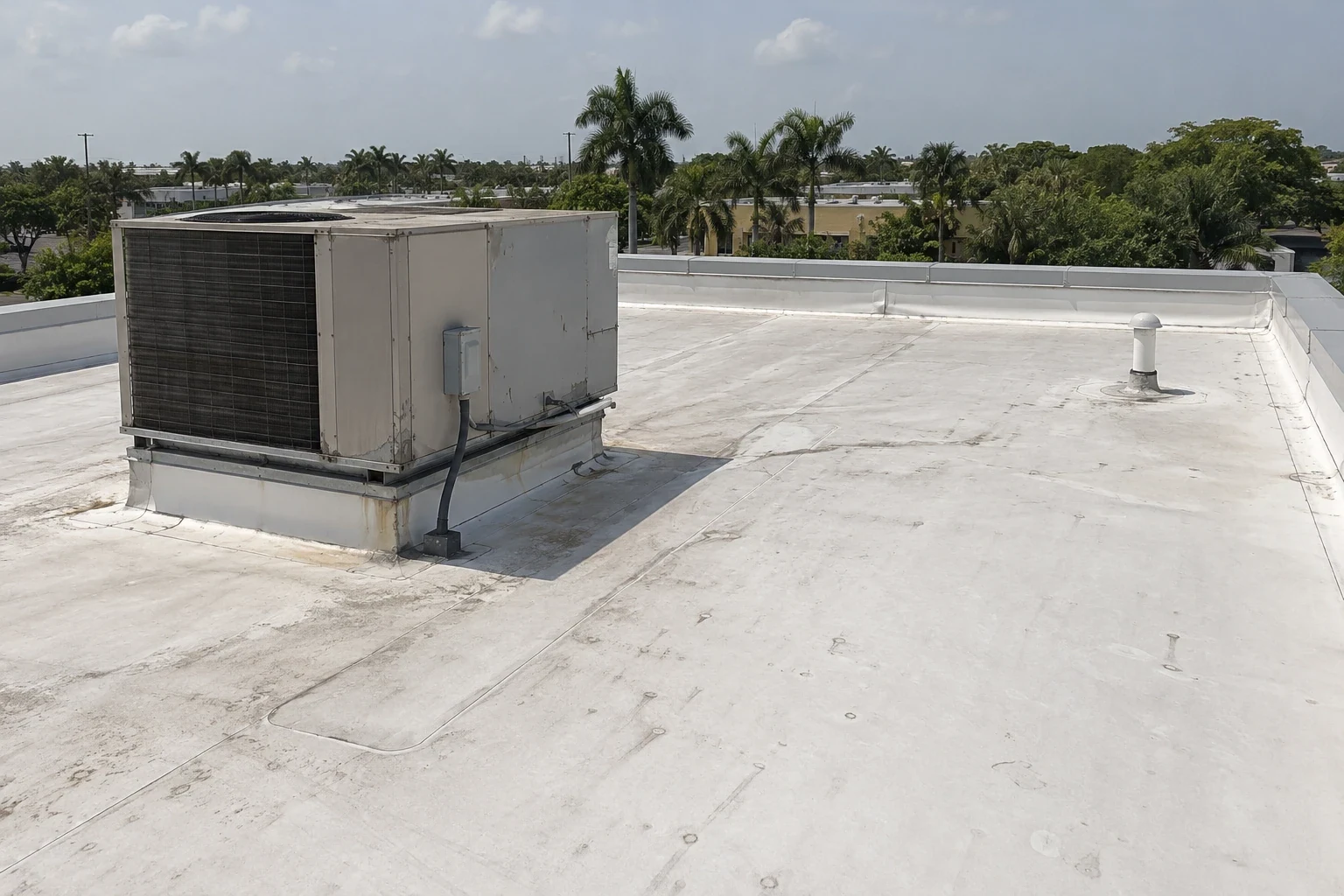
A thin spot in a TPO sheet shows up first as a dull patch where the scrim is close to the surface, long before water finds it. Versico makes single-ply roofing, and its VersiWeld TPO is a reinforced thermoplastic sheet welded at the seams with hot air. In Hollywood, FL, a sheet like that works under an August daily maximum near 90 degrees, a wet season with heavy rain and storms that can bring hail. Property managers who ask whether a Versico roof is sound are really asking about the seams, the fasteners, the surface and the drains, and those are the things we check on the first walk.
VersiWeld TPO and how the sheet is built
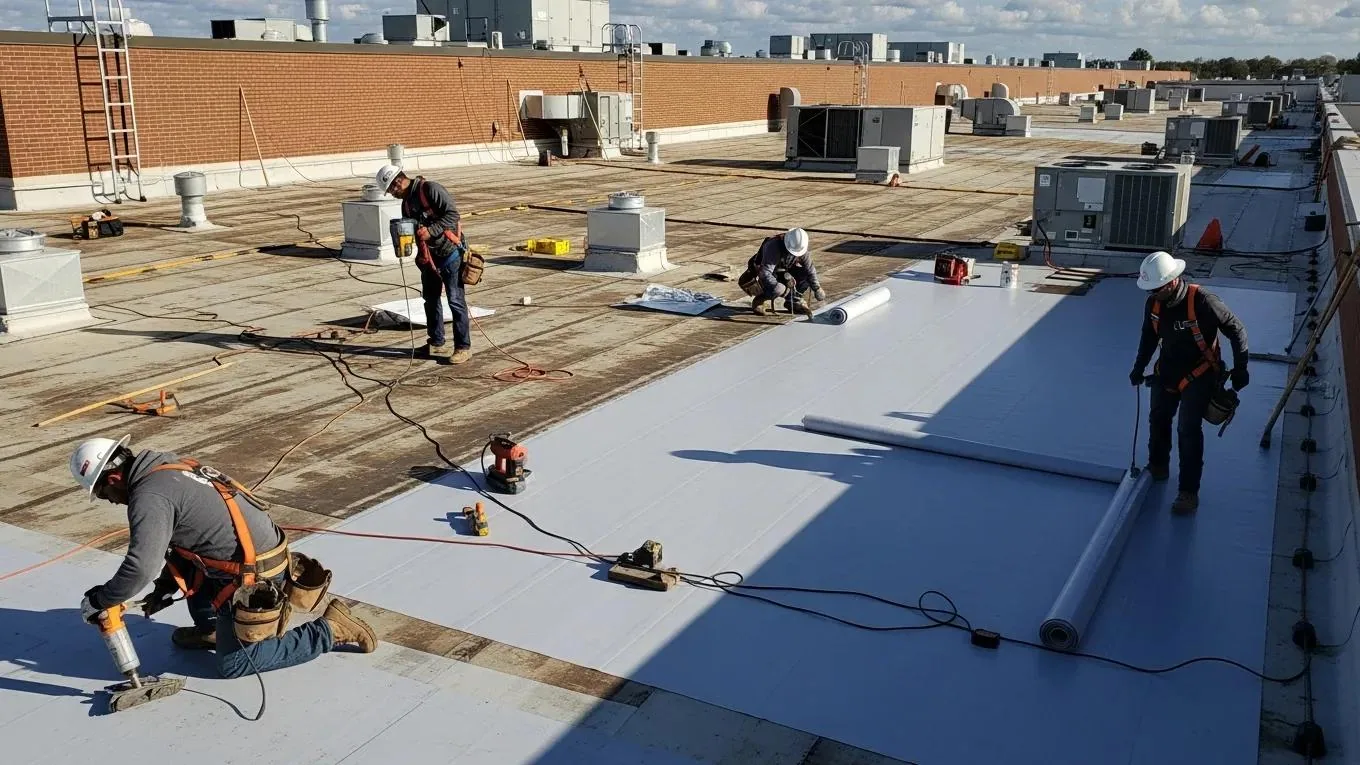
A reinforced TPO sheet has three parts: a top ply that takes sun and weather, a woven polyester scrim that gives the sheet its strength and a bottom ply that bonds or fastens to the roof. The thickness of the top ply governs how much surface wear the sheet can take before the scrim shows. Seams are made by melting the overlapping edges together with hot air, and the result is a continuous sheet with no adhesive at the lap.
That construction explains many field findings. Chalking and dulling at the surface point to weathering. A visible scrim pattern points to thin cover. Open or soft welds point to workmanship or aging. Our TPO roofing work reads each of those signs and ties it to a location on the roof sketch.
Color and heat are part of the picture. With an August daily high averaging 89.9 degrees at the Hollywood station, a light-colored sheet reflects more sunlight than a dark one. Dirt and residue reduce that benefit over time, so cleaning belongs in the plan and the schedule is written down.
Thickness differs by product and by the scope chosen, and the specification should name the one on the roof. When it is unknown, a small sample from an inconspicuous spot can be measured and patched, so the record shows what was found and not what was assumed.
Fasteners, plates and the perimeter
Many TPO roofs are mechanically attached with fasteners and plates placed along the seam or through the field. When a fastener backs out, the plate lifts, the sheet flutters and the membrane wears at the plate edge. In time that wear looks like a seam failure from a distance, so we check plates at close range, look for ridging along the fastener lines and pull a few samples to test resistance.
The perimeter and corners carry the strongest uplift, so attachment is tighter there. From mid-May through early July, the stormiest phase of the wet season, the National Weather Service expects damaging winds, tornadoes and hail to be most likely. Before and after that phase, we inspect edge metal, coping and terminations for movement.
Pull testing is simple and informative. A few fasteners are checked for resistance at representative spots, and the results are logged on the roof sketch. Low readings point to a deck problem that more fasteners will not cure, and the report says so before a repair is priced.
Hail, impact and the cover board beneath
Hail bruises a membrane without always splitting it. The mark is subtle, and the damage can be a crushed insulation board below a sheet that still looks whole. A firm cover board under the sheet resists that kind of impact, and soft or thin insulation increases the risk. When storm damage is suspected, we photograph the surface, test for moisture and map any impact marks.
Our hail damage roof repair scope covers what the storm caused and separates it from age. Where a roof is being replaced, a cover board is a decision made with the insulation and the attachment method, and the proposal says what it adds and why.
Documentation matters when an insurer is involved. Photographs taken before repairs, a marked roof plan and a written description of the damage let the owner and the carrier look at the same facts, and temporary protection is photographed so it is not mistaken for permanent work. Coverage decisions stay with the owner and the carrier.
Probing laps and repairing open seams
A weld is only as good as the surface it was made on. We probe each lap along its full length, mark soft or open segments and check cross-seams and corners, where welds are hardest to make cleanly. A seam failure repair begins with cleaning, a weldability test and then a welded patch that extends well past the damage.
Old TPO can resist new welds when it carries dirt or weathering, so the test comes first. When a sheet will not weld, the choices are an approved cleaner, a different patch material or replacing that section. Each repair record notes where the work was, what caused it and how it was done, so the next inspection goes straight back to that spot.
Drainage near seams matters. Water that stands on a lap loads the weld, collects dirt and invites algae. We measure ponding depth and duration after rain and clear the outlets, using the same routine on every roof so results can be compared.
Curbs, penetrations and downtown rooftops
At curbs and pipes, flashings are built from prefabricated pieces or field-cut sheet, and their terminations rely on sealant and bars. Where several penetrations sit close together, there may be no room for a clean weld, and a molded boot or a pocket may last longer. We count the penetrations, number them and probe the termination at each.
For a roof in Downtown Hollywood or along Johnson Street, the equipment mix may differ from one building to the next, so each roof is mapped as it is. Walk pads along service routes protect the sheet, and the roof sketch shows the paths.
Clearances are checked too. A curb set too close to a wall or another curb leaves too little room to flash properly, and the report notes it for the next time equipment is moved. Small layout changes at that moment avoid repeat leaks later.
Recover, replacement and comparison
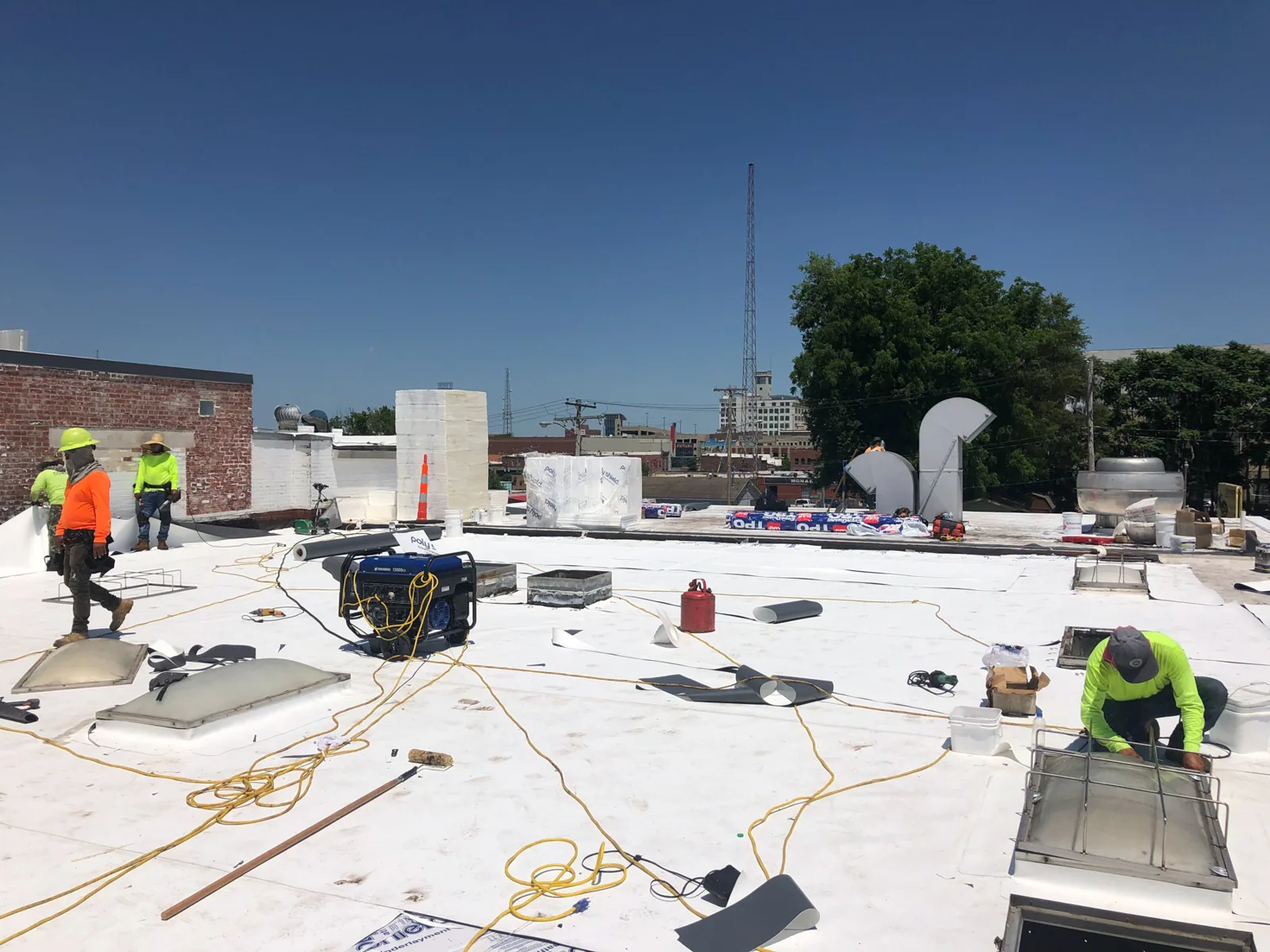
A Versico roof with dry insulation and isolated seam or flashing defects can be repaired. A sound roof can sometimes accept a new sheet over it, if it is dry and can carry the load. Widespread wetting or a failure that keeps returning points toward replacement. Permit filings for Hollywood reroofs carry product and attachment documentation, since the Building Division reviews plans under the Florida Building Code, Eighth Edition (2023).
Owners weighing options can compare Carlisle SynTec and GAF TPO systems against Versico on seam method, thickness, accessories and repairability. The roof's condition and the budget decide.
A written scope lists each layer, the attachment method, the cover board and the flashing pieces, with allowances where the roof must be opened. Owners can review it against another maker's proposal on equal terms.
Related Roofing Topics

