Need this roof reviewed?
Commercial fire and smoke damage roof repair in Hollywood, FL: structural safety first, wet insulation testing, temporary protection and permit-ready scopes.
Char on a roof surface shows where fire reached, but it does not show how deep the heat went, and the decisions that matter sit below the surface. Commercial Roofers Hollywood evaluates and repairs fire and smoke damage on commercial roofs in Hollywood, FL, working after fire crews have released the building and alongside the owner, the adjuster and any restoration contractor. The order is fixed: confirm that the roof is safe to walk, protect the building from water, document the damage before cleanup, test the assembly layers for hidden heat and moisture damage, and write a repair scope that states what stays, what goes and what needs an engineer.
Structural safety before access
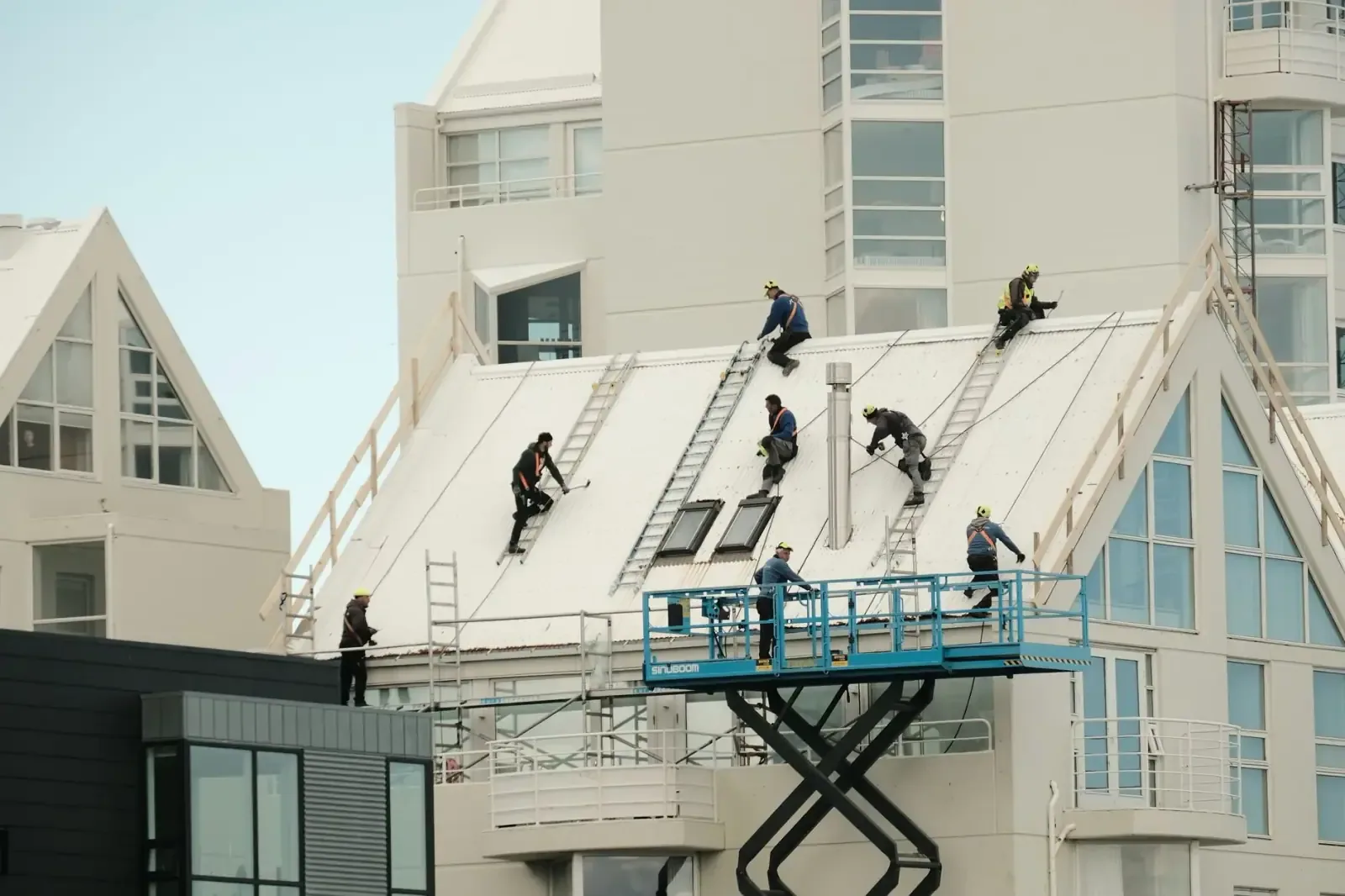
A roof deck weakened by fire can look normal from above. Steel can lose strength when heated, wood decking can char through, and insulation can hide voids. Before anyone walks the roof, we ask whether an engineer has cleared it, and if not, we inspect from the edge or by drone and recommend a structural evaluation. Where access is cleared, we move on boards, probe decks gently and mark any soft or spongy area. Hot spots, smoldering insulation and recently extinguished areas need a fire watch. Photographs are taken from safe positions, and areas not reached are listed in the report so the owner knows what remains unseen.
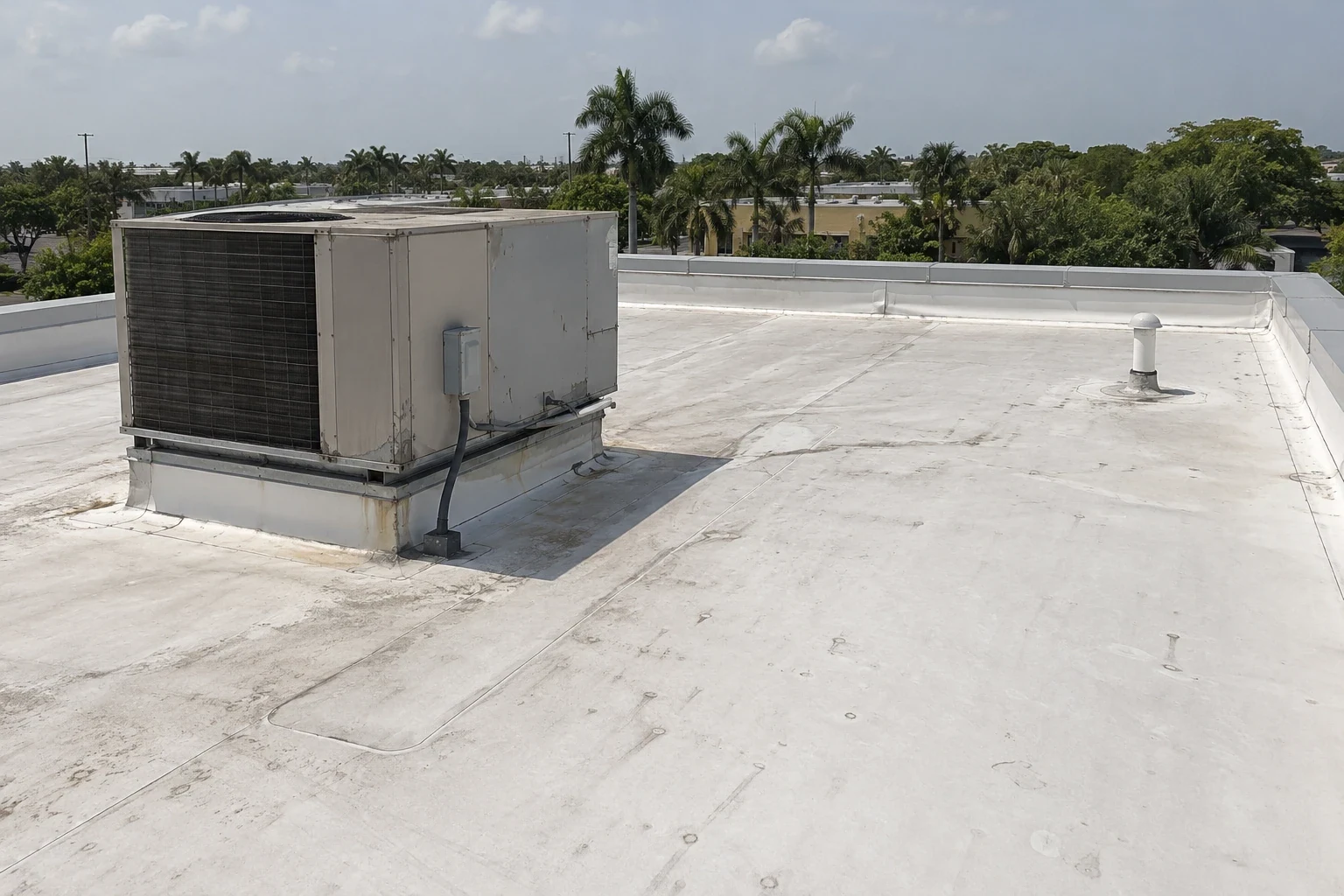
Utilities and equipment on the roof need attention too. Gas lines, electrical conduit and rooftop units may have been damaged or shut off, and no one should disturb them until the proper trades have cleared them. We log what we find, photograph it and pass it to the facilities contact before work starts.
Reading heat damage in the assembly
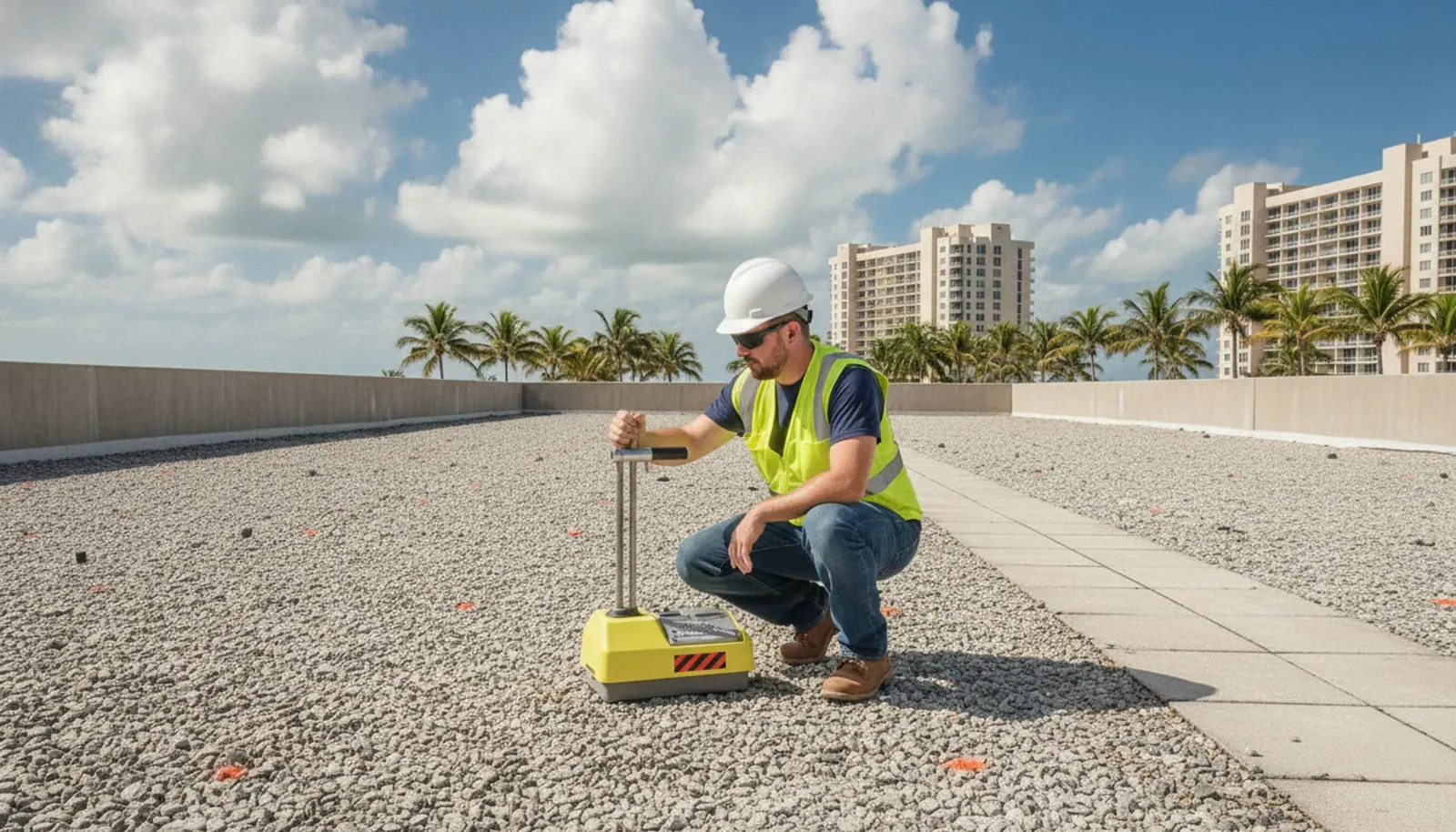
Heat damages each layer differently. Membranes blister, shrink, melt or burn away, insulation can char, melt or shrink, vapor barriers can fail and metal decks can warp. Smoke may stain surfaces that are not damaged, while a clean-looking area near the fire can hide insulation that has been cooked. We cut test openings at a pattern of locations across and beyond the visible damage, photograph each layer and note which are sound. The openings define the repair boundary: damage that reaches the deck is treated differently from damage confined to the membrane. Test cuts are closed the same day with a temporary patch.
Firefighting water and wet insulation
Water used to put out a fire often does more roof damage than the fire itself, because it soaks insulation and runs through openings into the building. With June rain averaging 8.84 inches and September 8.67, a roof left open after a fire in the wet season takes on more water quickly. An infrared moisture survey and core samples show where insulation is wet, and the repair boundary includes it. Drying a wet assembly in place is rarely reliable, so wet insulation is usually replaced, with the interior drying handled by the restoration contractor.
Water that entered through burned openings may also reach the deck and structure, and a rusting steel deck or swelling wood needs a closer look. Heat damage often shows alongside heat and UV degradation, since a fire-exposed membrane that survived can be brittle and age faster afterward. We test flexibility in the cleaned surface, record the result and flag areas that look intact but have lost their elasticity, so the owner can decide whether to keep or replace them while the roof is already open.
Temporary protection after release
As soon as the building is released and the roof is safe to access, openings need protection. Temporary measures include tarps secured to sound structure, sealed membrane patches, covers over exposed insulation and closures at penetrations. Each measure goes into the log as temporary, with photographs and a date to revisit. Protection from emergency roof repair crews can go on at any hour, holidays included. It is placed so it does not block investigation: test openings, evidence areas and structural access are left available. The permanent repair is a separate entry with its own scope, and the file keeps the two apart.
Rebuild options after fire
What replaces a burned roof depends on what survived. If damage is confined to the membrane and a thin top layer of insulation, the repair can be a localized replacement tied into sound material. If the deck is compromised, the scope includes deck repair by the appropriate trade before roofing resumes. If insulation is wet or charred across a wide area, a section or full replacement is the practical answer. The new system is chosen with the building's use in mind: TPO roofing and PVC roofing are common single-ply choices, and the final selection follows attachment, wind-uplift and fire-classification requirements that the design professional confirms.
Schedule is the other constraint. A building under repair may need to reopen quickly, and the roof is often on the critical path because interior work cannot proceed until the building is dry. We sequence the roof so that the deck is dried in early, and we coordinate with the restoration contractor so interior drying and roof work do not collide. Daily logs record conditions and progress, and weather delays are documented with photographs.
Documentation for the claim
Fire claims involve several parties: owner, adjuster, restoration contractor and sometimes a fire investigator. Roof evidence is photographed before cleanup, marked on a plan and kept with moisture readings and test-cut findings. The report separates fire damage, smoke staining, water damage and pre-existing wear, using what each layer shows. The conclusion about cause and coverage belongs to the investigator and the insurer. Our role is to document the physical state of the roof so those decisions rest on evidence. Insurance and restoration teams use the report as a basis for scope and pricing discussions.
Smoke and soot add another category. Soot can cling to membrane surfaces and some coatings, change reflectivity and hide the surface condition. Cleaning with the wrong method can damage the membrane, so we test a small area first and record the result. If a roof has coating, a patch of the coating is tested for adhesion after cleaning. Odors in insulation are harder to remove than stains, and a smell that persists after cleaning can signal contaminated insulation that needs replacement.
Code, permits and rebuild scope
Rebuilding after a fire goes through Hollywood's Building Division, which applies the 2023 edition of the Florida Building Code and lists structural reroof permits among its categories. The scope identifies the permit path, any engineer's letter, and code-driven work such as fire-rated assemblies or insulation changes. Items revealed during demolition are priced as separate lines tied to measured areas and photographs. In the Harrison and Tyler historic districts, where many buildings reflect 1920s-era architectural styles, the owner confirms the permit path with the Building Division before demolition begins. Debris thrown onto the membrane during the fire or the response can add punctures, and those are repaired as membrane puncture repair within the same scope.
Smoke and heat travel along shared walls and parapets, so when a burned building in Downtown Hollywood or on Johnson Street joins a neighbor, we inspect the adjoining roof edge too.
Related Roofing Topics

