Need this roof reviewed?
Commercial roof inspection, repair, replacement and maintenance for property owners and managers in Dania Beach, FL, with permit and review coordination.
Ponding at a single drain can wet a roof edge to edge, and the owner usually learns about it from the ceiling tile below. Commercial buildings in Dania Beach, FL get inspection, repair, replacement, recover and coating work on low-slope and metal roofs, always from the water path outward: where rain lands, where it leaves and where it lingers. The weather figures we use come from Hollywood, the market city, and they describe the summer heat and seasonal downpours that South Florida roofs face.
Heat, Downpours and the Wet Season
August afternoons in Hollywood average a high of 89.9 degrees by NOAA's normals, and a roof surface under full sun runs hotter than the air. The same normals put June rainfall at 8.84 inches and September at 8.67. Those numbers describe the neighboring market city, and they frame what a Dania Beach roof has to withstand: repeated heating that stretches a membrane and heavy rain that tests every seam, drain and flashing.
For South Florida's wet season, the National Weather Service puts the stormiest phase between mid-May and early July, when damaging winds and tornadoes, along with lightning, hail and flooding, are most likely. A roof that has open laps, a lifted corner or a clogged scupper going into that window is at risk of leaks that spread through insulation before anyone sees a stain. A pre-season walk addresses those items while they are still minor.
Heat and rain also combine. A membrane that has been stretched by a hot afternoon is stiffer and more prone to splitting at a cold-water shock from a sudden shower, and sealant that has dried out under sun opens at the first hard rain. Dark or aged surfaces carry the greatest swing. We note surface condition, color and any crazing during the walk, since those signs help predict where the next leak will start.
Permits, Zoning Review and Roof Scope
Dania Beach handles zoning questions and development review through its Community Development planning and zoning function. The City's Planning and Zoning Division links to a Development Review Committee, a zoning map, approved-development project information, a Planning and Zoning Board and development applications and forms. For a plain reroof of the same footprint, the work normally runs through the building permit process. When a project adds rooftop equipment screens, raises a parapet or changes the building outline, owners should check with the City's planning staff about review before ordering materials.
We prepare a clear scope that lists the existing system, the proposed system, drainage changes and any equipment additions. That document helps the owner or an architect decide whether the roof work stays within the permit track or touches zoning review. Since December 31, 2023 the Florida Building Code, 8th Edition (2023), has set the rules, and each reroof scope is written to meet them.
What We Check on the First Roof Walk
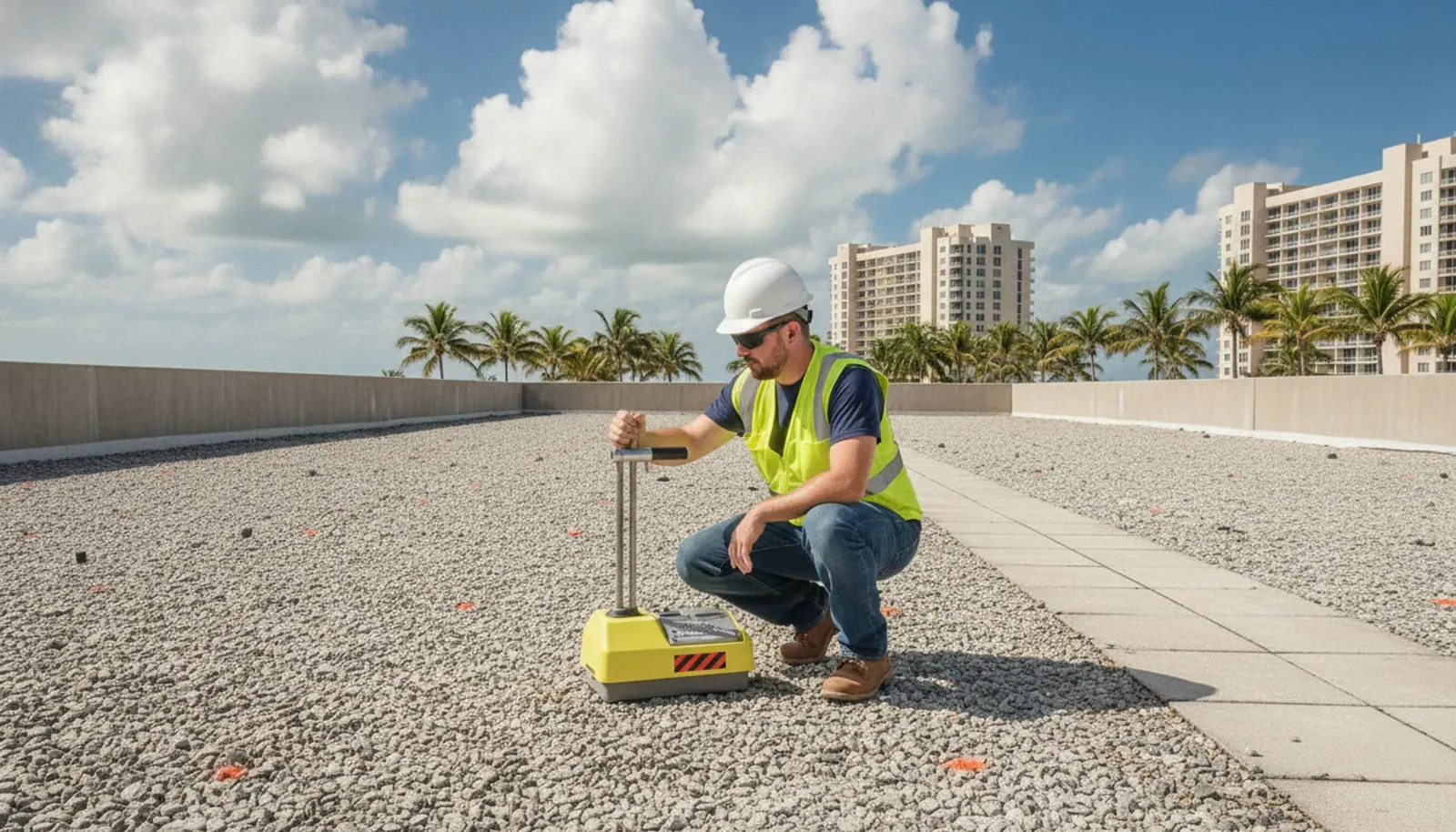
We begin with drains, scuppers and gutters, then move to seams, penetrations and the perimeter. We look at the wetting pattern, which tells us whether water drains toward outlets or collects in low spots. We measure ponding depth where it appears and check whether it persists a day after rain.
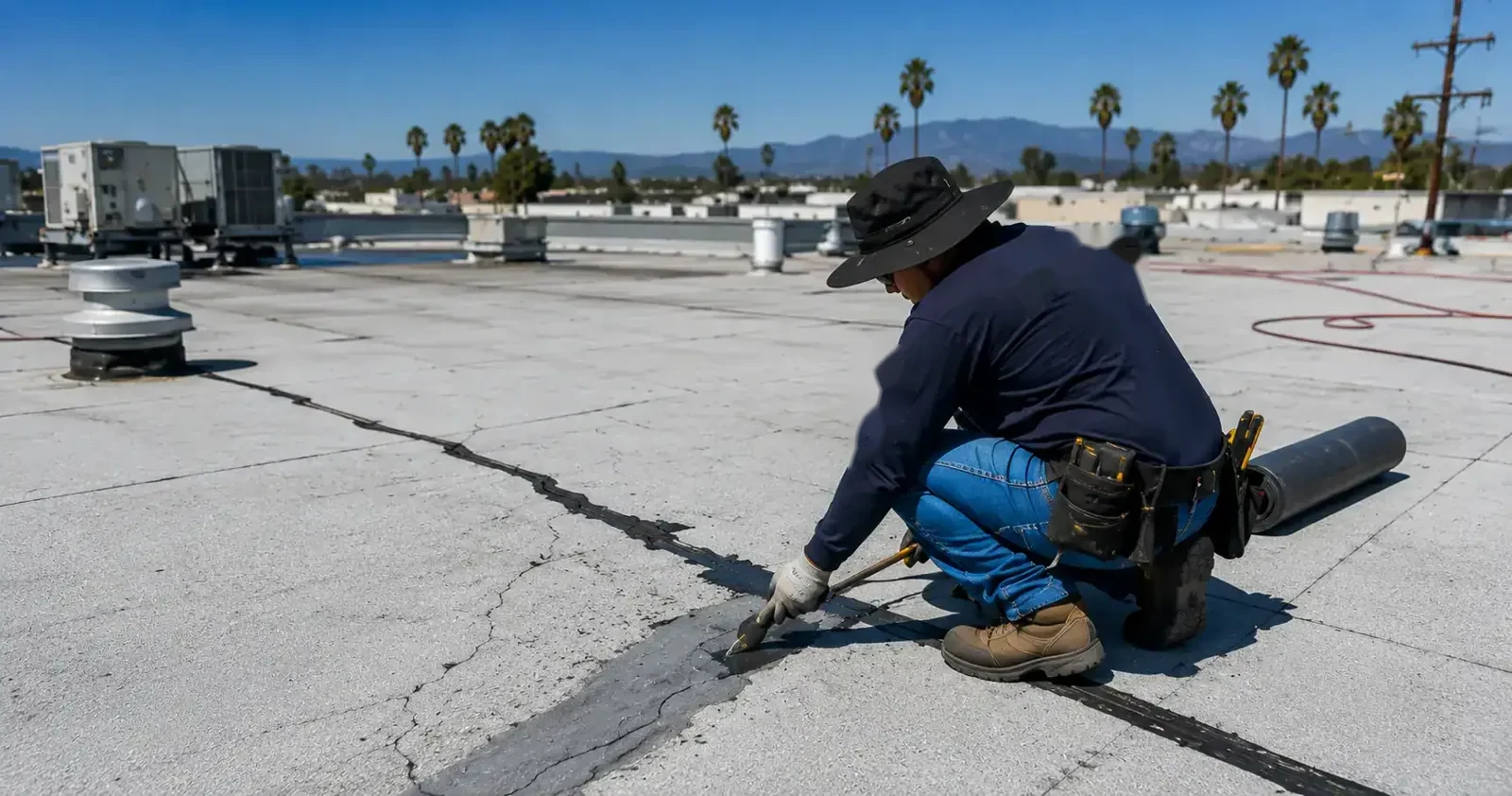
- Open or lifted membrane seams
- Cracked or missing sealant at flashing terminations
- Loose coping, gutters or edge metal
- Punctures near equipment and service paths
- Soft or spongy areas that suggest wet insulation
When surface signs are inconclusive, we use an infrared moisture survey or core samples to confirm. The report ties each finding to a location on a roof sketch with photographs, so a manager can show a tenant, lender or insurer what we saw.
Choosing Between Repair, Recover and Replacement
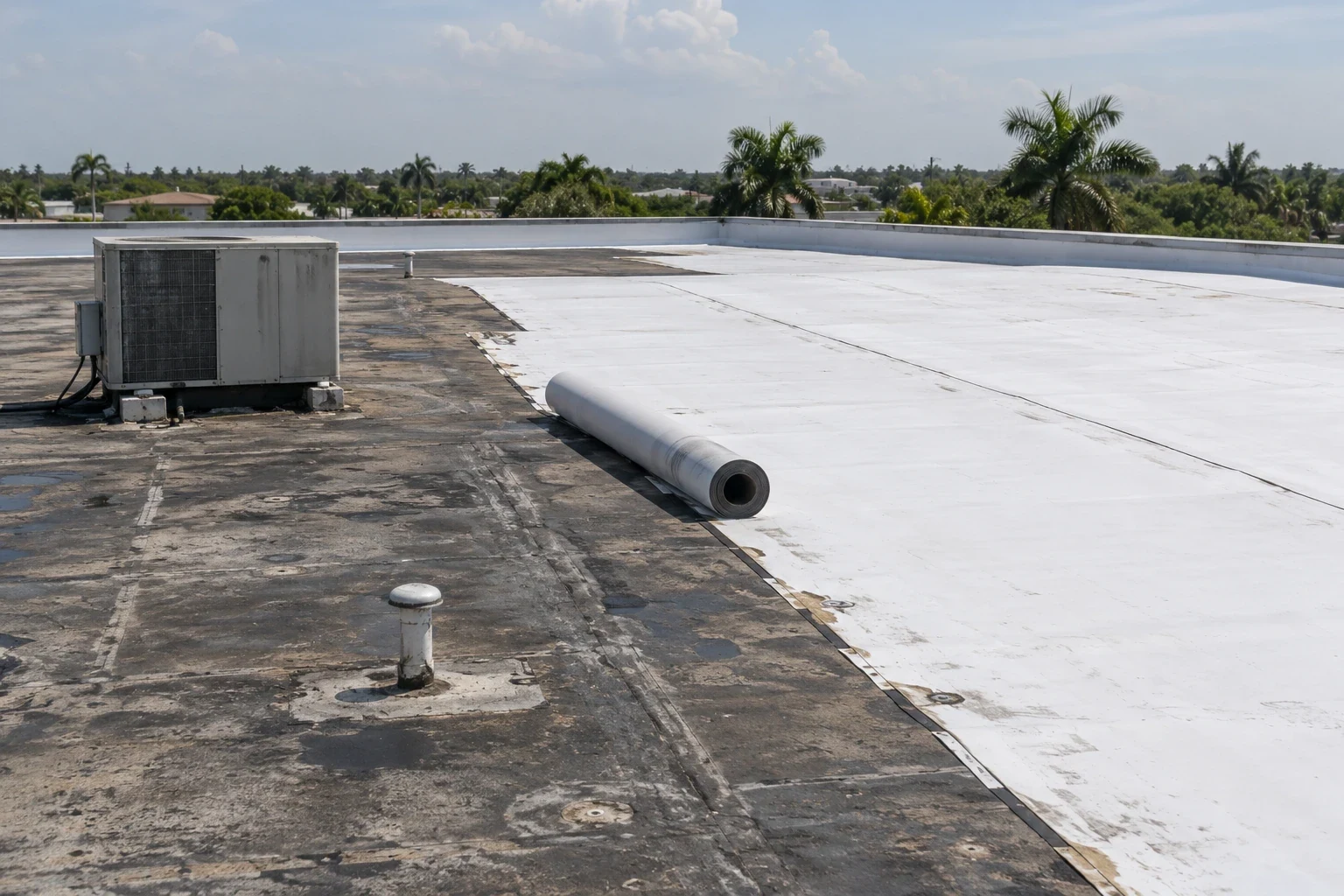
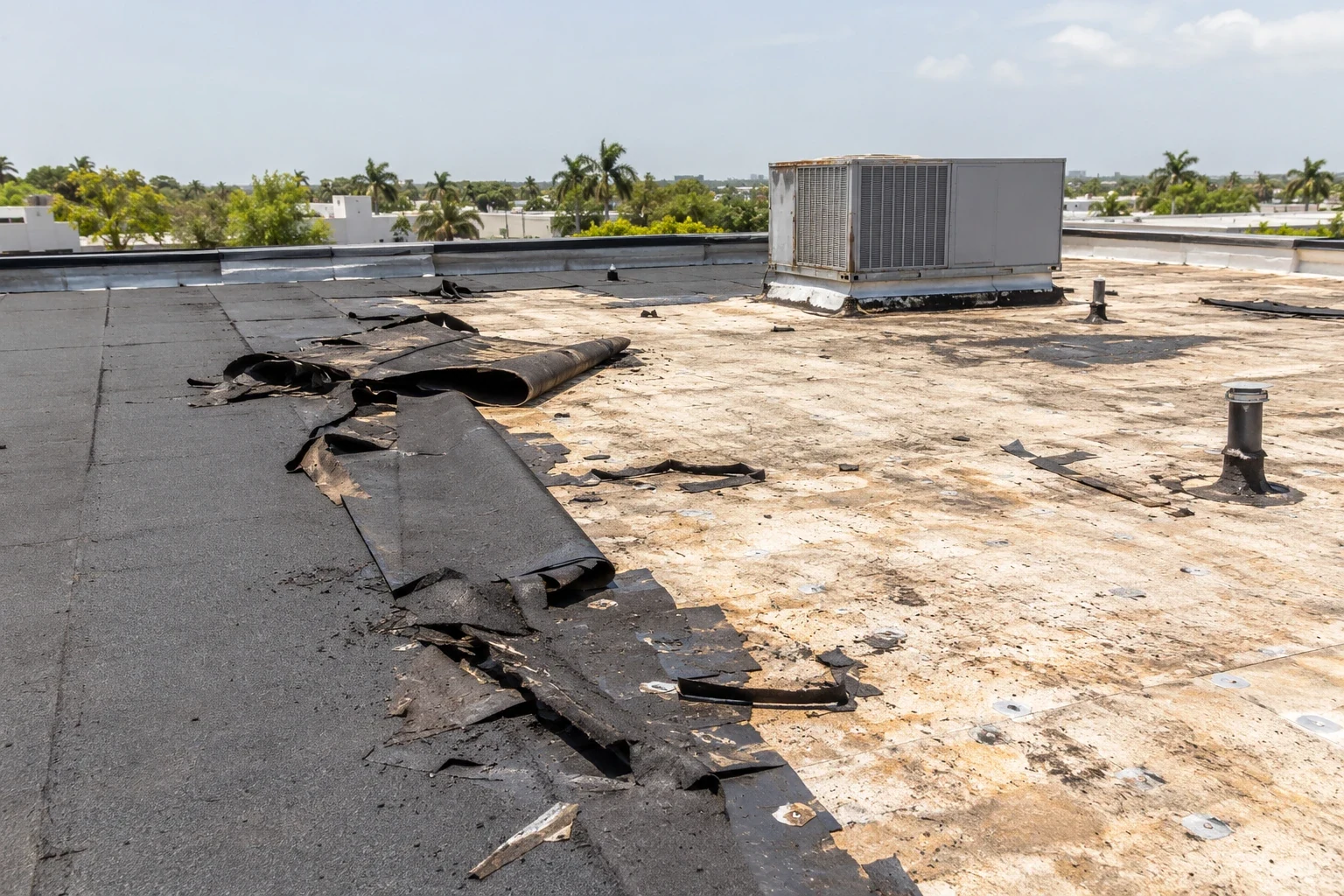
A leak repair fits a sound membrane with one local defect. A recover puts a new membrane over a dry roof and skips the tear-off. A replacement strips the roof to the deck and rebuilds the assembly; it earns its cost once moisture has reached the insulation or the deck shows damage.
Cost depends on roof area, access, the amount of insulation to replace, the number of penetrations and disposal. Timing depends on weather and tenant schedules. We put each path on paper with its scope and what it leaves open, so the owner can match it to a budget and a holding period.
One more factor is the building's use. A storage building can tolerate a short repair window and a patched roof for a season. A medical or food-service tenant cannot tolerate leaks at all, so replacement may make more sense even on a younger roof. Matching the scope to the cost of a failure inside the building is part of how we advise.
Membranes and Metal for Warm, Wet Conditions
Heat-welded single-ply membranes such as TPO and PVC are common on low-slope roofs because their seams fuse and their light surface reflects sunlight. EPDM is a rubber membrane that handles movement well. Modified bitumen and built-up roofs provide layered protection where foot traffic is heavy. Metal roofs shed water fast, and their life depends on fasteners, seams and coating condition.
Each system has places where it needs attention: TPO and PVC at welded seams and corners, EPDM at splices and flashing, metal at fasteners and laps. We choose based on what the deck and insulation can support and how the building is used, then detail the penetrations and edges with care since those are where most leaks begin.
Insulation and cover board deserve a line of their own. A new membrane over wet or crushed insulation will fail early, so we test and replace as needed. A cover board adds a firm, smooth base and helps resist foot traffic damage. Tapered insulation fixes ponding by building slope into the roof, and it is usually most practical during a replacement or recover.
Maintenance Visits and Neighboring Properties
A seasonal maintenance program clears drains, checks flashing and resets loose edge metal before storms, and each visit adds a dated entry to the roof record. Owners with buildings in Hollywood or Hallandale Beach can keep the same record format across properties. We also work in Hallandale Beach and Downtown Hollywood, so a manager overseeing several sites can compare roofs and spend on the worst first.