Need this roof reviewed?
Roof inspection, repair and replacement scopes for cities, counties and public agencies around Hollywood, FL, written for procurement review and public use.
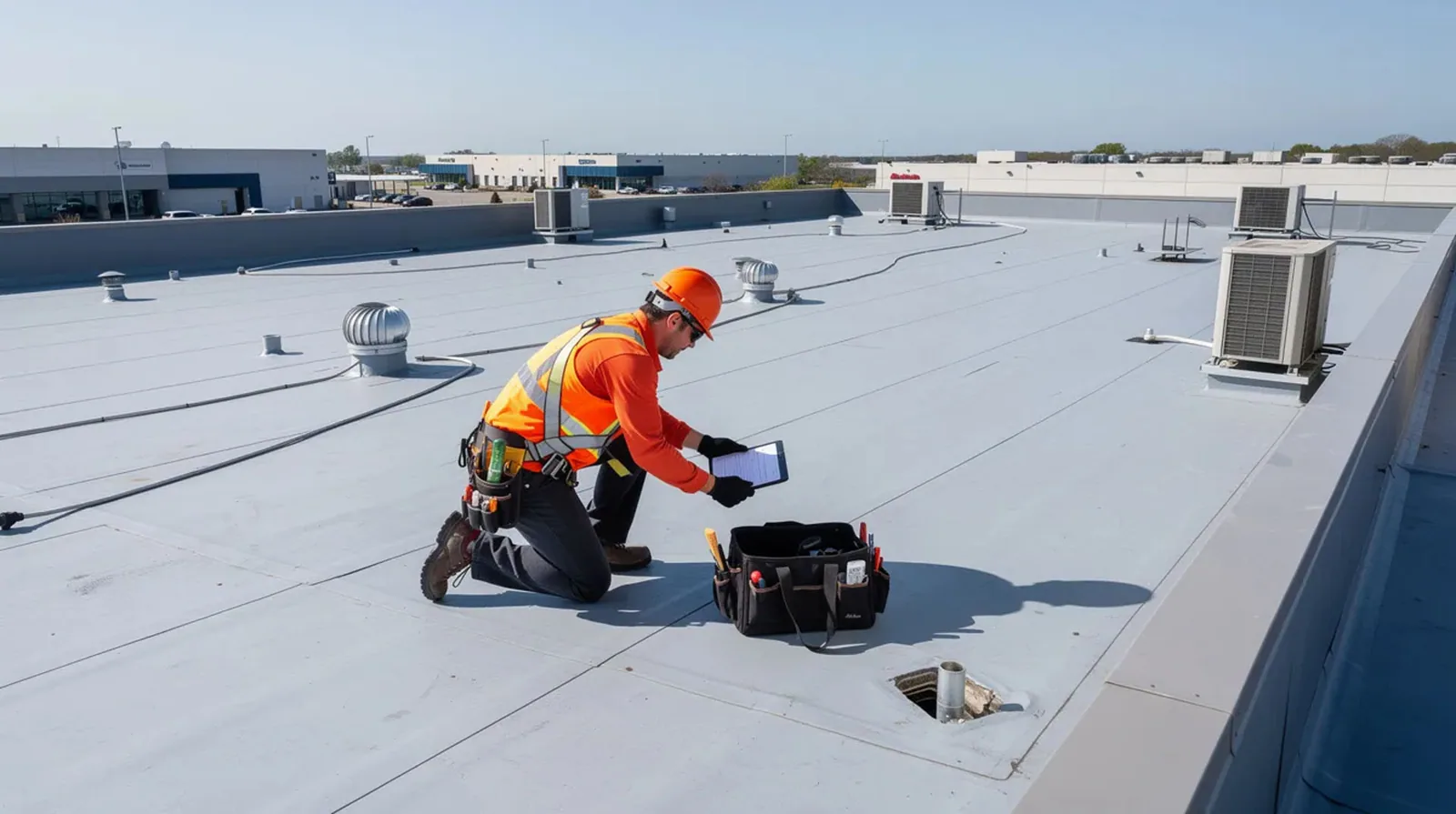
A public building roof has to answer to people who will never stand on it: a finance office, a procurement officer, a council, an auditor. Commercial Roofers Hollywood prepares roof inspections, repair scopes and replacement plans for cities, counties and public agencies around Hollywood, FL, with that audience in mind. The physical work is the same as for any commercial roof, with a membrane, drains, flashings and penetrations, but the record has to carry more: why a roof was repaired rather than replaced, what quantities were measured, which options were considered and what condition the roof was in on a given date. Each finding is a photograph, a location and a plain next step.
Scope language for procurement
Public buyers compare bids, and bids compare only when the scope is specific. A usable scope states roof area by zone, existing system and condition, proposed system and attachment, flashing and edge details, drainage changes, penetrations, access constraints, exclusions and the repair boundary for any partial work. Alternates are priced as separate items: added insulation, a recover versus a tear-off, a different membrane. We write the scope so the quantity behind each line can be traced to a photograph or a measurement, which makes it easier for a reviewer to challenge or accept an item. Agencies with their own specification format receive the content in that format, and the file keeps the original record beside it.
Change orders deserve a plan too. If the roof opens and reveals wet insulation or a damaged deck beyond the assumed quantity, the contract should state how it is measured and priced. Pricing added insulation or deck repair by the measured square foot, with a photograph for each area, keeps the project moving and the record clear.
Buildings with different public uses
Public inventories include offices, courts, libraries, community centers, recreation facilities, maintenance yards, fire and police stations, parking structures and utility buildings. Each has different hours, public access and risk. A permit counter or a records room cannot close for a roof, a fire station cannot lose its apparatus bay, and a maintenance yard may tolerate noise but not downtime for fueling. We describe each building's use in the roof record and rank findings by consequence, then schedule noisy or invasive steps in the windows the building can give. Public safety buildings may require escorts, background checks and restricted photography, and we settle those requirements before mobilizing.
Parking structures and utility buildings need a note of their own. A parking deck roof is a traffic-bearing waterproofing system, not a typical low-slope membrane, and a utility building may house equipment that cannot get wet. We state in the scope when a roof falls outside our low-slope and metal work, and where a specialist is needed, the schedule shows where that trade fits so the agency sees the whole project in one document.
Redevelopment areas and public programs
Hollywood's Economic Development office supports businesses and investors, its 2026 business resource guide lists help with permits and facade improvement grants, and Washington Park Industrial Area has its own redevelopment program with community input behind it. Nearby, the Opa-locka CRA covers about 514 acres in five primary districts, the Fort Lauderdale Central City CRA covers about 344 acres, and North Miami's NW 7 Avenue corridor initiative was structured around public-private partnerships for exterior improvement of commercial property. Public programs like these affect timing: a building in a redevelopment area may be repaired for a short horizon, while one with a long public use is a candidate for full replacement. The Opa-locka CRA is one example of a redevelopment district spanning downtown, industrial and commerce areas, and each of those areas needs its own roof plan.
Flood elevation, storms and continuity
Buildings in a FEMA Special Flood Hazard Area, a designation covering over 11,000 properties citywide, must meet local flood-elevation requirements, and the city's vulnerability assessment also weighs sea-level rise, tidal flooding, storm surge and compound flooding. For a public building, those facts shape the roof plan: rooftop equipment placement, drainage that does not rely on blocked outlets, and a storm checklist for continuity of service. Inspections and drain clearing are scheduled ahead of mid-May, when the stormiest stretch of the wet season begins. After a storm, buildings that serve emergency functions are inspected first.
Permits, inspections and closeout
In Hollywood, plan review and inspection of methods and materials sit with the Building Division, which applies the Florida Building Code, 8th Edition (2023), and city ordinances. Other agencies in the region have their own review paths. We confirm the applicable path for each building and date before work begins, and we keep permits, inspections and approvals in the closeout file with photographs, product data and drawings. A closeout that a successor can read without the original project manager is the goal. For agencies with many buildings, roof asset management keeps the records current from year to year.
Maintenance programs that fit public budgets
Public maintenance money arrives on a fiscal calendar, not a weather calendar, so a roof program has to be sized to fit. A preventive roof maintenance visit before the wet season clears drains, resets loose flashing and photographs transitions, and a visit after it records ponding depth and new staining. The cost of those visits is small next to a failed roof, and the dated photographs they produce are the evidence a department head needs when asking for capital. A roof condition report then summarizes the findings across the inventory, ranking buildings by consequence and condition.
Small repairs can be bundled into an annual work order, with unit prices for drain cleaning, flashing resealing, pipe boot replacement and seam repair, so that routine items do not require a new procurement each time. Larger scopes, such as a recover or replacement, are planned a year ahead, with design, permitting and material lead times built into the schedule. The inventory shows which buildings are likely to need them, and in what order.
Where grants or programs fund building improvements, as Hollywood's business resource guide lists for commercial-property facade work, the roof record helps show what the building needs and what has already been done. It is also the document a new administrator reads on the first day.
Working with schools and other public owners
Public owners often share contractors, calendars and budget processes. Schools raise their own constraints, which school districts face every summer, and health agencies raise others, as with healthcare systems. A county that operates both a courthouse and a clinic will want the same scope format for each and different access plans. We keep the format constant and change the access plan to suit the building.
Related Roofing Topics