Need this roof reviewed?
Commercial roof repair, replacement and planning across the Opa-locka CRA districts in Opa-locka, FL, from downtown buildings to the industrial area.
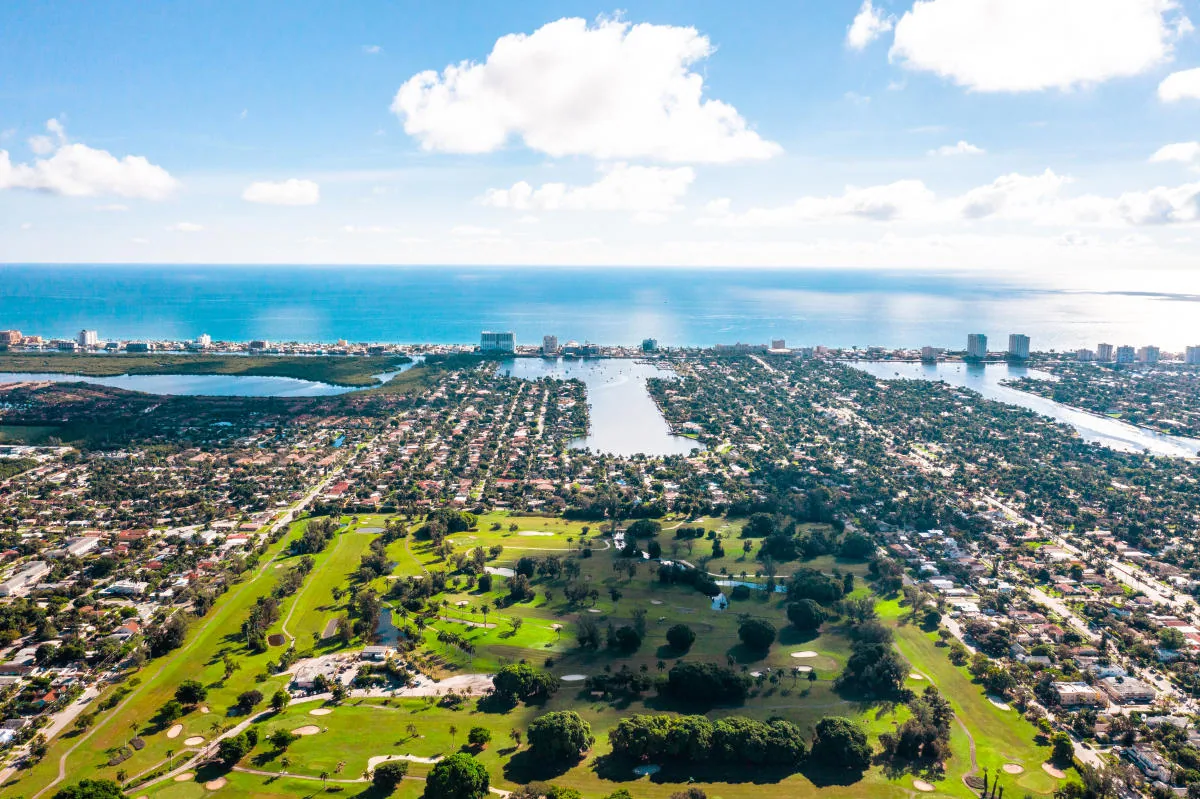
One community redevelopment area can hold a small commercial roof, a downtown building with a parapet and several tenants, and an industrial building with a long span and loading docks, and each one asks something different of a roofer. The Opa-locka CRA covers about 514 acres, roughly 18 percent of the City, with boundaries linked to NW 151st Street, the Tri-Rail and CSX corridor and a managed lake. It names five primary districts: Magnolia North, Magnolia Gardens, Downtown/City Center, the Opa-locka Industrial Area and the LeJeune commerce areas. We start a walk in any of them by sorting the roof by use, then by water path, so the plan matches the building and not the district label.
Five Districts, Five Kinds of Roof Question
The City's redevelopment work includes commercial, mixed-use, infrastructure and transportation improvements across these districts. For a roofer, that range means the questions change by district even when the climate does not. A commercial building in one of the Magnolia districts raises one set of questions, a building in Downtown/City Center may share walls and drains with a neighbor, and a roof in the Opa-locka Industrial Area raises dock, span and equipment questions.
We do not assume a roof type from a district name. The first visit records the use below each roof section, the age and repair history the owner can share, and the actual drainage, penetrations and edges. A district-wide pattern is not a substitute for what the roof shows.
The managed lake and the rail corridor that form part of the CRA boundary are reminders that edges of an area matter too. Properties near a boundary may face different deliveries, noise and access than ones in the middle, and we ask about those conditions when we set the work plan.
Heat, Rain and Transitions
At the Hollywood station August highs average 89.9°F, and June and September each carry more than eight inches of rain. Flat roofs feel those two forces at their transitions: wall bases, curb corners, pipe boots and the joins between roof sections. Heat opens them by thermal movement; rain finds them.
Per the National Weather Service, mid-May through early July is South Florida's stormiest stretch, with damaging winds, hail and flooding most likely. Those conditions are the reason to check edges, strainers, sealant joints and equipment covers before the season and to walk the roof again after a major storm, with photographs from the same positions each time.
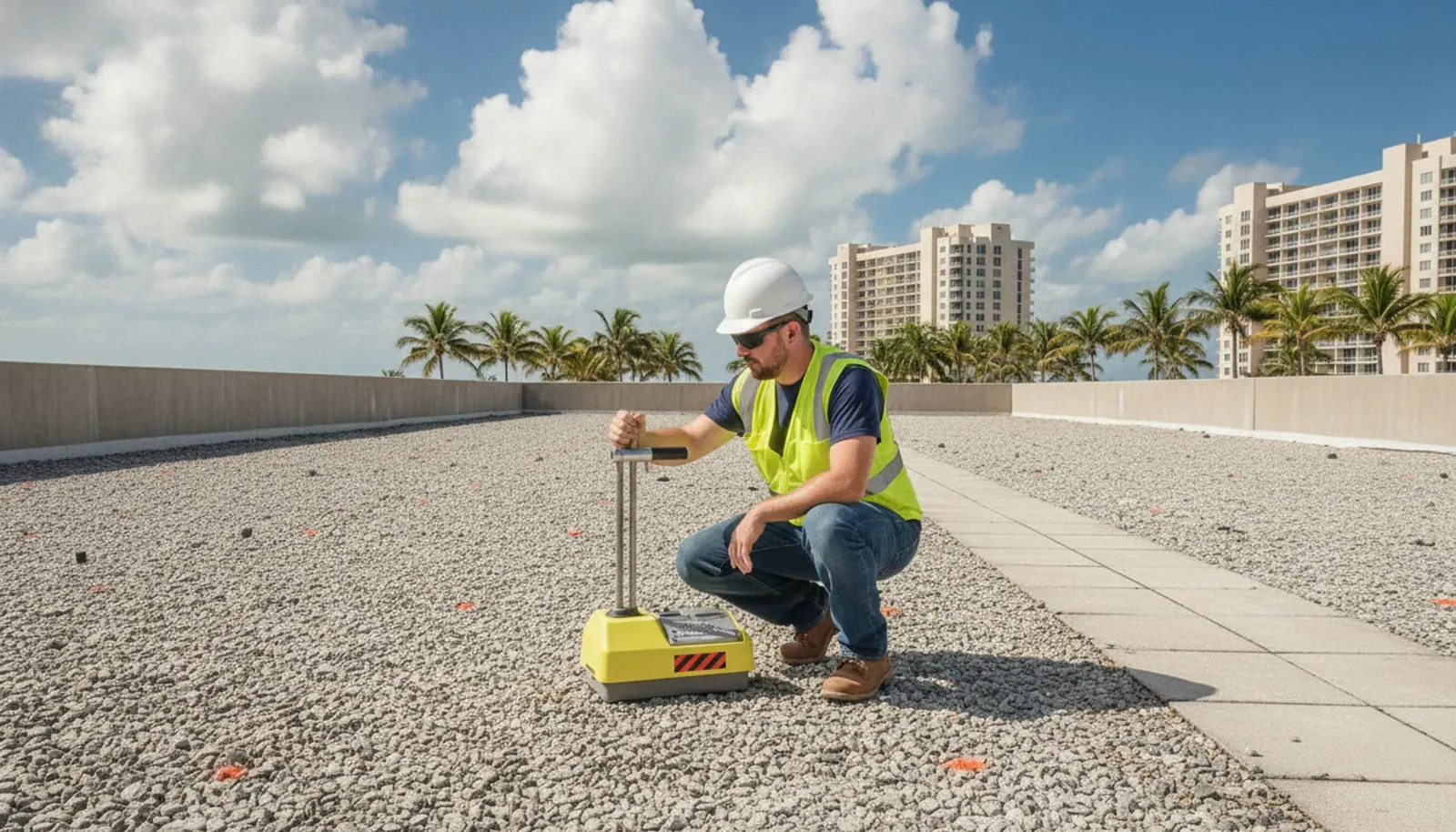
Drainage ties the two forces together. Every roof gets a check of strainers, scuppers and overflow openings, and ponding depth is measured after rain, because water standing a day after a storm shows where slope, outlet position or a sagging bay needs work.
The Walk by District Type
The same sequence applies everywhere, with emphasis changing by building. On a small commercial roof we concentrate on the parapet, the drain and the penetrations. On a shared downtown roof we add the party walls and the flashing along them. On an industrial roof we add the dock edges, the long runs of seam and any ponding between supports.
- Outlets, scuppers and overflow routes
- Walls, parapets and counterflashing
- Curbs, supports and added penetrations
- Seams, laps and prior patches
- Ponding depth and drying time after rain
When surface evidence is unclear, an infrared moisture survey marks wet insulation before anything is opened.
Tenant additions are common on commercial roofs of every size. Satellite mounts, exhaust fans, signage brackets and conduit supports each pierce or load the membrane, and we list them on the roof plan with the flashing condition at each.
Choosing a Scope That Fits the Building
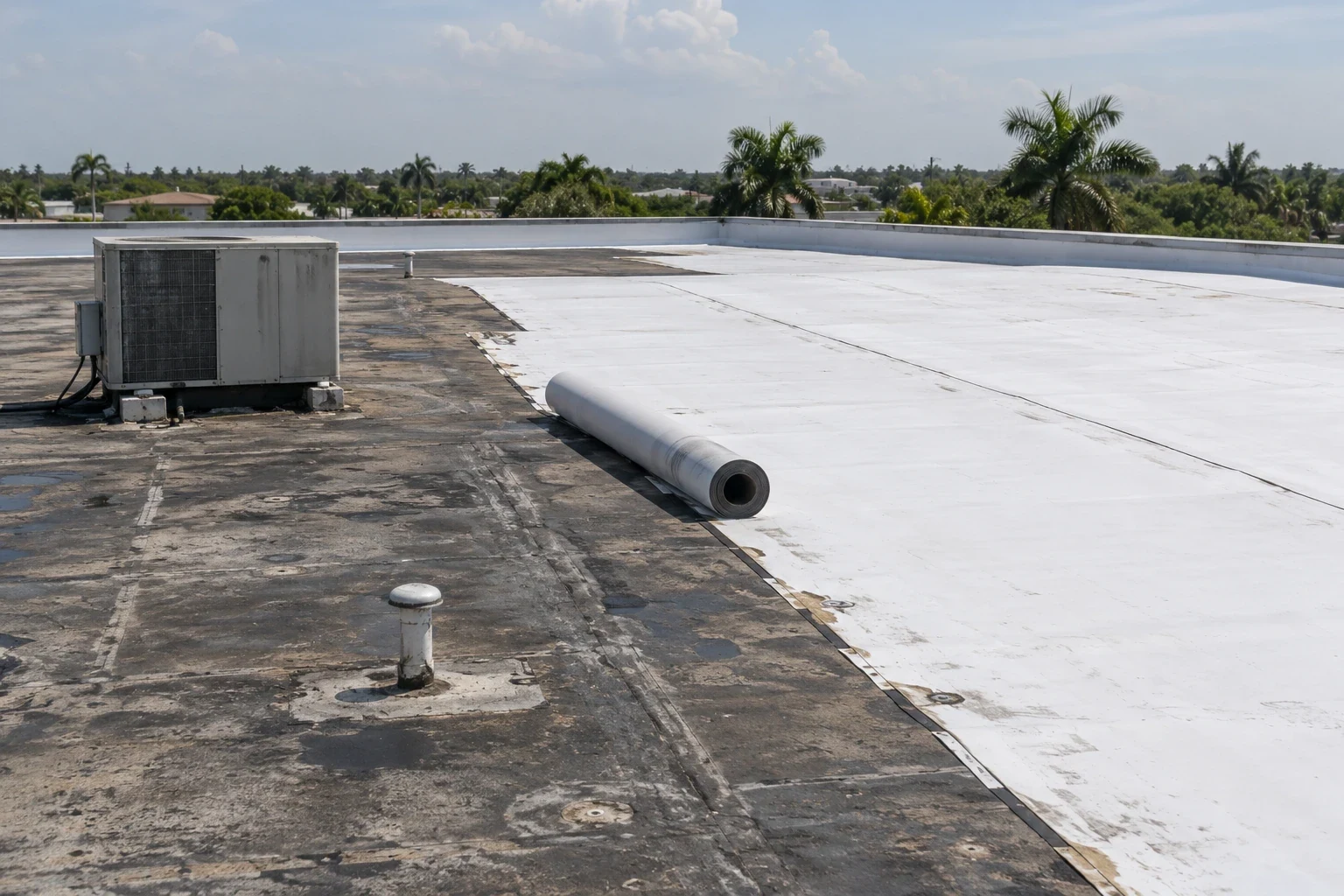
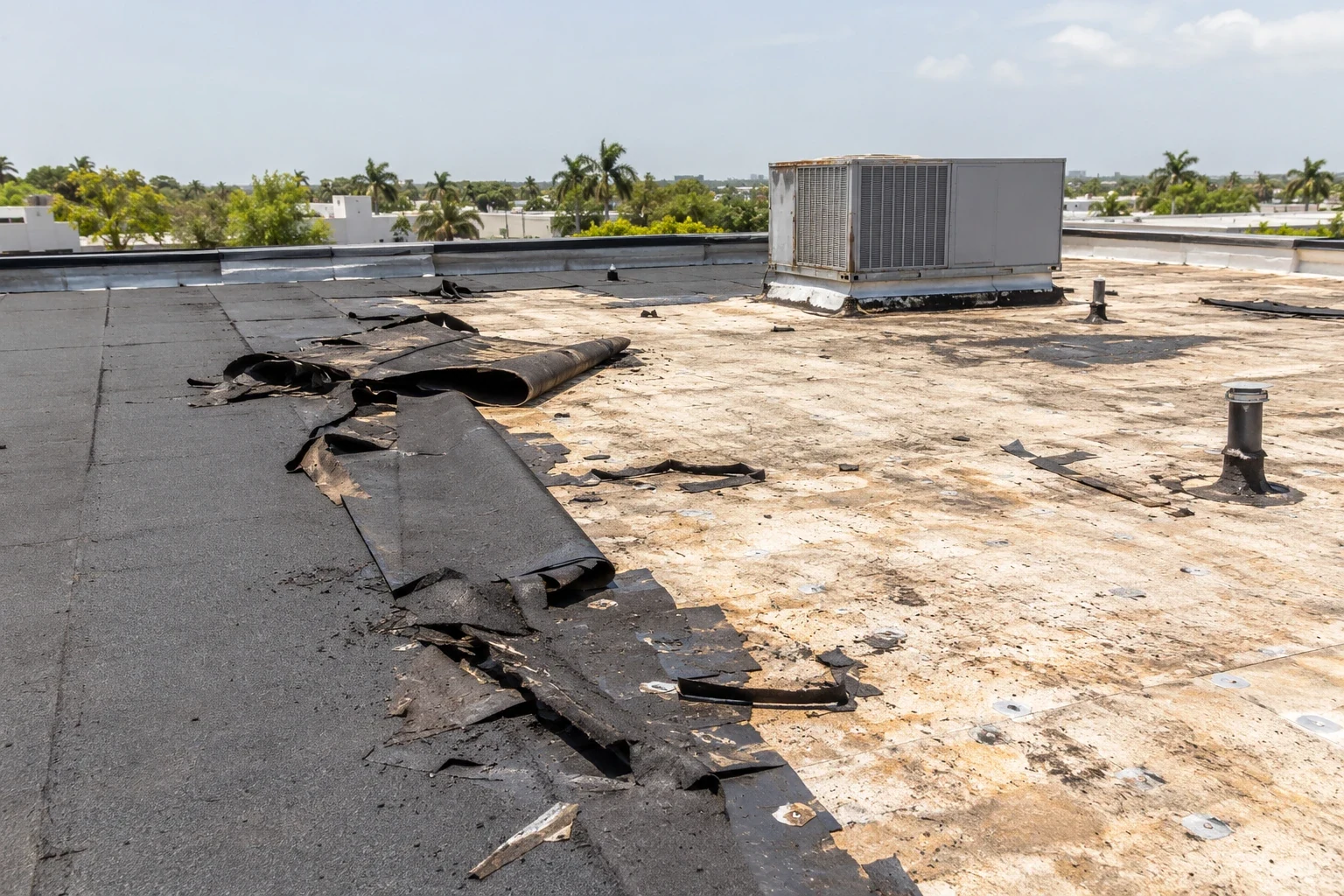
A defect on a sound roof calls for repair. A dry, attached membrane with worn surface may take a coating once seams and flashings are repaired. When insulation is wet or leaks return at the same details, a recover or replacement is the next question, and the layers show.
In a redevelopment area the owner's plans matter as much as the roof. A building that may change use or ownership is a candidate for a targeted repair that holds it through the decision; one the owner will hold is a candidate for a full replacement with drainage corrected. We write both routes in the proposal, with the evidence for each and the cost drivers named: access, roof area, penetrations, wet-area extent and tenant schedule.
Working Beside Infrastructure and Rail
The CRA's work includes infrastructure and transportation improvements, and its boundaries are linked to the Tri-Rail and CSX corridor. Roof work near active construction or rail needs a plan for dust, vibration, lane closures and delivery timing. We ask the owner and the manager about nearby work, choose lift positions and routes that avoid it and schedule noisy tasks outside tenant peak hours.
An occupied building is reroofed in sections that dry in daily. Interior protection is placed before any ceiling is disturbed, and the manager gets a daily plan listing the work area, the hours and a contact.
Records, Permits and Multi-Building Owners
Reroof permits are checked locally against the 2023 eighth edition of the Florida Building Code, effective December 31, 2023. We keep stage photographs and a note on what came off and what went.
An owner with several buildings across the CRA, or with property in Miami Gardens or Lauderdale Lakes, can use a multi-site roof program to rank buildings by condition and consequence. A preventive maintenance plan between projects keeps the drains and flashings in order.
A short list of watch items goes with each record, such as a lifting lap, an aging boot or a drain that held water after rain, so a later visit begins with what was seen last time.
What to Send Before the Visit
A roof plan or sketch, the dates and rooms of leak reports, repair invoices and a tenant list shorten the first walk and sharpen the report. If the owner knows of planned changes in use, ownership or nearby construction, tell us, since they affect whether a repair, a coating or a replacement fits.
We also ask about access: the hatch or ladder, lift positions, hours when the building is quietest and any area that needs an escort. The written findings then separate immediate protection from planned work and show the options side by side.
Related Roofing Topics