
Need this roof reviewed?
Sika Sarnafil PVC roofing in Hollywood, FL: weld testing, clad-metal edges, liquid-applied details and repair of aged membranes in strong heat and heavy rain.
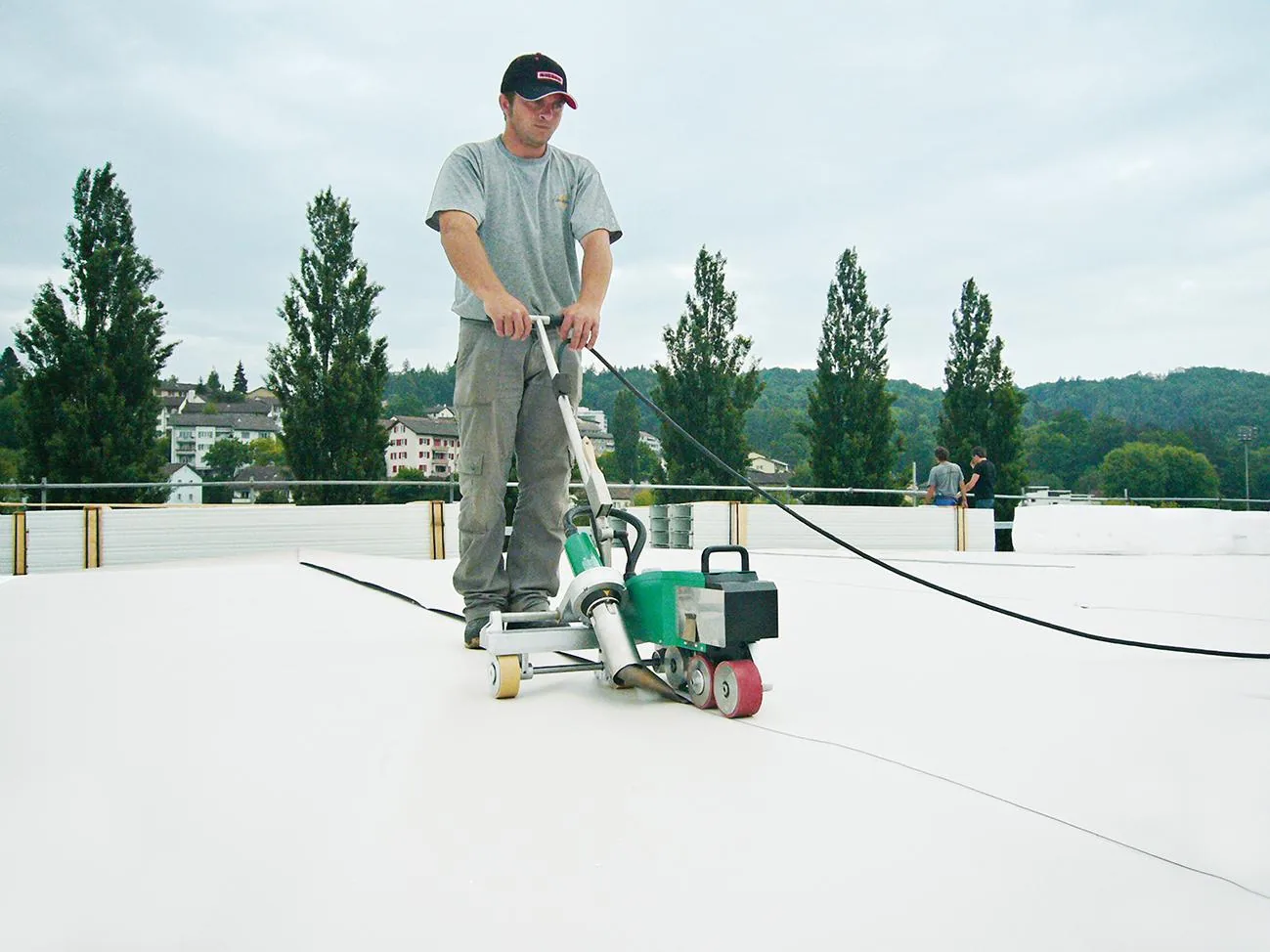
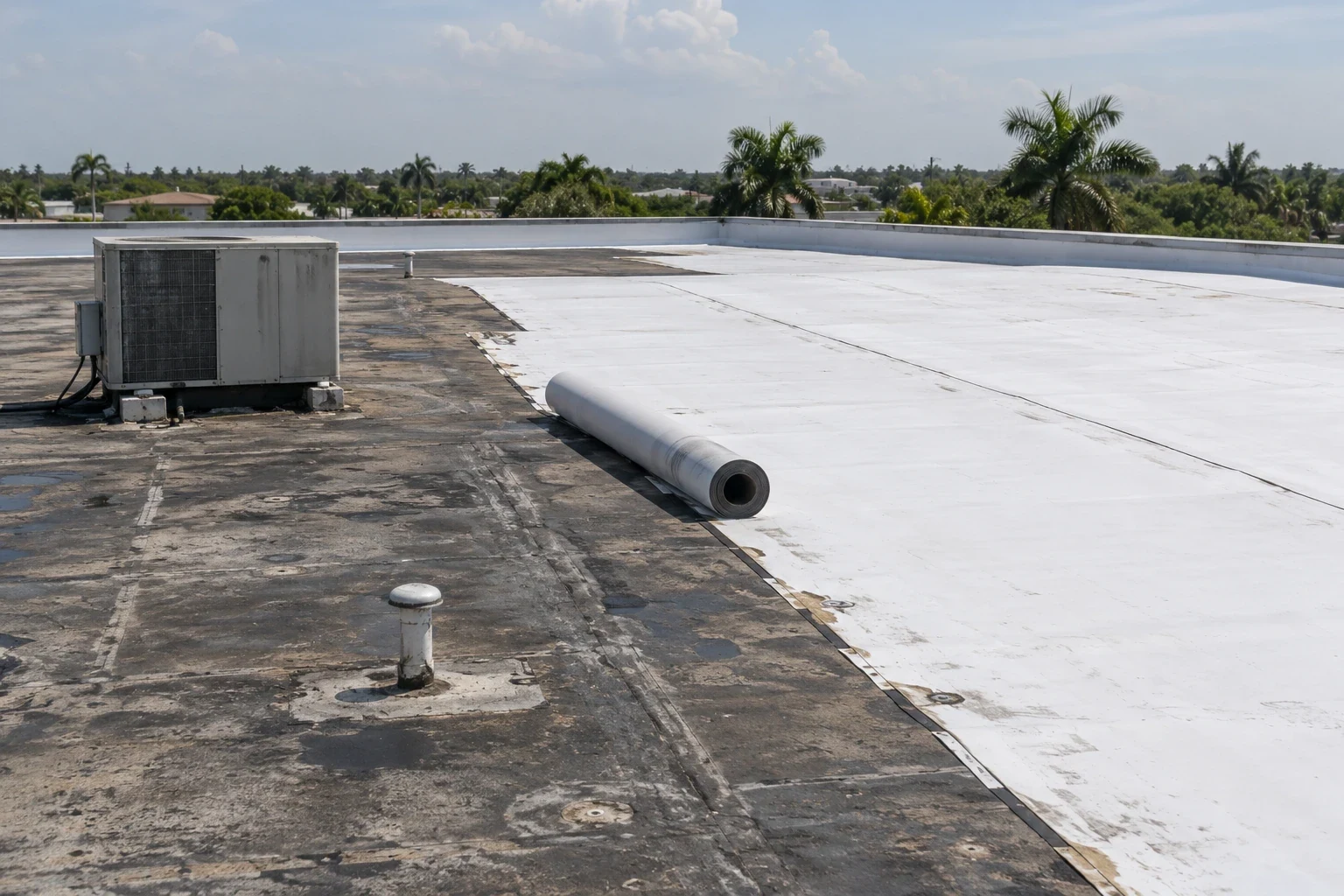
A PVC sheet that has been in the sun for many seasons may look unchanged and still refuse to weld, which turns a routine repair into a question about the surface. Sarnafil is the PVC single-ply line from Sika, welded with hot air at the seams and flashed with pieces cut or formed from the same family of materials. Weld quality, surface condition and drainage are the questions that matter for PVC in Hollywood, FL, where August highs run near 90 degrees and the wet season brings heavy rain. We test the seams, test the sheet's weldability and test the water path before a scope is written.
Sarnafil PVC sheet, accessories and liquid-applied details
Sika's commercial roofing range centers on Sarnafil thermoplastic PVC membranes, in reinforced sheets that may be mechanically attached, adhered or installed under ballast, and on accessories made for the system: prefabricated corners and boots, PVC-clad metal for edges and terminations and a membrane-compatible cement. Sika also makes liquid-applied products such as Sikalastic, which can detail irregular penetrations where a sheet is difficult to fit.
Our PVC roofing work uses the system's own accessories where they exist, since a mismatched part at a corner or a curb is a common source of early leaks. We identify the sheet and the accessories on an existing roof before choosing any repair material.
Attachment methods leave different signs. A mechanically attached PVC sheet shows ridges and fluttering along plate lines when fasteners back out, an adhered sheet shows bubbles where the bond failed and a ballasted sheet shows shifted stone and exposed membrane. We read the signs first, because they point to the cause of a leak faster than the stain below.
Product data and installation records help identify an unmarked roof. A roof with no remaining papers can still be read from seam pattern, thickness, reinforcement and accessory style, and we record the conclusions with a confidence note so a later reader knows what is confirmed and what is inferred.
Weld probing and weldability testing
Every seam on a PVC roof is a hot-air weld, and its quality shows at the edge. A good weld flows evenly and leaves a bead; a poor one shows gaps, skipped areas or a ridge where sheets failed to fuse. We run a probe along each lap and mark open or soft segments with their length.
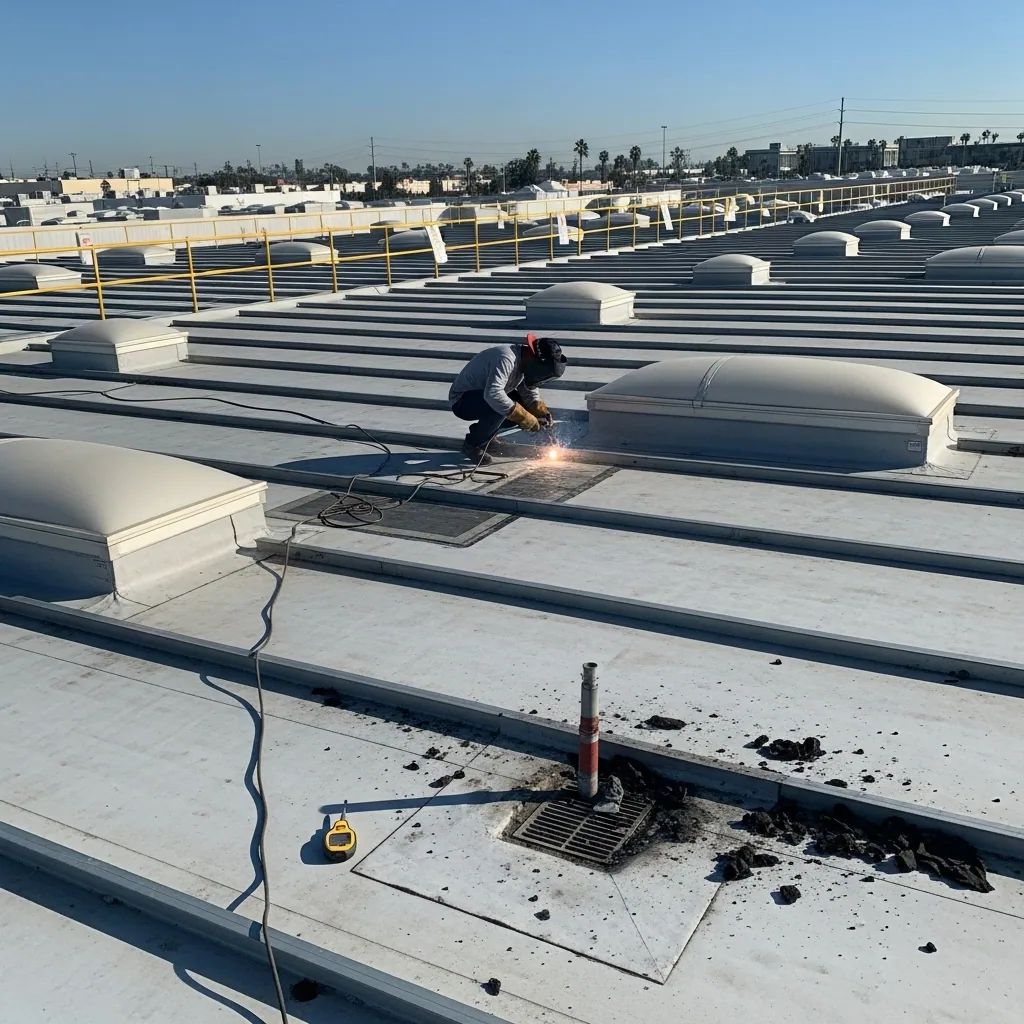
Before repairing an aged sheet, we also test weldability on a small area. Dirt, weathering and residue can keep new material from fusing with the old, and a patch that looks neat can peel within months. If the sheet welds, we clean and weld a patch past the damage. If it does not, cleaning, a different preparation or a liquid-applied detail may be needed, and in some cases section replacement is the better path.
Temperature and moisture limit when a weld can be made. A damp sheet, a wet substrate or a cold surface produces a weak joint, so weld repairs are scheduled for dry, clean conditions and tested after they cool. During the wet season we schedule open-roof work for gaps between storms and close off every exposed area before the crew leaves each day.
Clad-metal edges, terminations and wall details
PVC-clad metal flashings give a roof edge a surface that welds to the membrane, which reduces the number of sealant joints at the perimeter. They still depend on solid fastening and clean laps. We check edge cladding for lifting, open joints and movement, and look at terminations at walls and curbs for lost sealant or loose bars.
Wind loads concentrate at perimeters and corners, and the National Weather Service lists damaging winds, tornadoes, hail and flooding as most likely between mid-May and early July, the stormiest phase of South Florida's wet season. A seasonal preventive roof maintenance walk tightens what has moved before that phase begins.
Walkways and traffic paths also use PVC. Sheet-type walk pads welded to the field protect the membrane where technicians visit, and a path of pads from the hatch to each unit prevents wear at the same seams. We map the route and log the pads.
Corners at parapets receive extra attention. Four surfaces meet in a small space, and a prefabricated corner has to fit the actual wall, not the drawing. We check the fit, the weld around the corner piece and the termination above it, since that is where heat movement and wind-driven rain meet.
Heat, rain and the drainage plane
The August daily high at the Hollywood station averages 89.9 degrees, and June and September rainfall sits near 8.8 inches in each month. PVC tolerates standing water better than some sheets, but a weld under constant water carries stress and a clogged drain turns a normal storm into a long soak. Ponding depth and duration are measured, and each outlet, scupper and overflow opening is checked for flow.
Roofs close to the Atlantic, including those in the Hollywood Beach business district, get the same review, with extra attention to how outlets discharge. The City's flood information gives particular attention to areas east of US-1, which concerns ground exposure and not the roof, but it is a reminder that the drainage plane is the part of the building that has to keep working when everything else is wet.
Roof drains need the membrane to turn into them cleanly. At each drain we check the flange, the clamping ring and the cut edge of the sheet, because a drain that looks clear can still leak at its collar. The finding is photographed with enough roof around it to locate the drain later, and any correction is logged beside the date.
Recover, replacement and the permit
A new PVC sheet can sometimes be laid over an existing roof, provided the old assembly is dry, sound and compatible, and the structure can carry the added layer. We cut test openings and check moisture before recommending a recover. Where the existing roof fails, a tear-off follows. Reroofing in Hollywood is permitted through the Building Division under the Florida Building Code, Eighth Edition (2023), so we confirm attachment and product documentation before filing.
Owners comparing PVC suppliers can review Duro-Last for prefabricated sheets and Versico for other single-ply options, using the same criteria: weld method, accessories, repairability and upkeep.
Records close the loop. The warranty document spells out the conditions for a particular roof, so we request it, list what it requires and keep a dated file of every repair and maintenance visit. The roof, not the brand, is what decides the plan.
Related Roofing Topics