Need this roof reviewed?
Duro-Last prefabricated PVC roofs in Hollywood, FL: field seams, fasteners, factory-made flashings and aged-sheet repairs, checked for heat, rain and drainage.
On a Duro-Last roof, the few seams that were welded in the field carry far more weight than their number suggests, because everything else arrived as a factory-made panel. The system uses PVC membrane cut and welded into custom sections at the plant, then rolled up, delivered to the roof and joined along the remaining seams. In Hollywood, FL, those panels work under an August average daily maximum near 90 degrees and a wet season that puts heavy rain on every drain, so field seams, fastener lines, flashings and ponding are where an inspection begins. We read a Duro-Last roof by its field welds and its details before anything else.
Prefabricated panels and fewer field seams
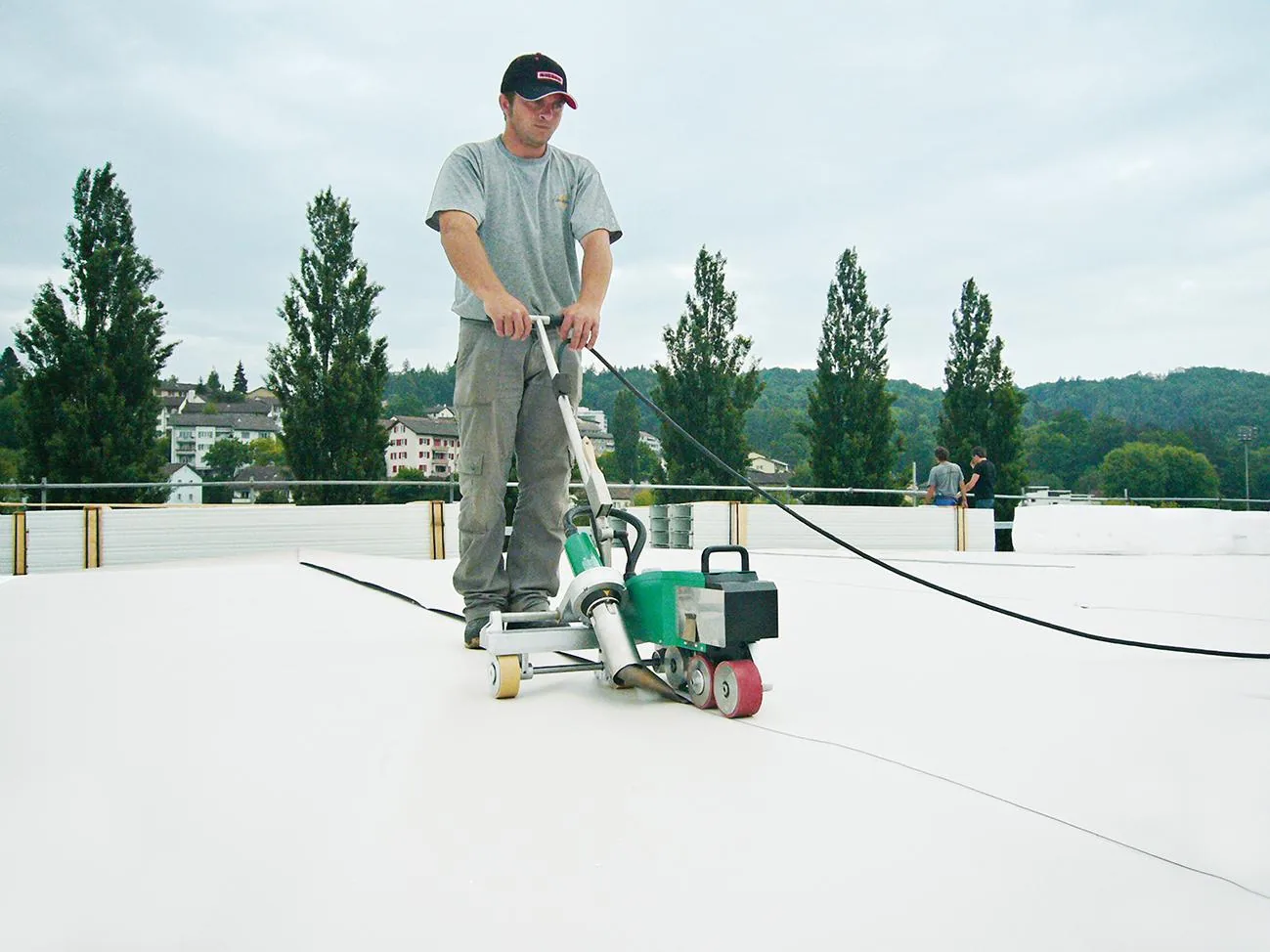
The idea behind a prefabricated PVC roof is to move as much welding as possible into a controlled factory setting. Panels are cut to the roof's dimensions, and flashings for pipes, corners and curbs are made in advance to fit. On the roof, the crew unrolls panels, attaches them and welds the remaining seams with hot air.
The consequence for an inspector is clear. Factory seams are made in good conditions, and field seams carry the variable quality of work on a roof. We probe every field weld along its length and look hard at the junctions between panels, at corners and around penetrations. Our PVC roofing work uses the same probing method on every PVC family, with adjustments for the system's layout.
Panel layout is worth sketching. A roof drawing that shows each panel, each field seam and each fastener line lets a later inspector go straight to the seams that matter, and it shows where the sheet changes direction. When no drawing exists, we create one during the first walk and keep it with the photographs.
Fastener lines, plates and the deck
Prefabricated PVC panels are typically attached with fasteners and plates along lines near the seams, with details at perimeters and penetrations. A fastener that has backed out raises the plate and lets the sheet flutter, which wears the membrane from below. We look for ridging, plate lines showing through the sheet and fasteners standing proud of the surface.
We also test pull-out resistance at sample locations, since a deck that cannot hold fasteners will not be cured by adding more. Perimeters and corners see the strongest wind uplift, and the National Weather Service describes damaging winds, tornadoes and hail as most likely in mid-May through early July, the stormiest phase of South Florida's wet season. Edge conditions get a close look before and after that phase.
Perimeter details are checked alongside the field. Edge metal, coping and terminations hold the sheet at the parapet and the roof edge, and a loose cap or open joint lets wind lift the membrane there. We tighten or replace what has moved and log the work.
Repairing punctures, seams and aged sheet
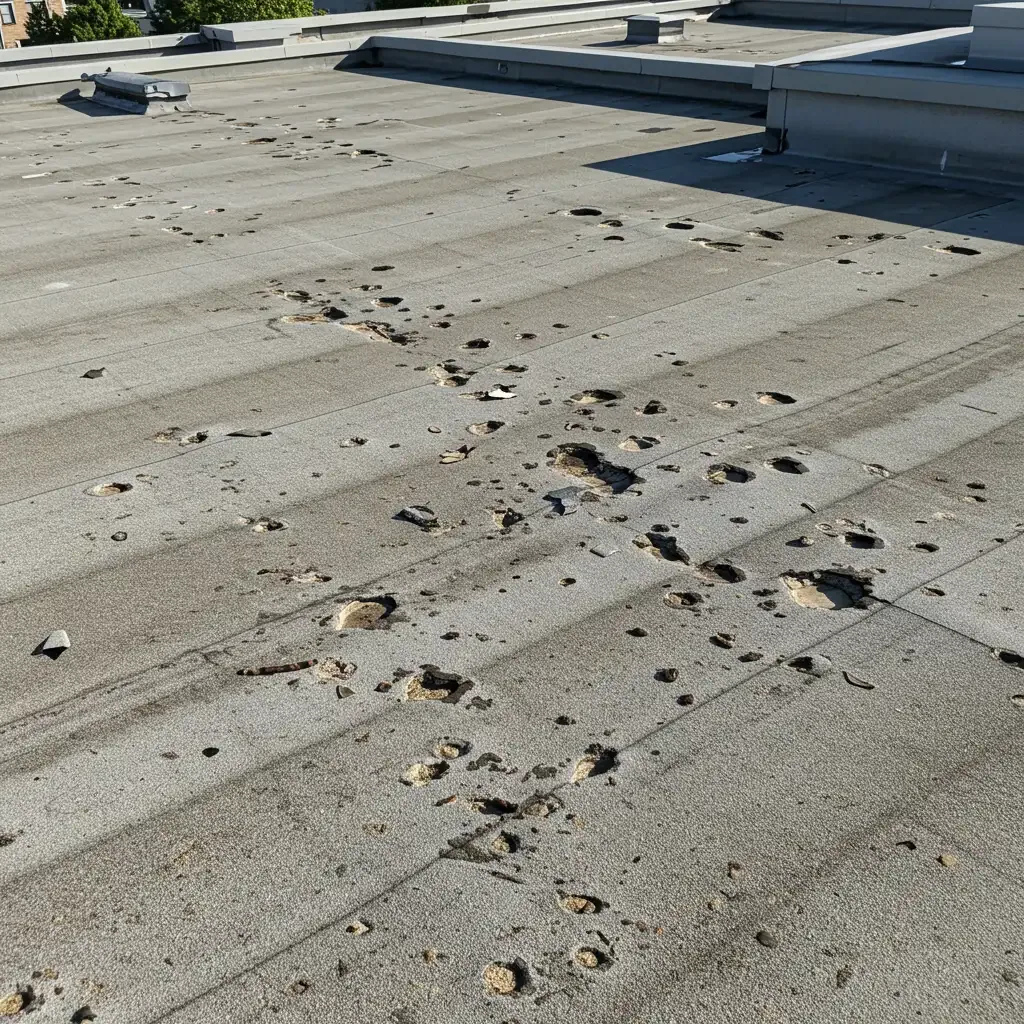
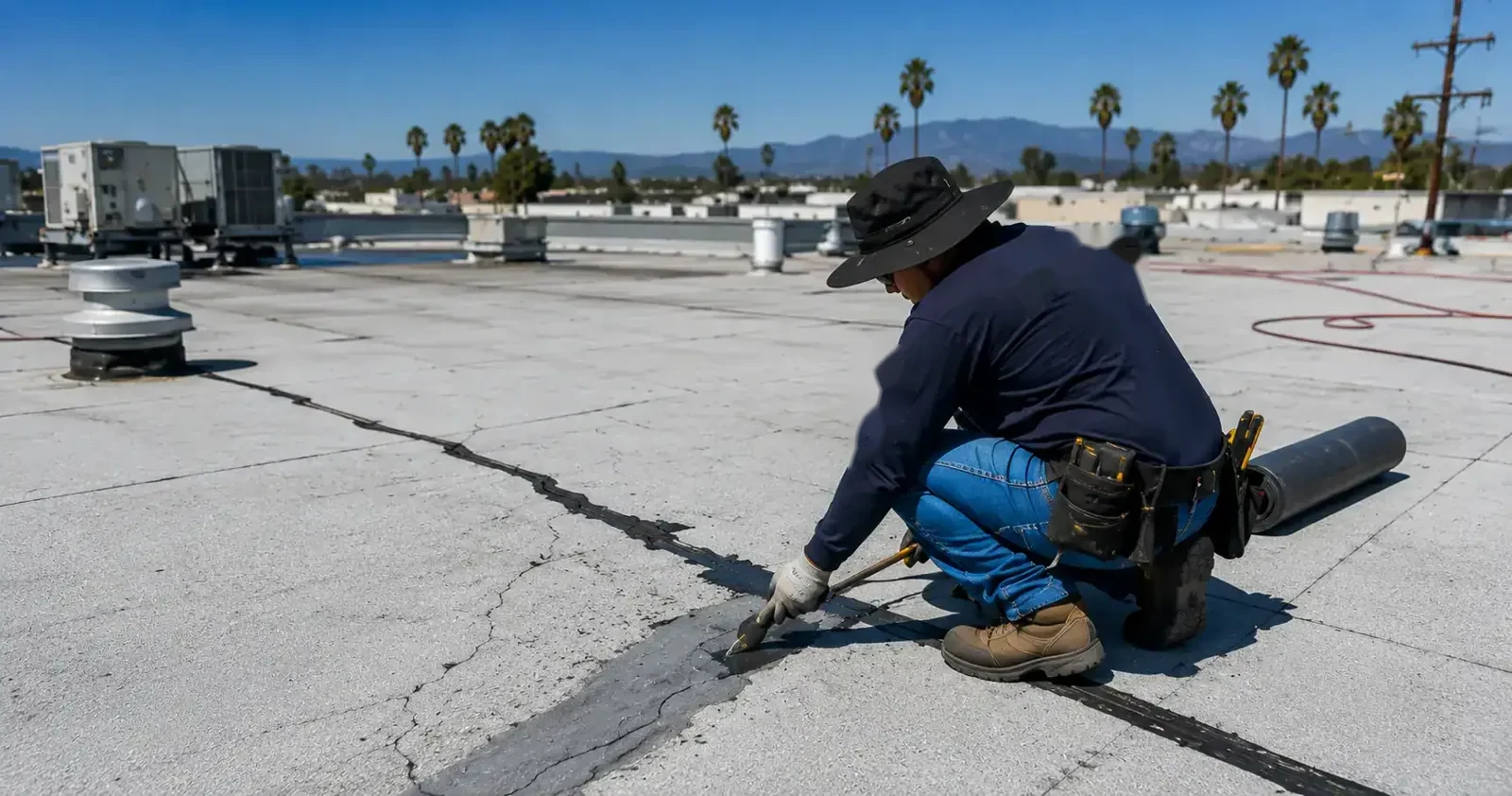
A puncture in PVC is repaired with a cleaned, prepared and welded patch that extends past the damage. A weak field seam is cleaned and re-welded or capped. Our membrane puncture repair follows that approach and records the location.
Aged sheet needs a test first. Weathering, dirt and residue can keep a new patch from fusing, so we try a small weld on an inconspicuous area before committing to a larger one. If the sheet does not weld, the options include cleaning with an approved cleaner, a different patch method or section replacement. A repair that looks tidy but never fused will fail within a season, and the test prevents it.
Cleaning is part of repair. Grease from kitchen exhaust, dirt and chalking all interfere with welding, so the repair area is cleaned to a bonded surface before any patch goes on. If a stain cannot be removed, the patch material and method are chosen to suit it.
Factory-made flashings and what changes after installation
Factory-made boots, corners and curb flashings fit the dimensions given at the time of ordering. When a unit is later moved, a pipe added or a curb enlarged, the original piece may no longer fit, and a field-made substitute becomes the weak point. We compare each flashing with the penetration it serves and flag any that no longer match.
Where equipment changes are planned, the roof record helps: it shows what flashing exists, who installed it and when. Our work on commercial roof leak repair starts by checking for these mismatches, because a flashing that no longer fits is a ready-made leak path. Termination bars and sealants at walls are examined in the same pass.
Photographs of each flashing, taken from the same position at each visit, make change visible. A boot that is cracking, a corner that is opening or a bar that has lost its sealant shows up in the sequence long before it leaks, and the owner can schedule the fix during a planned visit instead of an emergency one.
Heat, ponding and rainfall
NOAA normals at the Hollywood station put June and September precipitation near 8.8 inches each, and the August average daily maximum at 89.9 degrees. PVC tolerates standing water better than some membranes, but a field seam under constant water carries stress, and a blocked drain converts a normal storm into a long soak. We measure ponding depth and duration, clear outlets and check overflow openings.
For roofs near the Atlantic, such as those in the Hollywood Beach business district, the review is the same, with attention to how scuppers discharge. A scheduled preventive roof maintenance visit before the stormy phase keeps drains and edges ready.
Downtown Hollywood and Johnson Street roofs get the same routine as any other: drains first, then field seams, then edges and flashings. The City lists a variety of commercial settings, and each roof is read on its own condition and recorded.
Warranty papers and comparison with other PVC makers
A manufacturer's warranty carries conditions for approved procedures, notice and maintenance, so we ask the owner for the document and list its requirements in the file. Questions that depend on the manufacturer's own approval go from the owner to the manufacturer, and we supply the roof facts: location, cause, photographs and condition.
The Florida Building Code, Eighth Edition (2023), applies to reroofing in Hollywood and the Building Division reviews plans. Owners weighing a replacement can compare PVC from Sika Sarnafil and other single-ply sheets from Versico on seam method, accessories, repairability and upkeep.
A short list of what to keep: the roof drawing, panel layout if available, product data, repair invoices, warranty papers, photographs and the maintenance log. The list is filed once and updated after every visit, so any manager or lender can read the history in minutes.
Related Roofing Topics

