
Need this roof reviewed?
Commercial roof repair, replacement and parapet work along the NW 7 Avenue corridor in North Miami, FL, coordinated with exterior improvements.
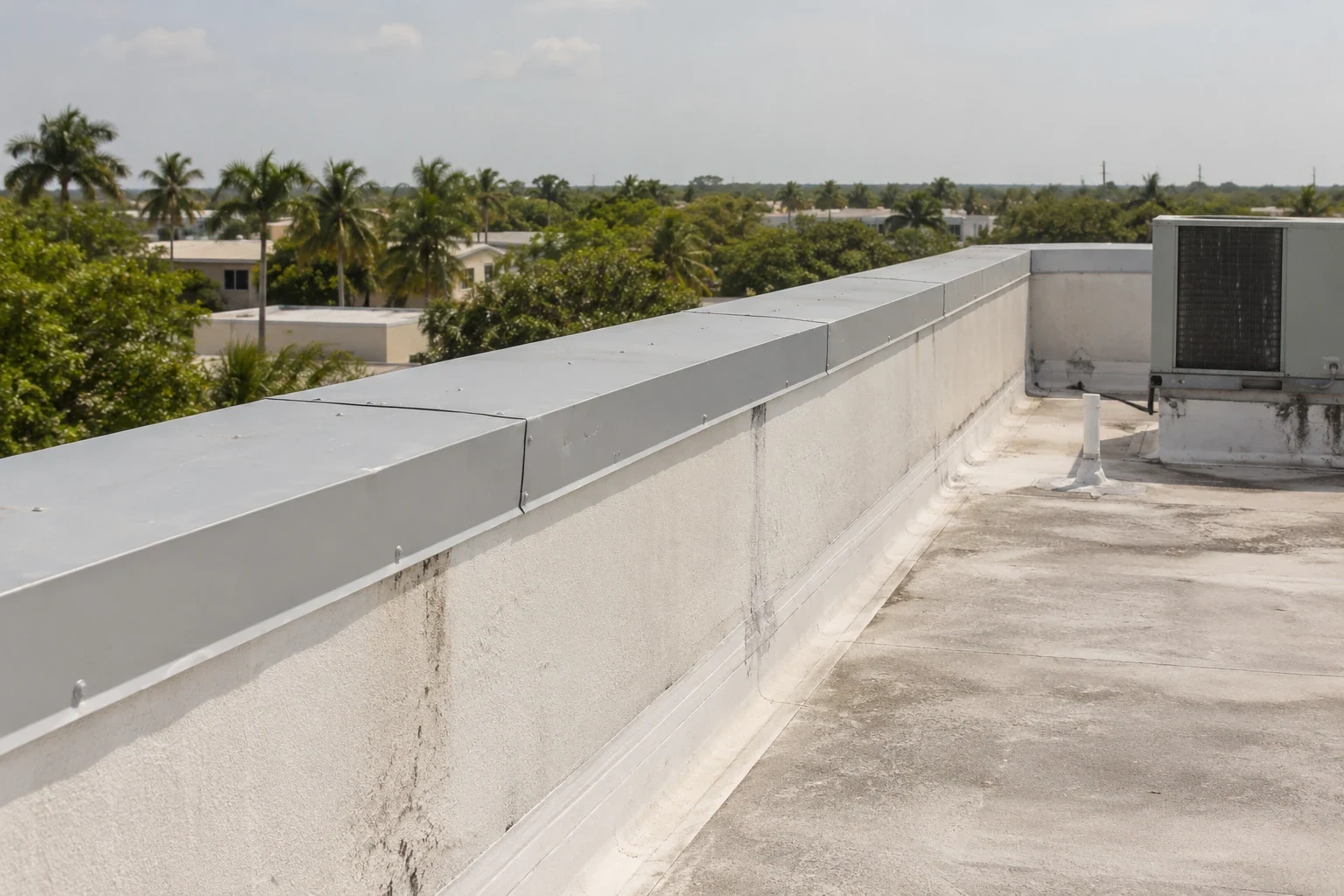
A new facade on a storefront puts the parapet above it on display, and the parapet is the first piece of the building to show whether the roof edge was ever finished properly. North Miami identifies the NW 7 Avenue commercial corridor between NW 119th and NW 143rd Streets, and its corridor initiative was structured around public-private partnerships for commercial-property exterior improvement. Exterior work and roof work meet at the same place: coping, flashing, scuppers and the top of the wall. We bring that point to the first walk, because a freshly painted wall with a leaking cap or a loose gutter will stain, swell and crack within a season, and the owner will have paid twice for the same wall.
Exterior Improvement and the Roof Edge
The City's Economic Development Department describes itself as the liaison between city government and the commercial community, and owners on the corridor may be weighing facade or exterior work alongside a roof decision. We can help that planning from the roof side. Before paint, stucco or cladding goes on, the wall top needs sound coping, a continuous termination edge and drainage that sends water away from the finished surface.
On the first walk we photograph the parapet caps, the joints between cap sections, the counterflashing along the wall and the discharge points of scuppers and downspouts. We then report which items should be repaired before exterior finishes are applied and which can wait. A roof edge repaired after the facade often damages the facade.
Signs and lighting add their own details at a street-front wall. A sign bracket bolted through a cap or into the parapet is a slow leak waiting for the next rain, so each bracket gets a sealant check and, where needed, a flashing repair before the wall is finished.
Summer Heat and Wet-Season Rain on Flat Roofs
Two Hollywood normals frame the cycle: 89.9°F for the August daily maximum, and a June and a September that each top eight inches of rain. Those regional numbers describe the cycle a low-slope roof faces: heat expands the membrane and the metal edge, then a downpour loads every joint with water. That cycle points to where the first signs tend to appear, so the walk concentrates on those spots before it moves to the open field.
It shows at the parapet base, where the membrane turns up the wall; at the cap joints, where thermal movement opens a gap; and at scuppers, where a small blockage backs water up against the wall. On any building whose wall faces a sidewalk, a leaking cap or a spilling scupper reaches pedestrians and parked cars quickly.
Drainage decides how long the water stays. We trace every scupper and downspout to its discharge, measure ponding depth after rain and note any low area that holds water against the wall. A roof that drains in an hour spends far less time under load than one that holds a pool for a day.
A Walk That Starts at the Wall Top
We begin at the parapet and work inward. Each section of cap is checked for fastener condition, joint sealant and movement. Counterflashing is tested for looseness. Scuppers, gutters and downspouts are traced to their discharge. Then we turn to the field: seams, laps, patched areas, penetrations and equipment supports.
- Cap joints, fasteners and sealant
- Membrane turn and counterflashing at walls
- Scupper size, strainers and overflow openings
- Ponding depth and duration after rain
- Wet insulation indicated by soft spots or moisture readings
Where the surface cannot show moisture, an infrared moisture survey marks wet areas so repair can be limited to them.
Edge Metal, Repair and Replacement Choices
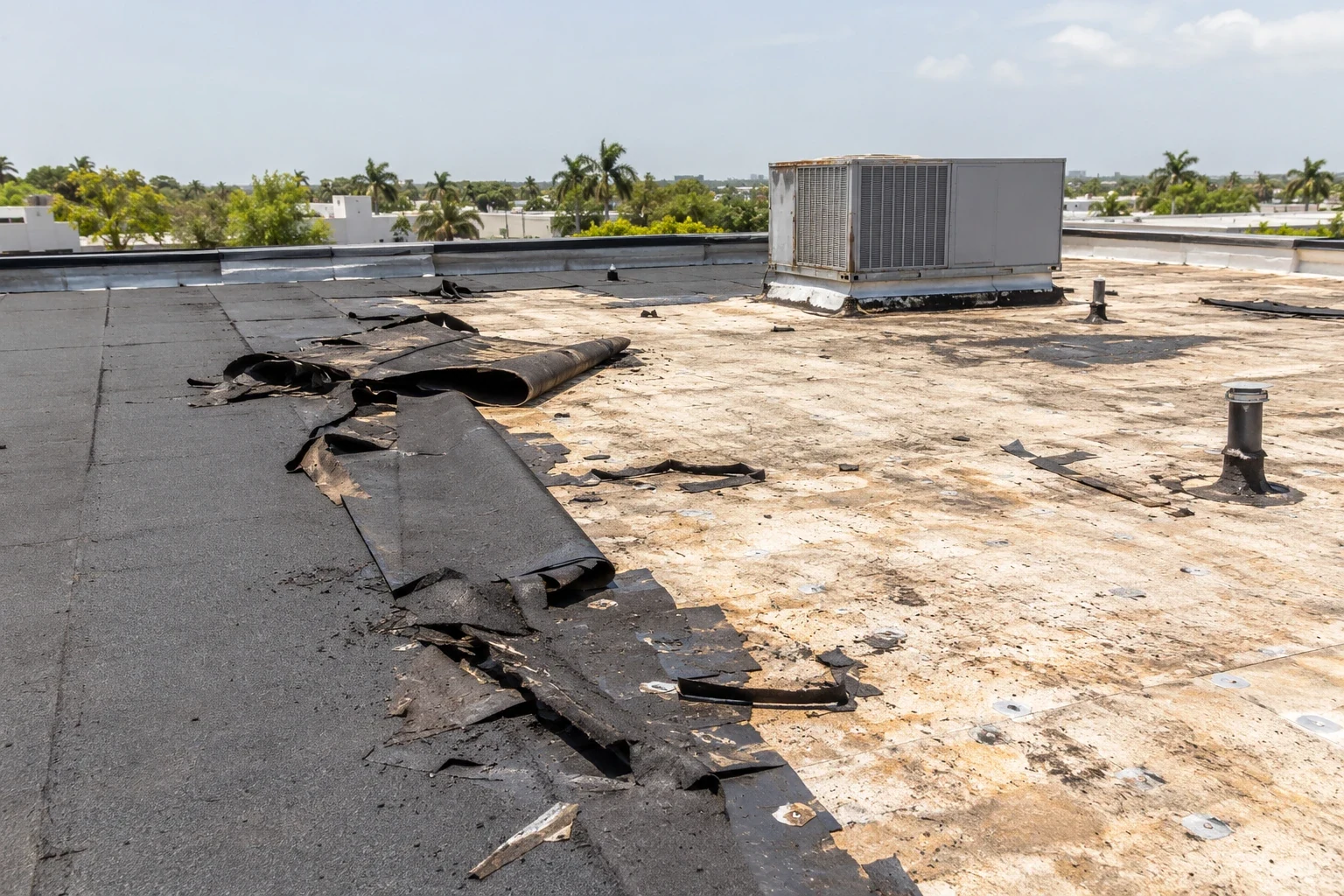
If the field is sound and the edge is the problem, edge metal and coping work may be all the roof needs. If the membrane is dry but worn, a coating after seam repair may extend its life. If insulation is wet over a wide area, replacement of the wet layers is the better fit than another patch.
Cost and timing depend on access, roof area, penetration count, the length of edge involved, wet-area extent and tenant schedules. We list those drivers in the proposal and tie each recommendation to the observation behind it, so an owner coordinating exterior work and roof work can sequence both.
Sequencing Roof Work with Exterior Contractors
Scaffolding, lifts and fenced zones serve both facade and roof crews, and sharing them can save an owner time. The order matters: roof edge and flashing repairs first, then exterior finishes, then a final check of the cap and drainage. We coordinate dates with the general contractor or painter, share the staging plan and keep sidewalks clear.
A building that stays open is reroofed in sections that dry in daily, with interior protection under ceilings that may be disturbed and noisy tasks set outside peak customer hours. Each day's plan lists working hours and names the person who can halt the job if something shows up below.
Debris control is part of the plan on a corridor with foot traffic. Material is lowered in a closed chute or by hoist, the drop zone is fenced and the work area is swept before each shift ends.
Permits, Records and Related Areas
Reroof permits are reviewed by local building staff against the 2023 eighth edition of the Florida Building Code, which the state commission shows as effective on the last day of 2023. Stage photographs show what was removed and what replaced it.
An owner with other property in North Miami Beach or Miami Gardens can use one file format throughout, and a preventive maintenance visit ahead of the wet season keeps caps, scuppers and drains in order.
What to Send Before the Walk
Three items shorten the visit and sharpen the report: a roof plan or a hand sketch, the dates and rooms of any leak reports, and the schedule for any exterior contractor. If facade work is planned, tell us the start date and the scope, so the roof edge can be repaired in the right order.
Access questions come next: hatch or ladder location, lift position on the street side and the hours when the sidewalk can be fenced. Once those are answered, the walk can concentrate on conditions and the written findings can keep urgent protection apart from planned work.
Related Roofing Topics

