Need this roof reviewed?
Holcim Elevate (formerly Firestone) roofing in Hollywood, FL: UltraPly TPO and RubberGard EPDM assemblies checked for seams, attachment and ponding.
The document in the owner's file may say Firestone, the label on the membrane may say Firestone and the manufacturer's current name is Holcim Elevate, and none of that changes what the roof is doing in August. Holcim Elevate is the name now used by the company formerly known as Firestone Building Products, and its commercial range includes UltraPly TPO and RubberGard EPDM single-ply membranes. Under August highs near 90 degrees and a rainy season that does not let up, these sheets in Hollywood, FL live or die by their seams, attachment and drainage. We read the paperwork, then read the roof, and treat the two names as one record.
Old and new names on the paperwork
Roofs installed before the name change carry Firestone on warranty papers, product data and invoices. Roofs installed after may carry Holcim Elevate. A manager reviewing a file can be confused by two names for one manufacturer, so we note both in the record and cross-reference them. The product names, such as UltraPly and RubberGard, often continue across the change.
The practical step is to confirm which membrane is actually on the roof. We read the sheet markings where visible, check the seam type and the accessories and compare them with the papers. If they disagree, the roof is the evidence, and the file is corrected. Accurate identification matters because repair materials and procedures depend on the sheet, not the label.
A change of name also affects who to call about a document. Questions about a warranty issued under the earlier name go to the manufacturer under its current name, and the owner makes that inquiry. We supply the roof facts the manufacturer will ask for: location, installation date, product and the condition found.
UltraPly TPO: welds, flashings and surface
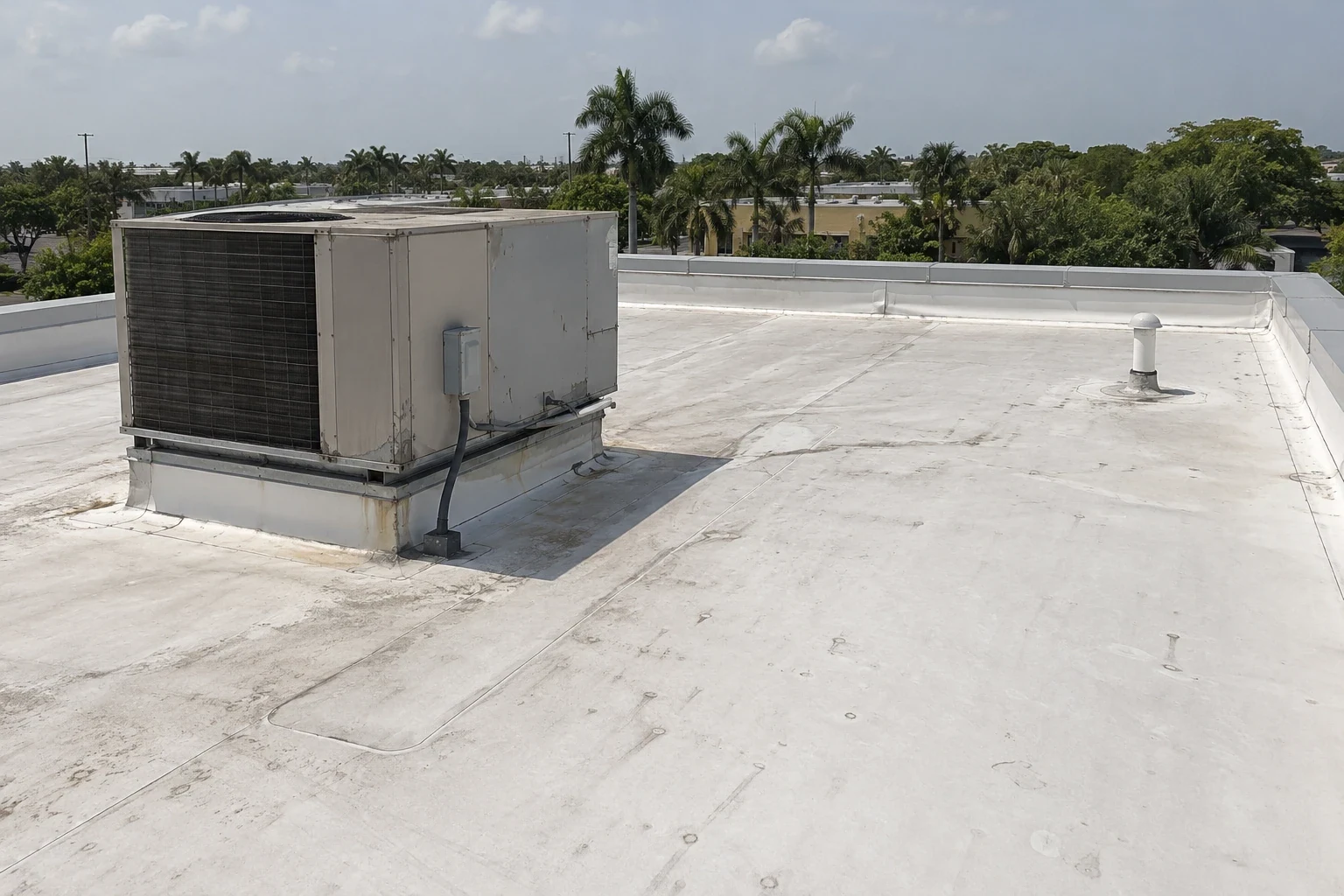
UltraPly TPO is a thermoplastic sheet welded with hot air, available in reflective colors. A good weld is continuous with even flow at the edge, and a poor one shows gaps, skipped sections or a ridge where sheets did not fuse. We probe every lap, flag open segments and mark their length.
Weak welds concentrate at cross-seams, corners and penetrations, because those spots are hard to weld cleanly in the field. Flashings are made from prefabricated pieces or field-cut sheet, and their terminations need sound sealant. A repair starts with cleaning the sheet, test-welding it for weldability and finishing with a welded patch that extends past the damaged area. Our TPO roofing work follows those steps and logs each repair on the roof sketch.
Reflective TPO needs a clear surface to work. Dirt, grease and algae lower reflectivity, and rooftop exhaust can leave a film that complicates later repairs. We note staining near fans and recommend cleaning intervals that fit what we see.
RubberGard EPDM: splices, stretch and heat
RubberGard is Holcim Elevate's EPDM line, a synthetic rubber sheet that stretches and recovers and joins at splices made with tape or adhesive. EPDM tolerates movement and standing water well, though water that sits on a splice still adds stress and grows algae. Black sheet absorbs heat, so surface temperature is higher than on a white membrane.
Splices fail when they were made on a dirty surface, when adhesive aged or when the lap lifted at its edge. We lift test sections, clean and re-prime where needed and re-splice with the right tape. Our EPDM roofing repairs include a cover strip over the splice and a photograph of the finished lap for the record.
Heat is the steady stress in this climate. Daily heating and cooling flex the sheet at every curb and wall, and aged sealant at terminations is a frequent entry point, so we check terminations before looking elsewhere.
Adhered, mechanically attached and ballasted installs
Both families can be installed in several ways. A fully adhered sheet is bonded to the substrate and presents a smooth surface; a mechanically attached sheet is held by fasteners and plates and is common over some decks; a ballasted sheet is held by stone or pavers and depends on the structure's capacity to carry the weight. Each leaves its own signs of trouble: bubbles in an adhered sheet, ridging at plates in an attached one and shifted stone in a ballasted one.
Hollywood's wettest months at the NOAA station are June and September, both near 8.8 inches, and the National Weather Service calls mid-May to early July the most storm-prone stretch of the wet season. Perimeters and corners see the strongest uplift, so we check edge metal, fasteners and ballast at the edges first.
Fastener patterns and plate spacing are checked against what the design calls for, and a few sample fasteners are pulled to test resistance. Where a deck has weak pull-out, the fix may be a different attachment method, not simply more fasteners.
Ponding, algae and cleaning schedules
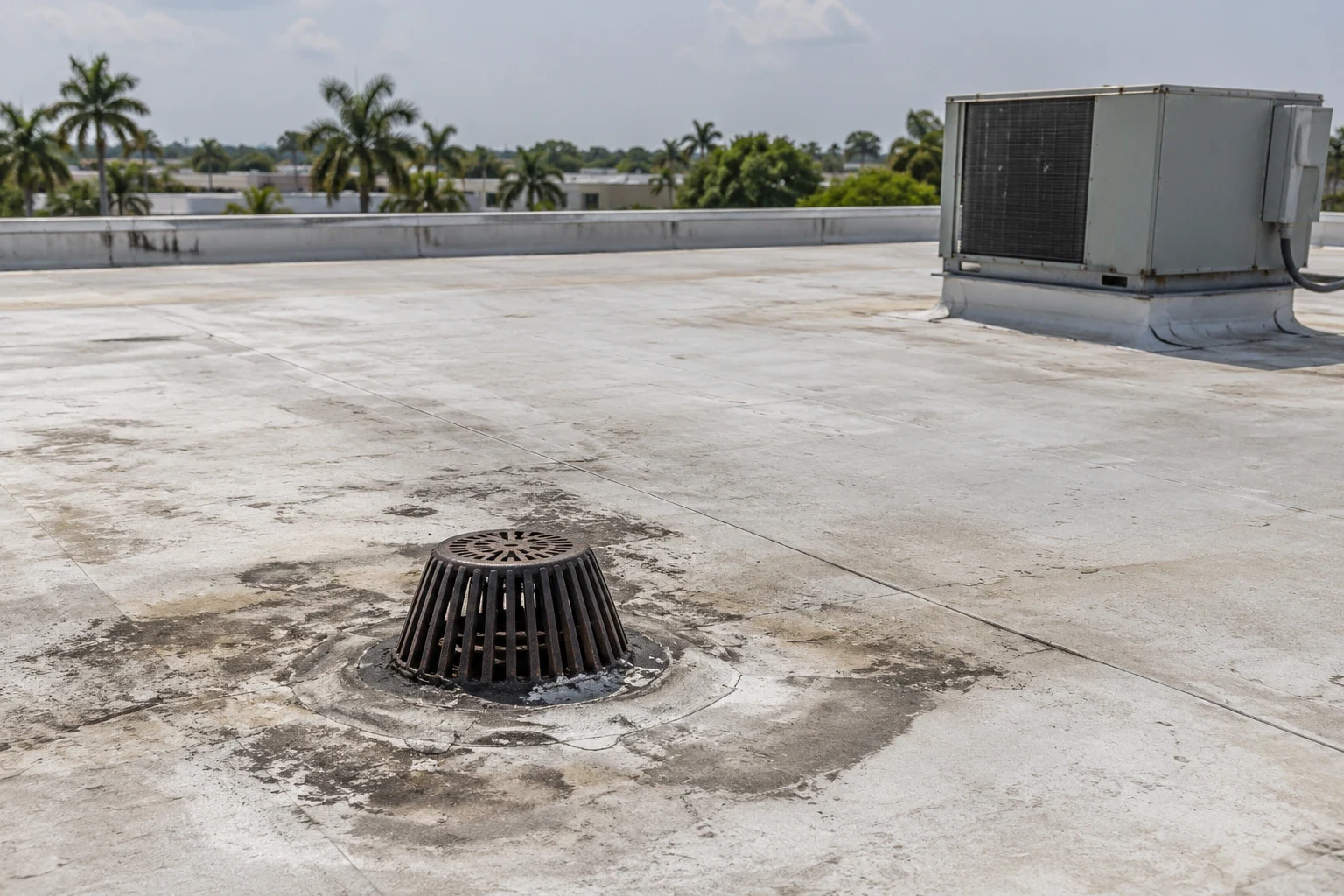
Standing water ages any membrane faster, and it feeds algae that darken a white sheet and reduce its ability to shed heat. We measure ponding depth and duration after rain, clear and flow-test drains and scuppers and note low spots that need tapered insulation or an added outlet.
A cleaning schedule belongs in the maintenance plan. Mild washing removes dirt and algae without harming the sheet, while harsh cleaners can damage a membrane or a seam. A building in the Historic Hollywood Business District or near Young Circle gets the same routine as any other: drains first, then surface, then edges.
The same drainage routine applies on Johnson Street as it does in Downtown Hollywood: clear the outlet, measure the pond, check the overflow and write down what was found. Hollywood has a range of commercial settings, and each roof still has to be read for what it actually is.
Warranty terms, code and comparison
A manufacturer's warranty sets its own conditions, so we ask for the document and list what it requires. For permits, product and attachment documentation is confirmed up front, as Hollywood's Building Division reviews plans and inspects the work under the Florida Building Code, Eighth Edition (2023). Our roof warranty management keeps the papers and dated repair entries together.
Owners weighing options can compare the same criteria across Carlisle SynTec and Johns Manville systems: seam method, flashing details, substrate needs, repairability and upkeep. The roof and the budget decide, not the label.
Dated photographs at the same positions each season make change visible. A pond that shrinks after a drain repair, a splice that stays flat through a wet season or a weld that holds after a patch are all provable from the file.
Related Roofing Topics