Need this roof reviewed?
Plan aircraft hangar roof repair in Hollywood, FL, with clear-span access, equipment coordination, moisture review and phased replacement options.
Long-span roof movement can open a seam far from the first place water appears. An aircraft hangar needs a scope that accounts for clear-span structure, door systems, lighting and work access while protecting equipment below. In Hollywood, FL, NOAA records an August average daily maximum of 89.9 degrees, while monthly rain normals peak above eight inches in June. We inspect the actual assembly, map the water path and identify which repair or replacement decision follows from the findings.
Read the long-span assembly
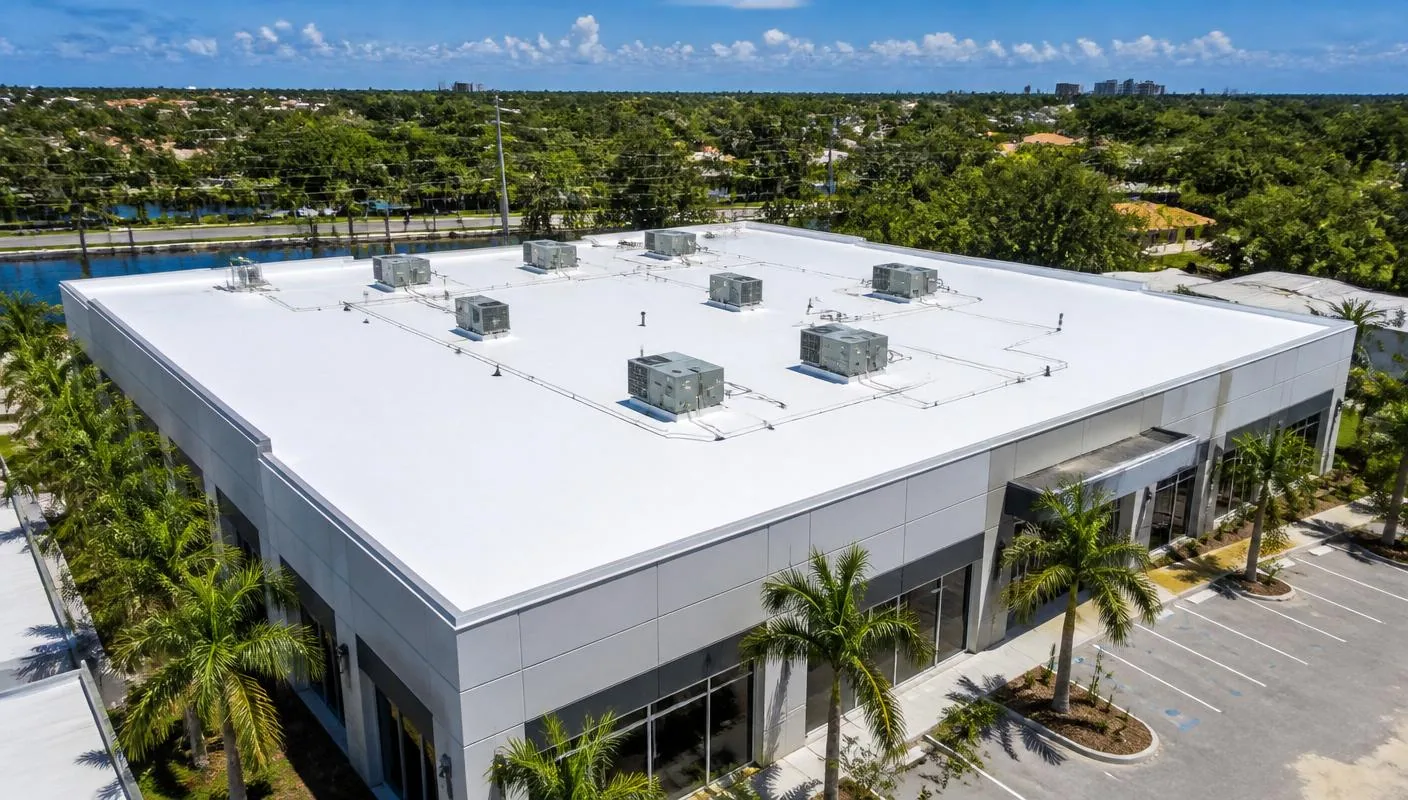
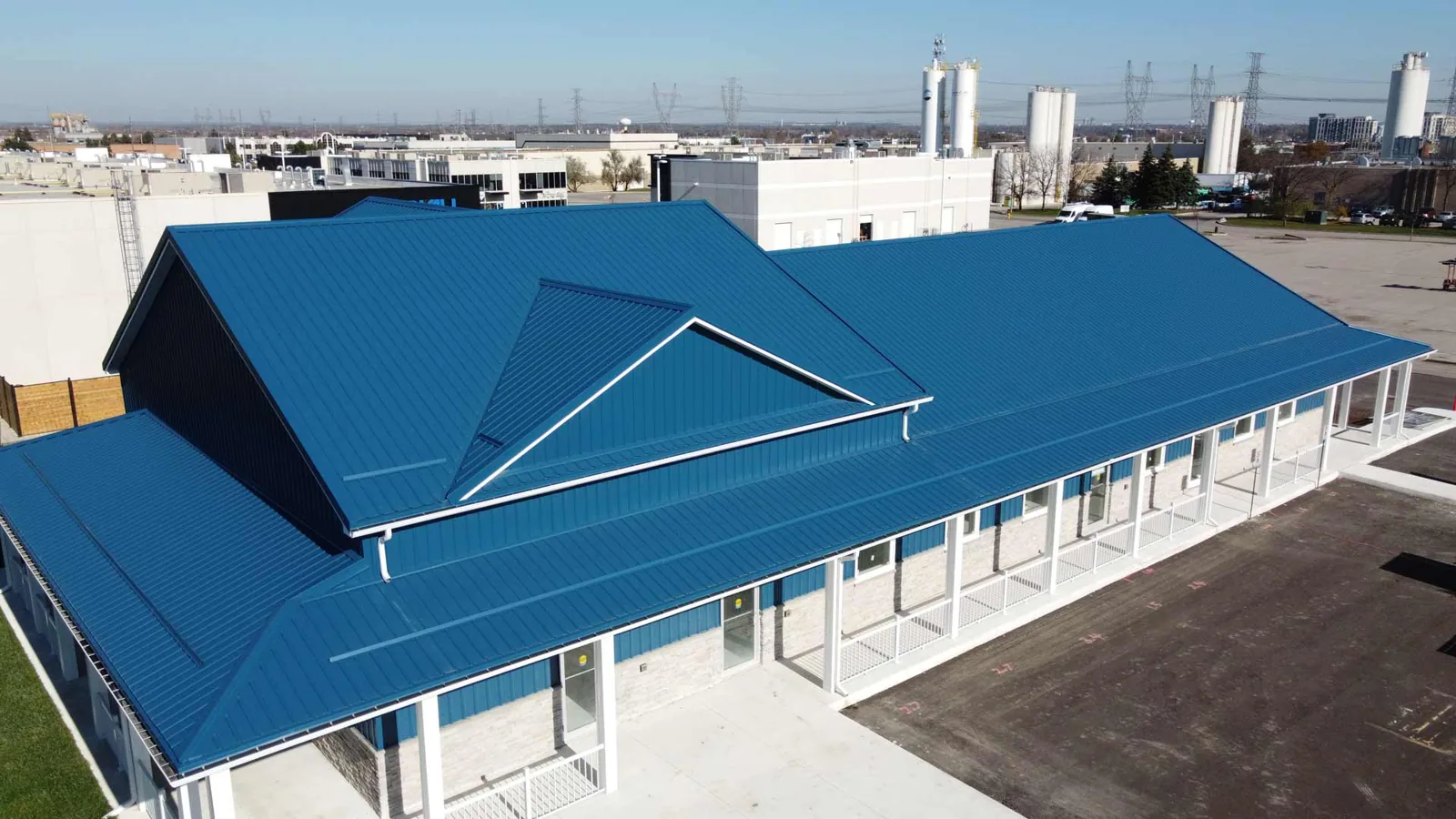
Hangar roofs may use metal panels or low-slope membranes over long structural spans. We confirm what is installed before selecting a repair. Panel sidelaps, fasteners, ridge and eave details need different attention from membrane seams and parapet transitions. We also note structural movement, prior penetrations and the areas that cannot be reached without coordinated equipment or lift access.
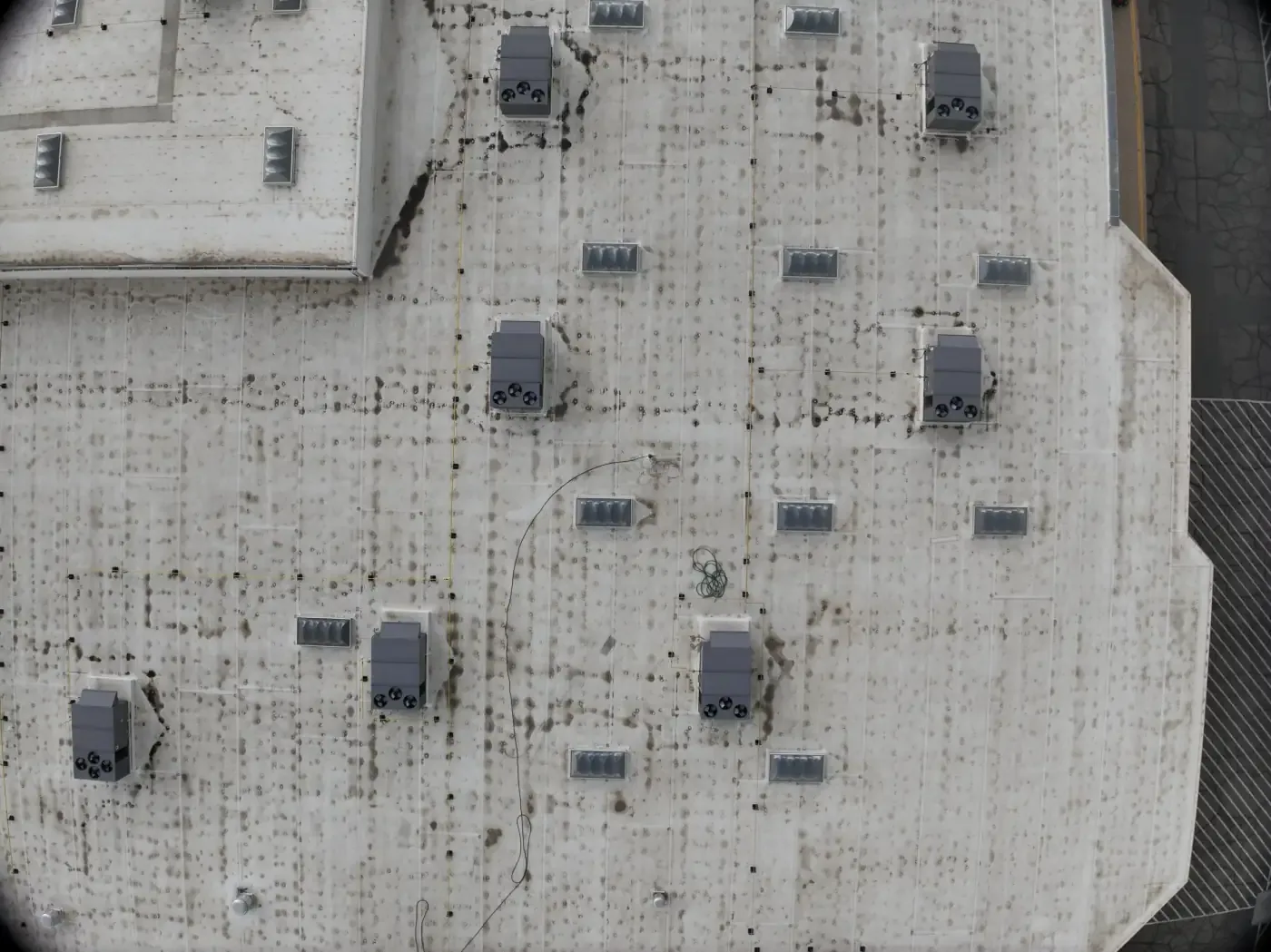
Water can travel along a purlin or insulation before reaching the floor, so an interior drip does not identify the entry point. We compare leak timing and location with roof joints, door tracks, drains and equipment supports. Selective openings help confirm concealed conditions where the survey is inconclusive. A roof inspection documents accessible details, while a drone survey can assist with a broad visual review when safe access is limited.
Account for door and edge movement
Large hangar doors move within tracks and frames that meet the roof or wall envelope. We inspect adjacent flashing, weather seals and metal transitions for separation or repeated patching. Door operation and roof movement should be coordinated, since a repair that interferes with a track or service clearance can create a different operational problem. The scope identifies the interface and the trade coordination it requires.
At perimeter edges, fasteners and metal closures can loosen under movement and wind. We document the attachment condition and look for membrane pullback, distorted panels or open terminations. An edge metal repair addresses the transition that failed; it does not assume all adjoining panels are sound. The manager receives photographs that locate each condition along the span.
Map moisture before adding material
A stain on the hangar floor may sit below a roof path that began at a lap, curb or drain. We map moisture indications and verify selected areas with openings when the assembly requires it. Wet insulation or deteriorated decking changes the removal boundary. Material that remains dry, attached and compatible may be retained, but that decision depends on what the survey and openings show.
Temporary protection can secure equipment and work areas while the permanent scope is prepared. The opening remains limited to what can be closed during the shift. A moisture survey guides test placement; a condition report keeps the results tied to roof locations and repair photos. Hangars with maintenance operations need the manager to identify equipment, fuel-related safety restrictions and access controls before any roof work begins.
Plan for Hollywood heat and rainfall
NOAA normals show 8.84 inches of precipitation in June and 8.67 inches in September at the Hollywood station. Rainfall and tides are also considered together in the city's stormwater risk modeling. Both make outlet condition and temporary closure relevant when planning work, since an open bay and a sudden downpour is a poor combination. We inspect drains and water paths, then set an opening limit that can be dried in before leaving the structure.
August average daily maximum temperature is 89.9 degrees, so surface heat and thermal movement deserve attention at metal seams, fasteners and membrane transitions. We look for actual movement, open joints, loose closures and fatigue at penetrations. A wind-related evaluation after an event records visible changes and identifies temporary protection needs. Findings from the roof itself, not the climate averages, set the repair scope.
Coordinate equipment and inspection access
Work planning starts with the owner's operating window, door clearances, vehicle routes and the approved points for lift or scaffold placement. We confirm who controls the space below, how tools and debris will move and what access remains available. If aircraft or service equipment occupies a bay, the operator identifies the safe work boundary and any restrictions before the roof is opened.
The property manager can use one plan to coordinate roof access, interior protection and inspection review. Hollywood enforces the Florida Building Code through its Building Division, and city permit information describes plan review and construction inspections. Those processes are separate from a roof condition survey, but the proposed work can be documented for the project's reviewers. Downtown Hollywood's property owners association works on buildout quality and permit coordination, which is a reminder that hangar-style and flex buildings in the area still need roof work sequenced with the tenant's own improvements. The hangar's own use controls its access plan: who holds the keys, where aircraft or service equipment sits and which bays must stay clear. A phased occupied-building scope can address clear-span access and dry-in limits where the operation continues below.
Compare repair, recover and replacement
A localized panel seam or flashing failure may support a repair when the surrounding assembly is sound. Repeated movement, widespread moisture or a damaged substrate can require larger work. We compare repair, recover and replacement with their assumptions, including how a new system attaches to the structure and how its edge details meet the hangar door or wall.
Standing seam metal and membrane systems use different attachment and closure methods. The chosen assembly follows the structural substrate, drainage plane and project requirements. A replacement scope identifies removal, metal transitions, curbs, drains and the work zone. For comparison across other property types, dealership roof work and senior living projects carry different occupancy constraints, even where inspection methods overlap.
Record the work for the next inspection
Closeout should show the repair or replacement location, assembly installed, photographs and any condition left for monitoring. A hangar operator can compare later leak reports with the prior work and determine whether movement has reopened a seam or whether a new area needs review. The record should identify equipment or penetrations changed during the project.
Emergency response is available around the clock, all week, holidays included, when water threatens equipment or operations. We first coordinate access and protect the area, then establish the water path and permanent repair. Share the roof plan, door schedule, equipment layout and leak history. We will define the inspection boundary and the decision that needs to be made before capital work begins. For a hangar-style or flex building near the Downtown Hollywood business area or in the Washington Park industrial area, lift positions and delivery routes are confirmed with the operator before any date is set.
Related Roofing Topics