Need this roof reviewed?
Inspect and repair auto dealership roofs in Hollywood, FL, with service-bay protection, showroom access planning and clear replacement options.
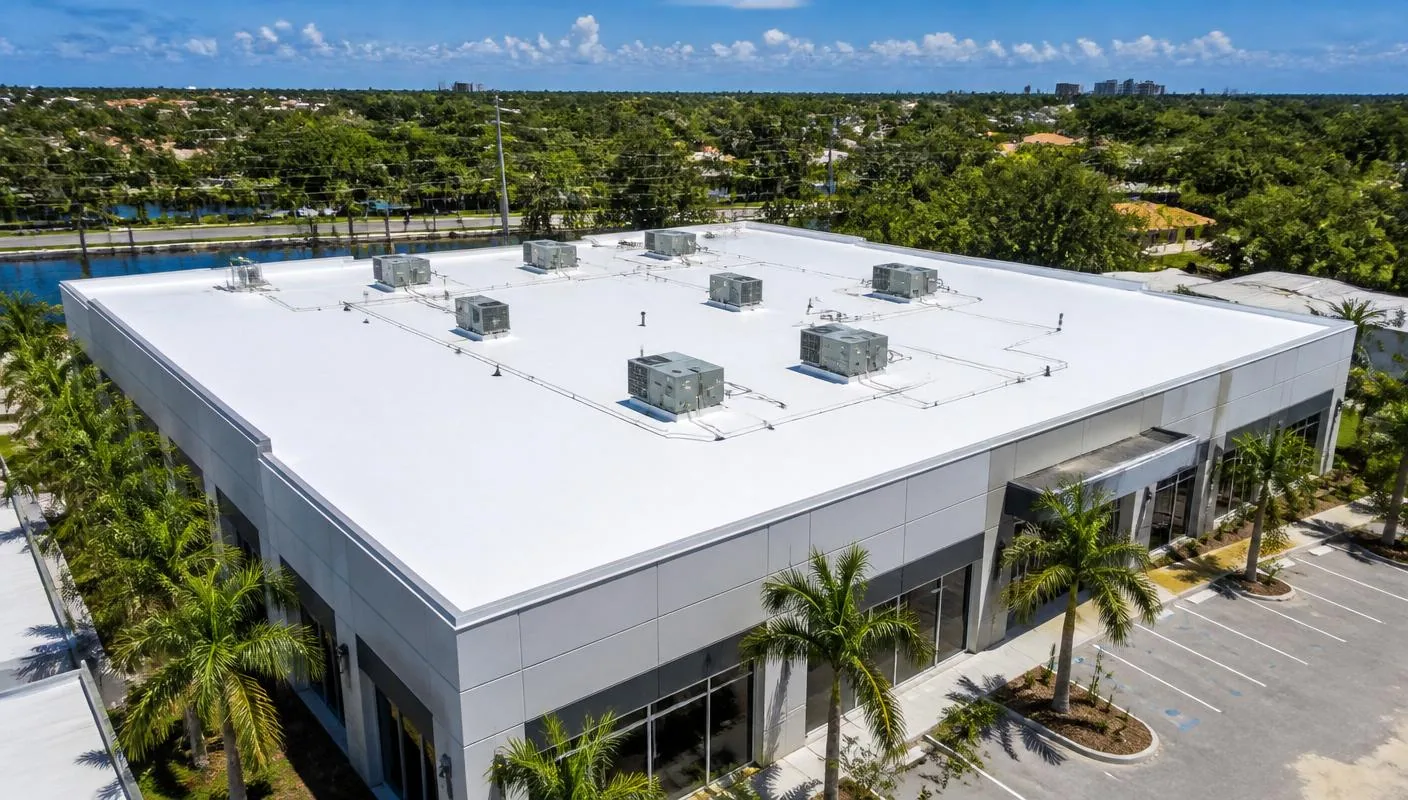
A drip above a service bay can interrupt work even when the roof opening is several feet away. Auto dealerships combine public showrooms, vehicle storage, offices and repair areas, each with different access and protection needs. Hollywood, FL, has June and September precipitation normals above eight inches, so drains, seams and equipment transitions deserve a measured review. We trace the water path, identify the affected area and show the manager what can be repaired while the rest of the operation remains available.
Separate showroom and service access
Roof work can affect customer parking, showroom doors, vehicle delivery and service-bay schedules. We map lift placement, debris movement and material staging before opening the membrane. The manager can keep customer routes clear and identify when a bay or interior space needs temporary protection. Each work zone receives a closure time and contact for field decisions. We check whether customer vehicle drop-offs overlap with material delivery and place waste containers where they will not narrow the service approach.
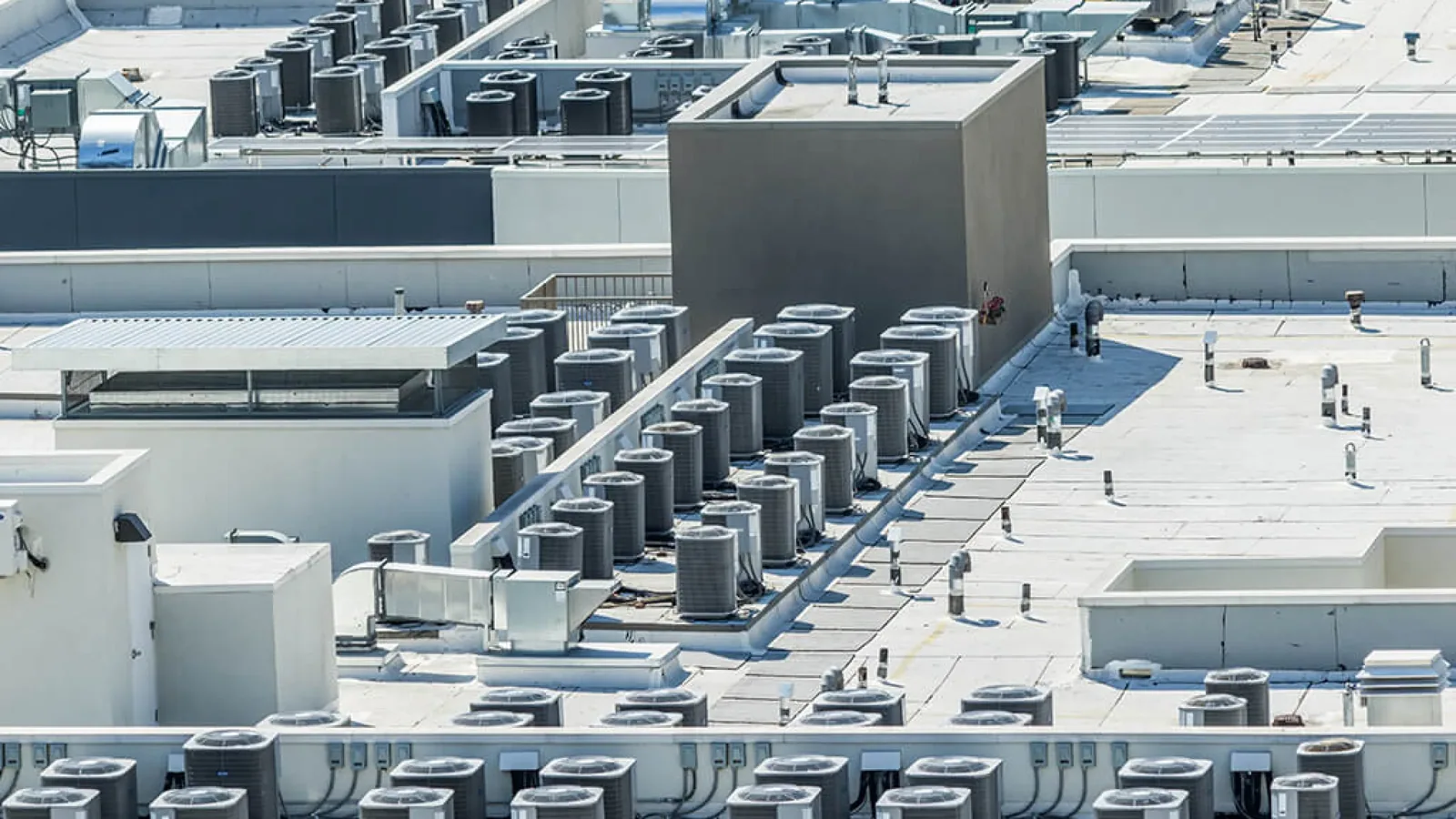
At a service area, vehicle lifts and exhaust equipment add rooftop penetrations that need inspection. A leak may follow a curb or exhaust connection, but the interior drip does not identify the entry by itself. We compare ceiling marks with roof seams, drains, supports and prior repairs. The roof inspection records actual conditions, while equipment curb work can address a moving support or failed flashing as part of the repair.
Trace moisture to its entry point
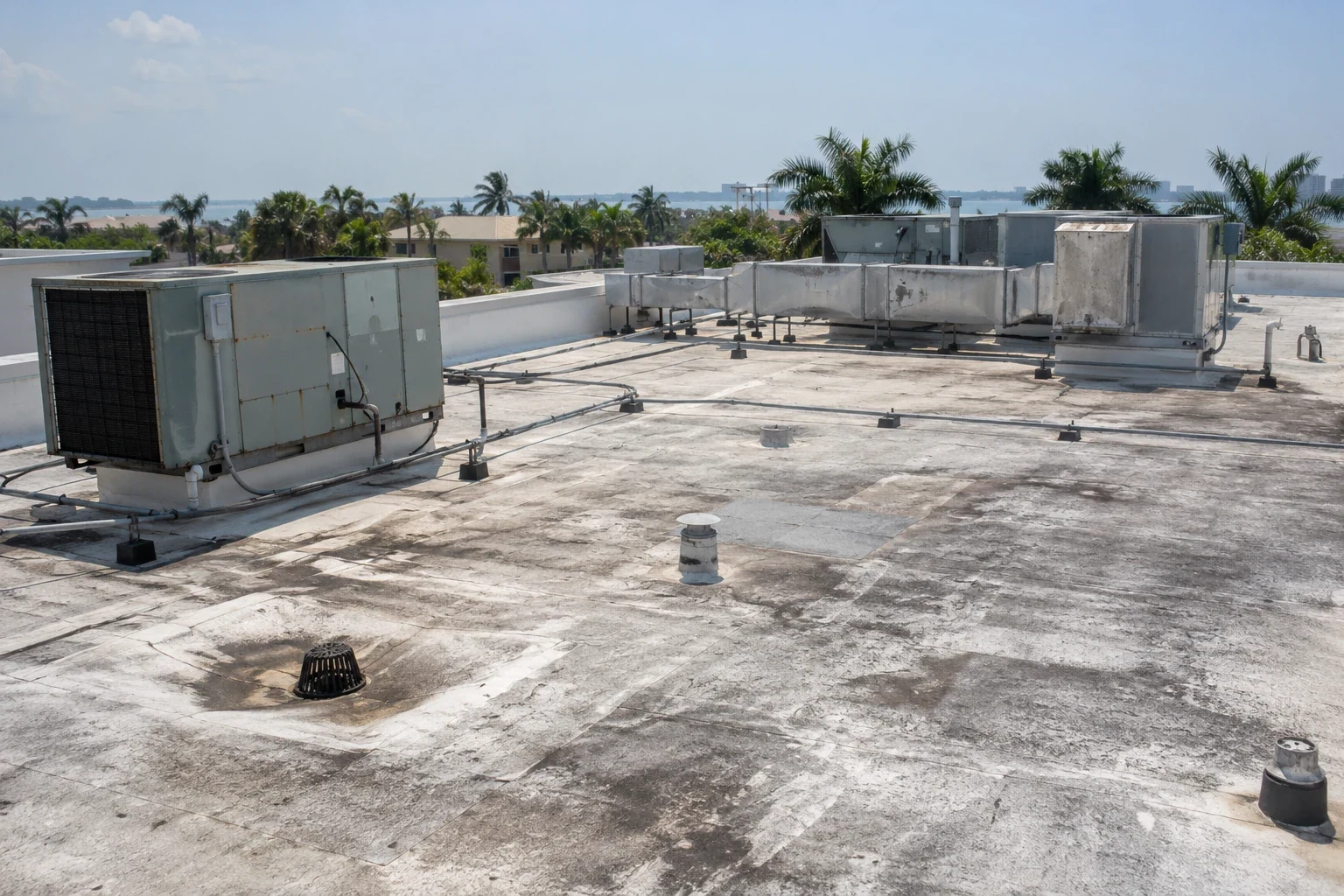
Water can travel beneath a membrane, across insulation or along a deck before it reaches a service counter or vehicle bay. We use interior reports and roof observations together, then apply moisture mapping or selective openings where the assembly is unclear. Each test location is marked, and wet material is distinguished from board that remains dry and secure. This sets the removal boundary before a new layer is installed.
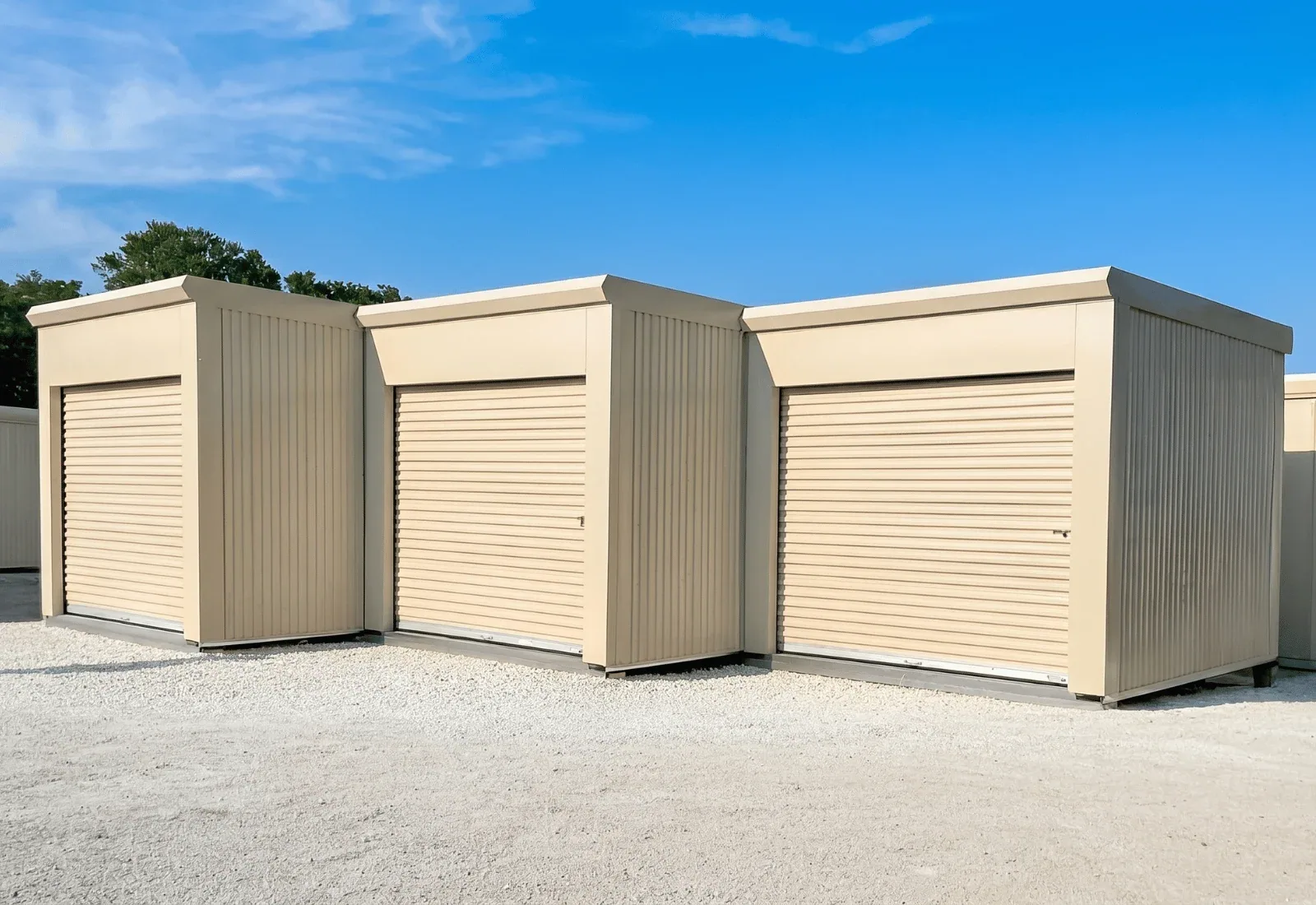
A localized seam or penetration failure may support a repair when the surrounding assembly is sound. Moisture across several sections can change the recommendation to a broader removal package. The owner sees immediate protection separately from permanent work, with the photo record tied to roof locations. If an owner holds a mix of properties, a self-storage facility or a government building in the same portfolio has its own access and operating requirements.
Keep water moving off the field
Showroom canopies, service additions and transitions between roof heights may interrupt drainage. We inspect outlets, scuppers, sumps and low areas, noting whether water is held by debris, an obstructed flow path or a change in roof geometry. That distinction affects whether maintenance is enough or a drainage correction belongs in the capital scope.
The city models rainfall and tides together in its stormwater program, which is a ground-level question. We document the roof surface and outlet separately from parcel-level flood questions. A drain and scupper inspection can record a blocked outlet or damaged bowl before the next heavy rain. Local business contexts such as Downtown Hollywood and the Johnson Street Business District are distinct areas; each building's access and drainage still require direct inspection.
Review seams and metal transitions
NOAA normals put Hollywood's August average daily maximum at 89.9 degrees. Repeated surface heating can contribute to movement at seams, metal edges and penetrations. We inspect open laps, loose terminations, sealant condition and patches that have shifted, then note whether the condition appears isolated or repeated. An exposure-related assessment ties the local climate context to actual roof observations.
When metal roofing is present, panel seams, fasteners, closures and edge details receive attention. A standing seam metal roof has different movement and repair considerations than a low-slope membrane. We identify the existing system and the repair compatibility before setting the scope. If the substrate or attachment is uncertain, a test opening or follow-up review may be more useful than another surface patch.
Compare repair with replacement
Repair, recover and replacement depend on moisture, attachment, existing layer count and deck condition. A recover can be reviewed when the assembly is dry, stable and compatible with the new system. Wet insulation, repeated leaks or a damaged substrate can require removal. We state what can remain, which details need adjustment and what still needs confirmation before the manager commits capital.
A replacement plan separates showroom, service and storage areas when temporary tie-ins permit phased work. The recover assessment sets retention assumptions, while a replacement scope identifies tear-off, drainage work, equipment transitions and closure steps. A capital recommendation can place the roof work beside equipment upgrades and other building needs. For bid comparison, we separate measurable removal and membrane work from deck conditions that cannot be priced accurately until opened. The proposal notes material handling, temporary protection, drain work and access equipment so the manager can compare equal scopes. If the assembly changes after tear-off, photographs and a location-specific change request support approval before that area proceeds.
Preserve the service history
After work, the record should show the repaired area, detail materials, photographs and any remaining condition to monitor. The service manager can compare future leaks with the prior repair location and tell whether the same path has returned. Drain cleaning, new equipment and later trade visits should be added to the roof history because each can affect the membrane or drainage plane.
Around-the-clock response is available throughout the week, holidays included, for an active leak needing protection. We coordinate the first access, protect vehicles or interior work areas and then document the permanent correction. If the repair cannot be fully tested during that visit, we state what observation or follow-up check will help confirm the result, and which roof area remains under review. Send the affected bay, roof plan, equipment schedule and recent repair notes. We will identify the finding that changes the scope and a repair sequence that respects the dealership's operating day.

